REVIEW · NEW DELHI
Private Half Day Delhi Tour
Book on Viator →Operated by BAE Travels · Bookable on Viator
Delhi can be overwhelming fast.
This half-day private tour is a smart way to get your bearings with a private air-conditioned car and a guide-led, customizable route. I like that you’re not stuck figuring out public transport, and you can shape the stops to what you care about most.
Two things I especially like: the mix of Mughal, memorial, and democracy-era landmarks, plus the way the guide keeps it practical. I’ve seen standout guide names in the feedback like Ajay, Ankush, Dharmender, and Rehman, with praise for clear English and good pacing—while one unhappy note called out a guide named Rahul for skipping advertised sites and lacking historical detail. One key consideration: some places have optional entrance costs, and Gandhi Smriti is skipped on Mondays because it’s closed—so you’ll want to plan your priorities around that.
In This Review
- Key Things That Make This Half-Day Tour Work
- Price and What You Really Get for $13.49
- Your Chauffeured Car Day: Comfort, Speed, and Less Mental Load
- Humayun’s Tomb: Mughal Power in One Carefully Timed Stop
- Agrasen Ki Baoli: The Short Stop With Real Personality
- Rashtrapati Bhavan and Parliament House: How Democracy Looks on the Ground
- India Gate: A Memorial Stop That Works Even on a Tight Schedule
- Lutyens’ Delhi and National Gallery of Modern Art: A Pair of Stops for Architecture and Culture
- Gandhi Smriti: A Meaningful Final Anchor (With a Monday Catch)
- Flexibility With a Private Guide: How to Make This 4-Hour Tour Feel Like Yours
- What the Mixed Feedback Teaches You (Without Ruining Your Day)
- Who This Tour Suits Best (and Who Should Pick Something Else)
- Should You Book This Private Half-Day Delhi Tour?
- FAQ
- How long is the Private Half Day Delhi Tour?
- Is this tour private or shared with other groups?
- Do I get hotel pickup and drop-off?
- Is the car air-conditioned?
- Is bottled water provided?
- Are entrance tickets included?
- What stops are included in the itinerary?
- Is Agrasen Ki Baoli open all day?
- Is Gandhi Smriti open every day?
- What’s the cancellation policy?
Key Things That Make This Half-Day Tour Work
- Hotel pickup + chauffeur-driven comfort: you ride between sites in an air-conditioned car with bottled water.
- A high-impact itinerary in 4 hours: Humayun’s Tomb, Agrasen Ki Baoli, Rashtrapati Bhavan/Parliament area, India Gate, and Gandhi Smriti.
- A private guide who can steer the day: the route can be adjusted to your interests without joining a crowd.
- Know what’s ticketed: Humayun’s Tomb is listed without admission included unless you choose the entrance-ticket option.
- The Agrasen Ki Baoli timing matters: it closes after sunset, so later starts can cut your window.
- Monday schedule tweak: Gandhi Smriti is skipped if it falls on a Monday.
Price and What You Really Get for $13.49
At $13.49 per person for about 4 hours, the headline price is hard to ignore—especially because you’re getting a private car, a chauffeur, and a professional guide. That value usually holds best when you count the unglamorous stuff you’d otherwise wrestle: navigation, time lost to figuring routes, and the stress of coordinating multiple stops on your own.
That said, the price can feel different depending on your choice about entrance tickets. Humayun’s Tomb is explicitly listed as not included, unless you upgrade to include entrance fees. So if you want to do the big-ticket interiors without stopping to pay at the gate, choose the entrance-ticket option. Also remember tips aren’t included, so budget a little extra for the driver and guide if you feel they earned it.
The other small reality check: 4 hours is short. Even with a well-planned route, Delhi traffic and security/entry lines (where they apply) can compress time. This isn’t a complaint—just the math. If you tell the guide what matters most, you usually get a better day out of the same timeframe.
You can also read our reviews of more tours and experiences in New Delhi.



Your Chauffeured Car Day: Comfort, Speed, and Less Mental Load
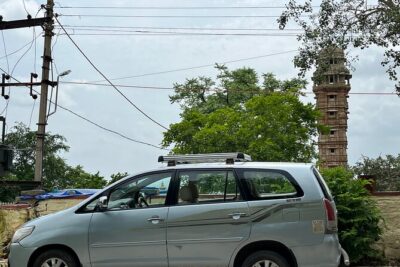
The tour is built around air-conditioned vehicle travel with hotel transfers and bottled water. That sounds basic, but it’s a big deal in Delhi. You’ll spend less energy on logistics and more time actually looking at places.
Practical upside:
- You don’t have to translate bus or metro routes while carrying time pressure.
- You can use the travel time for context. A good guide will connect what you’re seeing now with what came earlier in Delhi’s story.
- You avoid the awkward group-joining setup. Since it’s private, your day stays yours.
The best part is how this format suits first-time visitors. You get an organized loop through major sights without committing to a full-day sprint—or to multiple separate bookings.
Humayun’s Tomb: Mughal Power in One Carefully Timed Stop
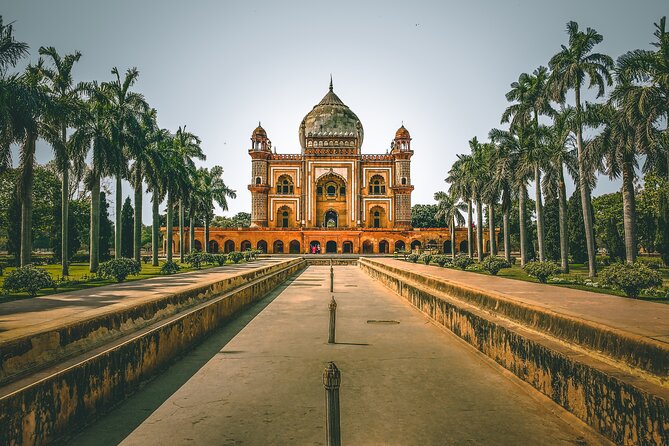
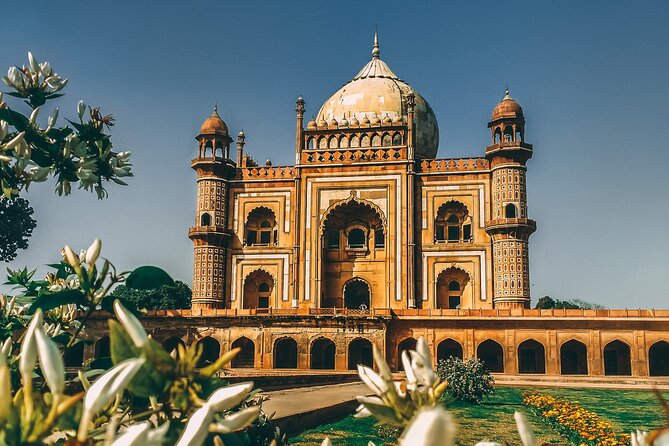
Humayun’s Tomb is a key start point, and there’s good reason: it’s the tomb of Mughal Emperor Humayun, commissioned in 1558 under the patronage of his first wife and chief consort, Empress Bega Begum. That detail matters because it frames the site as political legacy, not just pretty architecture.
You’ll have about one hour at the site. That’s enough time to do a meaningful walk, take photos from a few angles, and absorb the bigger design idea without rushing like you’re late for a flight.
Two practical notes:
- Admission isn’t included in the default listing. If you don’t upgrade, you’ll pay entry on your own.
- With only an hour, choose what you want most: sweeping views and architectural symmetry, or deeper explanation. If you’re the second type, ask your guide to slow down the moment you arrive.
Even if your background in Mughal history is thin, a good guide can turn the tomb into a clear story: who built it, why, and what kind of authority it broadcast.
Agrasen Ki Baoli: The Short Stop With Real Personality
Agrasen Ki Baoli is the kind of place you remember for its mood. The tour calls it a secret place in Delhi with an unusual setting and an extraordinary view—right in the middle of the city, where modern life sits close to older architecture.
Your time here is about 15 minutes, and it’s free. That’s very short, but it works because Baoli stops are about atmosphere and perspective. You’ll likely want to position yourself for the view and grab photos before the light changes.
Here’s the timing consideration that actually affects your day: it closes after sunset. So if your tour start time is later in the day, you might have less flexibility than you expect. If you’re someone who wants sunset photos, consider prioritizing this stop earlier.
Rashtrapati Bhavan and Parliament House: How Democracy Looks on the Ground
From Agrasen Ki Baoli, the tour moves into Delhi’s official power zone—Rashtrapati Bhavan and Parliament House. Even if you don’t care about politics, the architecture and layout give you a strong sense of how modern India projects authority.
Rashtrapati Bhavan is home to the President of India. It was designed by Sir Edwin Lutyens and Herbert Baker, and it’s described as emblematic of Indian democracy and its secular, plural, and inclusive traditions.
Parliament House houses India’s bicameral parliament: the Lok Sabha and the Rajya Sabha.
Important reality: your time here is almost certainly oriented around seeing the exterior areas and the big-picture layout. The tour’s flow suggests you’re checking off major landmarks rather than spending long hours inside official buildings.
If you like context, this is where a guide can be especially useful—connecting the British-era design influence with how the site functions today.



India Gate: A Memorial Stop That Works Even on a Tight Schedule
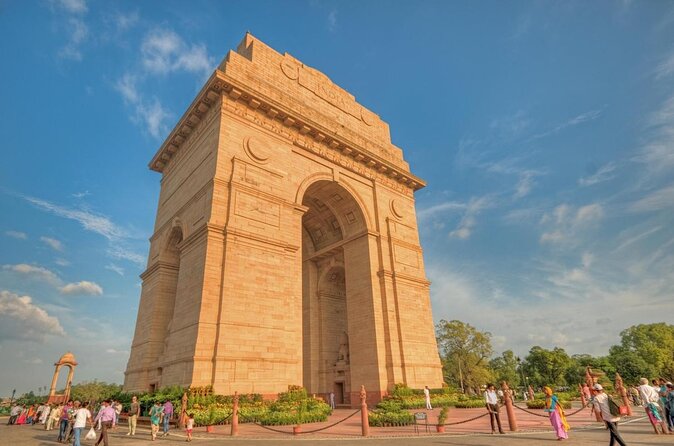
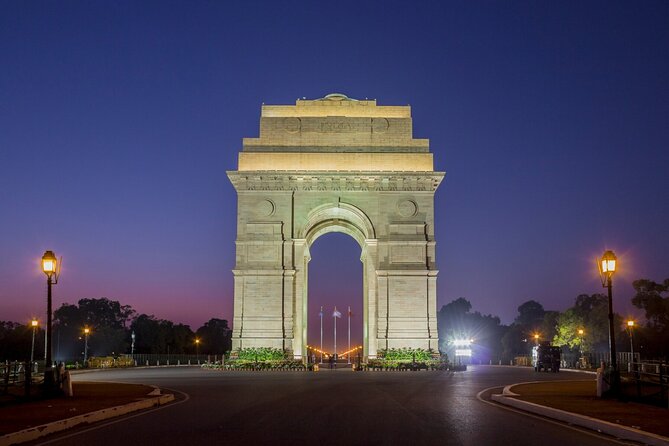
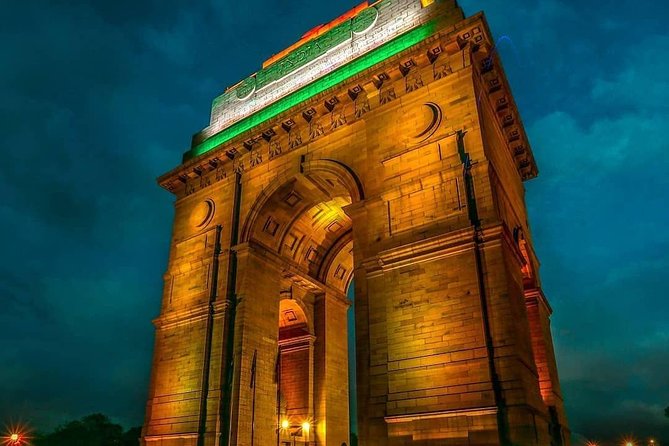
India Gate is quick but not pointless. It’s a war memorial originally called the All India War Memorial, located astride Rajpath on the eastern edge of the ceremonial axis of New Delhi.
You’ll have around 10 minutes here, and admission is free. In other words, don’t plan on a long linger unless your guide has made up time elsewhere.
What you can do well in 10 minutes:
- Take a few photos at the right angle.
- Walk a bit for scale and sightlines.
- Let the guide explain what it commemorates and why this location became such a strong symbol.
If you’re traveling with someone who wants photos more than facts, the guide can still keep it easy: focus on the memorial’s placement, the axis idea, and why it matters in Delhi’s planning.
Lutyens’ Delhi and National Gallery of Modern Art: A Pair of Stops for Architecture and Culture
After India Gate, the route shifts into Lutyens’ Delhi, a neighborhood named after Sir Edwin Lutyens, who designed the area during the British Raj. This is a great segment if you enjoy seeing how one era’s city plan influences how people move and gather decades later.
The itinerary also includes the National Gallery of Modern Art. It’s described as the premier art gallery under India’s Ministry of Culture, Government of India, and it’s housed at Jaipur House. The main museum was established on 29 March 1954.
Now, here’s the key practical point: your listing doesn’t specify an exact time budget for these stops. In a 4-hour tour, you should treat this as either:
- a short look with photo stops, or
- a quick decision point on whether you want to go inside (depending on entrance-ticket option and time).
If you’re an art fan and want actual gallery time, message your priorities early. Ask your guide whether you’ll have enough time for interior viewing, and decide based on what you’ve already seen.
Gandhi Smriti: A Meaningful Final Anchor (With a Monday Catch)
The tour ends with Gandhi Smriti, a museum dedicated to Mahatma Gandhi. It’s located on Tees January Road, and the tour notes it was formerly known as Birla House or Birla Bhavan.
You’ll have about 20 minutes, and admission is free. That’s just right for a focused visit if you want to connect Delhi’s earlier imperial and memorial themes to a more personal, modern national story.
The one schedule reality you must respect: Gandhi Smriti is closed on Mondays, so the tour skips it on Monday dates. If your travel plan includes a Monday, don’t assume you’ll still get the same end stop—use that day to swap priorities (more time elsewhere, or pick a different tour date).
Flexibility With a Private Guide: How to Make This 4-Hour Tour Feel Like Yours
One of the best parts of a private half-day format is that it’s built for adjustment. The itinerary is described as bespoke and adapted to your interests, and that matters more than it sounds.
Here’s how I’d use that flexibility:
- If your top interest is Mughal history, ask for extra attention at Humayun’s Tomb and keep the other stops moving.
- If you care most about India’s modern state symbols, spend more time around the Rashtrapati Bhavan / Parliament area photo-and-context segment.
- If you want a quieter, more atmospheric moment, make sure Agrasen Ki Baoli isn’t squeezed too close to closing.
Also, watch for one potential pitfall: one piece of feedback flagged being taken to shopping-focused stops with pressure to purchase. That doesn’t mean it will happen on your day, but it’s a good reminder. If you want sightseeing only, set that expectation at the start—politely, clearly, and early.
What the Mixed Feedback Teaches You (Without Ruining Your Day)
Most of the feedback I see strongly favors the tour format: good guides, good driver handling in traffic, and enough time at each stop to feel like you actually got something. Named guide praise includes Ajay, Ankush, Dharmender, and Rehman, with comments about prompt pickup, safe and careful driving, and flexible adjustments.
But there’s also a cautionary note tied to a guide named Rahul being criticized for skipping sites and having weak historic knowledge. I can’t predict which guide you’ll get, but you can protect yourself with simple steps:
- Confirm your must-see list at pickup.
- Ask the guide how they’re planning to fit your priority stops into the time.
- If something changes, request a trade: swap to a similar value stop, don’t just accept random omissions.
A private tour works best when you treat it like a collaboration, not a vending machine.
Who This Tour Suits Best (and Who Should Pick Something Else)
This experience is ideal for you if:
- you want a highly organized first taste of Delhi in a short time,
- you prefer car comfort over untangling transit,
- you like having a guide connect the dots across Mughal, colonial, and modern landmarks,
- you’re traveling with someone who appreciates safety and clear pacing (the driving feedback is a repeated theme).
You might want a different option if:
- you’re the type who needs 2+ hours inside major museums and tombs,
- you’re planning on visiting multiple ticketed sites and want lots of interior time without upgrades,
- you’re traveling on a Monday and Gandhi Smriti is non-negotiable.
Should You Book This Private Half-Day Delhi Tour?
Yes—with one smart condition. Book it if you want an efficient, guide-led loop through Delhi’s top landmarks and you’re happy to let the day prioritize seeing and understanding rather than deep museum time.
If you care most about Humayun’s Tomb interior, pick the entrance-ticket option so you don’t lose time to last-minute payments or decision anxiety. If your dates include a Monday, adjust expectations about Gandhi Smriti since it’s skipped.
And when you meet your guide, don’t be shy: tell them your top 2 or 3 priorities, especially if the day includes a mix of Mughal, government landmarks, and a museum finale. Done right, this is a clean, low-stress way to get oriented fast—and still leave you with energy for your next Delhi plan.
FAQ
How long is the Private Half Day Delhi Tour?
It lasts about 4 hours.
Is this tour private or shared with other groups?
It’s a private tour/activity, so only your group participates.
Do I get hotel pickup and drop-off?
Pickup is offered, and the tour includes hotel transfers.
Is the car air-conditioned?
Yes. The sightseeing is done by a private air-conditioned car with a chauffeur.
Is bottled water provided?
Yes, complimentary water bottles are included.
Are entrance tickets included?
Entrance fees are included only if you select the entrance-ticket option. Humayun’s Tomb is listed as admission ticket not included.
What stops are included in the itinerary?
Humayun’s Tomb, Agrasen Ki Baoli, Rashtrapati Bhavan, Parliament House, India Gate, Lutyens’ Delhi, National Gallery of Modern Art, and Gandhi Smriti.
Is Agrasen Ki Baoli open all day?
It closes after sunset.
Is Gandhi Smriti open every day?
Gandhi Smriti is closed on Mondays, and the tour skips it on Monday’s.
What’s the cancellation policy?
You can cancel for free up to 24 hours in advance for a full refund. If you cancel within 24 hours of the start time, the amount paid is not refunded.