REVIEW · NEW DELHI
Private 3-Days Golden Triangle Tour: Delhi, Agra & Jaipur by Car
Book on Viator →Operated by Delhi Agra Jaipur Holiday · Bookable on Viator
Three cities. One tight route.
This private 3-day loop is built for travelers who want the big sights—without wrestling buses, tickets, and taxi math. I like the private air-conditioned car with a professional chauffeur, which keeps the day moving even when traffic gets loud. I also like the early-morning Taj Mahal sunrise visit, because it’s the kind of moment you remember. The main trade-off is pace: you’ll be on the go most days, so plan for long driving stretches and compact sightseeing windows.
What makes it work (when you do it right) is the mix of star monuments and lived-in neighborhoods. On the Delhi side, you get major UNESCO stops plus Old Delhi’s spice markets and mosques—so it’s not just looking at famous buildings from far away. A strong local guide can make this feel clearer and calmer; names that show up in past experiences include Kuldeep Singh, Aman, Prakash, Javed, Bragesh, and Sunny Kapoor, with drivers like Raj praised for staying flexible in real traffic.
Finally, the value angle is practical, not hype. You’re getting private guides, hotel/airport pickup and drop-off, bottled water, and even small time-savers like the tuk-tuk ride in Old Delhi and the battery van at the Taj Mahal. The cost can still sting if you hate tight schedules, but for a short North India trip, the logistics are the point.
In This Review
- Key highlights worth getting excited about
- Private car Golden Triangle: how the pacing really feels
- Day 1 in New Delhi: Qutub Minar, Lotus Temple, and Old Delhi’s big hits
- Qutub Minar: start with UNESCO scale
- Lotus Temple: peace architecture in modern form
- Red Fort, Parliament, and the “quiet power” of passing sights
- Agrasen ki Baoli and Humayun’s Tomb: Mughal and pre-Mughal vibes
- Chandni Chowk and Jama Masjid: the day’s most sensory stretch
- Khari Baoli: spice market finale
- Heading to Agra: what the 3-hour drive is for
- Day 2 at the Taj Mahal: sunrise timing, battery van, and what else to see
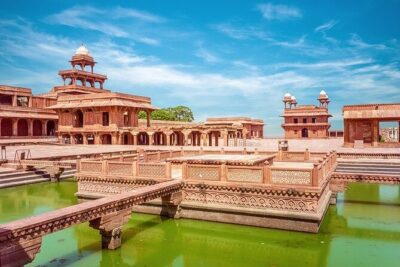
- Agra Fort: the Mughal power layer behind the postcard
- Itmad-ud-Daulah (“Baby Taj”): white marble detail work
- Agra food break: use your guide’s picks
- Drive to Jaipur: arrive and sleep like you earned it
- Day 3 Jaipur in one packed day: Jaigarh, Hawa Mahal, City Palace, Jal Mahal, Jantar Mantar
- Jaigarh Fort: high viewpoint fort energy
- Hawa Mahal: the iconic five-story façade
- City Palace: courtyards and the seat of power
- Jal Mahal: a palace sitting on water
- Jantar Mantar: ancient observatory that still feels technical
- After Jaipur: return to Delhi or drop at airport
- Price and logistics: why $210.57 can be fair value
- Guide and driver quality: what matters on the ground
- Small practical tips so your trip feels easier
- Should you book this Delhi–Agra–Jaipur car tour?
- FAQ
- What cities are included in the tour?
- Is this a private tour or will I share with other travelers?
- What is the pickup time window in Delhi?
- Are admission tickets included?
- Does the tour include transportation between Delhi, Agra, and Jaipur?
- What special rides are included during sightseeing?
- Is the Taj Mahal always open on this tour?
Key highlights worth getting excited about

- Private car with chauffeur: door-to-door pickup and drives that reduce stress between cities.
- Taj Mahal at sunrise: a timed visit that’s meant to hit the best light for the marble.
- UNESCO variety in Delhi and Agra: Qutub Minar, Humayun’s Tomb, Taj Mahal, Agra Fort, and more.
- Old Delhi experience with tuk-tuk: spice lanes, big mosque views, and a guided path through the chaos.
- Agra Fort and Itmad-ud-Daulah: not only the Taj—also the fort and the “Baby Taj” inlay work.
- Jaipur monuments in one day: Jaigarh Fort, Hawa Mahal, City Palace, Jal Mahal, and Jantar Mantar.
Private car Golden Triangle: how the pacing really feels
This tour is designed around one simple idea: in three days, you still want Delhi’s highlights, Agra’s icons, and Jaipur’s signature architecture. The best part is that you’re not piecing together transport. You’re in a private car (air-conditioned) with a chauffeur, so you’re less exposed to last-minute ticket lines, missed connections, and negotiating rides across different city zones.
Pickup timing in Delhi is flexible within a big window. You can choose a start time between 7:00 AM and 11:00 AM, and the pickup area covers Delhi, Noida, Gurugram, Ghaziabad, and Faridabad. That matters because Delhi traffic can turn a “quick start” into an all-day delay. With this plan, you choose a time and the driver handles the route.
Car size is matched to group size:
- 1–2 people: 4-seater sedan
- 3–5 people: 6-seater wagon
- 6–9 people: 9-seater van
- 10–12 people: 12-seater van
That’s helpful if you’re traveling with family or a mixed group and want space without wasting time shuttling.
Then there’s the hard reality of a Golden Triangle. You’ll drive about 3 hours from Delhi to Agra, then about 4 hours from Agra to Jaipur, and finally about 4 hours back to Delhi (or you can drop at Jaipur Airport). It’s not a “rest and wander” trip. It’s a “see a lot, with help” trip.
Two calendar notes are worth marking now:
- Taj Mahal is closed every Friday. If your dates fall on Friday, this tour will need adjustment.
- If you start on Thursday, your second day will be in Jaipur (so your day order shifts).
You can also read our reviews of more private tours in New Delhi



Day 1 in New Delhi: Qutub Minar, Lotus Temple, and Old Delhi’s big hits

Day 1 is where the tour flexes. You get famous monuments, yes, but also contrast: modern faith architecture, Mughal-era tombs, and then the dense, sensory Old Delhi markets.
Qutub Minar: start with UNESCO scale
You begin with Qutub Minar, a UNESCO World Heritage site built in 1193 by Qutub-ud-din Aibak. The minaret’s carvings and its towering presence are the kind of first stop that sets context fast—you see how monumental early Delhi architecture could be.
Admission is included, and the stop is about 1 hour, which is enough to absorb the structure without rushing through photos like you’re in a drive-thru.
Lotus Temple: peace architecture in modern form
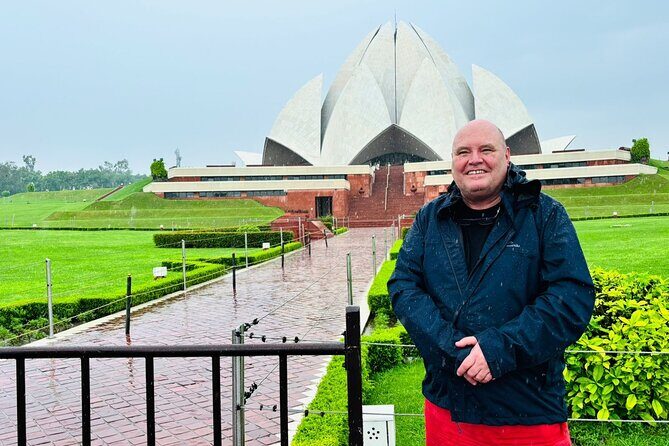
Next is the Lotus Temple, a Baháʼí House of Worship finished in 1986. Its flower-like design is what you notice first, but the message matters too: it’s meant as a symbol of peace and unity and is open to visitors of all faiths.
It’s a shorter stop (about 30 minutes), and it works well as a breather before Old Delhi’s intensity.
Red Fort, Parliament, and the “quiet power” of passing sights
You’ll pass by several major landmarks, including:
- Red Fort, built by Shah Jahan between 1639–1648, a Mughal residence and massive Indo-Islamic architecture
- Tomb of the Unknown Soldier (1921), with names of 13,300 Indian army servicemen carved on the wall who died in the First World War
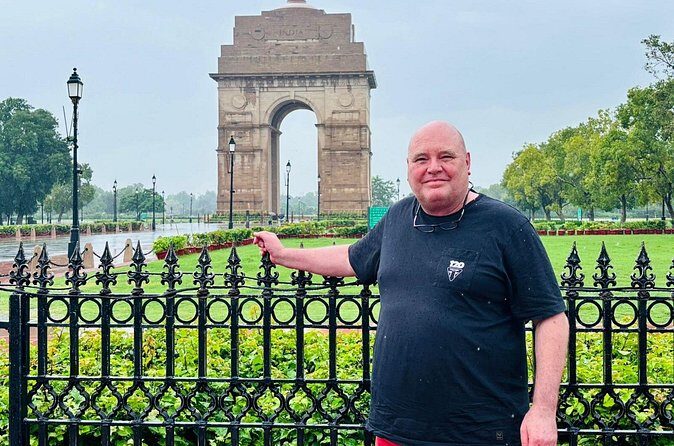
- A large area planned in 1929 by Sir Edwin Lutyens and Herbert Baker (they’re tied to much of New Delhi’s planned architecture)
- Parliament House, home to Lok Sabha and Rajya Sabha
Passing doesn’t mean it’s meaningless. If you pay attention to the scale and setting, it helps you understand why Delhi feels like multiple cities layered together—imperial power, British planning, and modern governance.





Agrasen ki Baoli and Humayun’s Tomb: Mughal and pre-Mughal vibes
You stop at Agrasen ki Baoli, an ancient stepwell in central Delhi. It’s known for its striking architecture and also an eerie, legend-heavy vibe. Even if you don’t buy into the stories, it’s a cool change of pace because it’s not a “postcard dome” stop.
Then comes Humayun’s Tomb, a UNESCO site and described as India’s first garden tomb. Commissioned by his wife after his death, it’s a landmark of Mughal architecture with a strong sense of symmetry and landscaped layout. Admission is included and you get about 1 hour.
Chandni Chowk and Jama Masjid: the day’s most sensory stretch
Old Delhi is where the tour becomes real life. You spend time in Chandni Chowk, one of the area’s most famous market districts—spices, dry fruits, silver jewelry, and saris in narrow lanes. The tour also includes a tuk-tuk ride in Old Delhi, which can be a big help when sidewalks get crowded and you’re trying to keep energy for the next stop.
A key pairing is Jama Masjid, India’s largest mosque. It was built in 1656 with the efforts of 5,000 workers and sits near the heart of Chandni Chowk. Admission is included, and it’s timed so you get real mosque scale—not a rushed “see it from the gate” moment.
Khari Baoli: spice market finale
Then there’s Khari Baoli, Asia’s largest wholesale spice market. Expect a dense mix of spices, herbs, and dried fruits. The stop is brief (about 30 minutes), but it’s a strong ending because you leave with smells in your memory and better bargaining instincts if you want to buy small souvenirs.
Heading to Agra: what the 3-hour drive is for
After Delhi sightseeing, your driver takes you to Agra by car, with about 3 hours on the road. You’re dropped at your hotel so you can relax and reset before tomorrow’s Taj Mahal morning.
This is where bottled water and the car comfort actually matter. You don’t want to spend the best evening of your trip exhausted. Use the downtime for a proper shower, quick meal planning, and charging devices—because an early start needs you ready, not grumpy.
Day 2 at the Taj Mahal: sunrise timing, battery van, and what else to see

Agra day is the headline. The tour schedules the Taj Mahal early in the morning for a sunrise visit. The mausoleum is the white marble work commissioned by Emperor Shah Jahan in 1630 for Mumtaz Mahal.
The Taj stop is about 2 hours, and the tour includes a battery van ride from the parking area to the gate. That small transfer can save energy in a spot where you’d rather not drag your feet under the sun.
Practical note: the Taj Mahal is closed every Friday, so if your trip overlaps a Friday, you need to confirm how the operator adjusts your route.
Agra Fort: the Mughal power layer behind the postcard
After the Taj, you go to Agra Fort, a UNESCO World Heritage site built in the 17th century. You explore its courtyards, palaces, and pavilions—described as a blend of Indian and Islamic architectural styles.
This stop is about 1 hour, which is a solid amount of time to look closely and still keep the day from dragging too long.
Itmad-ud-Daulah (“Baby Taj”): white marble detail work
Next is Itmad-ud-Daulah, often called the “Baby Taj.” You’ll see why: it was the first Mughal monument described here as built entirely from white marble and noted for intricate pietra dura inlay work. It’s positioned along the river banks, and the stop is around 30 minutes.
If the Taj feels too big to absorb in full detail, Itmad-ud-Daulah is the fix. The scale is smaller, and the eye can focus on craftsmanship.
Agra food break: use your guide’s picks
You’ll have about 1 hour of open time for Agra. The tour includes time for local cuisine, with your guide recommending restaurants for an authentic meal. This is one of those moments where a good guide beats guessing, especially in a place where menu choices can feel overwhelming.
Drive to Jaipur: arrive and sleep like you earned it
Then it’s about 4 hours to Jaipur, and you’re dropped at your pre-booked hotel for an overnight stay.
Day 3 Jaipur in one packed day: Jaigarh, Hawa Mahal, City Palace, Jal Mahal, Jantar Mantar
Jaipur day is architecture and views, with stops that look different depending on the light. It’s also where a private guide helps most—when you’re moving fast, explanations keep the monuments from turning into a slideshow.
Jaigarh Fort: high viewpoint fort energy
You start with Jaigarh Fort, built in 1726 by Maharaja Sawai Jai Singh II. It sits on the Aravalli hills, and the stop is about 2 hours with admission included.
Fort days can feel long, but here the hilltop setting and history context usually make the walk worth it. You also get a break from indoor museum-style visits.
Hawa Mahal: the iconic five-story façade
Then you hit Hawa Mahal – The Palace of Breeze, one of the most recognizable Jaipur buildings. It has five stories and 953 small windows (jharokhas) with latticework. Built in 1799 from red and pink sandstone, it’s all about façade pattern and that signature honeycomb look.
Time on this stop is about 30 minutes. It’s short, but it’s one of those places where you’ll want to pause and look upward.
City Palace: courtyards and the seat of power
Next is the City Palace, located in central Jaipur. It’s described as an architectural marvel with courtyards, gardens, and multiple buildings. This palace once served as the seat of the Maharaja of Jaipur, and parts remain accessible.
Admission is included and the visit is about 1 hour. This is where you get a more grounded sense of everyday royal life, not only street-level icons.
Jal Mahal: a palace sitting on water
You continue to Jal Mahal, a 17th-century palace in the middle of Man Sagar Lake. It’s built in traditional Rajput-style architecture and is known for serene views.
This is a 30-minute stop. If the light is right, it’s a great reset between busy landmarks.
Jantar Mantar: ancient observatory that still feels technical
Finally, the tour ends with Jantar Mantar, a UNESCO site and one of the best-preserved ancient observatories in India. It was built by Maharaja Sawai Jai Singh II.
You’ll spend about 30 minutes here. It’s a good note to end on because it’s not just palace-and-fort. It’s science-era architecture, measured and purposeful.
After Jaipur: return to Delhi or drop at airport
On Day 3, you can either drive back to Delhi (about 4 hours) or opt for a convenient drop-off at Jaipur Airport if it matches your schedule.
Price and logistics: why $210.57 can be fair value

At $210.57 per person, the big question isn’t just cost. It’s what you avoid: planning, coordination, and repeated transportation hassles between three cities.
Here’s what’s included that usually costs real money and time if you book separately:
- Private air-conditioned car with a professional chauffeur
- Hotel/airport pickup and drop-off in Delhi, Agra, and Jaipur
- Private, government-approved local guides for sightseeing
- Tuk-tuk ride in Old Delhi
- Battery van ride at the Taj Mahal from parking to gate
- Bottled mineral water during journeys
- All parking fees, tolls, fuel, and taxes and service charges
Admissions are mixed: some are explicitly included (like Qutub Minar, Humayun’s Tomb, Jama Masjid, Taj Mahal, Agra Fort, Itmad-ud-Daulah, Jaigarh Fort, Hawa Mahal, City Palace, Jal Mahal, Jantar Mantar), while others are free-entry stops. Either way, the structure keeps you from chasing tickets all day.
Two nights accommodation is included only if you choose the hotel option. Breakfast is listed as optional.
What’s not included is simple but important: tips for guides and driver. If tipping isn’t your thing, keep that in mind when you compare the price.
Also, hotel timing can affect cost in late December. The tour notes Dec 24 and Dec 31 as hotel blackout dates, with a mandatory gala dinner (additional USD 99 per person if you book accommodations those days). If you’re traveling then, check total budget early.
Guide and driver quality: what matters on the ground

This kind of Golden Triangle tour lives or dies on two people: the guide and the driver.
A great guide does three things:
- Turns monuments into understandable stories (instead of just dates)
- Keeps your stops efficient so you don’t burn daylight
- Handles the practical crowd moves—like mosque timing, lane navigation, and photo spots
In past experiences connected with this style of tour, Kuldeep Singh has been highlighted for strong explanations of Delhi’s history and for managing details around rickshaw arrangements at the end of sightseeing so visits like the mosque at sunset (when possible) work smoothly. Aman and Prakash are noted for making Old Delhi feel meaningful and not random. Bragesh and Javed are praised for friendly, clear guiding and good English.
Drivers matter even more than people expect. In traffic-heavy Delhi, a calm driver helps you stay on schedule. Raj has been mentioned for being flexible and easygoing, including helping keep things smooth with a toddler in the group.
The practical takeaway: if you want this trip to feel enjoyable instead of exhausting, you’ll benefit most from a guide who communicates well and a driver who’s comfortable with fast lane changes and stop-start city driving.
Small practical tips so your trip feels easier

A few things will save you hassle and keep the days from feeling chaotic:
- Bring valid photo ID for monument entry (the tour asks for a valid photo ID in your mobile).
- Dress for temples and mosques: expect you’ll be walking through sacred spaces, so choose something that covers appropriately.
- Plan for early mornings on the Taj day. Sunrise isn’t optional if you want that effect.
- Keep water and sun protection handy. The tour provides bottled water during journeys, but you’ll still be outside between stops.
- Expect weather swings. Even with rain, the plan is built to keep moving, so having a light rain layer helps.
Should you book this Delhi–Agra–Jaipur car tour?
I think this tour is a strong fit if:
- You have only three days and want the core Golden Triangle sights
- You prefer private transport over managing trains, transfers, and taxi hunting
- You want guided context at major UNESCO stops and also want Old Delhi market energy with help
I’d think twice if:
- You hate tight schedules and long driving stretches
- You’re traveling on a Friday and you’re counting on the Taj Mahal to be included as planned
- You want lots of free time to wander completely on your own without a structured route
If your priority is getting the highlights in a smooth, guided way, this car tour is the kind of plan that removes the friction. You’ll still walk a lot, but you won’t spend your trip figuring out logistics. That’s the real value.
FAQ
What cities are included in the tour?
The tour covers Delhi, Agra, and Jaipur.
Is this a private tour or will I share with other travelers?
It’s a private tour/activity. Only your group participates.
What is the pickup time window in Delhi?
You can choose a pickup time between 7:00 AM and 11:00 AM. Pickup is offered from Delhi, Noida, Gurugram, Ghaziabad, and Faridabad.
Are admission tickets included?
Some admissions are included and others are free-entry. Included admissions are listed for stops such as Qutub Minar, Humayun’s Tomb, Jama Masjid, Taj Mahal, Agra Fort, Itmad-ud-Daula, Jaigarh Fort, Hawa Mahal, City Palace, Jal Mahal, and Jantar Mantar.
Does the tour include transportation between Delhi, Agra, and Jaipur?
Yes. You’ll travel by private air-conditioned car with a professional chauffeur, with about 3 hours from Delhi to Agra and 4 hours for the Agra to Jaipur and Jaipur to Delhi drives.
What special rides are included during sightseeing?
The tour includes a tuk-tuk ride in Old Delhi and a battery van ride at the Taj Mahal from parking to the gate.
Is the Taj Mahal always open on this tour?
No. Taj Mahal is closed every Friday, so timing depends on your travel dates.