REVIEW · JAIPUR
Private Jaipur Tour with Guide & All Entry Tickets
Book on Viator →Operated by Namaste Jaipur Tours · Bookable on Viator
Jaipur in one guided day can work. This private tour packs the big names—Hawa Mahal, City Palace, and Jantar Mantar—with a few quieter, more local-feeling stops like the stepwell and Royal Gaitor Tumbas.
I like two things a lot. First, you’re traveling with a licensed guide who can explain what you’re seeing in English, German, or French. Second, the day runs on an A/C vehicle with hotel/airport/railway pickup and drop-off, so you spend less time sorting transport and more time watching the city.
One drawback to plan for: monument entrance fees and lunch aren’t included, so you’ll want to budget extra for tickets and food.
In This Review
- Key Highlights You’ll Feel During the Day
- A Private Jaipur Day, Done by Car and Built Around Real Sights
- How the 8-Hour Route Works (and Why the Timing Feels Comfortable)
- Stop 1: Devisinghpura Village and the Rajput Fort Area (Why 2 Hours Is Enough)
- Stop 2: Panna Meena ka Kund Stepwell (The 30-Minute Social Hub)
- Stop 3: Jal Mahal on Man Sagar Lake (What You Can See in 30 Minutes)
- Stop 4: Hawa Mahal’s Jali Screens (A 1-Hour Walk Through the Palace of Wind)
- Stop 5: City Palace Complex (Where Royal Life Meets Astronomy)
- Stop 6: Jantar Mantar (Nineteen Instruments and the World’s Largest Stone Sundial)
- Stop 7: Royal Gaitor Tumbas (Carvings, Temples, and a Calmer Pace)
- The Human Part: Guides and Drivers That Make Jaipur Feel Easy
- Price and Entry Fees: The Real Value Math
- What You’ll Like Most (And Who This Tour Fits Best)
- Tips to Get More Out of the Day
- Should You Book Namaste Jaipur Tours for a One-Day Jaipur Hit?
- FAQ
- How long is the private Jaipur tour?
- Is this tour private or shared?
- What’s included with pickup and drop-off?
- What languages are available for the guide?
- Are monument entrance fees included?
- Is lunch included?
- Does the tour use a mobile ticket?
- Where does the tour start?
- Is the tour good for families?
- What is the cancellation policy?
Key Highlights You’ll Feel During the Day

- Private pacing: it’s just your group, so you can move at a human speed instead of a herd pace.
- A/C car + pickup/drop-off: easier logistics when you’re matching sights to traffic and heat.
- Jantar Mantar, explained: you’ll get the story behind nineteen astronomical instruments, including the world’s largest stone sundial.
- More than postcards: Royal Gaitor Tumbas and the stepwell add texture beyond the main attractions.
- Flexible guide energy: guides like MJ, Gaurav, Suneil, Bablu, and Tahir were praised for adapting to families and interests.
A Private Jaipur Day, Done by Car and Built Around Real Sights
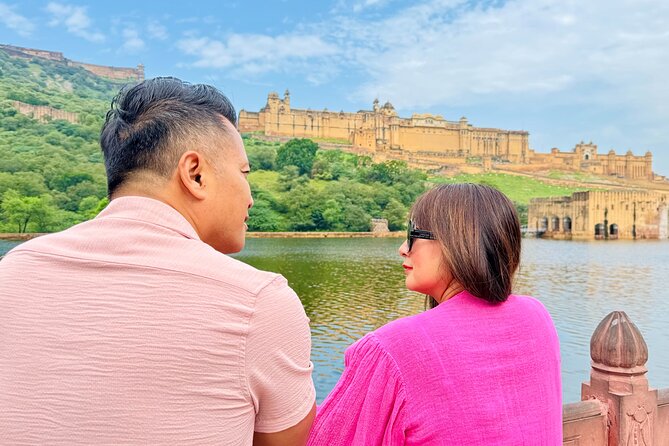
This is the kind of Jaipur tour that helps you get your bearings fast. Instead of hopping between random cabs, you’re on a planned route with a guide and driver who handle the moving parts.
The attraction mix also makes sense. You’ll cover royal Jaipur (palaces and forts), then shift into the city’s science and water culture (Jantar Mantar and the stepwell). That balance is why an 8-hour day doesn’t feel like a checklist.
You can also read our reviews of more tours and experiences in Jaipur.



How the 8-Hour Route Works (and Why the Timing Feels Comfortable)
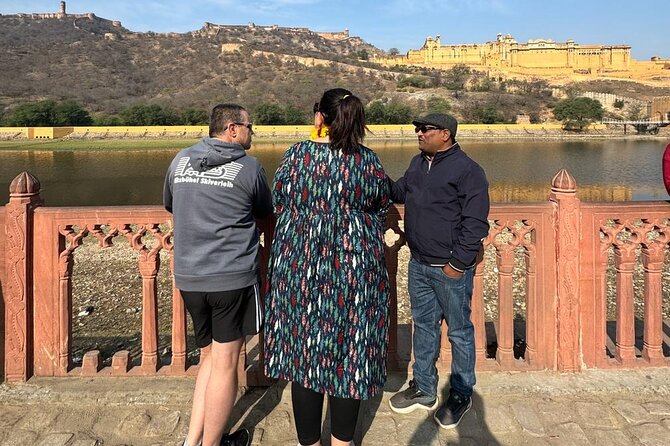
The tour runs about 8 hours, with short, focused stops mixed with a couple of longer segments. That matters in Jaipur because travel time and heat can eat your day if you’re not careful.
You’re looking at a route that goes from the Rajput Fort area into Amer sights, then back through the Pink City heart. Expect a pattern: photo stop, quick orientation, then a deeper look while your guide talks.
Also, it’s private. So when your group needs a slow-down—kids tired, someone wants extra questions, you’re not rushed—it’s easier for the guide to adjust.
Stop 1: Devisinghpura Village and the Rajput Fort Area (Why 2 Hours Is Enough)
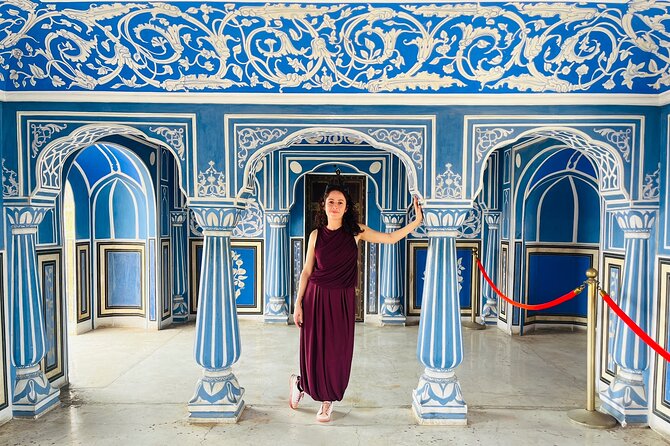
You start at the Devisinghpura Village area in the Rajput Fort zone. The tour frames this part as heritage buildings plus the historic fort setting, and the extra 2-hour block helps you notice things beyond gates and viewpoints.
This is the segment that tends to feel more lived-in than the main city attractions. You get a sense of layered Jaipur: rural village space, fort heritage, and the way the area still carries meaning for locals.
Practical note: fort-area sightseeing often means uneven steps and sun. Wear shoes that don’t punish you halfway through, and bring water even if you think you won’t need it.
Stop 2: Panna Meena ka Kund Stepwell (The 30-Minute Social Hub)
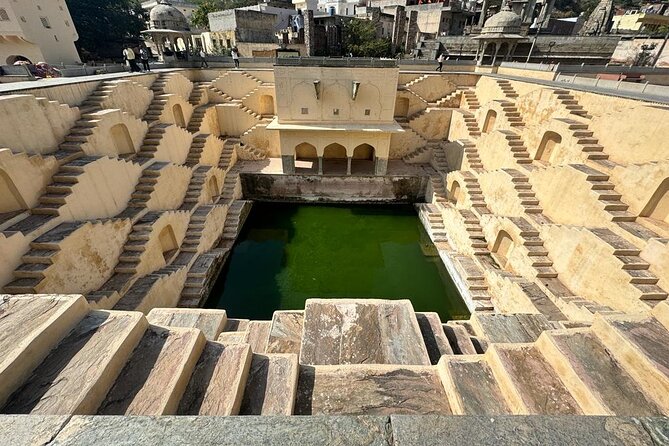
Next up is Panna Meena ka Kund, an ancient stepwell in the Amer area. It was built in the 16th century and served as a community gathering place—so it’s not just a pretty structure.
In about 30 minutes, your guide should help you read the place. Stepwells are basically climate control and community infrastructure rolled into one. You’ll likely notice the geometry of the steps and the way the structure funnels life toward water.
If you’re short on time in Jaipur, this stop is a strong “one-and-done.” It gives you a different side of the city’s engineering, not just royal architecture.
Stop 3: Jal Mahal on Man Sagar Lake (What You Can See in 30 Minutes)
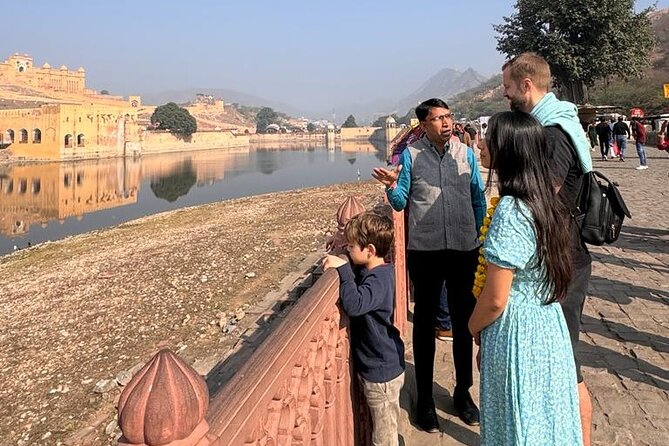
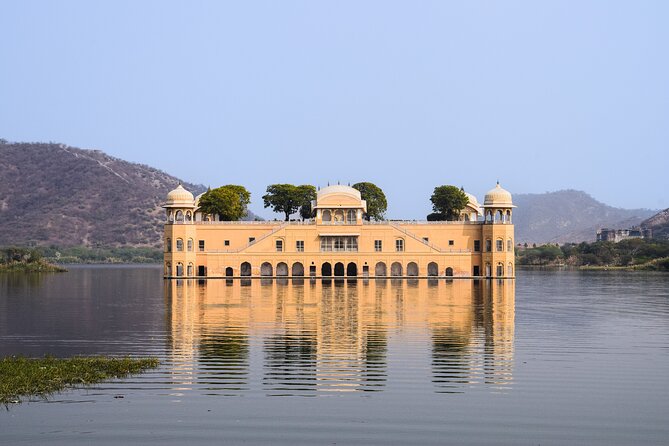
Then comes Jal Mahal, the Water Palace sitting in Man Sagar Lake. The palace is described as originally built in red sandstone, then expanded and renovated in the 18th century under Maharaja Jai Singh II of Amber.
You get about 30 minutes here. That’s usually enough for a look, a couple of photos, and the history context that explains why the palace’s design makes sense in a water-based landscape.
One consideration: lakeside light and crowds can shift fast. If you care about photos, aim to be ready when your guide says the timing is best.






Stop 4: Hawa Mahal’s Jali Screens (A 1-Hour Walk Through the Palace of Wind)
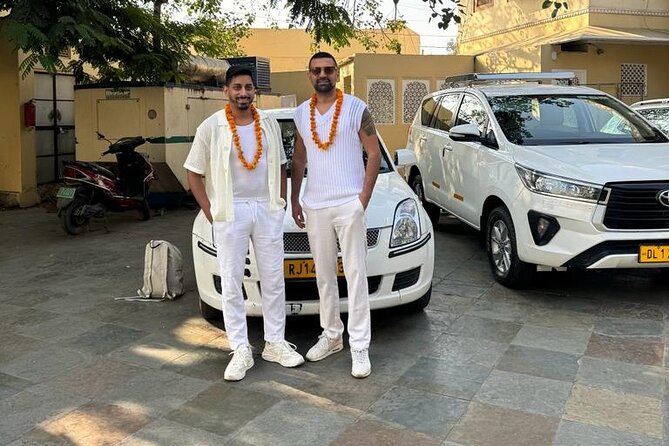
Hawa Mahal is the stop almost everyone recognizes, and the 1 hour here lets you do more than snap one iconic shot. The palace was commissioned by Sawai Pratap Singh, and it was designed so the royal household could observe daily city life.
The star feature is the tiered arches with intricate jali latticework screens. Your guide’s job is to point out how those screens aren’t decoration only—they shape views, airflow, and privacy all at once.
Because this is a top landmark, expect it to be busy at times. The trade-off is worth it if you want the iconic Jaipur image with a real explanation behind it.
Stop 5: City Palace Complex (Where Royal Life Meets Astronomy)
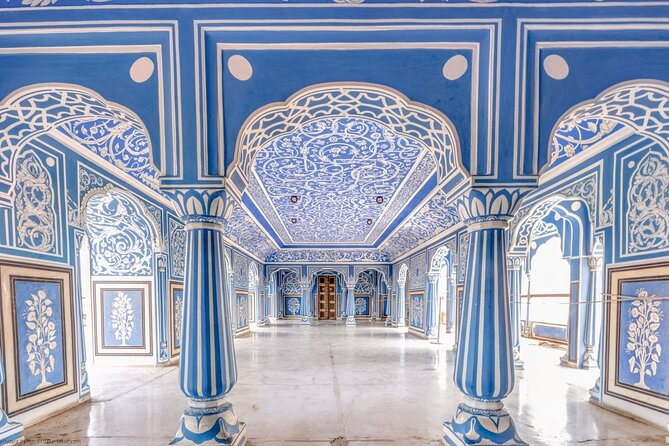
Next is the City Palace of Jaipur, where you spend about 1 hour. Built by Maharaja Jai Singh, it’s tied to architecture shaped by the same mind behind Jaipur’s astronomical work.
The City Palace served as the residence of the royal family, so it’s less about a single room and more about how space was organized for power, ceremony, and daily life.
Here’s what I think you should aim to do in the hour: don’t just look. Ask your guide to connect the dots between City Palace and the science site coming next at Jantar Mantar. The logic becomes clearer when your guide links them.
Stop 6: Jantar Mantar (Nineteen Instruments and the World’s Largest Stone Sundial)
Jantar Mantar is the big science stop, with about 1 hour allotted. This UNESCO World Heritage site includes nineteen astronomical instruments, created under Sawai Jai Singh.
The tour highlights the world’s largest stone sundial, and that’s a great anchor for understanding the rest. Once you understand how one instrument measures time and angle, the rest start to feel like a connected system rather than random objects.
This is also the part of Jaipur that benefits from a good guide. Your best payoff here is learning what each instrument is trying to do in practical terms.
Stop 7: Royal Gaitor Tumbas (Carvings, Temples, and a Calmer Pace)
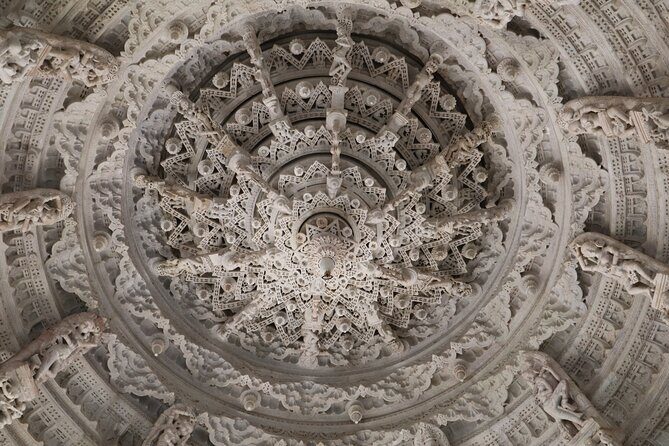
You finish at the Royal Gaitor Tumbas with about 1 hour. The complex dates to the 18th century and features intricate carvings along its walls. It also includes temples dedicated to Hindu deities, which is why it’s significant for pilgrimage.
This stop gets praise because it feels like a change of tempo. One guide-led day I heard about specifically called out that the less-touristy segments like Royal Gaitor Tumbas were among the best moments—mainly because you’re not stuck inside the busiest postcard circuit.
If you want a final hour that’s more about detail and atmosphere than major landmark pressure, this is a strong way to end.
The Human Part: Guides and Drivers That Make Jaipur Feel Easy
The tour works when the people get the details right. The review snippets line up on the same themes: punctual pickup, clear explanations, and a driver who keeps the day safe and smooth.
Ickbar and Suneil were singled out as a great combo for looking after a group and handling questions in English without hassle. Gaurav was credited with making the experience special through insights at each stop.
Family-friendly flexibility also came up. MJ was praised for staying calm when a group had four small children, plus for adjusting timing and where the day focused. That matters because the best guides don’t force a rigid script; they manage the reality of kids, energy levels, and attention spans.
On the driving side, Mohammed Shakir showed up in multiple comments for promptness and safe driving, and one note even mentioned water being arranged. Maliq (driver) and Tahir (guide) were another strong pairing, especially for the convenience of having one car handle the route.
If you’re the type who likes to ask questions as you walk, pick a day when you can linger a bit. Your guide’s explanations are the glue that makes the stops connect.
Price and Entry Fees: The Real Value Math
The price listed is $12.00 per person for an about 8-hour private tour with pickup/drop-off, an air-conditioned vehicle, and a licensed guide. That’s unusually affordable for a private car day, and the value is mainly in the logistics and the guide time.
But here’s the key thing for your budget: monument entrance fees and lunch aren’t included. That means your final cost depends on what tickets you need at each stop and what you choose to eat.
Also, the title suggests all entry tickets are part of the package, while the cost details say monument entrance fees aren’t included. Before you go, confirm exactly which entry fees are covered for each site. That one check can save you from surprise spending on a tight schedule.
Practical budgeting tip: set aside a separate amount for tickets and a lunch plan. If you come prepared, the low tour price feels like a win.
What You’ll Like Most (And Who This Tour Fits Best)
This is a great fit if you:
- Want the main highlights without spending your day coordinating transport
- Like having a guide who can explain in English, German, or French
- Prefer a plan that includes both palace landmarks and an astronomy/water culture angle
- Travel with kids or mixed interests and want some flexibility
It also works well for first-time visitors. Jaipur can be a lot on your own. Having a structured day means you’re not stuck guessing what’s worth your time.
If you’re a hardcore “I only want one or two places” traveler, the packed route may feel intense. You’ll still have a private setting, but the schedule includes several stops with shorter durations.
Tips to Get More Out of the Day
You’ll feel the biggest difference if you show up ready to walk and look closely.
- Wear comfortable shoes for stepwell and fort-area surfaces.
- Bring a hat and sunscreen, since most outdoor viewing is sun-heavy.
- Have your questions ready. The guide time is what turns photos into understanding.
- If your group needs breaks, ask early. Private tours are easier to adjust when you speak up before everyone gets tired.
If you care about photos, ask your guide when the best light or least-crowded moments are. That kind of small timing advice can matter more than you’d think.
Should You Book Namaste Jaipur Tours for a One-Day Jaipur Hit?
I’d book it if you want a smooth, private day that hits Jaipur’s core stories: royal power, water culture, and the city’s science obsession.
The strongest reasons are practical: pickup/drop-off, an A/C car, and a licensed guide who’s shown flexibility—especially helpful with families. The only real hesitation is money for food and monument entrance fees, plus the mismatch between the tour title wording and what’s listed as included in the details. Confirm the entry ticket coverage up front, and you’re in good shape.
If you want a one-day Jaipur plan that doesn’t turn into a logistics project, this is a solid choice.
FAQ
How long is the private Jaipur tour?
It’s about 8 hours.
Is this tour private or shared?
It’s private. Only your group participates.
What’s included with pickup and drop-off?
Pickup and drop-off are offered from your hotel, airport, or railway station in Jaipur, with an air-conditioned vehicle and a licensed tour guide.
What languages are available for the guide?
The guide language options include English, German, or French.
Are monument entrance fees included?
Monument entrance fees aren’t listed as included in the tour details. You’ll need to plan for them separately.
Is lunch included?
Lunch is not included.
Does the tour use a mobile ticket?
Yes, the tour includes a mobile ticket.
Where does the tour start?
The tour starts in Jaipur, Rajasthan, India.
Is the tour good for families?
It can be, especially because the guide and driver are used to adjusting for group needs, including families with small children.
What is the cancellation policy?
Free cancellation is available. You can cancel up to 24 hours in advance for a full refund. If you cancel less than 24 hours before the start time, the amount paid is not refunded.