REVIEW · JAIPUR
Pink City Walking Tour With Us ( A Haritage Walk in Jaipur)
Book on GetYourGuide →Operated by Elephant With Jaipur | Jaipur Walking Tour · Bookable on GetYourGuide
Jaipur hits different when you walk it. This 3-hour Pink City route turns major landmarks into stories you can actually picture, with a guide who connects Rajput and Mughal architecture to what people do today. I really like how the tour mixes big sites like Hawa Mahal with real street life in markets, and I also like that you get practical food and culture context, not just dates.
One thing to consider: you’ll be on your feet most of the time, and Jaipur heat can feel intense even with regular stops for photos and breaks like chai and water.
In This Review
- Key Things You’ll Love on This Jaipur Walk
- Entering Jaipur Through Hawa Mahal’s Street View
- Meet Mudassir and Learn Jaipur’s Real Context
- Hawa Mahal to City Palace: Why Architecture Feels Personal
- Govind Dev Ji Temple and the Krishna Ceremony Moment
- Sabji Mandi and Phool Mandi: Markets That Explain Daily Jaipur
- Jantar Mantar at Walking Speed (With a Break)
- Tripolia Bazar: The Finish Line Where You Feel the City
- Price and Value: Why $12 Can Actually Be Worth It
- What’s Included vs. What You’ll Still Need
- Bring This Stuff and You’ll Enjoy the Walk More
- Who Should Book This Jaipur Walking Tour
- Should You Book This Tour?
- FAQ
- Where is the meeting point?
- How long is the tour?
- What does the tour include?
- Which sights are covered on the walk?
- What languages is the guide speaking?
- Is there anything I should bring or wear?
- Final Word
Key Things You’ll Love on This Jaipur Walk

- Mudassir, a Jaipur-born guide who studied software engineering before starting walking tours locally
- Krishna ceremony focus as a major cultural stop, explained with context you can follow
- Markets with purpose like Sabji mandi and Phool mandi, plus Tripolia Bazar for the everyday rhythm of Jaipur
- Architecture at street level—how Rajput and Mughal design shows up in what you see outside
- Included chai, coffee, and water to keep you going during the walk
- English and Spanish live guide for easier back-and-forth questions
Entering Jaipur Through Hawa Mahal’s Street View
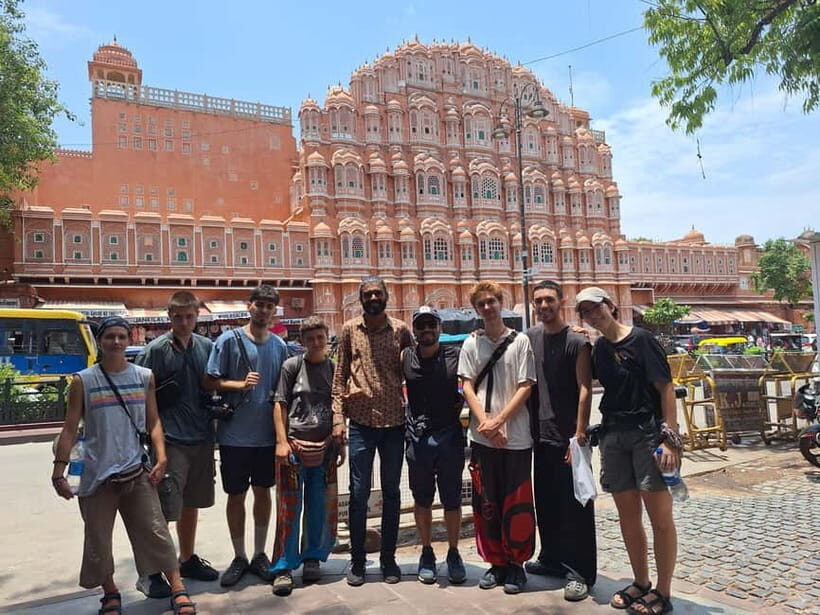
Most Jaipur tours start with a monument. This one starts with a mood. You meet in front of Hawa Mahal (Wind Palace) and immediately get that “Pink City from the sidewalk” feeling, where you notice scale, colors, and the flow of people in front of the camera stops.
You’ll have time for photos, a guided look, and a bit of breathing room. Expect the guide to explain what you’re seeing instead of just telling you what it’s called. That’s the difference between looking at a facade and understanding why it exists.
And yes, it’s an easy place to anchor the rest of the walk. From here, you start to see how the city’s layout and building styles shape daily life.
You can also read our reviews of more walking tours in Jaipur



Meet Mudassir and Learn Jaipur’s Real Context

The guide behind this walk is Mohd Mudassir, born and raised in Jaipur. He studied software engineering, then in 2015 started doing free walking tours in various Indian cities before creating his own tour at home. That background matters because his style is both organized and curiosity-driven.
On this tour, you’re not just passively watching. You’re encouraged to ask questions about history, religion, food, and how the city works now. The tone stays friendly and approachable, and the guide is used to handling questions even when the heat makes people a little slower.
You also get built-in direction on do’s and don’ts in Jaipur, plus suggestions on what and where to eat and drink. That helps you leave with a plan for after the walk, not just photos.
Hawa Mahal to City Palace: Why Architecture Feels Personal
After the initial stop, you head toward the City Palace, Jaipur area. This is a classic sight, but what makes it worth walking to is how the explanation ties back to what you saw earlier.
You’ll get a photo stop and guided time, then you’ll keep moving. Because the tour focuses on the center and generally explores attractions from the outside, it keeps you in the real streets instead of freezing your day in ticket lines and long detours.
What I like about this approach is that it trains your eyes. Once the guide points out Rajput vs. Mughal influences, you start spotting details—shapes, proportions, and design choices—that you would otherwise miss. It’s the difference between collecting monuments and learning a city’s visual language.
If you’re the type who loves architecture but hates stiff museum pacing, this works well. It’s serious information delivered in street-smart chunks.
Govind Dev Ji Temple and the Krishna Ceremony Moment
Then comes a more spiritual stop at the Govind Dev Ji Temple. You’ll have time for a photo stop and guided understanding here too, and the tour includes a highlight centered on a Krishna ceremony.
This part is valuable because it treats religion as something you can observe with respect, not as a textbook topic. The guide’s job is to explain the meaning and local context so you aren’t just photographing people while missing what’s happening.
You’ll also notice how temple zones change the mood of the street—sound, movement, and how people dress and behave. Even if you’re not religious, you can still learn a lot about Jaipur through what people practice daily and how they gather.
One practical note: dress matters in temple areas. The tour asks for long pants and a scarf you can use if needed, plus comfortable shoes because there’s walking involved.
Sabji Mandi and Phool Mandi: Markets That Explain Daily Jaipur
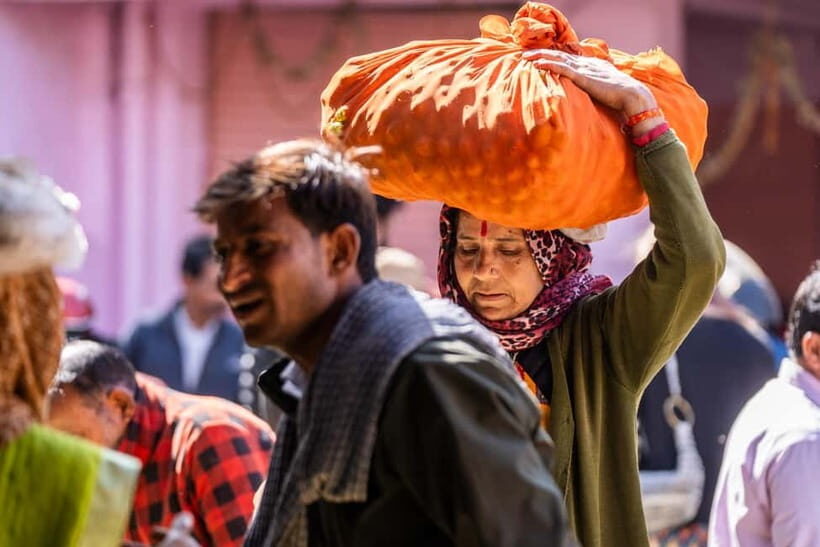
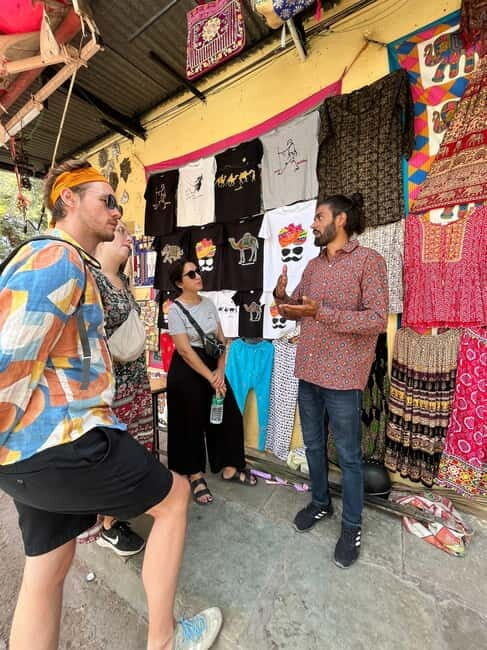
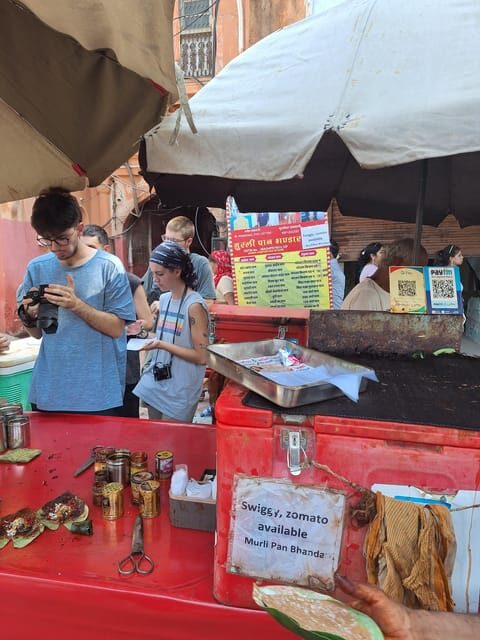
The walk then leans into what Jaipur runs on. You’ll pass through Sabji mandi janta market (vegetable market) and Phool mandi (flower market). These stops aren’t just “look at a market” moments. They’re where the city’s energy becomes obvious.
At a place like the vegetable market, you get to see how commerce feels local: bargaining rhythms, quick exchanges, and the sheer variety of produce that never makes it into sightseeing brochures. At the flower market, you can understand why ceremonies and everyday life are linked—flowers aren’t decoration; they’re part of the routine.
This is also where the guide’s culture explanations become extra useful. The tour goes beyond layout and dates to cover social customs, and it connects markets to local wedding and ceremony life. That’s why these stops stick in your memory.
You’ll have guided time plus free moments to look around. If you’re someone who likes taking photos, this is one of the best places to do it thoughtfully—focus on hands, materials, and expressions, not just the widest-angle crowd shots.
You can also read our reviews of more city tours in Jaipur






Jantar Mantar at Walking Speed (With a Break)
Next is Jantar Mantar, the observatory. You’ll get a photo stop, a guided tour, and time to breathe. Tea or coffee is included here, which is a smart move because Jantar Mantar can feel very exposed under the sun.
The observatory part is great for anyone who thinks “math and science” equals boring. With a good local guide, the instruments become stories about how people once studied the sky with precision—and why that mattered in planning and belief.
Because the tour is built to keep moving, you don’t get stuck spending hours in a single place. That’s a plus if your Jaipur time is tight. You still get enough guided explanation to connect the dots, and the included drink helps keep energy steady.
Bring a sun hat. If you forget one, you’ll feel it fast.
Tripolia Bazar: The Finish Line Where You Feel the City
The final main stop is Tripolia Bazar, with the longest stretch of walking time on the later part of the route. This is where you see how Jaipur’s center stays active—day-to-day life moving around the landmark sights.
You’ll have guided time, photo opportunities, and space to wander a bit. This is a good moment to slow down and watch. You’ll likely notice a mix of shoppers, traders, and people doing errands that tourists usually miss.
It’s also a great place to ask your guide practical questions about what to do next. The tour is designed with food and local recommendations in mind, so you can use Tripolia Bazar to figure out where to go for dinner or a snack after you’re back near Hawa Mahal.
By the time you return, you don’t feel like you “completed” a checklist. You feel like you learned the city’s rhythm.
Price and Value: Why $12 Can Actually Be Worth It
At $12 per person for a 3-hour walking tour, you’re paying for more than entry-level sightseeing. You’re paying for a local guide who explains architecture, religion, markets, and modern culture connections as you walk.
You also get chai, coffee, and water included. In Jaipur, that isn’t a tiny perk. It helps you stay comfortable enough to keep listening instead of losing focus to thirst and heat.
Add in the fact that the tour includes guide fee, and you also get help with skipping the ticket line for the main sights. That means less time waiting around and more time learning while you’re already in the center.
If you’re comparing it to self-guided sightseeing, the value becomes clear: you pay a small amount for local context that would take you hours of reading or random online searches to recreate.
What’s Included vs. What You’ll Still Need
Included:
- Exploration of key sights from the outside in the city center
- Chai, coffee, and water
- Local guide service
- Help with time savings at the main sights (ticket line skipping)
Not included:
- Personal expenses (so budget a little for extra drinks or snacks beyond what’s provided)
Before you go, I’d plan your spending around small add-ons. This is a walk that stays close to public streets and markets, so your “extra costs” are usually food purchases, small purchases, or transport if you extend your day afterward.
Bring This Stuff and You’ll Enjoy the Walk More
This tour is straightforward, but Jaipur weather is not subtle. Bring:
- Comfortable shoes
- Sun hat
- Long pants
- Scarf
Also note the rules: no pets, no alcohol, no bikes/scooters, and no speakers. That keeps the walking experience calmer and more respectful in crowded market areas.
One more tip: if you’re sensitive to heat, plan to start earlier in the day. The walk includes moments of free time and explanations, but you’ll still spend plenty of time outdoors.
Who Should Book This Jaipur Walking Tour
This one fits best if you want Jaipur without the stiff, “see it, leave it” vibe. You’ll enjoy it if you like:
- Asking questions about history and religion
- Walking through markets as part of your sightseeing
- Architecture explanations tied to real street life
It’s also a strong pick for first-timers who want their bearings fast. Starting at Hawa Mahal and then working through City Palace, Govind Dev Ji Temple, and Jantar Mantar gives you a clean mental map of central Jaipur.
It may be less ideal if you hate walking or you need a very low-footprint outing. And it’s not suitable for people over 95 years as stated by the tour.
Should You Book This Tour?
If you want Jaipur explained by a local and you like your sightseeing with real street context, I’d book this. The price is low enough that you’re not taking a big risk, and the included chai/coffee/water makes it practical instead of purely performative.
Skip it only if you need a mostly indoor experience or you can’t handle outdoor walking in warm weather. If that’s not you, this is one of the best ways to turn famous sights into living context.
FAQ
Where is the meeting point?
You meet in front of Hawa Mahal. Look for a tall person with a ponytail just down the side of Tattoo Cafe.
How long is the tour?
The tour lasts about 3 hours.
What does the tour include?
The tour includes exploring from the outside in the city center, drinking chai, coffee, and water, plus the guide fee. It also includes meeting at the starting point and ticket line skipping for the main sights.
Which sights are covered on the walk?
You’ll see Hawa Mahal, City Palace, Govind Dev Ji Temple, Sabji mandi janta market, Phool mandi, Jantar Mantar, and Tripolia Bazar.
What languages is the guide speaking?
The live guide speaks English and Spanish.
Is there anything I should bring or wear?
Bring comfortable shoes, a sun hat, long pants, and a scarf.
Final Word
This is a smart, street-level way to learn Jaipur in a short time. You walk, you ask questions, you drink chai, and you leave with a better sense of how the city’s architecture, faith, and markets connect.