REVIEW · NEW DELHI
New Delhi Sanjay Colony slum Tour (Private Tour)
Book on Viator →Operated by Delhi by Locals · Bookable on Viator
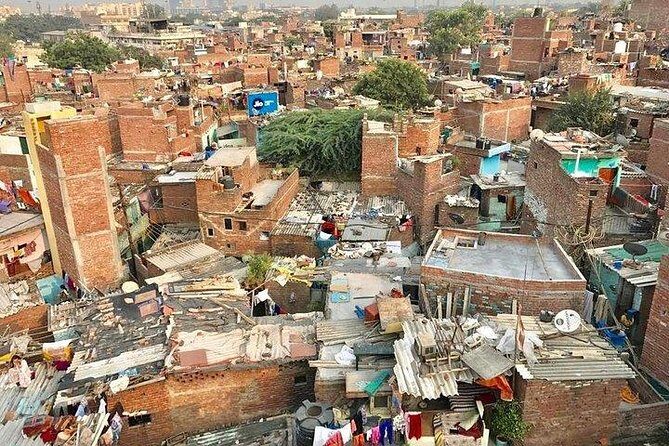
Sanjay Colony is real life, not a show. This private New Delhi experience takes you through day-to-day routines, from work in the clothing industry to how families manage basic needs, with a focus on education, faith, and practical local challenges.
I like that the tour is organized around understanding systems, not just sightseeing. I also like the clear support behind it: 50% of profits go back to the nonprofit Learning by Locals, and you’ll share the walk with local guidance, not a script.
One thing to consider: no photography is part of the deal, so come ready to watch, listen, and take mental notes instead of building a photo album.
In This Review
- Key things to know before you go
- A private 90 minutes in Sanjay Colony: what you’ll actually do
- Meeting point at Harkesh Nagar Okhla Metro: the simple start
- Stop 1: the s.d.m.c primary school stop and why it matters
- Stop 2: Learning by Locals and the education + faith mix
- The walk through daily challenges: water, electricity, and hygiene
- Clothing industry work: seeing livelihood, not just poverty
- Tea, water bottle, and the small comforts that keep it humane
- Respect rules: why no photography is part of the ethics
- Private group size (max 6): how that changes the feel
- What the tour is great for (and who should book it)
- Value and price: why $35 can still feel “worth it”
- Getting the most out of your visit
- Should you book the Sanjay Colony slum Tour?
- FAQ
- How long is the Sanjay Colony slum Tour?
- Is this tour private, or do I join a group?
- What does the tour cost?
- What’s included in the price?
- Is photography allowed during the tour?
- Where do I meet for the tour?
- Does the tour include visits related to education and faith?
- How does the tour support the community?
Key things to know before you go
- No photography allowed on this tour, so plan on observing with your full attention
- Private group up to 6 people, which keeps the pace respectful and conversational
- Local tea and a water bottle are included, helpful in a hot Delhi day
- Faith is part of the route, including a temple stop during the walk
- Education shows up twice, through a primary school stop and a public school view
- 50% of profits return to Learning by Locals, supporting community projects
A private 90 minutes in Sanjay Colony: what you’ll actually do
This is a New Delhi slum tour designed for one main goal: help you understand daily life inside Sanjay Colony through the things that shape people’s days—work, school, faith, and basic services. The route is compact and paced for conversation, not for rushing photos.
You’re looking at a community of about 60,000 people, so don’t expect a quick glance at a few houses. Instead, you’ll follow a structured walk that links the big-picture idea (how systems work) to the small, everyday reality (water, electricity, and hygiene).
It runs about 1 hour 30 minutes, so it fits well into a busy Delhi itinerary. And because it’s private (up to 6 people), your guide can tailor explanations in real time, like what matters most in their neighborhood and what outsiders often misunderstand.
You can also read our reviews of more private tours in New Delhi



Meeting point at Harkesh Nagar Okhla Metro: the simple start
The tour starts near Harkesh Nagar Okhla Metro Gate no. 2G7VG+62H, Harkesh Nagar, Okhla. This is useful because you’re not relying on a long taxi ride just to begin. Delhi’s metro access can make a big difference when you’re trying to keep timing tight.
Your activity ends back at the starting point. That closed loop matters if you’re trying to connect to another plan afterward—lunch, shopping in nearby areas, or heading back toward your hotel.
Stop 1: the s.d.m.c primary school stop and why it matters
You’ll first go to s.d.m.c primary school. The time is brief (about 5 minutes), but the purpose isn’t to tour buildings for long stretches. It’s to help you frame what education looks like in this neighborhood and why it’s a key pathway for many families.
What I find important here is how this stop sets context for the rest of the experience. You’re not just seeing adults doing daily tasks—you’re watching how the community’s future gets planned through schooling. Even in a short visit window, the goal is understanding the role school plays when resources and space are limited.
Stop 2: Learning by Locals and the education + faith mix
Next comes Learning By Locals, where you’ll experience the community through a mix of learning and human interaction (about 15 minutes here). This is also where the tour leans into the “why” behind what you’re seeing.
You’ll learn about the education system in Delhi and the slum and you’ll visit a public school from the outside. That outside-view detail is worth noting: this tour is about respectful understanding, not entering spaces that don’t need to be entered to make the point.
Faith also plays a meaningful role on this route. You’ll visit a temple and hear how faith shows up in people’s daily lives—through routines, coping, community bonding, and moral structure. It’s not presented as spectacle. It’s presented as part of how the neighborhood runs.
And yes, there’s interaction with locals as part of the experience. That’s one of the biggest differences between an ethical community visit and a standard walking tour: you’re not only consuming information; you’re being guided through real relationships and real priorities.
The walk through daily challenges: water, electricity, and hygiene
The tour focuses on day-to-day challenges—especially access to water, electricity, and hygiene. These aren’t abstract topics here. They’re described in terms of what affects routines: how people manage water, what electricity means for daily work and household life, and how hygiene gets handled with the realities of tight living conditions.
This is one of the most valuable parts of the tour because it connects the human side (how people cope) to the infrastructure side (what systems exist, what gaps create workarounds, and what solutions community organizations try to support). You’ll come away with more clarity than you would from general reading about urban poverty.
A practical tip: go in prepared to listen longer than you speak. It’s easy to want to ask questions right away, but you’ll get more out of the experience if you let your guide lead the flow—especially in conversations tied to sensitive daily needs.




Clothing industry work: seeing livelihood, not just poverty
One highlight in the overview is that you’ll see how people work in the clothing industry. This matters because it shifts the frame from slum-as-a-problem to slum-as-a-place-with-economy. In other words, you get to understand livelihoods—how people earn, what kinds of work are common, and how daily labor fits around family life.
It’s also a good correction for the way many visitors expect to feel. Instead of treating the area like a single-note hardship scene, you’re shown a functioning world with commerce, skill, and routine. That helps you leave with a more accurate sense of what drives stability and what threatens it.
Tea, water bottle, and the small comforts that keep it humane
You’ll be offered local tea and given a water bottle during the tour. It’s a small inclusion, but it signals something important: this walk is built for human comfort, not just for your itinerary.
Delhi weather can be intense, and with a 90-minute timeframe, hydration and a warm drink can keep the day pleasant. It also gives you a natural moment to slow down and talk, ask questions, and let the information land.
Respect rules: why no photography is part of the ethics
A key rule is no photography. This isn’t a “no photos because of safety” issue—it’s about privacy and respect. If you arrive with a phone ready to click every moment, it will make the experience harder for everyone.
What to do instead:
- Watch faces and body language, not screens
- Listen for explanations tied to water, school, faith, and work
- Keep your questions thoughtful and gentle
If you want memories, treat the trip like a story you carry, not a camera roll you upload.
Private group size (max 6): how that changes the feel
With a maximum of 6 people per booking and a private format, you’ll usually get a calmer pace than you would on larger group tours. This is one reason the explanations tend to feel personal and grounded. Your guide can slow down where you need clarity and move on when you’ve got it.
I also like that the experience is designed with a “respectful way” approach and doesn’t turn people’s lives into entertainment. A small group helps keep that balance.
In past experiences with this organization, guides you might be with include Pradeep, Sukh, and Badal. Across those different names, the consistent thread is friendly, professional guidance and a strong focus on safe, respectful interaction.
What the tour is great for (and who should book it)
This is a good fit if you want a meaningful, community-driven experience in Delhi and you care about how education, faith, and basic services shape everyday life.
You’ll probably enjoy it most if you:
- Like tours with real context, not just landmarks
- Are comfortable asking questions and listening patiently
- Want to support community impact while learning how systems work
- Prefer smaller groups and a respectful pace
If you’re the type who needs constant photo moments to feel satisfied, the no photography rule might frustrate you. But if you’re open to observation and conversation, this is one of the most memorable ways to understand a side of Delhi that tourists often miss.
Value and price: why $35 can still feel “worth it”
At $35 per person for about 1 hour 30 minutes, this tour sits in a budget-friendly range for private guided experiences in Delhi. But the real value is how the price connects to outcomes.
You get:
- A local guide
- Local tea and a water bottle
- A focused route covering education, faith, and daily challenges
- And the big one: 50% of profits go to Learning by Locals
That profit-back structure is the main reason I’d treat this as more than a standard “see a neighborhood” tour. You’re paying for interpretation and access, and a portion supports the nonprofit work tied to the community.
Getting the most out of your visit
To have the best experience, plan to act like a student, not like a tourist with a checklist.
A few practical moves:
- Wear comfortable shoes for uneven, close-walking streets
- Keep your questions about how systems work: water, school, electricity, hygiene
- Respect the no photography rule completely
- Bring a curious mindset about faith and daily routines, not just hardship
Also, since it’s private and short, think of it as a focused “first understanding” of Sanjay Colony, not a complete study of everything the community faces.
Should you book the Sanjay Colony slum Tour?
I’d recommend booking this tour if you want an ethical, structured look at life in Sanjay Colony with education and faith included, plus real community interaction. The private format, small group size, and the no photography rule help keep it respectful. And the profit-sharing link to Learning by Locals is a strong sign you’re not just consuming stories—you’re supporting the work behind them.
Skip it if you’re mainly after photos, or if you’re uncomfortable with tours that focus on daily challenges like water, electricity, and hygiene. But if you can handle a thoughtful, human-paced walk, this is the kind of Delhi experience that stays with you longer than a museum ticket.
FAQ
How long is the Sanjay Colony slum Tour?
It’s listed at about 1 hour 30 minutes.
Is this tour private, or do I join a group?
It’s a private tour. Only your group participates, with a maximum of 6 people per booking.
What does the tour cost?
The price is $35.00 per person.
What’s included in the price?
A local guide is included, along with local tea and a water bottle.
Is photography allowed during the tour?
No. Photography is not allowed on this tour.
Where do I meet for the tour?
The start point is near Harkesh Nagar Okhla Metro Gate no. 2G7VG+62H, Harkesh Nagar, Okhla, New Delhi, Delhi 110020, India. The tour ends back at the meeting point.
Does the tour include visits related to education and faith?
Yes. You visit s.d.m.c primary school, a public school from the outside, and you also visit a temple to understand the role of faith.
How does the tour support the community?
The tour states that 50% of profits go back to the nonprofit in the slum called Learning by Locals.
If you tell me your travel dates and where you’re staying in Delhi, I can suggest a smart time slot for this and what else to pair it with nearby.