REVIEW · NEW DELHI
3-Days Private Golden Triangle Tour: Delhi, Agra & Jaipur by Car
Book on Viator →Operated by Amin Tours · Bookable on Viator
Three days can feel like a sprint—if it’s not well run. This one works because you move between Delhi, Agra, and Jaipur in a private air-conditioned car with a chauffeur, plus you get sunrise access planning for the Taj Mahal. You also stack famous Mughal and Rajput sights with Delhi’s quieter corners, from Humayun’s Tomb to Agrasen Ki Baoli.
I like two things a lot: first, the private guiding. Guides such as Arham in Agra, Amaan at the Taj, Kamran in Jaipur, and Faizal for Agra-style details are the kind who help you read what you’re seeing, not just point at it—people loved how they explained key monuments and helped with photos from the right spots. Second, I like the comfort and control: hotel pick-up and drop-off, bottled water in transit, and extra helps like a tuk-tuk ride and a golf cart at the Taj for moving from parking to the gate.
The main consideration is cost and time. Entrance fees are not included (plan on about $70 per person), and you’ll also want money for tips. Plus, yes—this route is a lot of driving over three days, so if you hate long car stretches, you may feel the pace.
In This Review
- Key takeaways before you go
- Private Golden Triangle by car: why 3 days feels doable
- Day 1 in Delhi NCR: Qutub Minar, Lotus Temple, and Humayun’s Tomb
- Old Delhi walking route: Agrasen Ki Baoli, Chandni Chowk, Jama Masjid, Khari Baoli
- Day 2 in Agra: Taj Mahal at sunrise plus Agra Fort and Baby Taj
- Day 3 in Jaipur: Jaigarh Fort, Hawa Mahal, City Palace, and Jal Mahal
- Car comfort and timing: how to keep the trip from feeling like commuting
- Price and what you should budget beyond the $127
- Hotels, rooms, and breakfasts: how the lodging option works
- Should you book this private Golden Triangle tour?
- FAQ
- What cities does this Golden Triangle tour cover?
- What’s the meeting and pickup time in Delhi NCR?
- Is the tour price per person, and what does it include?
- Does the price include hotel nights?
- Are monument entrance fees included?
- Do I need photo ID for monument entry?
- Is there any special transport during the Taj Mahal visit?
- Is Taj Mahal open every day?
- If I cancel, can I get a full refund?
- Is this tour only for my group?
Key takeaways before you go
- Private car with a chauffeur: You’re not stuck in a group bus schedule, and pickup is flexible within the 7:00 AM–11:00 AM window.
- Sunrise Taj Mahal planning: It’s timed early, which helps you beat the day’s crowds and heat.
- Built-in transport extras: You get a tuk-tuk ride and a golf cart at the Taj from parking to the gate.
- Delhi is split between monuments and Old Delhi: Qutub Minar and Lotus Temple on one side, Chandni Chowk and Jama Masjid on the other.
- Hotel option vs no-hotel option: If you choose lodging, you’re covered for two nights and breakfasts.
- Budget for more than the base price: Monument entry fees and tips sit on top of the $127.
Private Golden Triangle by car: why 3 days feels doable
A Golden Triangle tour is always a trade-off: you get the big icons fast, and you accept some time on the road. The upside here is that your transport is private and air-conditioned, with a professional chauffeur doing the long drives while you focus on sights.
For planning, treat the “3 days” idea as a sight-and-drive rhythm. The schedule is packed with high-value stops, but you also get drop-offs at your hotel so the day doesn’t turn into extra wandering. Car size can also matter. For one to two people it’s a four-seater sedan, then it scales up (six-seater wagon, nine-seater van, or twelve-seater van) depending on group size—useful if your party has more luggage than you expect.
One practical note: monument timings and closure rules can shift the flow. Taj Mahal is closed every Friday, so if your dates land on a Friday, you’ll want the operator’s plan to be adjusted.
You can also read our reviews of more tours and experiences in New Delhi.



Day 1 in Delhi NCR: Qutub Minar, Lotus Temple, and Humayun’s Tomb
Your day starts with pickup anywhere in Delhi NCR—Noida, Gurugram, Ghaziabad, or Faridabad included. You choose a pickup time between 7:00 AM and 11:00 AM, which is a lifesaver for jet lag or late arrivals.
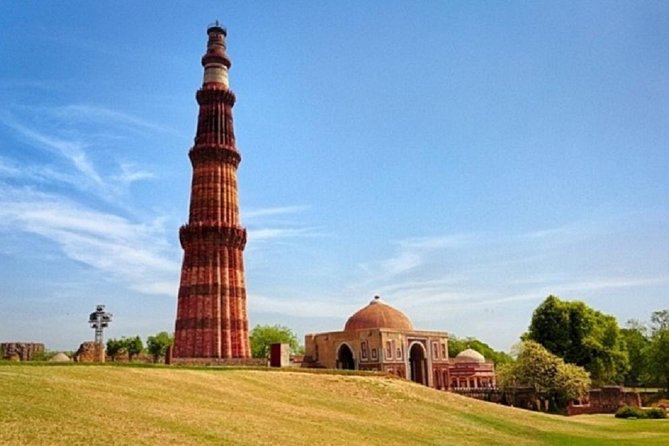
In Delhi, you begin with Qutub Minar, a UNESCO-listed landmark that dates back to the late 1100s era. It’s not just a photo stop; it gives you a sense of how far back the city’s monumental building goes. Next comes Lotus Temple, finished in 1986, known for its lotus-like form and for welcoming people of all religions. Even if you’re not a religious traveler, it’s one of those spaces where the noise of the city drops away.
Then you move through areas tied to Mughal and colonial-era Delhi—there are drives past major landmarks like Red Fort, India Gate, Rashtrapati Bhawan, and Parliament House. You might not walk every one of them, but the drive-by segments help you build a mental map of what’s where before you hit Old Delhi.
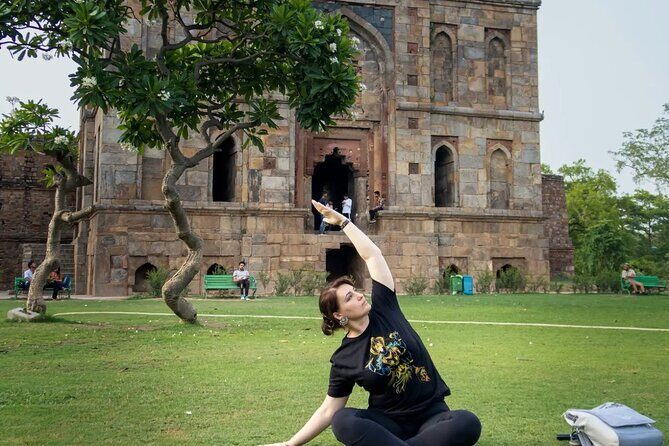
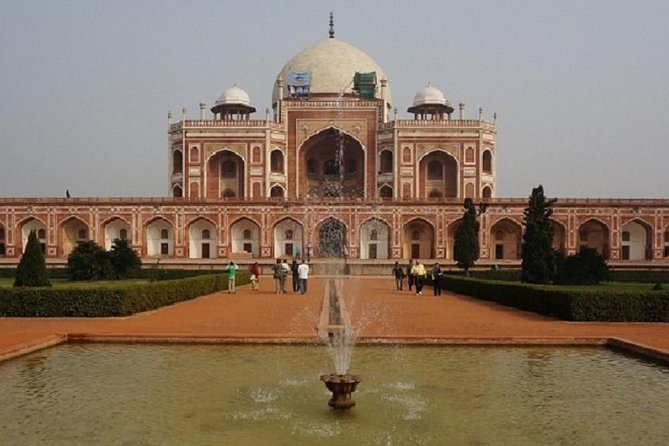
Humayun’s Tomb follows, and this is one of the best “bridge monuments” on the trip. It’s early Mughal architecture and a blueprint for what later becomes the style language of the Taj region. Expect a garden tomb setting, strong symmetry, and a lot of visual detail if you slow down for a few minutes.
Old Delhi walking route: Agrasen Ki Baoli, Chandni Chowk, Jama Masjid, Khari Baoli
After the broad Delhi highlights, Old Delhi takes over—this is where Delhi gets loud, colorful, and sensory in the best way. Agrasen Ki Baoli is a quieter pause in the middle of the chaos: an ancient stepwell with symmetrical stonework and a strangely haunting feel. It’s short, but it breaks up the day so you don’t run through everything at full intensity.
Chandni Chowk is next. You’ll walk through lanes packed with shops selling spices, sweets, fabrics, jewelry, and all the everyday bustle that makes Old Delhi feel alive. It’s also a great place to pick up small gifts, snack on something simple, or just slow down and watch how commerce works at street level.
Then you reach Jama Masjid, India’s largest mosque, built in 1656 and set across a huge red sandstone courtyard. You’ll want respectful clothing and patience for how busy it can get. Across the area, Khari Baoli brings the spice wholesale market energy—one of those spots where you can smell the difference before you see every stall.
A word on comfort: this is real walking on a real schedule. Wear shoes you can trust. Delhi in cooler months can still be dry and dusty, and summer is its own story—so bring water and expect to use it.
Day 2 in Agra: Taj Mahal at sunrise plus Agra Fort and Baby Taj
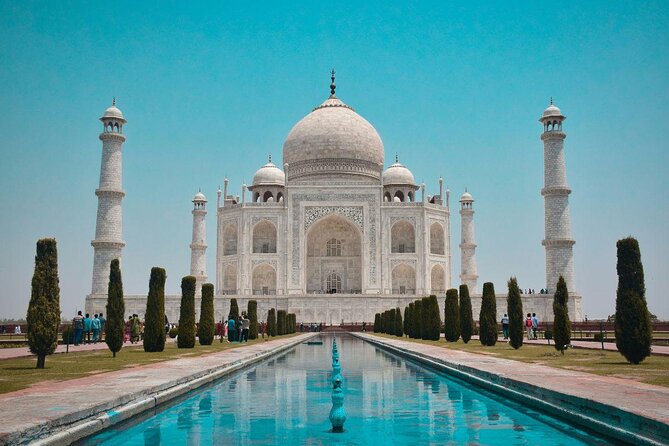
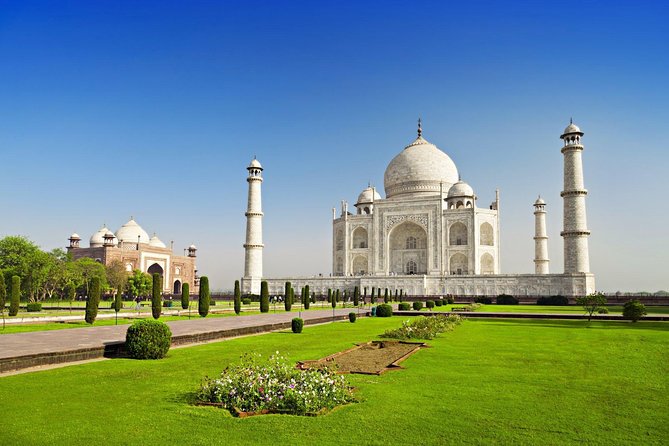
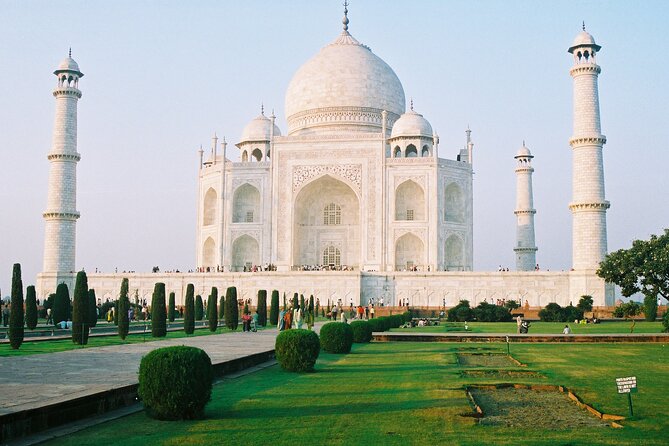
If Delhi sets the stage, Agra is the payoff. You start early for the Taj Mahal sunrise visit. The Taj Mahal is a white marble mausoleum built in 1630 for Mumtaz Mahal, and early timing matters. You’ll arrive before the day fully heats up and before the crowds thicken, which makes it easier to take in the scale and the mirror-like reflections across the marble surfaces.
There’s also an extra transport help built into the Taj experience. You’ll get a golf cart ride from the parking area to the gate, which saves energy and keeps the experience from feeling like a marathon. Also, bring your photo ID in your mobile for monument entry—this is explicitly required for entry.
After the Taj, the plan keeps you in Mughal mode with Agra Fort. This UNESCO site once functioned as a main residence for Mughal emperors. The fort’s red sandstone and defensive layout make it feel different from the Taj’s romantic story. It’s more about power, governance, and daily life at court scale.
Finally, you visit Itmad-ud-Daulah, often called the Baby Taj. This one is worth slowing down for because it’s the first Mughal structure fully in white marble and it shows fine decorative detail. If you love architecture and ornamental work, this stop can be a favorite—small changes in stonework stand out when you’re not rushing.
Day 3 in Jaipur: Jaigarh Fort, Hawa Mahal, City Palace, and Jal Mahal
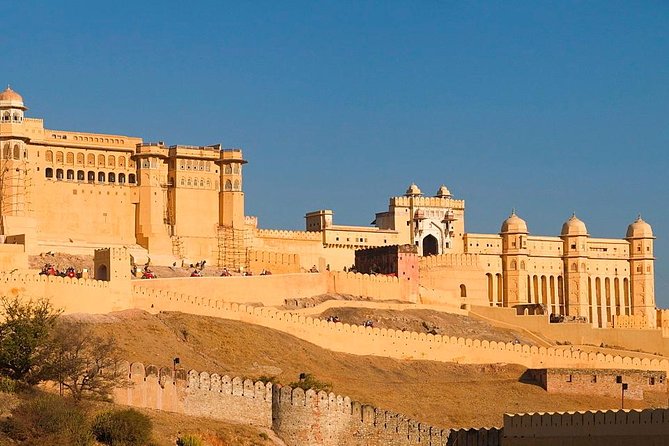
Jaipur starts after breakfast with pick-up from your Agra hotel and a drive into Rajasthan. Jaipur’s big first stop is Jaigarh Fort, built in 1726 by Maharaja Sawai Jai Singh II. It sits on the Aravalli hills, and the setting gives you wide views plus a sense of strategic planning. If you’ve ever wondered why forts look the way they do, this is where the reason clicks.
Next is Hawa Mahal, the Palace of Wind. Built in 1799 for royal women, it’s famous for its 953 small carved windows, designed so you can glimpse street life while staying protected. Even from outside, it’s visually striking. Inside, you learn how the structure is tied to daily royal life rather than being just a “pretty facade.”
Then comes City Palace, in the heart of Jaipur. It’s a complex that used to be a royal residence and now houses museums with costumes, weapons, and historical displays. This stop helps you connect the city’s buildings to the people who ran the place.
Jal Mahal is a quieter closer. The Water Palace sits in the middle of Man Sagar Lake, appearing to float. It’s only about a 30-minute stop, but it’s a nice reset after more time in forts and courtyards—good for photos too, if the light is right.



Car comfort and timing: how to keep the trip from feeling like commuting
Golden Triangle trips succeed or fail on pacing. Here, your best friend is the private chauffeur. He’s driving the long distances between cities, while you keep your energy for walking and photos instead of negotiating trains or buses.
A few timing and logistics details matter:
- Pickup is in a window (7:00 AM–11:00 AM). If you’re picky about start times, confirm your exact pickup location and time in advance.
- You’ll have monument days with varied walking and indoor/exterior time. Bring water and a layer; mornings can feel cooler than midday.
- Taj Mahal has a Friday closure rule. If your schedule lands on Friday, adjust expectations early so you don’t waste the day.
Also, note that the trip can be customized. If you want to reduce one stop or add extra time in another, it’s easier with a private format. On the other hand, if you insist on total freedom at every shop and restaurant stop, keep expectations realistic. The experience is guided, and sometimes that means the driver/guide may steer you toward places they know—so tell them plainly what you want and don’t want.
Price and what you should budget beyond the $127
The headline price is $127 per person, and that includes a lot of what normally costs extra in India: private air-conditioned car with chauffeur, hotel/airport pick-ups and drop-offs, private approved local guides, bottled mineral water during journeys, all parking fees and tolls, and fuel and taxes. It’s also built to include breakfast two times if you book the hotel option.
What’s not included is the big one for most budgets: monument entrance fees, listed at $70 per person. That figure can feel like an afterthought when you book, but it’s not small. Plan to carry cash or a backup payment method for fees on the spot.
Tipping is also not included. That’s common for private guiding. If you want your day to feel smooth—especially with sunrise timing—setting aside a tip budget is part of being a good guest.
There are also holiday date considerations. On December 24 and 31, hotel bookings can trigger a mandatory gala dinner requirement, with an additional $99 per person if you book lodging those dates. If you’re traveling around New Year, factor that into your total.
Hotels, rooms, and breakfasts: how the lodging option works
If you choose the package with hotels, you get two nights accommodation and breakfast for two mornings. Rooms are generally twin-sharing. If three people book together, triple-sharing can happen by default. If your group prefers two rooms for three people, there may be an extra charge.
If you choose the option without hotels, you’ll still get pick-up and drop-off in the cities and the guided sightseeing, but you handle your own lodging arrangements. For some people, this is actually a better value—especially if you already know the neighborhood you like and want more control over the hotel choice.
One more detail: the tour can include airport pick-up or hotel pick-up in Delhi, and you must provide flight details if it’s airport-based. If your hotel name isn’t in their system, there’s a manual entry step you’ll need to do.
Should you book this private Golden Triangle tour?
Book it if you want the Golden Triangle in three tightly planned days without juggling trains, timings, or taxi negotiations. It’s a good match for first-timers who want the Taj Mahal sunrise experience, and for families or couples who like having one driver and one set of plans instead of “maybe we’ll do this” logistics.
Skip or rethink it if you hate long car hours or you prefer a slower, more flexible pace in just one or two cities. Also, if your budget can’t stretch to entrance fees on top of the base price, you’ll feel the squeeze quickly.
If you do book, one smart move is to decide your must-do priorities before you arrive—Taj sunrise, specific Jaipur monuments, or extra photo time. The private format can help you get there.
FAQ
What cities does this Golden Triangle tour cover?
It covers Delhi, Agra, and Jaipur in a 3-day private tour by car.
What’s the meeting and pickup time in Delhi NCR?
Pickup is offered from anywhere in Delhi NCR between 7:00 AM and 11:00 AM.
Is the tour price per person, and what does it include?
The price is $127.00 per person and includes a private air-conditioned car with professional chauffeur, pick-up and drop-off in Delhi, Agra, and Jaipur, private approved local guides, bottled mineral water during journeys, and parking/tolls/fuel/taxes/service charges.
Does the price include hotel nights?
Two nights accommodation is included only if you book the option that includes hotels. There is also a package option without hotels.
Are monument entrance fees included?
No. Entrance fees to monuments are not included and are listed at $70.00 per person.
Do I need photo ID for monument entry?
Yes. You should carry valid photo ID in your mobile for monument entry.
Is there any special transport during the Taj Mahal visit?
Yes. There is a golf cart ride at the Taj Mahal from parking to the gate, and there is also a tuk-tuk ride as part of the inclusions.
Is Taj Mahal open every day?
No. The Taj Mahal is closed every Friday.
If I cancel, can I get a full refund?
Yes. Free cancellation is allowed up to 24 hours in advance for a full refund.
Is this tour only for my group?
Yes. It’s a private tour/activity, so only your group participates.