REVIEW · JODHPUR
Jodhpur by Night : Street Food And Temple Walking Tour
Book on Viator →Operated by Blue city wonders · Bookable on Viator
Jodhpur gets better after dark. This private night walk strings together temples and markets in a way that feels more local than a standard sightseeing loop. You’ll start near the Clock Tower area, then move through bazaars where your guide helps you navigate the street flow and language barrier.
I especially like two things: the food stops are aimed at real street snacks like Jodhpur-style chaat, and the temple moments are timed for evening activity, including crowded aarti at Achal Nath Shivalaya. One thing to consider is that the tour is weather-dependent, and it’s built around evening walking, so you’ll want solid shoes and a good attitude for night streets.
In This Review
- Key highlights worth knowing
- A night walk that links temples and street food without feeling rushed
- Starting near Sardar Market and the Clock Tower you can’t miss
- Tripoliya Bazar Road: Leheriya prints and Bandhej textiles in motion
- Jodhpur market chaat: a classic street-food lesson in one stop
- Achal Nath Shivalaya: Shiva, crowded aarti, and the human side of temple time
- Shri Gangshyam Ji Maharaj Mandir: Vaishnava-style architecture you can actually notice
- Toorji Ka Jhalra step well: the restored 1740s world under the square
- Price and value: why $47.15 can make sense here
- Timing, meeting point, and what you should do before you go
- Who this tour is best for (and who should skip it)
- Should you book Jodhpur by Night: Street Food And Temple Walking Tour?
- FAQ
- FAQ
- How long is the Jodhpur by Night Street Food And Temple Walking Tour?
- What time does the tour run?
- Where do I meet the guide?
- Is this tour private or shared with other groups?
- What’s included during the tour?
- Which temples or heritage stops are part of the route?
- What will I eat or try?
- What happens if the weather is poor?
- Can I cancel for a full refund?
- Is the tour suitable for most people?
Key highlights worth knowing
- Private guide for night bazaars and back streets: you set the pace inside the same planned route.
- Sardar Market’s Clock Tower landmark: it dominates the area and sets the tone for the evening.
- Leheriya and Bandhej shopping streets: Tripoliya Bazar Road is about textiles and recognizable Rajasthan prints.
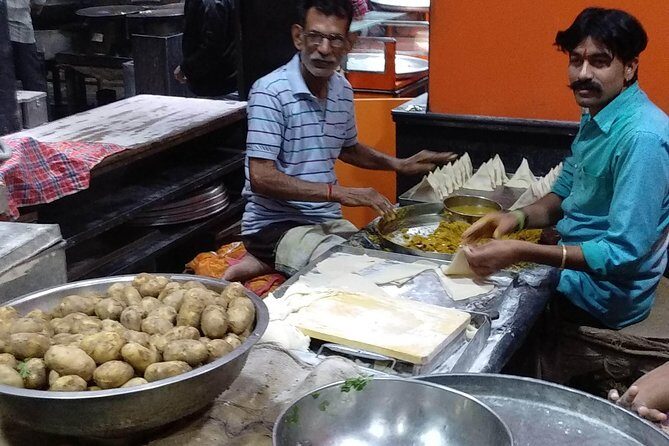
- Jodhpur chaat sampling: you’ll get a close-up look at the mix of crisp fried elements, dahi, chickpeas, and tangy-salty spice.
- Temple stops during evening energy: Achal Nath Shivalaya’s aarti draws crowds.
- Toorji Ka Jhalra step well: a restored 1740s site that shows centuries of building tradition in one square.
A night walk that links temples and street food without feeling rushed
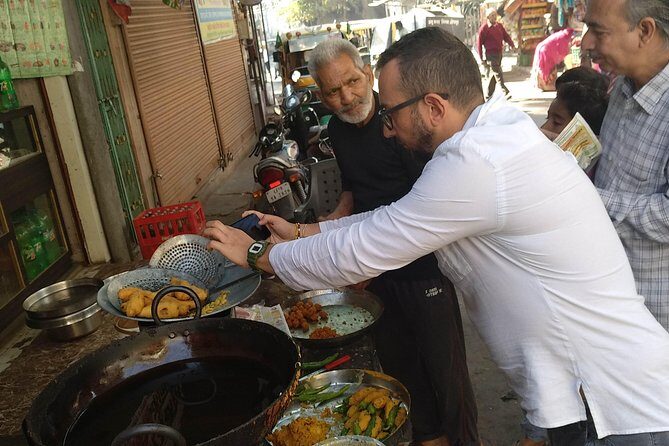
This is the kind of tour you take when you want Jodhpur to feel like a living city, not a photo checklist. The format is simple: a private guide leads you from landmark to landmark, and you get time to eat, watch, and ask questions as you go. The total time runs about 2 to 4 hours, so it fits well between late-afternoon plans and your evening.
You’ll also have a small but smart comfort item: an included bottle of water. That matters more than you’d think on night walks, especially when you’re tasting multiple things and the air is warm. Plus, you’ll meet near the Clock Tower area and return there at the end, so navigation stays easy.
Finally, remember you’re doing both city culture and street-level food at night. If you prefer quiet museums only, you might find the market streets loud and crowded in pockets. If you like motion—people, smells, and everyday life—this works.
You can also read our reviews of more walking tours in Jodhpur



Starting near Sardar Market and the Clock Tower you can’t miss
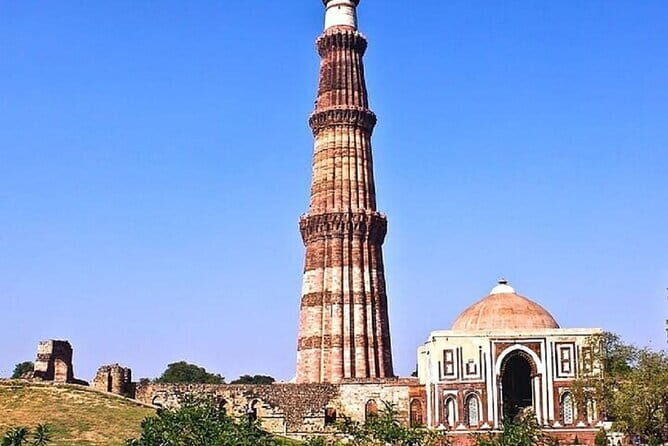
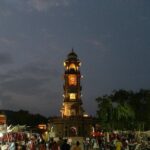
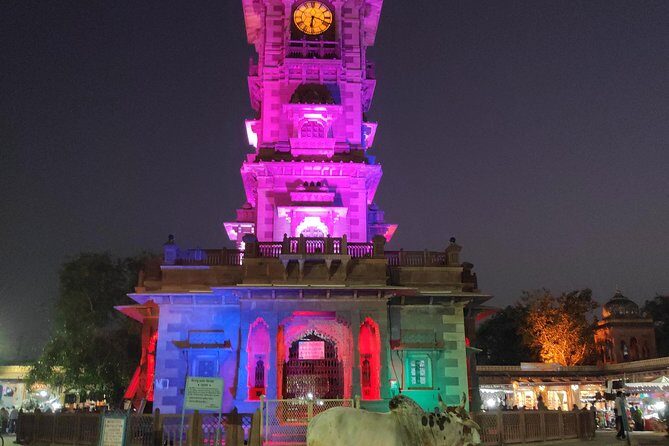
Your evening begins in the Clock Market area by the famous Sardar Market surroundings and the towering clock structure built by Maharaja Sardar Singh (1880–1911). Even before you see shops clearly, the clock tower gives you an anchor point. It’s a useful start because it helps you orient quickly, and it frames the night experience right away.
From here, you’ll get your first taste of how Jodhpur markets work after hours. The goal isn’t just to point at a landmark—it’s to walk through the street rhythm: where people stop, where vendors call out, and how the area flows. Your guide’s job is to keep you moving safely and efficiently, especially if you don’t read the local signage well.
A small practical plus: the tour is private, so you’re not squeezed into a big group that slows everything down. That also means you can ask for quick explanations without waiting for the next person in line.
Tripoliya Bazar Road: Leheriya prints and Bandhej textiles in motion
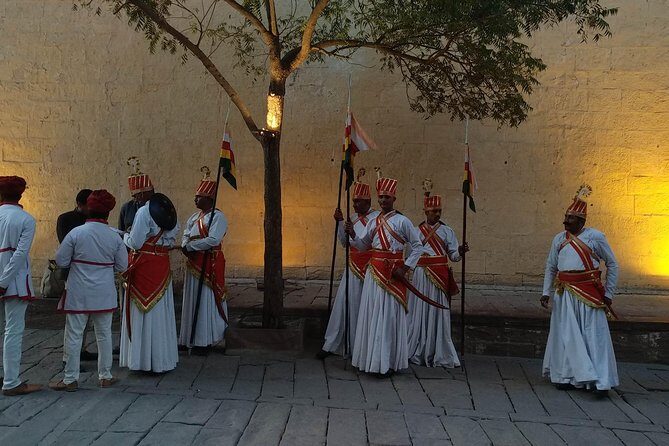
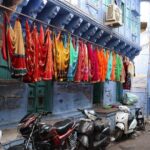
Next you head toward Tripoliya Bazar Road, a street known for local apparel and textile styles you can recognize instantly once your guide points them out. This is where Leheriya comes into the story—an origin linked to Jodhpur—and you’ll see how the print shows up on dupattas, suits, and sarees. Bandhej cloth material is also part of what you’ll encounter in this stretch.
What I like about using this stop in a food-and-temple tour is that it adds texture to the evening. You’re not only tasting snacks; you’re seeing how people dress and buy, too. It turns the market into more than a backdrop, because clothing patterns are a visible piece of everyday Rajasthan identity.
The only drawback is time sensitivity. Bazar streets can be crowded, and textile browsing can take longer if you like to look closely. Your guide can help you keep it efficient, but if you’re hoping for long shopping time, you’ll need to pair this with a separate day for shopping.
Jodhpur market chaat: a classic street-food lesson in one stop
When the tour turns toward food, it’s aimed at proper Jodhpur-style street chaat. Your guide brings you to a market-area food spot known for chat, especially for anyone who really likes street snacks. This stop is one of the best “why this tour” moments because it connects flavors to place.
The chaat you’ll hear described has a recognizable structure: potato pieces plus crisp fried bread like dahi vada or dahi bhalla, then gram or chickpeas, all topped with tangy-salty spices. It sounds like word salad until you taste it, then you get how the textures and spice levels balance. And if you’re used to sweeter snacks, this is a good way to understand how Rajasthan leans savory and tangy at night.
A practical tip: eat slowly here, because it’s easy to overdo spices when you’re sampling multiple items. Keep sipping water between bites. You’ll still enjoy the rest of the tour much more if you don’t feel overly full by the time temples start.
Achal Nath Shivalaya: Shiva, crowded aarti, and the human side of temple time
After markets and food, the tour shifts into temple mode with Achal Nath Shivalaya, a Shiva temple in the heart of the city surrounded by local market streets. The setting is part of the experience: you can often hear the city while you’re inside, and that contrast makes the temple feel real rather than isolated.
This stop also has strong timing. It’s very crowded during evening aarti when prayer is happening, and you’ll see the energy of that moment up close. If you enjoy spiritual atmosphere and don’t mind a crowd, this is a standout.
The consideration here is simple: you’ll be shoulder-to-shoulder for aarti. If you prefer quiet spaces or you’re sensitive to tight crowds, you might want to keep a slightly flexible posture and let your guide guide you to the best angle. A private guide helps because you’re not stuck waiting for the crowd to move.
You can also read our reviews of more food & drink experiences in Jodhpur



Shri Gangshyam Ji Maharaj Mandir: Vaishnava-style architecture you can actually notice
Next comes Shri Gangshyam Ji Maharaj Mandir, built in an architectural style used mainly in Vaishnava temples. That matters because it’s not just another stop for worship—you’re also seeing how temple design communicates tradition.
You’ll likely spend a bit more time here (compared with quick picture stops), because the temple’s design and wall engravings are part of why it’s worth visiting. The key is that this stop gives your eyes something structured to study after the fast movement of markets and the intensity of aarti.
One practical drawback: religious sites can feel intense in terms of sensory input—crowd energy, chants, incense, and close quarters. If that’s your thing, great. If you don’t handle crowds well, this is a good point to pause, take a breath, and let your guide manage the pace.
Toorji Ka Jhalra step well: the restored 1740s world under the square
The final major highlight is Toorji Ka Jhalra (Toorji’s Step Well), a famous step well in a square setting that turns into a mini architectural tour. The site is centered in the square, and you get a sense of how the surrounding space supports the structure. It’s tied to about 250 years of building tradition being visible at once.
Built in the 1740s, the step well had been submerged for decades and then restored. That restoration is part of the attraction because you’re seeing something recovered rather than something purely preserved behind barriers. It’s a different kind of Jodhpur view: not rooftop vistas or palace walls, but a layered piece of engineering and community life.
If you’re the type who likes details, this stop rewards you. If you’re exhausted from nighttime walking, it can feel like a long finish (the stop is described as lasting around 2 hours). Still, it’s a great closer because it gives your eyes a calmer, architectural focus after food and temple crowds.
Price and value: why $47.15 can make sense here
At $47.15 per person, this tour sits in a mid-range band for a private evening experience. What makes the value work is the combination: you’re getting a private guide for multiple stops, access to food sampling, and a water bottle included. You’re also not just visiting one temple—you’re hitting several different kinds of sights in one route.
Another subtle value point is pacing flexibility. The tour is private, and the experience is designed so you explore at your own pace rather than getting dragged along at group speed. If you like asking questions—about temples, markets, or why certain styles are tied to Jodhpur—this format pays off.
If your main goal is only temple photos or only street food, you may feel this is slightly mixed. But if you want the full Jodhpur night blend—markets plus spiritual stops plus a signature snack—then the price becomes easier to justify.
Timing, meeting point, and what you should do before you go
The tour runs in the evening window 6:00 PM to 10:00 PM, which is ideal for both temple activity and market atmosphere. You’ll meet at Clock Market, listed with the meeting point reference 72WF+28P near Clock Tower Road in the Ghantaghar Market area. The tour ends back at the meeting point, so you don’t have to solve last-mile logistics late at night.
A quick real-world prep: aim to arrive a little early so you can settle in and start without stress. Night markets can make you impatient even when everything is fine, and starting calm helps you enjoy the first food and first landmark more.
Also, plan around weather. The experience is described as requiring good weather, and if it’s canceled due to poor conditions, you’ll be offered a different date or a full refund. In Jodhpur, that practical rule can save your evening from getting derailed.
Who this tour is best for (and who should skip it)
This tour fits best if you want street food and temple time together. If you like learning as you walk—what makes a market street special, why people gather for aarti, and what you’re actually eating—this is a strong match.
It also works well for solo travelers and couples because it’s a private activity with only your group. You’ll get more conversation time with your guide compared with crowded walking tours.
You might skip it if you’re not comfortable with evening crowds, strong smells from street food, or uneven walking in market streets. It’s not described as short and gentle; it’s built as an active night circuit.
Should you book Jodhpur by Night: Street Food And Temple Walking Tour?
If your idea of a great night in Jodhpur is markets, temple atmosphere, and tasting street snacks in a guided, organized way, then yes—this is the kind of tour that makes the city feel personal fast. The mix of landmarks like the Clock Tower area, textile streets linked to Leheriya and Bandhej, key temples like Achal Nath Shivalaya and Shri Gangshyam Ji Maharaj Mandir, and the architectural close of Toorji Ka Jhalra is a smart route for a first or second evening.
If you hate crowds or you want guaranteed quiet, you might feel uneasy during crowded aarti. But if you’re curious and flexible, the private guide format gives you the best chance to enjoy the energy without getting lost in it.
FAQ
FAQ
How long is the Jodhpur by Night Street Food And Temple Walking Tour?
The duration is approximately 2 to 4 hours.
What time does the tour run?
The opening hours are 6:00 PM to 10:00 PM, Monday through Sunday.
Where do I meet the guide?
You meet at Clock Market, near the Clock Tower area, listed as 72WF+28P, Clock Tower Rd, Ghantaghar Market, Jodhpur, Rajasthan 342001, India.
Is this tour private or shared with other groups?
It’s a private tour/activity, so only your group participates.
What’s included during the tour?
You get a private guide, you’ll sample local street food, and there’s an included bottle of water. The tour also uses a mobile ticket.
Which temples or heritage stops are part of the route?
The tour includes Achal Nath Shivalaya, Shri Gangshyam Ji Maharaj Mandir, and Toorji Ka Jhalra (Toorji’s Step Well), plus market stops.
What will I eat or try?
The tour includes street food tasting, including Jodhpur chaat described as having potato pieces, crisp fried bread like dahi vada or dahi bhalla, gram or chickpeas, and tangy-salty spices.
What happens if the weather is poor?
The experience requires good weather. If it’s canceled due to poor weather, you’ll be offered a different date or a full refund.
Can I cancel for a full refund?
Yes. Free cancellation is available. You can cancel up to 24 hours in advance for a full refund.
Is the tour suitable for most people?
The information says most travelers can participate.