REVIEW · JODHPUR
Jodhpur Blue City Heritage Walking Tour
Book on Viator →Operated by Jodhpur Blue City Heritage Walking Tour · Bookable on Viator
Jodhpur rewards curious walkers. This Blue City style walking tour strings together the old town feel and the big landmarks locals care about, from the central Clock Tower Market to the viewpoint over the blue houses, with stops that help you connect the dots between people, architecture, and everyday life.
I especially like two things: the way the guide brings the sights to life with interactive, easy-to-follow stories (not a lecture), and the smart food timing, including Naarayan Mishtan Bhandar and its famous ghee ki kachori. One thing to consider is that it’s a weather-based walk and it’s concentrated into about 2 to 3 hours, so come prepared for sun and stairs if you’re sensitive to walking.
In This Review
- Key highlights at a glance
- Why the Clock Tower Market makes the best start
- Toorji Ka Jhalra: a 1740 stepwell stop that feels like a time machine
- Pachetia Hill and the blue houses: the viewpoint that makes the city make sense
- Shri Gangshyam Ji Maharaj Mandir: a 350-year Krishna temple break
- Naarayan Mishtan Bhandar for ghee ki kachori: the sweet ending that matters
- Price and logistics: why $11.24 per group is a strong value
- Pace and what the guide actually adds
- Practical tips to make the walk easier
- Who should book this blue city walk
- Should you book the Jodhpur Blue City Heritage Walking Tour?
- FAQ
- FAQ
- How long is the Jodhpur Blue City Heritage Walking Tour?
- What does the tour cost?
- Is it a private tour?
- Where does the tour start?
- Where does the tour end?
- What’s included in the tour price?
- What tickets or admissions are included at the stops?
- What stops will I visit?
- Do I need a printed ticket?
- What if the weather is bad?
Key highlights at a glance
- Private group experience that keeps the pace comfortable
- Clock Tower Market in the old town, known for local crafts in textiles and wood
- Toorji Ka Jhalra stepwell founded in 1740
- Pachetia Hill viewpoint for seeing older blue house facades and architectural details
- Shri Gangshyam Ji Maharaj Mandir with standout paintings and craftsmanship
- Ghee ki kachori dessert stop with a sweet-food wrap-up
Why the Clock Tower Market makes the best start
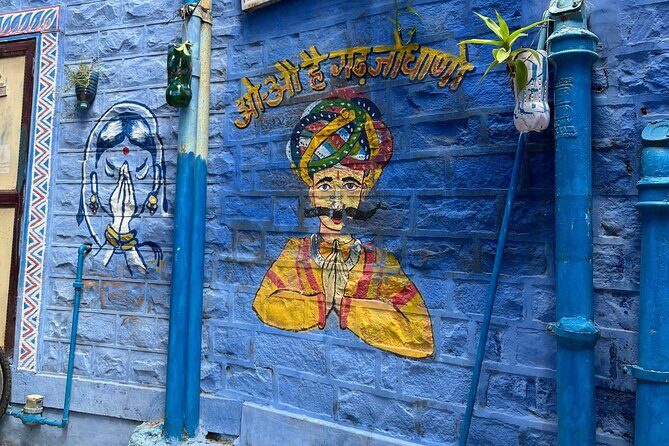
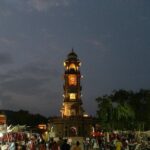
Your tour begins back at the central clock tower area, at Golu gol gappe72VF+WJF, Ghanta Ghar Rd, Ghantaghar, Clock Tower, Rawaton Ka Bass, Jodhpur. That matters because you start in the heart of the old town, where you can get your bearings fast without wasting time on long travel.
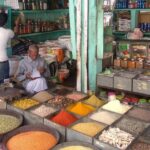
Stop 1 is the Clock Tower Market, also known as Sardar Market, described as one of the oldest markets in Jodhpur and right in the middle of the old town. You’ll get a quick look at what people actually do here: shop, browse, and trade through narrow streets that sell textiles and wooden handicrafts. If you like getting a sense of how a city works day to day, this is where that clicks.
This stop lasts about 15 minutes, with an admission ticket included. The short timing is intentional. You’re not meant to shop for hours; you’re meant to notice what’s around you and let the rest of the tour add meaning to what you see. If you’re the type who wants to spend extra time here anyway, ask your guide what’s worth returning to after the walk.
You can also read our reviews of more walking tours in Jodhpur



Toorji Ka Jhalra: a 1740 stepwell stop that feels like a time machine
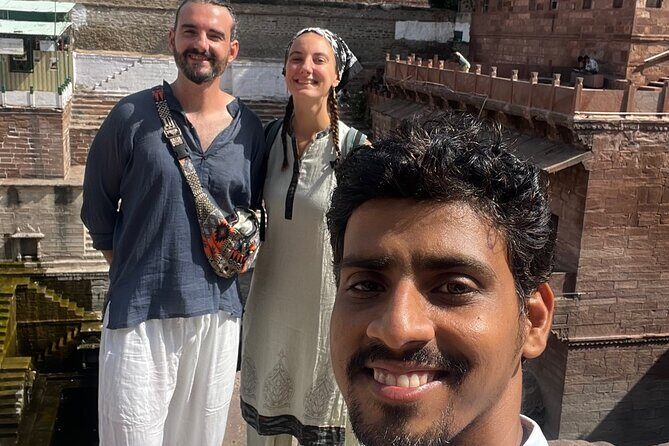
Next you head to Toorji Ka Jhalra (Toorji’s Step Well), one of Jodhpur’s best known stepwells. This isn’t just a pretty photo stop. The architecture is the point: layered steps, built form, and the sense of how people designed public water spaces in the 1700s.
It was founded in 1740 by Rani Tawarji, the wife of Abhay Singh ji. That bit of history helps you look at the stepwell as more than decoration. Water storage, community utility, and royal patronage all show up in the structure.
You’ll spend about 15 minutes here, and admission is free. The time window is perfect for most people. You can take in the carvings and geometry without getting stuck while the light changes and the city moves around you.
The main drawback is that stepwell architecture is detail-heavy. If you rush, you’ll miss what makes it special. Go slow, look at the levels, and let your guide point out the parts you might otherwise gloss over.
Pachetia Hill and the blue houses: the viewpoint that makes the city make sense
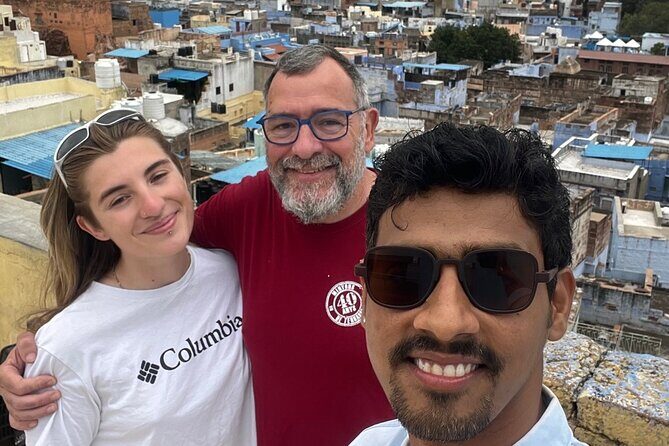
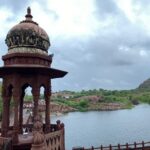
Stop 3 is Pachetia Hill, and it’s your longest stop at about 1 hour 10 minutes. The goal is simple: get a view over the city and see the older blue houses with details that explain why people talk about the blue city the way they do.
From this height, you can spot old blue houses said to be about 400 to 500 years old, plus architectural elements like jharoka windows, along with pillars and columns. The time here isn’t just for standing and staring. It’s enough time to wander along angles where the building details catch the light and to understand how the neighborhood folds into itself.
A practical note: viewpoints can feel busy with other sightseers, and the hill area is active. You’ll move at a manageable walking pace, but if you’re not comfortable with uneven ground, keep your steps careful.
Why I think this stop is a win: you leave it with context. The blue color stops looking like a paint job and starts looking like part of a whole visual language—architecture, heritage, and the way neighborhoods evolved.
Shri Gangshyam Ji Maharaj Mandir: a 350-year Krishna temple break
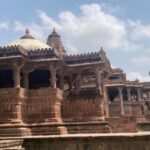
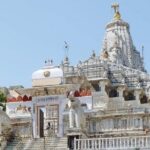
After the hill, you visit Shri Gangshyam Ji Maharaj Mandir, a temple noted as about 350 years old and dedicated to Lord Krishna. This is a shorter stop at about 15 minutes, but it’s one of the more memorable ones because it mixes faith and art.
The standout here is the paintings and architecture workmanship. Instead of rushing past, take a minute to look closely. Temple artwork tends to reward attention, and your guide can help connect what you’re seeing to the tradition behind it.
Admission is free for this stop, which is nice because it keeps the tour balanced: you’re paying for a guided experience, not a stack of ticketed attractions.
The only consideration: if you’re trying to fit in extra temple visits later, this stop might feel “short.” But it works as a palate cleanser between the architectural viewpoint and the food finale.
Naarayan Mishtan Bhandar for ghee ki kachori: the sweet ending that matters
Every good walking tour needs a food stop that’s not random. Here, the finale is at Naarayan Mishtan Bhandar, also known as Lal Bhatti Wale, for a famous desert item: ghee ki kachori.
This stop lasts about 10 minutes, admission is free, and it focuses on what you came for—taste a local classic before your walk fades into random snack hunting. The point isn’t just eating. It’s understanding what locals choose after a day in the old town rhythm.
I like that the tour includes both savory and sweet culture signals: the kachori and the usual chai pairing you’ll often hear about around these markets. If your stomach is sensitive, keep expectations simple: this is a rich, ghee-forward treat. Go one portion, sip water, and enjoy the contrast to all the walking.
You can also read our reviews of more city tours in Jodhpur





Price and logistics: why $11.24 per group is a strong value
The price is listed as $11.24 per group (up to 2), and the tour runs about 2 to 3 hours. That “per group up to 2” model is where the value shows. A short private tour that includes a guide and bottled water is usually priced higher in many parts of India, especially when you’re covering multiple old-town landmarks.
For this one, bottled water is included, and the stops are designed to limit extra costs. Only the first market stop includes an admission ticket; the stepwell, hill viewpoint area, temple, and food stop are free. So the money mostly goes toward the guide, the pacing, and getting you to the right places in the right order.
One more logistics win: the tour is a mobile ticket experience and the meeting point is well-defined in the clock tower area. It’s also described as near public transportation, so you’re not stuck planning around private vehicles.
If you’re thinking about booking, the best reason to do it is not the price alone. It’s that you’ll spend your limited time in Jodhpur with direction—especially on the hill and in the older lanes—so you see more than you could by wandering.
Pace and what the guide actually adds
What makes this tour feel worth it is the human factor. The tour framework emphasizes understanding and communication, and the guide is described as experienced, friendly, and able to explain history in an engaging, interactive, and entertaining way.
You’ll often hear that guides for this route share English clearly and adjust to what you want. I’d treat that as a real benefit: if you’re most interested in architecture, ask for extra attention on jharoka windows and carved details. If food is your priority, time questions around the kachori stop so you know what to try and how it fits into local routines.
Pace-wise, you’re looking at short stops plus one longer hill segment. That structure keeps energy reasonable, especially in warmer weather. Still, it’s a walking tour. Wear shoes you trust, and don’t plan a tough workout right after.
Practical tips to make the walk easier
Here’s how to set yourself up for a smooth 2 to 3 hours:
- Wear comfortable walking shoes. The old-town routes can be uneven.
- Bring light sun protection, because the route includes open viewpoint time at Pachetia Hill.
- Stay hydrated. Bottled water is included, but you may still want to sip often.
- If you take photos, do it in bursts. You’ll get better shots when you slow down briefly instead of trying to capture everything while moving.
- If you have a specific interest (temples, markets, or food), tell your guide early so they can steer explanations your way.
Weather matters. The experience notes that it requires good weather. If it’s canceled due to poor weather, you’ll be offered another date or a full refund.
Who should book this blue city walk
I think this tour is a great match if you want:
- A short, focused old-town overview instead of a full-day itinerary
- Strong guidance so you don’t miss architectural details in the lanes
- A mix of history + everyday life, capped with a real food stop
It also works well for first-time visitors who want to understand the city’s layout fast: clock tower area, stepwell, hill views, temple, and then dessert.
If you’re in Jodhpur for a long time and already know the major sights, you might find the 2 to 3 hour format a bit tight. But even then, the targeted route and food finish are usually worth it.
Should you book the Jodhpur Blue City Heritage Walking Tour?
Yes, if you want a guided, compact way to see the old town’s key layers—market life, a historic stepwell, the blue houses from above, temple art, and a proper local dessert. At $11.24 per group up to 2, it’s also priced to be an easy decision, not a big budgeting debate.
Skip it only if you need a very slow pace, want a lot of shopping time, or you’re unable to do a moderate amount of walking in changing conditions. Otherwise, this is exactly the kind of practical, locally focused tour that helps Jodhpur click quickly.
FAQ
FAQ
How long is the Jodhpur Blue City Heritage Walking Tour?
The tour runs about 2 to 3 hours.
What does the tour cost?
It’s priced at $11.24 per group (up to 2).
Is it a private tour?
Yes. It’s a private tour/activity for only your group.
Where does the tour start?
The meeting point is at Golu gol gappe72VF+WJF, Ghanta Ghar Rd, Ghantaghar, Clock Tower, Rawaton Ka Bass, Jodhpur, Rajasthan 342001, India.
Where does the tour end?
The activity ends back at the meeting point.
What’s included in the tour price?
Included: bottled water.
What tickets or admissions are included at the stops?
The Clock Tower Market stop includes an admission ticket. The other listed stops (Toorji Ka Jhalra, Pachetia Hill, Shri Gangshyam Ji Maharaj Mandir, and the dessert stop) are listed as admission free.
What stops will I visit?
You’ll visit the Clock Tower Market, Toorji Ka Jhalra, Pachetia Hill, Shri Gangshyam Ji Maharaj Mandir, and Naarayan Mishtan Bhandar (Lal Bhatti Wale) for ghee ki kachori.
Do I need a printed ticket?
No. It’s listed as a mobile ticket.
What if the weather is bad?
The experience requires good weather. If it’s canceled due to poor weather, you’ll be offered a different date or a full refund.