REVIEW · JAIPUR
Jaipur Heritage Walk – Artisans | Bazaars | Culinary | Temples (Awarded)
Book on Viator →Operated by Vedic Walks Rajasthan · Bookable on Viator
Jaipur is laid out like a living diagram. This heritage walk uses the city’s geometry and old gates to help you understand how Pink City works, from everyday crafts to royal-era lanes. I like the way it mixes temples, artisans, and food into one smooth route, so you’re not bouncing between random spots. I also like the small-group feel (max 15), which makes it easier for your guide to answer questions in the tight lanes. One thing to consider: you’ll spend a lot of time on foot in narrow, sometimes crowded market streets, so comfy shoes matter.
Expect hands-on craft moments and real street-level scenes. You’ll pass through by-lanes where metal beating is practiced by local families, then follow the smells and sounds to places like the pani puri snack market and a traditional bridal-shopping area. The walk also includes a temple component, plus a bangle-making demo that turns sealing-wax craft into wrist-bangle magic. The food tastings and artisan souvenir are real value for a tour priced around $30. One possible drawback: like many old-city walks, timing can be affected by weather and day-to-day street conditions.
If you want Jaipur beyond the big monuments, this is your plan. Your guide helps connect the dots: the meaning of Jaipur’s seven gates, how neighborhoods function, and why certain lanes were important long before today’s foot traffic. In past departures, guides such as Nidhi and Ani have been praised for clear explanations and steady pacing, including temple context that’s easy to follow.
In This Review
- Key highlights to look for
- Why This Heritage Walk Beats the Usual Jaipur Checklist
- Golcha Cinema and Jaipur’s Seven Gates: the orientation stop
- Narrow Lanes, Metal Beaters, Pani Puri Market, and Ayurveda Stops
- The Big Heritage Gate and the Royal Entry Feeling
- Sodhya Halwai Bridal Market: mohanthal and wedding-shopping street scenes
- Maniharo Ka Rasta Bangle Demo: sealing wax into wristwear
- Tripolia Bazar: flower and spice markets plus Isarlat Sargasooli
- Price, timing, and what you actually get for about $30
- Who Should Book This Walk (and who might want a different plan)
- Should You Book This Jaipur Heritage Walk
- FAQ
- Is this Jaipur heritage walk around $30?
- How long is the experience?
- Where do I meet and where does the walk end?
- What’s included in the price?
- Is there a mobile ticket?
- How many people are in a group?
- Do I need good weather?
- Is the guide English-speaking?
- Is it near public transportation?
- Is free cancellation available?
- When is confirmation received?
Key highlights to look for
- Seven Gates orientation from the start so you get your bearings fast
- Metal beating and bangle-making demos that show craft technique, not just a storefront
- Food stops built into the route, including pani puri and a Jaipur sweet like mohanthal
- Bridal market street scenes where traditional wedding shopping takes center stage
- Old-city bazaars finish the walk, with flowers, spices, and Isarlat Sargasooli’s minaret on the route
- A small group max of 15 that helps you move through narrow lanes comfortably
Why This Heritage Walk Beats the Usual Jaipur Checklist
Jaipur can look simple on a map, but in real life it’s all about movement: gates, lanes, markets, and the craft economy that keeps neighborhoods functioning. This walk is built around that idea. Instead of telling you Jaipur’s story from a distance, it puts you into the street rhythm—where artisans work, shoppers bargain, and food gets made and served right where people live.
You’ll also get the kind of context that makes the city feel less like a collection of sights. When you understand why the seven gates matter, and how the walled-city layout shapes routes, the walk clicks into place. That context is what turns a market stroll into a real learning experience.
If you’re a first-time visitor, this is a great way to get oriented. If you’ve already seen the big attractions, it’s a smart add-on because it covers the day-to-day Jaipur you’d otherwise miss—especially in the older lanes that don’t make it into most quick itineraries.
You can also read our reviews of more walking tours in Jaipur



Golcha Cinema and Jaipur’s Seven Gates: the orientation stop
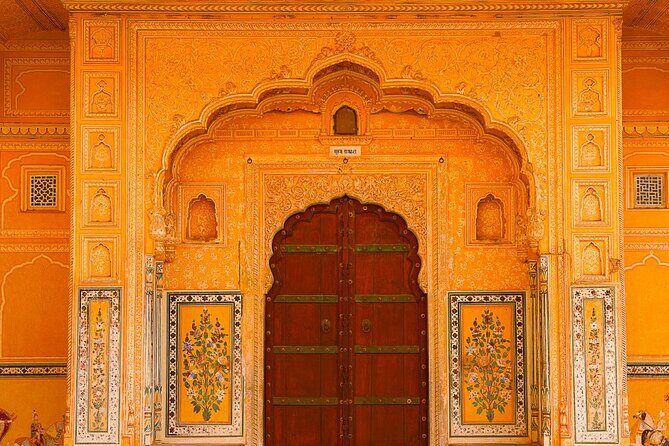
You’ll start at Golcha Cinema on Chaura Rasta Road, near the New Gate area of the Pink City. The first minutes are not about wasting time. Your guide frames the walled-city setup by talking about the seven gates of Jaipur—and why they’re more than landmarks. They act like city-control points: boundaries, flow channels, and historical markers that shaped where people went and how the city grew.
From there, you’ll visit a priest family connected to a heritage mansion. This is one of those stops that gives texture. It’s not just a photo moment; it helps you understand the living side of religious tradition in the old neighborhoods.
Practical note: this start includes an admission ticket. That usually means you’re stepping into a space where the experience can’t be recreated from outside—so you’re paying to enter, listen, and learn in the right setting.
Narrow Lanes, Metal Beaters, Pani Puri Market, and Ayurveda Stops
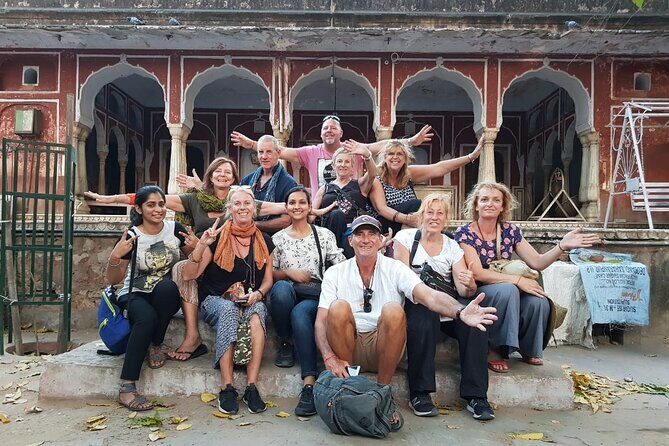
After the opening orientation, you’ll step into Jaipur’s tight by-lanes. This is where the walk becomes real. Wide boulevards are fine for distance viewing, but they don’t show how Jaipur breathes at street level. The lanes do.
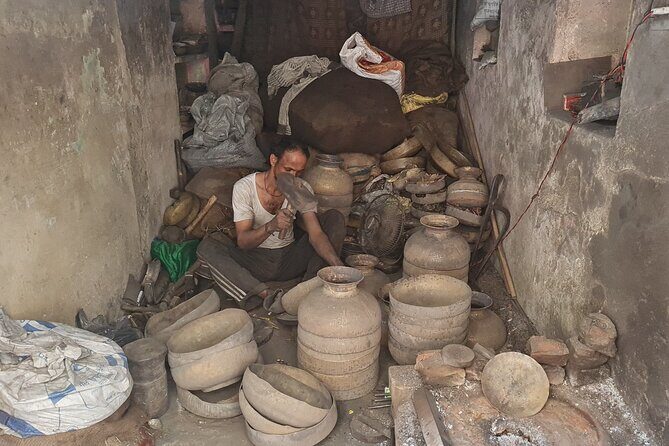
You’ll see (and in many cases watch) a community of metal beaters. This kind of work is learned in family setups and passed down over generations, so you’re seeing craft as a way of life rather than a one-off demonstration. It also helps you appreciate why Jaipur has a reputation for traditional metalwork.
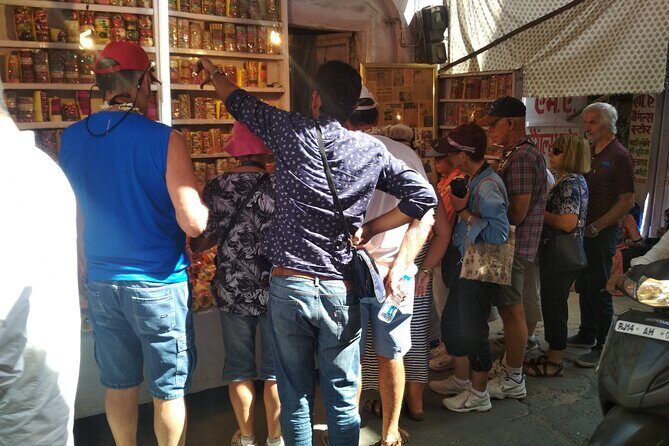
Food comes in at street speed. You’ll pass through a wholesale market connected to pani puri, where the snack culture isn’t staged for tourists. The best part here is that the walk doesn’t treat food as a separate activity. It’s integrated into the route, so your snack stop feels like part of the city’s logic.
You’ll also visit an Ayurveda center. Even if you don’t plan to buy anything, the point is cultural understanding: Ayurveda is part of daily health thinking in India, and seeing where that happens makes it more than a term you read on a menu.
One more lane-level detail that matters: the route includes heritage lanes linked with royal-era history, and in the walk’s context, there’s even mention of those lanes being visited by Prince Charles. Whether you care most about royal anecdotes or daily street life, that thread helps stitch the city together.
The Big Heritage Gate and the Royal Entry Feeling
At a key mid-point, you’ll reach a big heritage gate that also functions as an entry gate for the residence area of Jaipur’s royal family. This is one of those moments where architecture and power intersect. Gates in a city like Jaipur aren’t just decorative. They’re about access and control, and they shape what you see next.
Even if you never go “inside” in a formal way, standing at that kind of threshold changes how you read the street. The lanes leading away from a gate tend to feel more purposeful. Shops and craft activities near royal or institutional boundaries often develop in ways that support visitors, workers, and household needs.
The benefit of including this stop in a walking route is simple: it gives you a reference point. Without something like this, a bazaar walk can feel like a sequence of interesting streets. With it, the streets become a system.
Sodhya Halwai Bridal Market: mohanthal and wedding-shopping street scenes
Next up is Sodhya Halwai, tied to Jaipur’s most colorful bridal market experience. This is where you can watch wedding-related shopping play out in real time. Traditional outfits, intense planning, and the everyday pace of people choosing what matters for a wedding day create a strong sense of place.
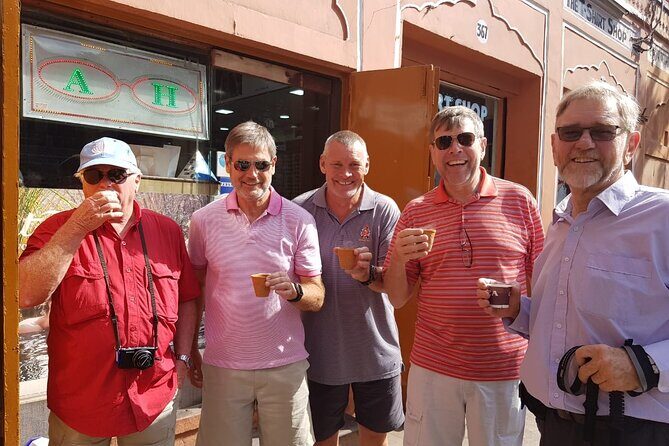
You’ll get a food tasting here, including mohanthal, a Jaipur sweet. This is a smart inclusion because it’s local, specific, and tied to festive culture. It also gives you something to do during the stop that doesn’t just involve looking.
The practical side: this area can be busy, and the crowd energy may vary depending on the day and time you join. If you’re sensitive to hectic street noise, keep your expectations flexible. But if you want Jaipur’s wedding-season vibe, this stop is where the walk really earns its name.
You can also read our reviews of more historical tours in Jaipur




Maniharo Ka Rasta Bangle Demo: sealing wax into wristwear
If you’ve ever wondered how bangles transition from craft to final wearable, Maniharo Ka Rasta is a standout moment. Here you walk the street of bangle-making artisans and watch a live demo.
The demo centers on traditional wrist-bangle creation using sealing wax. That detail matters because it shows the craft’s method—not just the finished product. You’ll see the process as a hands-on craft workflow, with artisan skill that’s learned and refined through repeated practice.
This is also a shopping area, but it’s worth treating it as a learning stop first. If you want value, ask how the process works and what makes one type different from another. Even if you don’t buy, you’ll leave understanding why bangles aren’t all the same, and why Jaipur remains a craft destination.
Tripolia Bazar: flower and spice markets plus Isarlat Sargasooli
You’ll finish with a classic old-city combo: Tripolia Bazar, including the oldest flower market of Jaipur and a spice market stretch. This is a good final segment because smells do a lot of storytelling. Flowers point to ceremony and daily offerings, while spices connect to the city’s food culture.
You’ll also walk past a tall minaret known as Isarlat Sargasooli. Including a minaret near the end gives your eyes a chance to reset from street-level activity back up to the skyline. It’s a useful visual anchor before you exit into the surrounding bazaar lanes.
The end point is at the Flower Market area near Choti Chaupar in Tripolia Bazar (Modikhana), Jaipur. In practice, that ending location is helpful if you want to keep wandering independently afterward, because you’re already where people are shopping and moving.
Price, timing, and what you actually get for about $30
The price listed is $30.04 per person for about 2 hours 30 minutes. For a half-day walking experience inside the walled city, the value comes from a few concrete inclusions:
- Packed drinking water
- An English-speaking city explorer guiding the route
- Two local food tasting opportunities
- A souvenir from local artisans
- Plus admission where it matters (the early stop includes a ticket)
You’re not just paying for someone to walk beside you. You’re paying for access, interpretation, and the “why” behind what you’re seeing—especially at craft and temple-related stops. That’s the difference between a look-and-go bazaar tour and something that helps you remember Jaipur as a living city.
Group size is capped at 15, which is important in old-city walking. In places with narrow streets and crowded market edges, smaller groups tend to move with less chaos, and your guide can respond more easily.
What about drawbacks? Plan for uneven pavement and crowds. Also, the experience needs good weather, so if rain or extreme heat hits, your departure may be changed or offered as a different date.
Who Should Book This Walk (and who might want a different plan)
This tour is a great fit if you want Jaipur that feels human-scale: artisans working, people buying wedding clothes, food being made and sold close to where it’s eaten. It also suits travelers who like structure—because the seven gates framing helps you connect what you see to how the city was designed.
It may be less ideal if you want only monument-level sightseeing. This is not built around major palaces or long museum lines. Instead, it’s designed to show the old-city engine: crafts, bazaars, and everyday religious context.
Best match:
- First-timers who want orientation fast
- Food lovers who want local tastings built into the route
- Culture-minded travelers who like artisanship and craft technique
- Families who can handle a couple hours of walking (it’s described as doable for most travelers)
If you have mobility challenges, the notes only say that most travelers can participate—not that it’s stroller- or wheelchair-friendly. When in doubt, message the operator before booking.
Should You Book This Jaipur Heritage Walk
Yes, if you want Jaipur you can feel in your feet. For around $30, you get a tight route with craft demos, food tastings, and a temple element, plus a souvenir and bottled water. The walk’s format also makes it easier to learn without standing in lines all day.
Book it especially if you’re planning other Jaipur highlights too. This kind of heritage walk adds the “why” and “how” behind the city—so your later photos and palace visits make more sense.
FAQ
Is this Jaipur heritage walk around $30?
Yes. The listed price is $30.04 per person.
How long is the experience?
It’s approximately 2 hours 30 minutes.
Where do I meet and where does the walk end?
You start at Golcha Cinema, Chaura Rasta Rd, New Gate, Bapu Bazar, Pink City, Jaipur. The walk ends at Flower Market, Choti Chaupar, Tripolia Bazar (Modikhana), Jaipur.
What’s included in the price?
Included are packaged drinking water, an experienced English-speaking city explorer, two local food tasting opportunities, and a souvenir from local artisans. Admission is included for the first stop.
Is there a mobile ticket?
Yes, the experience uses a mobile ticket.
How many people are in a group?
The tour has a maximum of 15 travelers.
Do I need good weather?
Yes. The experience requires good weather, and if it’s canceled due to poor weather, you’ll be offered a different date or a full refund.
Is the guide English-speaking?
Yes. The included guide is described as an English speaking city explorer.
Is it near public transportation?
Yes, the meeting area is described as being near public transportation.
Is free cancellation available?
Yes. You can cancel for a full refund up to 24 hours in advance of the experience start time.
When is confirmation received?
Confirmation is received at booking time unless you book within 1 day of travel, in which case confirmation is received as soon as possible based on availability.