REVIEW · NEW DELHI
Full-Day Private Tour at Old & New Delhi
Book on Viator →Operated by Visit India with Raj · Bookable on Viator
Delhi in one day, without the stress. This full-day private tour is a smart way to get your bearings fast and see Delhi’s big contrasts—modern worship spaces, Mughal monuments, and core Old Delhi landmarks—without juggling rickshaws or taxi negotiations. I like that you travel in a comfortable A/C private vehicle with a live guide, and you can shape the day to what you care about most.
I also like the way the route stitches together New Delhi and Old Delhi into a single flow. You start around Jama Masjid, then move through Gandhi sites and grand imperial architecture like Red Fort, Humayun’s Tomb, and Qutub Minar, and end with major religious and cultural stops such as Lotus Temple, Bangla Sahib, Birla Mandir, and Swaminarayan Akshardham.
One possible drawback: monument entrance fees and meals are extra, so the final cost depends on which ticketed sites you choose and how long you spend at each stop. Also, the day can feel packed because it’s designed to cover a lot in about 4 to 8 hours.
In This Review
- Key highlights that make this day tour work
- Private A/C pickup means you spend time seeing, not figuring out
- A route built for first-timers: Mughal + modern Delhi, same day
- Jama Masjid: Old Delhi’s scale and the feel of a living city
- Gandhi’s Delhi in two parts: Raj Ghat and Gandhi Smriti
- India Gate: a powerful pause in New Delhi’s center
- Red Fort: Mughal power made visible
- Humayun’s Tomb and Qutub Minar: the Mughal era’s long shadow
- New Delhi’s calmer side: Gandhi Smriti, Lodhi Garden, and a breather
- Lotus Temple: modern worship with an instantly recognizable shape
- Gurudwara Bangla Sahib and Birla Mandir: faiths you can feel without a thesis
- Swaminarayan Akshardham: ending with a cultural and spiritual complex
- Price and value: what $53.03 covers, and what it doesn’t
- Timing tips for a 4 to 8 hour private day
- Who should book this Old and New Delhi day tour
- Should you book it?
- FAQ
- How long does the Full-Day Private Tour at Old & New Delhi take?
- Is pickup and drop-off included?
- Are monument entrance fees included in the price?
- Are meals included?
- Is this a private tour just for my group?
- What happens if I need to cancel?
Key highlights that make this day tour work
- Private, A/C transport so the city’s traffic doesn’t become your full-time job
- Live guide to connect the dots between Mughal Delhi and modern landmarks
- Old and New Delhi in one loop (Jama Masjid to Akshardham) with minimal backtracking
- Plenty of free stops like Raj Ghat, India Gate, Gandhi Smriti, and several temple/gurdwara sites
- Entrance fees listed site-by-site so you can budget ahead instead of guessing
- Professional driving noted with working seatbelts and careful handling in traffic
Private A/C pickup means you spend time seeing, not figuring out
Delhi can be brilliant—and also exhausting—if you’re hopping between multiple neighborhoods on your own. This tour handles the heavy lifting: hotel, airport, or railway station pickup and drop-off, plus fuel, parking, tolls, and taxes covered in the package price. That matters because one bad logistics decision can turn a half-day into a missed opportunity.
You’ll ride in a private vehicle with air-conditioning, which is a big deal if you’re traveling in warmer months. Even if you love the city’s chaos, having a calm base helps you actually enjoy the sights rather than just surviving the transit.
And the small comfort details matter too. One review highlight was the driver’s professionalism—safe driving, no constant horn honking, and working seatbelts in the back. The guide and driver also wore seatbelts, which tells me they take safety seriously rather than treating it like an afterthought.
You can also read our reviews of more private tours in New Delhi



A route built for first-timers: Mughal + modern Delhi, same day
This is a classic intro-day structure: start with a major Old Delhi religious landmark, then layer in political history, then shift to imperial Mughal architecture, and finally sweep through New Delhi’s most recognizable spiritual sites.
The pacing is designed for “see the big stuff” rather than “linger all day.” Stops are time-boxed (many are around 10–40 minutes), so you get multiple moments without spending hours in just one queue. If you want a calmer visit to a couple of places, you can usually steer the day—this tour is set up so your interests can shape the schedule.
Also, it’s a private tour, so it’s only your group. That means you can talk to your guide, ask questions, and adjust pace without the pressure of matching everyone else’s priorities.
Jama Masjid: Old Delhi’s scale and the feel of a living city

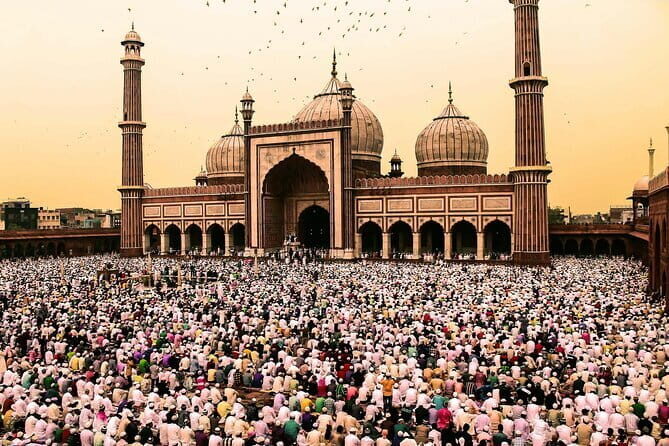
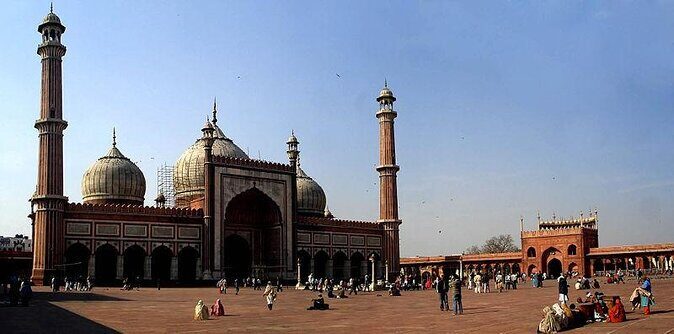
You’ll begin at Jama Masjid, one of Delhi’s landmark mosques, built in 1650–1656 by Mughal emperor Shah Jahan. This is the kind of stop that instantly tells you you’ve entered history that still functions today, not a sealed-off museum set.
Expect an active atmosphere. Even if you’re not religious yourself, this is where architecture, street life, and daily rhythm collide. One practical note: at the mosque, you may need to deal with a shoe deposit (so plan for the extra hassle that comes with any place that requires removing footwear).
Admission isn’t included, so budget for the listed ticket amount for Jama Masjid. Still, it’s an essential first-stop because it sets the tone for Old Delhi before you move into Gandhi-era memorials and New Delhi’s monument grid.
Gandhi’s Delhi in two parts: Raj Ghat and Gandhi Smriti
Next you’ll hit Raj Ghat, a memorial dedicated to Mahatma Gandhi. It’s set up to mark the place tied to his assassination, including the detail that it was built after he was killed while on his way to a meeting at Birla House.
Then the day turns to Gandhi Smriti (formerly known as Birla House/Birla Bhavan). This site focuses on the last 144 days of Gandhi’s life and includes the place where he was assassinated on 30 January (year not stated in your information, so just treat it as the day and the story rather than a casual landmark).
What I like about pairing these two is the emotional rhythm. Raj Ghat is open, reflective, and immediate. Gandhi Smriti adds the museum-like context that helps you understand the final chapter instead of just seeing a memorial plaque.
These stops are also budget-friendly because Raj Ghat and Gandhi Smriti are free in the tour plan.
India Gate: a powerful pause in New Delhi’s center
India Gate is the next quick stop. Its official name is the Delhi Memorial, and it originally was called the All-India War Memorial. It commemorates troops of British India who died in wars fought between 1914 and 1919.
Even if you only spend about 15 minutes, India Gate works as a visual reset between sections of the day. You get a major “New Delhi landmark photo” moment, plus a historical frame that’s easy to carry to the next stop.
Like Raj Ghat, India Gate is listed as free, which is always a plus when you’re trying to keep the day’s expenses predictable.
You can also read our reviews of more tours and experiences in New Delhi






Red Fort: Mughal power made visible
Then comes Red Fort, one of the Mughal-era anchors of Delhi. The tour plan notes how its planning and design reflect a culmination of Mughal architectural development that began in 1526 under the first Mughal emperor and was refined under Shah Jahan.
This is a sight where it helps to have a guide. From the outside, it already looks monumental. Up close, the details matter, and a good explanation can turn the visit from “big walls” into a real sense of what the fort was built to represent.
Admission isn’t included for Red Fort, and the tour data lists a specific entrance fee. If you’re watching costs, this is one of the bigger-ticket stops, so decide in advance whether you want your time here to be brief or more focused.
Humayun’s Tomb and Qutub Minar: the Mughal era’s long shadow

After Red Fort, the tour moves into the architecture that makes Mughal Delhi feel like a different city.
Humayun’s Tomb is described as the first of the grand dynastic mausoleums that later shaped what people associate with Mughal architecture. It’s listed with a longer time slot in the day (about 40 minutes in the plan), which is a hint that this one benefits from a slower pace.
Then you’ll go to Qutub Minar, one of India’s most famous towers. Your tour details include measurable facts you can picture: it’s 72.5 meters tall, with a base diameter around 14.32 m and a smaller diameter near the top around 2.75 m. The foundation is attributed to Qutbu’d-Din Aibak, with the minar’s construction tied to the early Sultanate/Mughal-era history.
This part of the day is where Delhi’s “big architecture” becomes real, not just a list of names. It also helps that these stops aren’t free—meaning the guide-led time usually has a clearer structure—so you’re less likely to feel like you spent money but didn’t really see anything.
Admission fees are listed for Humayun’s Tomb and Qutub Minar, with Humayun’s Tomb and Qutub Minar each shown at ₹650 per person in your information.
New Delhi’s calmer side: Gandhi Smriti, Lodhi Garden, and a breather
Between major monuments, you get slower, greener moments.
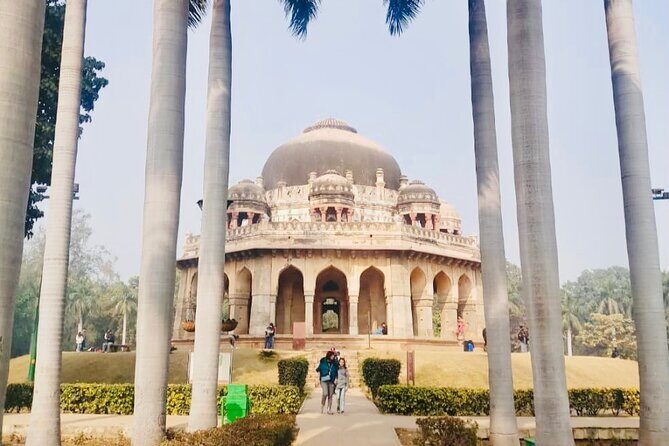
You’ll visit Lodhi Garden, described as the lungs of New Delhi. It’s a 90-acre park and includes tombs in the area, including Mohammed Shah’s Tomb and the Tomb of Sikandar (names listed in your info). Even when you’re not a dedicated garden person, a garden stop breaks the “hard sights nonstop” rhythm.
This is also the moment to adjust your day. If you’ve had your fill of museums, you can lean into the outdoor walking. If you’d rather stick to indoor history, you can use the next stops to keep the focus on religious and architectural interiors.
Lotus Temple: modern worship with an instantly recognizable shape
Next up is Lotus Temple, a Bahá’í House of Worship dedicated in December 1986. It’s famous for its flowerlike shape, and it’s listed as free in the tour plan.
This is a great stop for two reasons. First, the building is visually iconic, so even a short visit gives you something concrete. Second, it shifts your understanding of Delhi from “only Mughal and colonial layers” to a city still building new identities.
Time is tight in a full-day schedule (around 20 minutes here), so I’d treat it as a quick visual and atmosphere stop rather than trying to make it your long main event.
Gurudwara Bangla Sahib and Birla Mandir: faiths you can feel without a thesis
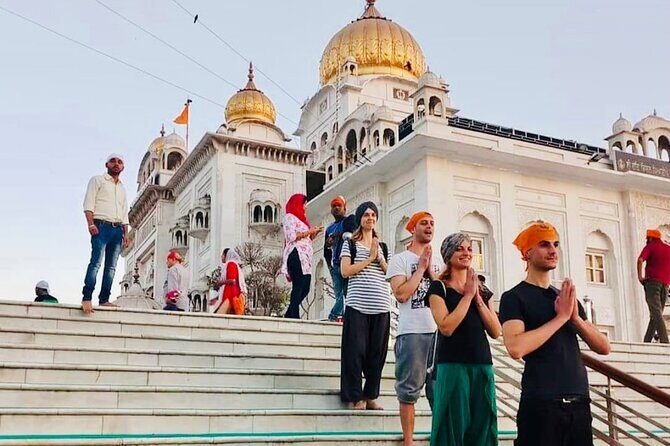
Then you’ll visit Gurudwara Bangla Sahib, a 17th-century shrine dedicated to Guru Har Krishan, the eighth Sikh Guru. The tour plan flags its architectural beauty and that it has a large wat (as listed).
After that, you’ll go to Birla Mandir (Lakshmi Narayan), a Hindu temple dedicated to Laxminarayan.
These are both listed as free, which is a smart way to balance the day’s paid sites. They also keep your day’s “religious map” broad: mosque, memorial/museum history, imperial monuments, then Sikh and Hindu temples, then onward to the Bahá’í Lotus Temple.
If you care about understanding how different faiths coexist in a single metropolis, this sequence works well because each place has a distinct feel.
Swaminarayan Akshardham: ending with a cultural and spiritual complex
The day’s later stop is Swaminarayan Akshardham, described as a spiritual-cultural complex and an epitome of Indian culture and architecture. It’s listed as free in the tour plan.
This can work as a satisfying finish because it feels like Delhi’s modern “destination attraction” energy. If you’re still feeling energized after the older monuments and memorials, this is the kind of stop that gives you a strong final impression.
If you’re running low on attention, you can still get value from the architecture and atmosphere in the allotted time, but I’d keep your expectations aligned with a 4–8 hour schedule.
Price and value: what $53.03 covers, and what it doesn’t
The posted price is $53.03 per person, and what you get matters more than the headline number.
Included items are the big-ticket logistical costs:
- A/C private vehicle
- Hotel/airport/railway station pickup and drop-off
- Experienced friendly driver
- Live tour guide
- Fuel, parking, tolls, and government taxes
- Mobile ticket
That’s why this can feel like good value even when you add extras: you’re paying for time savings and comfort, not just a list of sightseeing stops.
What’s not included is equally important:
- Meals are not included, and you can arrange them based on your request
- Monument entrance fees are not included, with a listed total of ₹2300 Rupees for monument entrance
- Specific per-person entrance fees are given for:
- Jama Masjid: ₹350
- Red Fort: ₹650
- Humayun’s Tomb: ₹650
- Qutub Minar: ₹650
- Tips/gratuities aren’t included
- A Delhi city rickshaw ride isn’t included
My practical take: if you’re going to pay for multiple paid monuments anyway, this kind of tour price can actually come out “fair” because it removes the cost and friction of figuring out transport across Delhi’s zones.
Timing tips for a 4 to 8 hour private day
The plan is built for flexibility: your duration is listed as about 4 to 8 hours, so the day length likely depends on how long you spend at each stop and how your route is adjusted.
Here’s how to use that flexibility:
- Pick a priority list for paid sites (Red Fort, Humayun’s Tomb, Qutub Minar, Jama Masjid) so you don’t feel rushed.
- Don’t pack in extra activities on your schedule the same day. Delhi traffic can be unpredictable even with careful driving.
- Expect short walks and frequent transitions between neighborhoods. Wear comfortable shoes and keep a light jacket handy if the weather shifts.
Also, this experience requires good weather. If it gets canceled because of weather, you should expect an option for a different date or a full refund.
Who should book this Old and New Delhi day tour
This is a strong match if:
- You’re a first-time visitor and want an organized introduction to both Old and New Delhi
- You dislike navigating public transport or negotiating taxis
- You want a private guide to connect history and architecture across multiple neighborhoods
- You want the comfort of A/C and pickup/drop-off so you start your day already in “vacation mode”
It may be less ideal if you already know you want to deeply linger at only one or two monuments and nothing else. This tour is designed for breadth, not marathon museum mode.
Should you book it?
Yes—if your goal is to see Delhi’s major highlights in one day without turning the day into a logistics lesson. The biggest reasons to book are straightforward: private A/C transport, live guiding, and a route that spans Old Delhi to major New Delhi landmarks. The added bonus is a track record of careful, professional driving with working seatbelts.
Just go in prepared for entrance fees and meals being extra, and choose which paid monuments you want most. If you do that, this tour becomes a very efficient way to understand what Delhi is, and what to come back for later.
FAQ
How long does the Full-Day Private Tour at Old & New Delhi take?
The duration is listed as approximately 4 to 8 hours.
Is pickup and drop-off included?
Yes. Hotel, airport, or railway station pickup and drop-off are included.
Are monument entrance fees included in the price?
No. Monument entrance fees are not included. The tour lists specific fees for Jama Masjid (₹350), Red Fort (₹650), Humayun’s Tomb (₹650), and Qutub Minar (₹650), and also notes a total monument entrance amount of ₹2300.
Are meals included?
No. Meals are not included, but you can arrange them based on your request.
Is this a private tour just for my group?
Yes. It’s a private tour/activity, so only your group participates.
What happens if I need to cancel?
This experience is non-refundable and cannot be changed. It also requires good weather and a minimum number of travelers; if it’s canceled for those reasons, you’ll be offered a different date or a full refund.