REVIEW · CITY PALACE JAIPUR
Jaipur: Private Full-Day Sightseeing Tour by Tuk-Tuk
Book on GetYourGuide →Operated by Rajasthan Tour Driver · Bookable on GetYourGuide
Jaipur in one smooth, local day. This private full-day outing runs on a tuk-tuk (or an AC car if you prefer) with hotel pickup, a driver who speaks English, and a tight route through Jaipur’s headline sights plus a couple of calmer pauses.
I like the balance here. You get the big wow monuments like Hawa Mahal, then you also reach the quieter, more reflective stop at Panna Meena Ka Kund near Amber Fort. I also like that you can set the tone with the vehicle choice—open-air style street cruising in a tuk-tuk, or more comfort in an AC car during Jaipur heat or rain.
One consideration: you’ll pay separately for entrance fees, possible camera charges, and meals. And because Amber Fort and the stepwell area involve moderate walking, comfortable shoes matter.
In This Review
- Key things you’ll notice on this Jaipur day
- A full day of Jaipur landmarks, without the self-navigation stress
- Hotel pickup and choosing tuk-tuk vs AC car for Jaipur streets
- Hawa Mahal’s Palace of Winds: honeycomb beauty and 953 windows
- City Palace complex: royal residences and named halls you can picture
- Jantar Mantar: UNESCO astronomy with large measuring instruments
- Jal Mahal photo pause: a palace in the water along the Amber route
- Amber Fort hilltop time, plus the stepwell that slows everything down
- Wandering the Pink City between big monuments, with optional local detours
- Guides make the day: names you’ll likely meet and what they do well
- Timing, walking, and what to wear in Rajasthan heat and fort areas
- Price and value: what the $2.70-per-person actually covers
- Who this Jaipur tour fits best (and when to skip it)
- Should you book this Jaipur private full-day tuk-tuk tour?
- FAQ
- What transport options do I have on this tour?
- Is pickup and drop-off included?
- What is included in the price?
- What costs are not included?
- How much walking should I expect?
- What should I wear?
- What ID do I need to bring?
- Can I bring luggage or pets?
- Is the tour suitable for wheelchair users or people with heart problems?
- Can I cancel and get a refund?
Key things you’ll notice on this Jaipur day
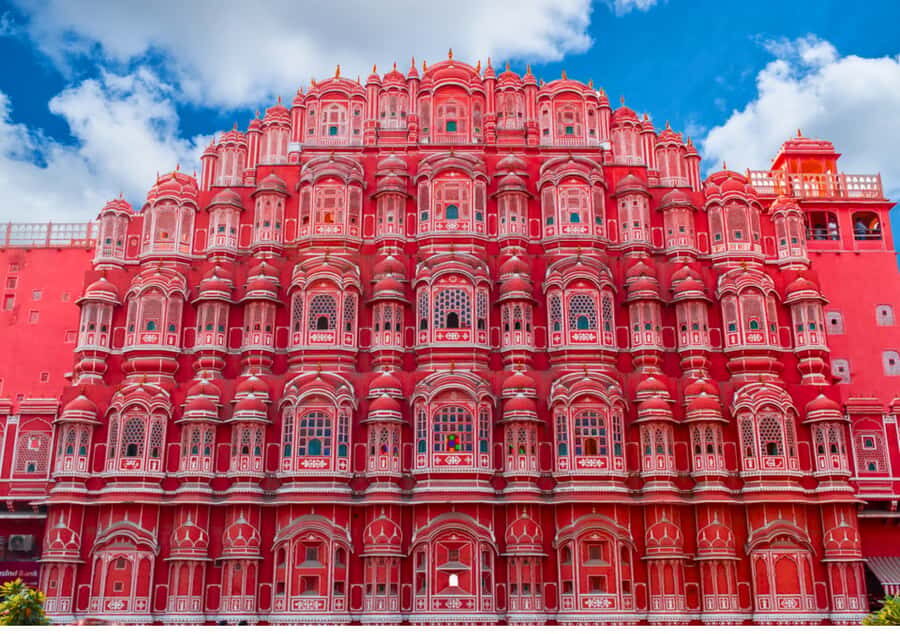
- Hawa Mahal’s 953 windows: see the honeycomb facade up close at the city’s most photographed landmark.
- City Palace complex includes named royal spaces like Mubarak Mahal, Chandra Mahal, and Diwan-i-Khas.
- Jantar Mantar is UNESCO-listed and built in the 18th century for practical astronomy with large instruments.
- Jal Mahal is a photo stop on the way to Amber Fort, so you get the postcard view without losing the day.
- Amber Fort + Panna Meena Ka Kund: a hilltop fort with stories, plus a symmetrical stepwell near it.
- Personal pacing: your guide adjusts around rain and your preferred photo and exploring time.
A full day of Jaipur landmarks, without the self-navigation stress
This is the kind of day that works when Jaipur feels bigger than your energy. You’re not trying to stitch together auto-rickshaws, rickshaw stands, and confusing directions. Instead, you start with hotel pickup at a time you choose, then follow a clear sightseeing flow across the city in a vehicle sized for one group.
That private setup matters. You’re not stuck in a rigid group rhythm, and your driver can take you between major sights efficiently. You also get bottled water, which is a small thing that helps a lot in the Rajasthan sun—especially if your day includes a water-side pause like Jal Mahal.
The itinerary keeps a strong “headline → context → quiet moment” pattern. You begin with the exterior spectacle of Hawa Mahal, then move into royal spaces and UNESCO observatory science, and finally land at Amber Fort and the stepwell area where you can slow down and look around.
Hotel pickup and choosing tuk-tuk vs AC car for Jaipur streets
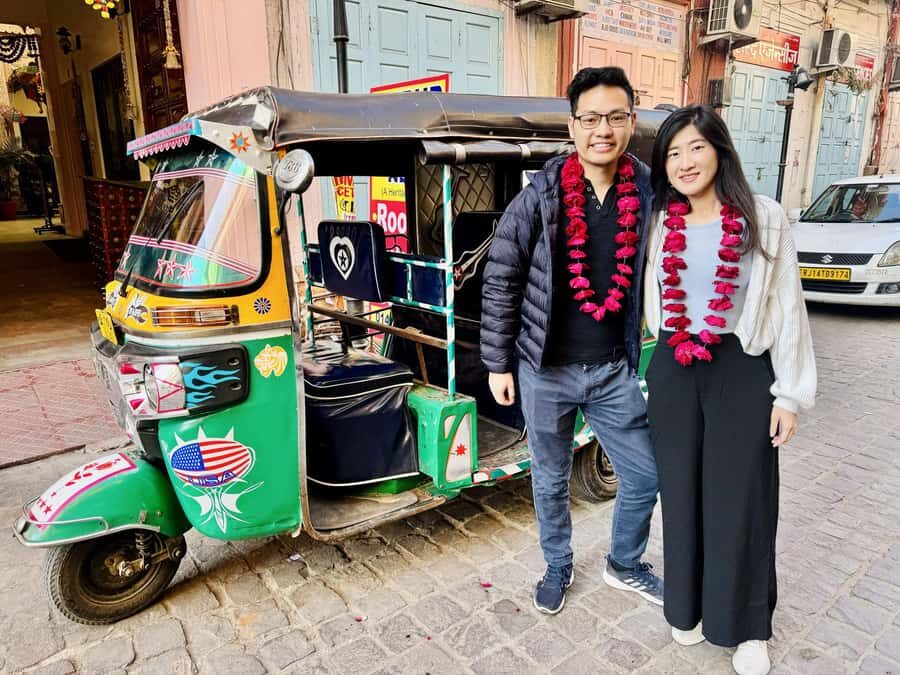
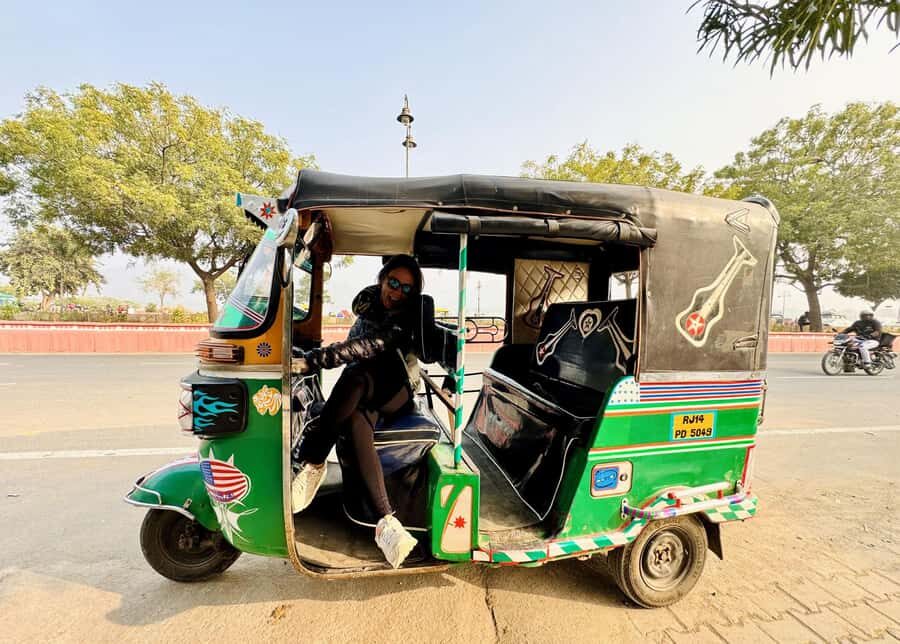
Your ride is your first decision point: tuk-tuk or private AC car. Both options are private, but they feel different in practice.
A tuk-tuk is fun because it matches Jaipur’s street scale. The route goes through the city’s lanes and photo spots, and a tuk-tuk keeps you close to street scenes while still moving as a dedicated vehicle. This is also what many people want when they say they want the trip to feel local, not like you’re just being transported.
An AC car is the practical choice when the weather turns or you’re tired of heat. The day can include heavier walking areas near Amber Fort, so having air-conditioning can take the edge off between stops.
Hawa Mahal’s Palace of Winds: honeycomb beauty and 953 windows
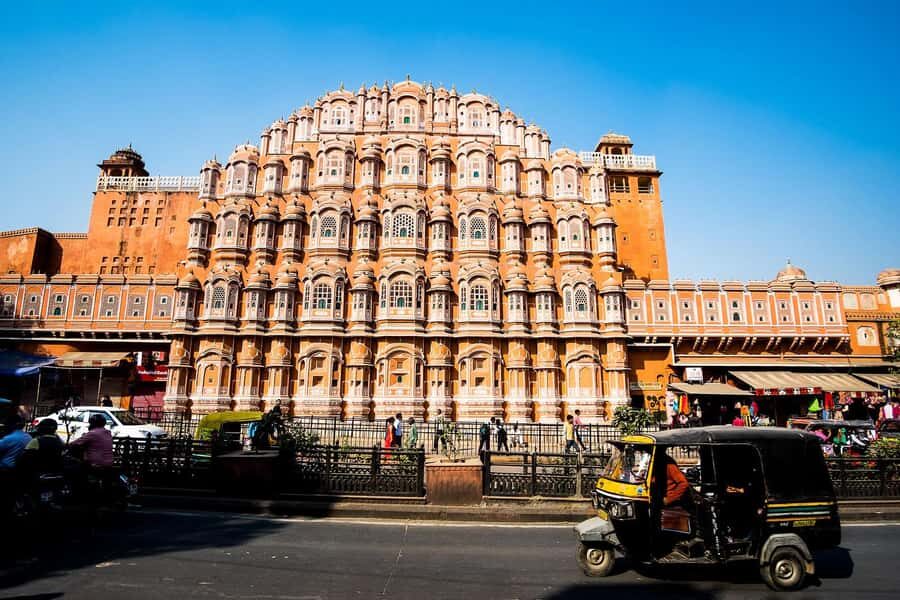
Hawa Mahal, also called the Palace of Winds, is the kind of structure you understand faster in person than from pictures. It’s over 220 years old, designed with a honeycomb pattern of 953 intricately designed windows—a facade that looks delicate but reads as power and precision.
What I’d plan for at this stop is not rushing. This landmark is mostly about exterior viewing and photo composition: getting the angles right, zooming in on the windows, and taking a moment to recognize how the building’s design repeats itself all the way across.
If you care about architectural details, this stop will feel like a fast lesson in how Jaipur court life looked from the outside. You’re seeing a facade built for ventilation and viewing—then you move on to the city’s deeper royal-and-science layers.
City Palace complex: royal residences and named halls you can picture
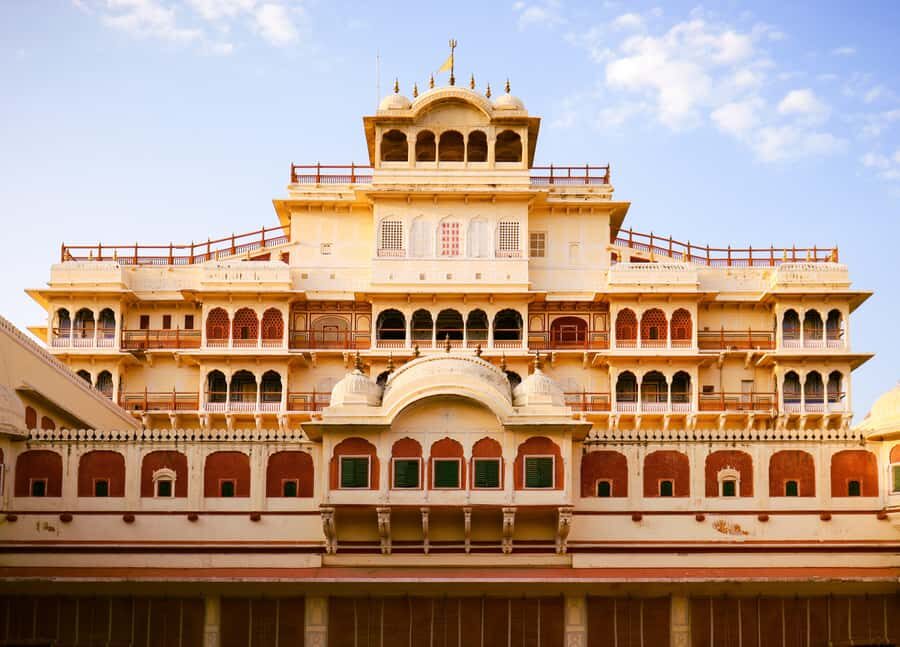
After Hawa Mahal, the route shifts from single-face spectacle to an entire royal compound: the City Palace complex. This isn’t one building; it’s a wide cluster that includes multiple royal residences and halls such as Mubarak Mahal, Chowk, Chandra Mahal, Diwan-i-Khas, and Maharani Palace.
This stop is valuable because it helps you connect what you’ve just seen. Hawa Mahal gives you the visual shorthand for court glamour. City Palace gives you the place structure—the idea that Jaipur’s rulers weren’t just living in one spot, but managing a whole complex of spaces with different roles.
One practical tip: if you want photos, tell your guide right away. The compound can offer many corners for framing, and a good driver-guide combo helps you spend time where you’ll actually want pictures, instead of wandering to find them.
Jantar Mantar: UNESCO astronomy with large measuring instruments
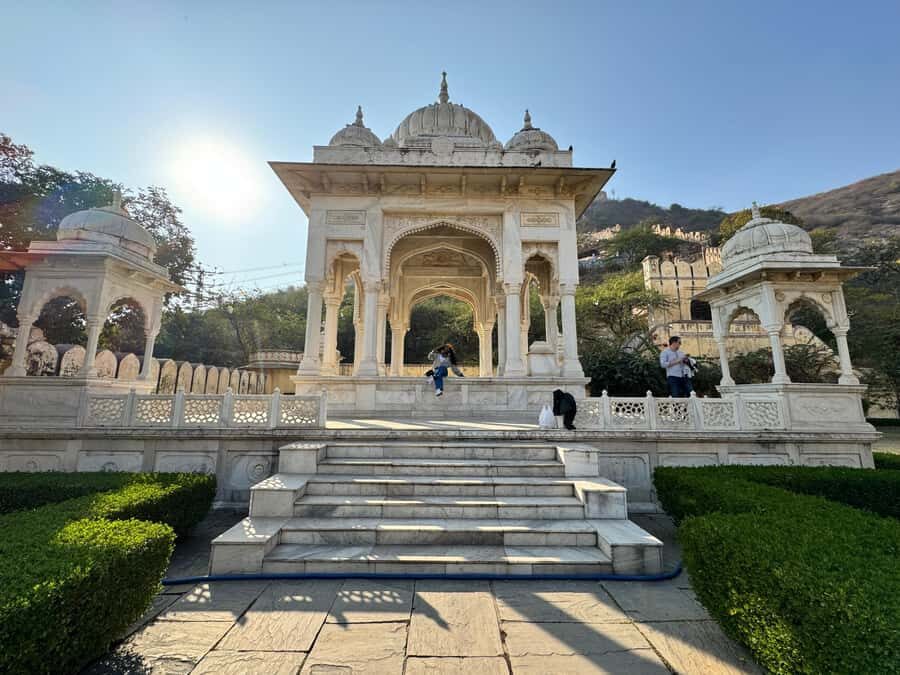
Next comes Jantar Mantar, a UNESCO World Heritage site and one of the city’s most popular attractions. Built in the 18th century, it’s an astronomical observatory designed with a collection of large instruments used to measure time, track celestial bodies, and study the stars.
The key here is to treat it as more than a backdrop. The instruments look like stone objects until someone explains how their scale and shape relate to measurement. When your guide talks through the purpose—timekeeping, star tracking, and the observatory’s design—it clicks quickly.
This stop adds contrast to the royal palace themes. You’re going from court architecture to ancient scientific thinking, still within the same city worldview. If you like “how did they do that without modern tools,” Jantar Mantar is your payoff.
Jal Mahal photo pause: a palace in the water along the Amber route
On the way toward Amber Fort, you stop at Jal Mahal for a scenic break. The palace sits in the middle of the water, and this is mainly a camera-and-cool-down stop—time to look, frame shots, and appreciate the reflective setting.
This pause is smart for two reasons. First, it breaks up the day before Amber Fort’s hilltop walking. Second, it gives you a different Jaipur scene than red stone palaces and observatory instruments.
Just keep expectations practical: the information you have here points to a viewing/photo stop, not a long interior visit.
Amber Fort hilltop time, plus the stepwell that slows everything down
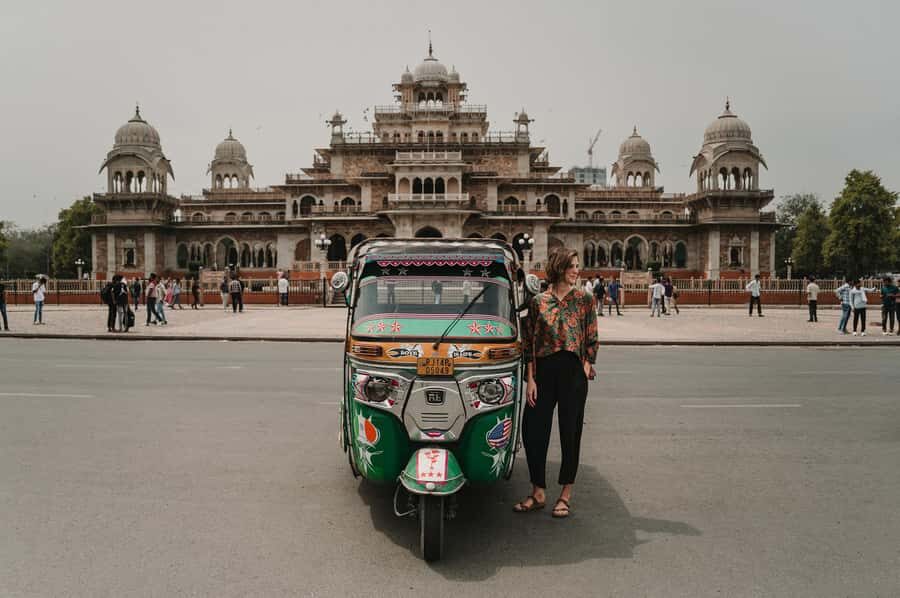
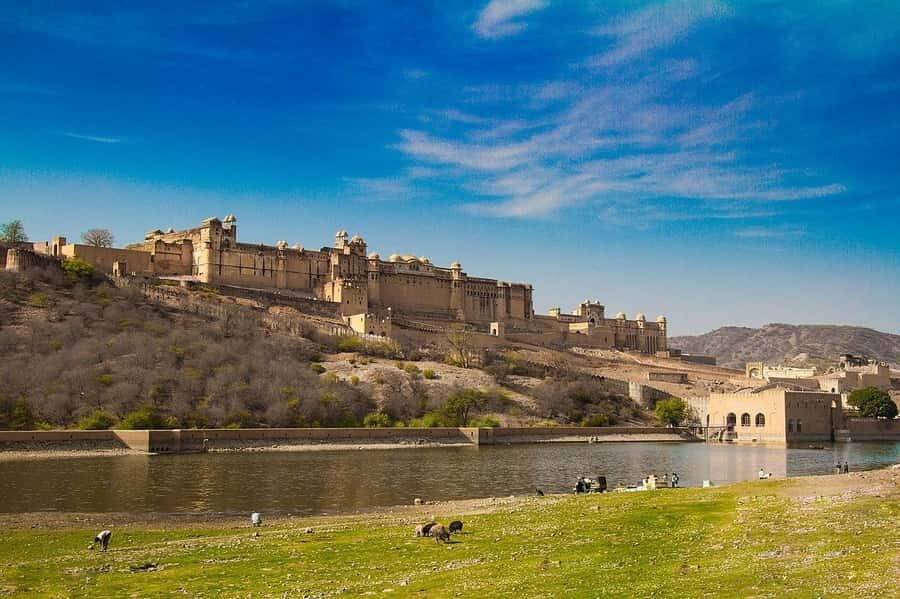
Amber Fort is described as an impressive fort perched high on a hill and one of Jaipur’s principal attractions. This is the big final act of the sightseeing loop, and it’s the place where your guide’s storytelling can make the walls feel alive.
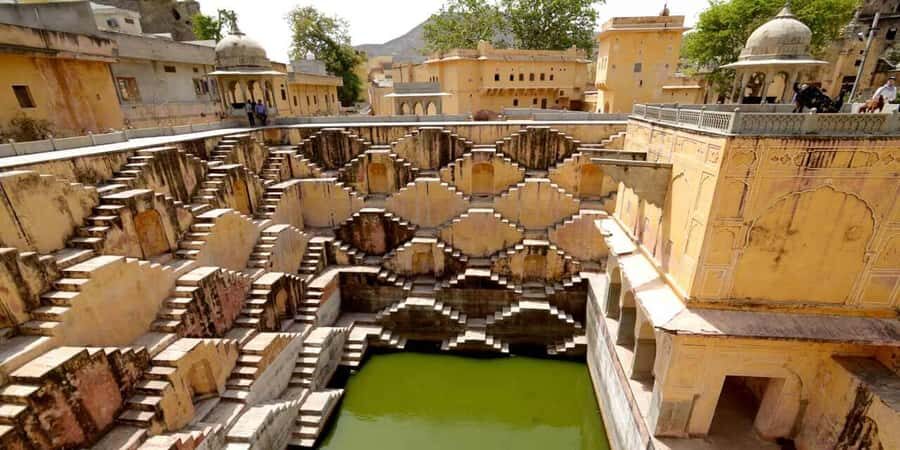
You’ll explore the fort area with a guide who shares history and local tales. And near it sits Panna Meena Ka Kund, also called the Panna Meena Stepwell—a lesser-visited stop known for its architectural design and symmetry.
This stepwell is where the day gets quieter. Instead of crowds and big exteriors, you’re looking at structure, repetition, and an old water reservoir designed with intent. It’s also a good moment to slow down your pace, take fewer but better photos, and look for the geometric patterns.
A practical tip from the real-world experience of this route: if you’re thinking about transport up within the Amber Fort approach, walking up can save time when jeep lines and traffic get messy. Your legs may be the fastest plan.
Wandering the Pink City between big monuments, with optional local detours
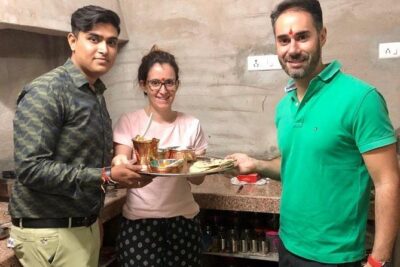
Between the major sights, the day includes time to stroll Jaipur’s streets—interacting with locals and grabbing traditional food samples if you want. This is where the tour can feel more like a lived-in day than a checklist.
Depending on your guide and your preferences, you might also get short stops connected to local crafts and shopping. In real experiences, guides have taken people by block-painting and jewelry places, and helped them keep shopping respectful and pressure-free. One benefit of having a guide is knowing when to steer clear of aggressive selling.
I’d treat these detours as optional offers, not obligations. If something doesn’t interest you, ask to keep moving. A good guide can still add value with explanations and photo stops without pushing you into purchases.
Guides make the day: names you’ll likely meet and what they do well
This tour’s strength is the human side. The day runs smoothly when your driver also acts like a translator of the city—someone who can explain what you’re looking at, help you time your walking, and keep you comfortable.
From the guides attached to this experience, you may see names like Shabeer, Shabbir/Shabbil, Soni, Ali, Khalid, and Imran. The common theme across those experiences is patient pacing and a calm approach, including adapting when weather gets rough. There’s also a recurring point about doing the route efficiently so you don’t feel rushed at each stop.
If you care about photos, look for a guide who plans stops with your picture needs in mind. Several experiences mention the guide helping with photo spots and letting people explore at their own speed. If shopping matters, ask the guide for advice on where to avoid trouble and where selling stays respectful.
Timing, walking, and what to wear in Rajasthan heat and fort areas
This day includes a moderate amount of walking, especially around Amber Fort and the stepwell area. So wear comfortable shoes that can handle uneven surfaces and more steps than you’d expect from a single “fort and a stepwell” description.
Smart casual is recommended. Also plan for temple-style modesty: sleeveless tops and short shorts aren’t suitable if you’re stopping in or near religious areas. Bring a camera, and you’ll want it ready for Hawa Mahal window patterns, Jal Mahal reflections, and the stepwell’s symmetry.
Also, come light. Pets aren’t allowed, and luggage or large bags aren’t allowed, so keep your day-bag sized for comfort.
Price and value: what the $2.70-per-person actually covers
The listed price is $2.70 per person, which is low enough that it’s worth understanding what’s built into that number. In this tour, you get:
- private tuk-tuk or a private AC car (depending on your choice)
- professional English-speaking driver
- hotel/airport/railway station pickup and drop-off
- fuel, parking charges, and government taxes (GST)
- bottled water
What’s not included matters, too. You’ll pay separately for meal expenses, entrance fees to monuments, and any camera fees. Alcoholic drinks are available to purchase.
So is it good value? Yes—if you see this as paying for a full-day route with transport and an English-speaking guide/driver attached to the sights you care about. The best value happens when you would otherwise spend time figuring out transport between far-flung landmarks on your own.
If you’re the type who hates paying separate admission fees and prefers everything “all in,” then this may feel like a partial package. But if you’re okay budgeting for entries while using the tour to save time and stress, it’s hard to beat.
Who this Jaipur tour fits best (and when to skip it)
This is a strong match if you:
- have limited time in Jaipur and want the core highlights in one day
- want a private experience rather than group chaos
- prefer a guided route where someone helps you connect the dots between sights
- like practical photo planning and flexibility around your interests
It’s not the right fit if you:
- have heart problems (not suitable)
- use a wheelchair (not suitable)
- need to carry luggage or travel with pets (not allowed)
Children must be accompanied by an adult, and you’ll want to plan clothing that works for temple visits if the route includes those kinds of stops.
Should you book this Jaipur private full-day tuk-tuk tour?
I’d book it if you want a day that feels organized without feeling rigid: pickup handled, transport sorted, and the main Jaipur landmarks connected through explanation. The combo of Hawa Mahal, City Palace, Jantar Mantar, Amber Fort, and Panna Meena Ka Kund hits the city’s major themes in one loop, and the stepwell stop adds a slower, architectural moment.
I’d hesitate if you hate walking even a moderate amount, or if you’re strictly trying to keep everything fully prepaid with no separate monument or camera costs. And if you need wheelchair access, you’ll want a different plan.
If you go, do it with one goal: ask your guide how you want to spend the day—photo stops, time to wander, and where you’d like the pace to slow down. That’s where this tour turns from sightseeing into a smooth Jaipur day.
FAQ
What transport options do I have on this tour?
You can choose a private tuk-tuk or an AC car, based on your preference.
Is pickup and drop-off included?
Yes. The tour includes hotel/airport/railway station pickup and drop-off in Jaipur.
What is included in the price?
Included are the private tuk-tuk/AC car, an English-speaking professional driver, fuel and parking, government taxes (GST), and bottled water.
What costs are not included?
Meal expenses, entrance fees to monuments, and camera fees are not included. Alcoholic drinks are available to purchase.
How much walking should I expect?
There is a moderate amount of walking during the day, especially around Amber Fort and nearby areas.
What should I wear?
Smart casual attire is recommended. Avoid sleeveless tops and short shorts for temple visits.
What ID do I need to bring?
Bring a passport or ID card. A valid passport is required on the day of travel.
Can I bring luggage or pets?
No. Pets are not allowed, and luggage or large bags are not allowed.
Is the tour suitable for wheelchair users or people with heart problems?
No. The tour is not suitable for wheelchair users and is also listed as not suitable for people with heart problems.
Can I cancel and get a refund?
You can cancel up to 24 hours in advance for a full refund.