REVIEW · JAIPUR
From Jaipur: One-Day Trip From Jaipur to Pushkar
Book on GetYourGuide →Operated by Taj Voyages Tour - TVT India · Bookable on GetYourGuide
One road, one holy town. This Jaipur-to-Pushkar day trip turns a long drive into a focused hit of temples and sacred sights, without wasting your time. I love the stop at the Brahma Temple and how the day centers on Pushkar Lake. The main drawback is simple: it’s a long 14-hour day, so you’ll spend a lot of time in the car.
I also like the comfort level for such a full schedule: pick-up from your Jaipur hotel, an air-conditioned vehicle, and a driver who keeps things running on track. You’ll have a live English-speaking guide (plus Spanish, German, and French), and it’s set up as a private group, not a crowded scramble with strangers.
In This Review
- Key Highlights You’ll Care About
- Why Pushkar Fits Into a One Long Day From Jaipur
- Hotel Pickup To the 150-Mile Drive: How the Day Starts
- Brahma Temple: One Hour That Sets the Tone
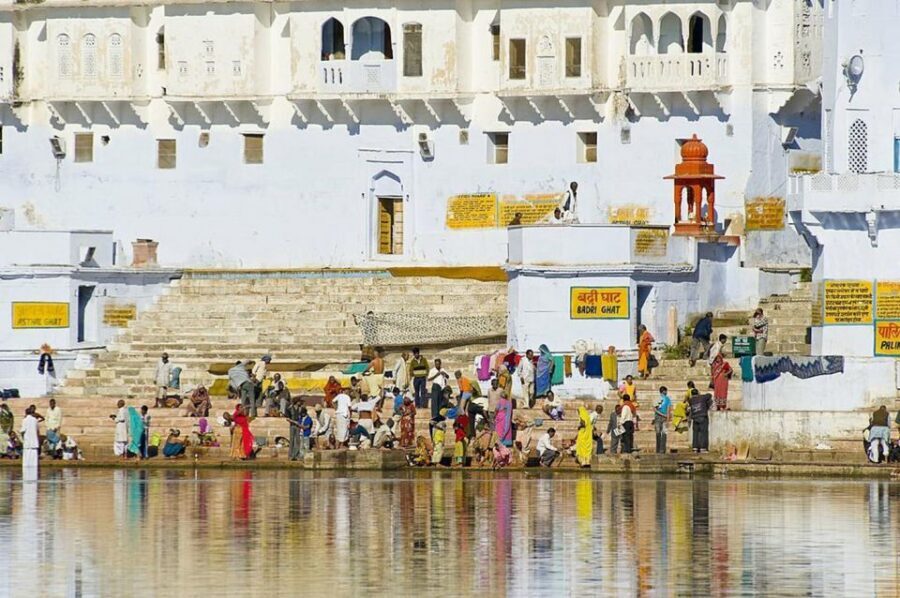
- Pushkar Lake and the 52 Ghats: What You’ll Actually Do There
- Pushkar Bazaar: Jewelry, Clothes, and the Quick Reality Check
- Rangnath Venugopal and Savitri Temple: Why the Side Stops Matter
- Camel Ride in Pushkar: A Full Hour to Decide If It’s Your Thing
- Transportation, Pacing, and What the Private Setup Really Gives You
- Price and Value: Is $47 Worth a 14-Hour Day?
- Practical Tips for Temple Shoes, Sun, and Smooth Walking
- Who This Jaipur to Pushkar One-Day Trip Suits Best
- Should You Book This Jaipur to Pushkar Day Trip?
- FAQ
- How long is the Jaipur to Pushkar day trip?
- What distance does the trip cover from Jaipur?
- What major places do you visit during the day?
- Is there a guided tour or is it self-guided?
- Do I need to buy tickets in advance?
- What languages are available for the live guide?
- How do pickups and drop-offs work?
- Is this a private group or a shared tour?
- Is wheelchair access available?
- Are there restrictions on what to bring or consume?
Key Highlights You’ll Care About
- Air-conditioned, round-trip transport from Jaipur with a dedicated driver and water bottle per person
- Brahma Temple visit with a photo stop, guided tour, and about 1 hour on-site
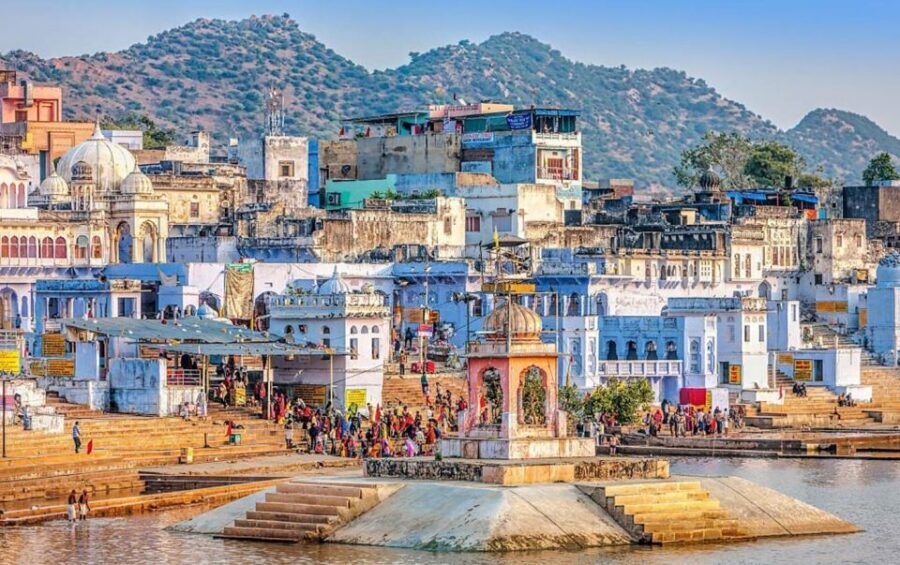
- Pushkar Lake + 52 ghats as the sacred heart, with about 2 hours to walk and look around
- Pushkar Bazaar time for jewelry and clothes, plus a practical reminder to carry cash
- Camel ride in Pushkar for about 1 hour, as long as you’re comfortable on a saddle
- Private group pace that aims to show the key spots without rushing you
Why Pushkar Fits Into a One Long Day From Jaipur
Pushkar is one of Rajasthan’s big pilgrimage anchors, and that matters because it shapes everything you’ll see. This isn’t a “random sightseeing” town. It’s built around devotion, temple life, and the sacred water at the lake.
I like that the trip keeps the focus tight. You get a real taste of what makes Pushkar special—starting with the Brahma Temple (one of the few dedicated places for Lord Brahma) and then moving to the lake that holds about 52 ghats. Even if you’re not deeply religious, you’ll still recognize why people come here: the layout, the routines, and the nonstop visual activity around sacred spaces.
The other reason Pushkar works as a one-day stop is distance and time planning. This tour covers about 150 miles from Jaipur and still gives you structured temple time, market time, and a camel ride.
You can also read our reviews of more tours and experiences in Jaipur


Hotel Pickup To the 150-Mile Drive: How the Day Starts
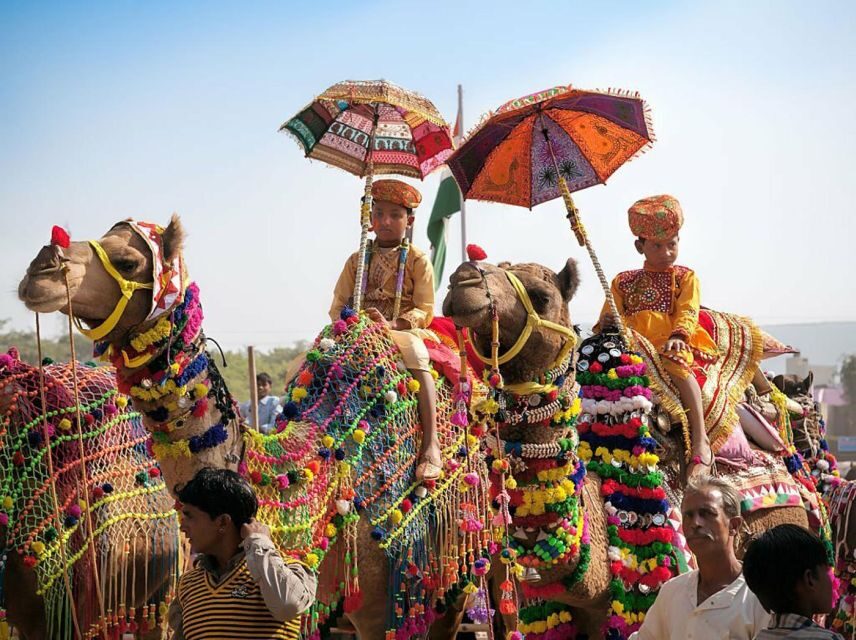
Your day begins with pick-up in Jaipur, meeting you at your hotel (and the same service also covers railway station or airport pick-up if needed). You ride in a luxurious, air-conditioned vehicle, which is a big deal in Rajasthan heat—especially when you’re committing to a full day.
The trip time isn’t short. The schedule is built for a long day: about 14 hours total, with transfers that can stretch depending on traffic and time of day. In plain terms, you’ll want to start the morning rested. If you usually hate early departures, this is one of those trips where you’ll have to accept it for the payoff.
One small but important value point: a guide and driver arrangement means you’re not piecing together local transport, negotiating in unfamiliar traffic, or trying to find the temple entrances on your own. The English-speaking driver and live guide support make the whole drive feel organized.
Brahma Temple: One Hour That Sets the Tone
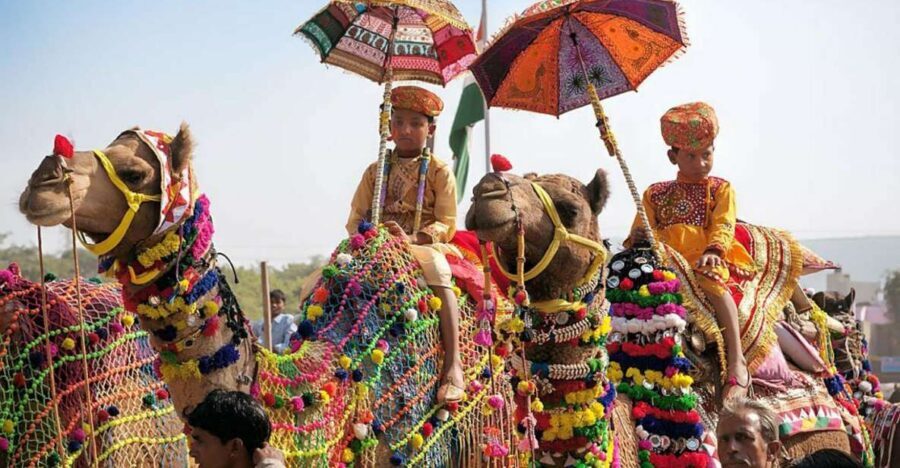
The Brahma Temple stop is your first real anchor. You’ll have a photo stop plus a visit and guided tour, with about 1 hour allocated for this portion.
What makes this temple visit feel meaningful is the specific dedication. The tour highlights it as one of the few places dedicated to Lord Brahma, and that uniqueness helps you understand why this stop is treated as a “must” on Pushkar itineraries.
Also note the practical rule you’ll want to plan around: shoes are not permitted in any house of worship. So wear footwear that’s easy to remove and put back on, and expect some waiting if other worshippers are moving through entrances. The 1-hour block is designed to keep you moving, but temple etiquette still affects the flow.
If you care about photos: you’ll likely get a chance to step into good viewpoints during the photo stop, but you should still expect people and ceremonies around sacred areas.
Pushkar Lake and the 52 Ghats: What You’ll Actually Do There
Next comes the heart of the city: Pushkar Lake. You get about 2 hours here, with a photo stop and both guided and self-guided time.
The key idea is that the lake isn’t just scenic. The trip frames it as the sacred heart of Pushkar, and it mentions the lake has around 52 ghats. That means you can spend time walking along the water’s edge, watching how people move, and seeing how the lake’s multiple steps shape the city’s daily life.
Two helpful ways to make the most of your time there:
- Keep your eyes moving along the ghats. Don’t stare in one direction too long; the best scenes change quickly.
- Use the guided portion to get your bearings fast, then switch to self-guided wandering so you can slow down when something catches your attention.
One consideration: because it’s sacred and active, there can be crowds. You won’t be able to treat this like a quiet museum. For many visitors, that’s the point.
Sunglasses and comfortable walking shoes are worth it. This is also the stage of the day where you’ll feel the morning heat if you’re arriving from the car without a chance to stretch.
Pushkar Bazaar: Jewelry, Clothes, and the Quick Reality Check
After the lake, the tour gives you time in Pushkar town, with the highlights pointing specifically to the Pushkar Bazaar, known for jewelry and clothes.
This is one of the best “soft” parts of the day because it balances the temple focus. Temples give you the sacred side; the market gives you the day-to-day shopping energy.
Here’s the practical reality: bring cash, as it’s listed as a recommended item. Markets in smaller side streets can be hit-or-miss with payment methods. Having cash avoids the awkward moment of scrambling while people move around you.
Also, keep your shopping approach simple. If you want one or two special items, this is a good time. If you want to browse for an hour and compare every stall, the rest of the itinerary might start feeling tight.





Rangnath Venugopal and Savitri Temple: Why the Side Stops Matter
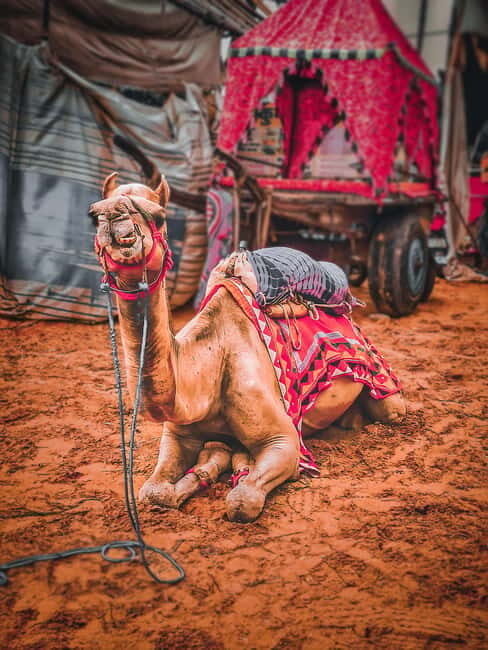
This trip is built around a small set of big names, and it doesn’t treat Pushkar as only one temple and a market. Along the way, you’ll discover prominent temples such as Rangnath Venugopal Temple—and the city is also associated with places like Savitri Temple.
Even when your schedule is tight, these additional temple references matter because they show Pushkar’s broader religious map. You start to see the city as a network, not a single postcard scene.
You should expect the experience here to be more about “seeing and understanding” than about deep, hour-by-hour study at every site. The tour time is allocated to your key anchor stops, with guided context tying the rest together.
Camel Ride in Pushkar: A Full Hour to Decide If It’s Your Thing
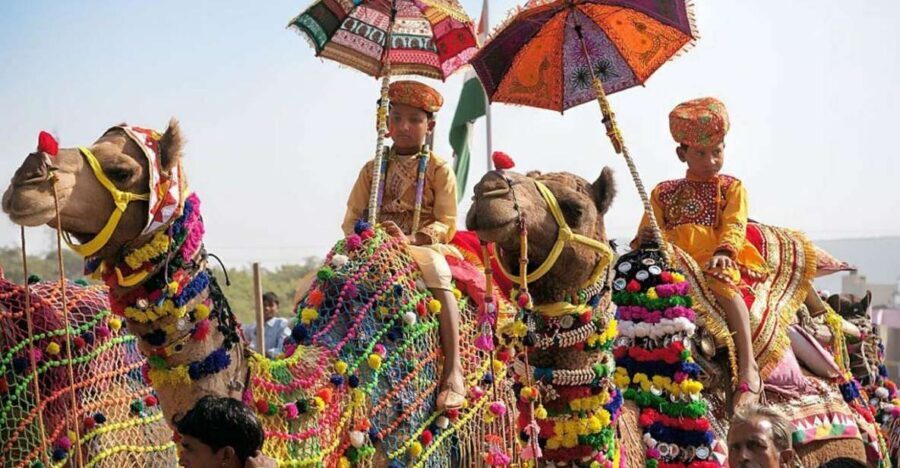
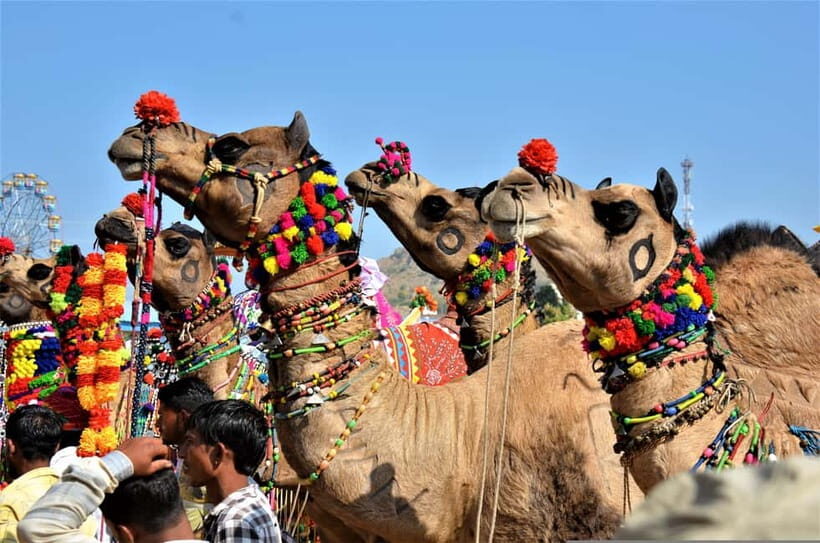
One of the most distinctive parts of this day trip is a camel ride in Pushkar, listed as about 1 hour.
This is a big part of why people choose a one-day tour: it adds a classic regional activity without you having to organize anything yourself. A guided, scheduled ride is also safer and smoother than trying to arrange one on the spot in a busy town.
Still, a “consideration” has to be mentioned: this tour is listed as not suitable for pregnant women. If you have mobility limits or health concerns, treat camel rides as something to discuss directly before you book.
For everyone else, wear comfortable clothes and expect you might get dust. Bring a layer if you get chilly after the car ride. The ride is part fun, part practical experience—one more way to feel the local rhythm of Pushkar.
Transportation, Pacing, and What the Private Setup Really Gives You
A private group format can sound like marketing fluff, but here it actually matters. With a planned route, you spend less energy figuring out where to go next and more energy enjoying each stop.
One thing I really like about the way this trip is positioned is the emphasis on smooth logistics: an English-speaking driver, pick-up and drop-off that meet you at your chosen start point in Jaipur, and round-trip transport so the day doesn’t fall apart when traffic shifts.
In the same spirit, skip-the-ticket-line support is a small perk that can save time at entry points. When you’re cramming a full day into 14 hours, any “dead time” adds up.
Also, the reviews you’ll see about this style of service point to a calm, punctual approach. The idea is that you visit the main spots—Brahma Temple, Pushkar Lake, the market area—without feeling like someone is yanking you forward every five minutes.
Price and Value: Is $47 Worth a 14-Hour Day?
At $47 per person, this tour pricing lands in the category of a solid day-trip bargain—mainly because so much is bundled.
Here’s what you’re paying for, in practical terms:
- A private-group vehicle with round-trip service from Jaipur
- A driver and an English live guide setup
- Skip-the-ticket-line help
- Pick-up/drop-off at hotel, railway station, or airport
- A water bottle per person
What you’re not paying for is the time and hassle of arranging everything yourself: car rental, driver coordination, route timing, and figuring out temple entrances plus in-town scheduling. For many people, that’s the real value.
It’s also value if you want a structured day that hits the essentials. If you’re the type who loves unplanned wandering and stops, this tour’s tight time blocks might feel limiting. But if you want a reliable route and a guided framework, $47 can be a reasonable price for the convenience and certainty.
Practical Tips for Temple Shoes, Sun, and Smooth Walking
I’ll keep this practical, because Pushkar’s rules are simple but real.
- Wear comfortable shoes you can remove quickly. Shoes are not permitted in houses of worship.
- Bring sunglasses and comfortable clothes, since you’ll be outside around the lake and bazaar.
- Carry cash for market purchases.
- Bring passport or ID card (a valid, up-to-date ID is needed on travel day).
- Plan on no alcohol and drugs during the trip, since those aren’t allowed.
Timing also matters. Transfers depend on traffic and time of day. Even with a good driver, you should treat the schedule as “planned,” not “guaranteed to minute.”
Who This Jaipur to Pushkar One-Day Trip Suits Best
This is a great fit if you:
- Want a one-day introduction to Pushkar without building the plan yourself
- Prefer a guided day around religious sites and key landmarks
- Like structured time for photos and walking (Brahma Temple and Pushkar Lake are built in)
- Enjoy regional activities like the camel ride
It may be less ideal if you:
- Hate long car days (14 hours total is substantial)
- Want extra time to deep-study temples without moving on
- Have pregnancy or health constraints, since it’s listed as not suitable for pregnant women
Should You Book This Jaipur to Pushkar Day Trip?
I’d book this if you want a reliable, organized one-day trip from Jaipur to Pushkar with a clear route and minimal friction. The value is strongest when you appreciate bundled transport, an English live guide, and a plan that hits the big anchors: Brahma Temple, Pushkar Lake, the bazaar, and the camel ride.
I’d hesitate only if you’re sensitive to long travel days or if you’re hoping for a completely flexible schedule with lots of extra time. In this format, the upside is focus; the tradeoff is fewer hours to roam beyond the planned stops.
If you’re aiming for a smooth day with the major sights and a local-feeling market hour, this private setup is a smart way to do it.
FAQ
How long is the Jaipur to Pushkar day trip?
The duration is listed as 14 hours.
What distance does the trip cover from Jaipur?
The drive is about 150 miles.
What major places do you visit during the day?
The tour includes the Brahma Temple, Pushkar Lake, and time in Pushkar, including the Pushkar Bazaar. It also highlights Rangnath Venugopal Temple and includes a camel ride.
Is there a guided tour or is it self-guided?
You get both guided and self-guided time, including guided touring at Brahma Temple and guided touring time at Pushkar Lake.
Do I need to buy tickets in advance?
The tour includes support to skip the ticket line.
What languages are available for the live guide?
The live tour guide is available in English, Spanish, German, and French.
How do pickups and drop-offs work?
You get pick-up and drop-off from your Jaipur hotel, or from the railway station or airport.
Is this a private group or a shared tour?
It’s listed as a private group.
Is wheelchair access available?
Yes, it’s listed as wheelchair accessible.
Are there restrictions on what to bring or consume?
You should bring passport or ID card, comfortable shoes, sunglasses, comfortable clothes, and cash. Alcohol and drugs are not allowed.