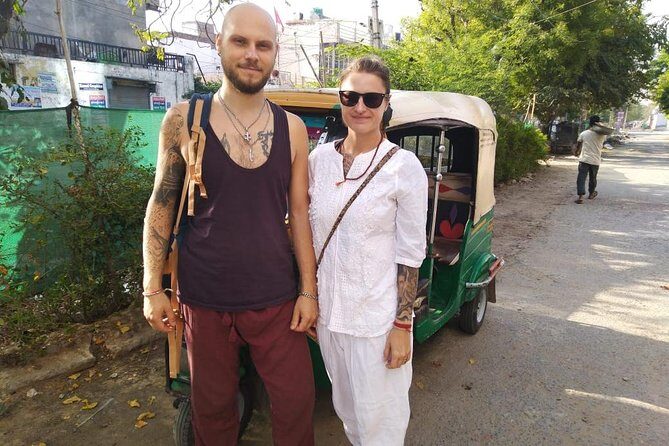
Old Delhi hits different when your guide has stories. This walk strings together Mughal sights, Sikh and Jain faith sites, and classic food streets into one easy-to-follow route. I like Rahul’s street-level explanations, and I like the small group size that keeps the pace human and questions easy.
One thing to consider: you’re walking through crowded Old Delhi streets with a 4:00 pm start, so comfy shoes and a little patience for the city traffic rhythm matter. Also, since you enter active places of worship, you may be asked to follow simple on-site rules while you’re there.
In This Review
- Key highlights you can plan around
- A 3-hour free walking plan for Old Delhi’s best contrasts
- Meet Rahul and set the pace at Lal Quila
- Red Fort from the outside: learn what to notice first
- Gurudwara Sis Ganj Sahib and the community kitchen tour
- Sri Digambar Jain Lal Mandir and the bird hospital
- Gali Paranthe Wali: the food lane that helps you stay grounded
- Naughara: the row of nine houses and the patience to notice details
- Khari Baoli spice market: browse, learn, and follow the 300-year thread
- Fatehpuri Mosque: a quick Mughal-era story in 10 minutes
- What the low price actually buys you
- Who this tour fits best (and who might want something else)
- Simple tips to get more out of the walk
- Should you book the Free Walking Tour Old Delhi with Rahul?
- FAQ
- Where does the tour start?
- What time does the Old Delhi walking tour begin?
- How long is the tour?
- How much does it cost?
- Are admission tickets required for the stops?
- Is free cancellation available?
Key highlights you can plan around
- Rahul’s focus on local insight across Red Fort, gurudwara, Jain temple, and Mughal-era mosque stops
- Big moments in a short 3 hours without heavy ticketing or long detours
- Gurudwara Sis Ganj Sahib community kitchen tour that adds real, practical context
- Sri Digambar Jain Lal Mandir’s bird hospital inside gives you a surprising look at compassion in action
- Khari Baoli spice market stop with a 300-year-old thread you can follow while you browse
- Ends back where you start, so you avoid the classic Old Delhi “now what” feeling
A 3-hour free walking plan for Old Delhi’s best contrasts
This tour is built for people who want the big landmarks and the everyday texture of Old Delhi, without spending half a day trying to piece it all together. It starts at Lal Quila Angoori Bagh Rd in the Chandni Chowk area, runs about 3 hours, and returns to the meeting point. That loop format matters because Old Delhi can feel confusing fast, especially if it’s your first time.
The price is low enough that you can treat it like orientation. At $3.96 per person, you’re paying for guidance and timing more than for paid attractions. In practice, that means you can spend your day’s budget on food, transit, and anything else that catches your eye later.
Most importantly, this is not just a checklist. The route intentionally swings from outside views to active places of worship and food lanes. If you like travel moments where you learn what a place means to the people who use it daily, this format fits.
You can also read our reviews of more walking tours in New Delhi



Meet Rahul and set the pace at Lal Quila
The meeting point is at Lal Quila Angoori Bagh Rd, in the broader Chandni Chowk area. The tour also notes it’s near public transportation, which I consider a big plus in Delhi. Getting to Old Delhi by transit can be easier than trying to predict car or taxi routes in real time.
You start at 4:00 pm. That timing is smart for two reasons. First, you get to see a stretch of Old Delhi in late afternoon light, which can make walking feel more comfortable than midday. Second, you’re well-positioned to keep going after the tour for dinner on your own, since you’re not stuck inside a long, rigid schedule.
Group size is capped at 15 travelers. That’s not a huge number, which usually means less waiting around at each stop and more chance to hear the guide’s explanations clearly.
Red Fort from the outside: learn what to notice first
Stop one is Red Fort, and you’ll see it from outside for about 20 minutes. There’s no admission ticket required here, which keeps the start easy and low-friction.
Red Fort can look like one thing if you only see it through a photo lens. The value of a guided outside view is that you learn what to pay attention to: the scale, how it sits within the surrounding streets, and why this landmark still anchors Old Delhi’s sense of place.
Practical takeaway: arrive ready to look slowly. Even if you only walk past, you can still pick up cues about the fort’s role and the way the neighborhood grew around it.
Gurudwara Sis Ganj Sahib and the community kitchen tour
Next up is Gurudwara Sis Ganj Sahib for around 30 minutes. Again, admission is free. This stop is special because it doesn’t stay at the level of architecture. You also get a community kitchen tour, which adds a practical human layer to what you’re seeing.
A gurudwara is more than a building. It’s a place where faith shows up in daily routines, including shared meals prepared for visitors and community members. Seeing the kitchen part of the experience helps you connect the symbolism of the space to real actions.
One consideration: because this is a working religious site, you should be ready for the flow of people moving through the area. Keep your phone handling low-key, follow any guidance from staff, and treat quiet respect as part of the experience.
Sri Digambar Jain Lal Mandir and the bird hospital
Stop three is Sri Digambar Jain Lal Mandir, about 20 minutes. This is where the tour gets noticeably more distinctive. You’ll explore Jainism, and you’ll also see a bird hospital inside.
That bird hospital detail is exactly the kind of stop that changes your Old Delhi mental map. It’s not only about temples as monuments; it’s about how religious values can turn into care for living creatures. Even if you don’t know Jain traditions ahead of time, you’ll have a chance to understand the idea as you walk through the space.
If you’re the kind of traveler who likes questions like how faith shows up in everyday life, this is one of the strongest points on the route.






Gali Paranthe Wali: the food lane that helps you stay grounded
Then you head to Gali Paranthe Wali for about 30 minutes. This is a short stop, but it’s timed like a break for your senses. You get to enjoy the famous parathas of Old Delhi.
A food lane stop works best when you don’t treat it like a museum exhibit. Let it be casual. Use the time to watch how people order, how food moves, and what makes a paratha shop feel like a place people return to.
What I’d suggest: have a plan for your appetite. Since the tour itself doesn’t promise a meal as a formal inclusion, treat this as time to grab something you choose and can share with your own preferences.
Naughara: the row of nine houses and the patience to notice details
Stop five is Naughara, the row of nine houses, around 20 minutes. The tour frames them as about 300 years old.
This is a different kind of stop. You’re not just looking at one big monument. You’re seeing a grouped arrangement of older houses that gives you a feel for how neighborhoods used to be shaped and organized.
If you’re used to landmark tourism, this can feel slower at first. But it’s worth it because it helps you understand Old Delhi as a lived-in patchwork, not only a stage for famous sights.
A small caution: old lanes and heritage structures can be easier to observe from a careful position than by trying to squeeze close. You’ll enjoy this more if you focus on what’s visible without rushing into tight spaces.
Khari Baoli spice market: browse, learn, and follow the 300-year thread
Next is Khari Baoli, described as the biggest spice market of Asia, with a hidden spice mention connected to about 300 years of history. You’ll spend about 20 minutes here, and admission is free.
Even if you’ve visited other markets, Khari Baoli has that sensory “you’ve arrived” effect. Spices bring color, smell, and texture, and the best part of doing it with a guide is learning what to ask and what to notice. Instead of just buying random bags, you can connect a specific spice to how people use it.
How to make this stop pay off:
- Take a second before buying. Identify what you came for and why.
- Ask about what’s used locally versus what’s mostly for tourists.
- Don’t pressure yourself to buy at all. Market browsing is the point.
Also, markets change fast. If you see something unusual, grab a quick photo and move on. You’ll get more enjoyment by keeping your pace with the group.
Fatehpuri Mosque: a quick Mughal-era story in 10 minutes
Stop seven is Fatehpuri Mosque, about 10 minutes. It’s also free to explore, and the tour highlights that it was built by the wife of Shahjahan.
Even though it’s brief, this is a meaningful capstone. It gives you a final Mughal-era reference point after the earlier stops, and it closes the loop between the fort-world and the religious sites you’ve already visited.
Because the time is short, treat it as a “listen and look” moment. You’ll get more out of the stop if you let the guide’s context shape what you notice in the architecture.
What the low price actually buys you
With tours, price can mean one of two things: a bargain because everything is free, or a bargain because value is low. Here, the value comes from three places:
First, you pay for timing. The route is structured so you don’t spend your evening crossing the city to connect distant points.
Second, you pay for interpretation. The stops are mostly free or outside-focused, which means the guide’s explanations do a lot of the heavy lifting.
Third, you pay for flow in a place that can otherwise feel chaotic. A maximum group size of 15 helps keep that flow realistic.
So if your budget is tight, this is a smart choice. If your budget is bigger, it still makes sense as an orientation walk you can build on.
Who this tour fits best (and who might want something else)
This tour is ideal for you if:
- You want a guided introduction to Old Delhi’s mix of faith, food, and landmark sights
- You like short, efficient stops instead of one long monument visit
- You’d rather spend time walking and learning than buying multiple tickets
It may be less ideal if:
- You want a deep, museum-style experience at only one site
- You’re looking for a long food crawl with a set menu and guaranteed tastings
- You dislike walking in busy streets even for a few hours
The 4:00 pm start also suggests it’s meant to be part of a larger day. I’d plan your evening meals around the tour area, since you’ll end back at the meeting point.
Simple tips to get more out of the walk
You’ll enjoy this more if you show up ready for the rhythm of Old Delhi:
- Wear comfortable shoes for short stretches of uneven or crowded street movement.
- Carry a small amount of cash just in case you decide to buy something at the food lane or spice market.
- Keep your phone use respectful inside places of worship.
- Bring a water bottle if you tend to walk a lot, even though water isn’t listed as a tour feature.
One last thing: don’t rush each stop. The itinerary is short by design, so your best photos and best learning often come from slowing down for a minute when the guide points something out.
Should you book the Free Walking Tour Old Delhi with Rahul?
If you want a straightforward way to understand Old Delhi in about three hours, I’d book this. The combination of Red Fort outside, Gurudwara Sis Ganj Sahib with the community kitchen, a Jain temple with a bird hospital, and a spice market stop is a nice range of experiences that doesn’t pile on paid admissions.
The price is low enough that you’re not taking a financial risk on an intro day, and the max group size helps the tour stay personal. The only real downside is the usual one for Old Delhi: it’s busy, you’ll walk, and you’ll want to be flexible.
If your goal is to get your bearings and leave with clear mental links between landmarks, faith, markets, and street food, this is a strong choice.
FAQ
Where does the tour start?
It starts at Lal Quila Angoori Bagh Rd, Netaji Subash Place, Lajpat Rai Market, Chandni Chowk, New Delhi, Delhi 110006, India.
What time does the Old Delhi walking tour begin?
The start time is 4:00 pm.
How long is the tour?
The duration is about 3 hours.
How much does it cost?
The price is $3.96 per person.
Are admission tickets required for the stops?
The itinerary lists admission ticket as free for each stop, and Red Fort is viewed from outside.
Is free cancellation available?
Yes. You can cancel up to 24 hours in advance for a full refund.