REVIEW · JAIPUR
Feel Jaipur Like a Local with Guide & Old City Heritage Walk
Book on GetYourGuide →Operated by Rajasthan Tour Car Driver · Bookable on GetYourGuide
A great day starts with one good guide. This Jaipur like a local route strings together the city’s must-see forts, royal sites, and old-street life with just enough time to actually look. I like how it mixes big-ticket sights with quieter heritage corners, and I especially like the guided context that makes the buildings click instead of just posing for photos. I also appreciate the price-to-coverage value, but do note the walk is moderate and you’ll be in crowds at the popular stops.
The flow is simple and efficient: you begin around Hawa Mahal, then head into Amber’s hilltop fort world, swing by the water sites, and end with the old-city streets and gates. The guides I saw in the reviews stood out for being funny, punctual, and willing to tailor the day. One possible drawback: some of the best views are photo-friendly, but that means a few stops are brief, so you might want a slower second visit if you fall in love with a place.
In This Review
- Key things to know before you go
- From Hawa Mahal meeting point to a full day of Jaipur sights
- Amber Fort: the hilltop showpiece, explained in human terms
- Panna Meena ka Kund: the symmetry you notice only when someone points it out
- Jal Mahal photo stop, plus Royal Gaitor for the quieter marble side
- City Palace: where royal space and daily life overlap
- Hawa Mahal exterior: a 30-minute lesson in form and function
- Pink City streets and a shopping-friendly pace
- The 30-minute old city heritage walk: where you feel Jaipur living
- Guides and drivers: why the human touch matters here
- Price and value: $8 for a full-day route that covers real ground
- What to bring, and how to survive Jaipur heat with less annoyance
- Who should book this Jaipur like a local walk
- Should you book it?
- FAQ
- How long is the Jaipur heritage walk experience?
- Where does the guide meet?
- Is hotel pickup and drop-off included?
- What’s included in the price?
- Are meals included?
- Is the tour suitable if I have mobility issues or use a wheelchair?
Key things to know before you go
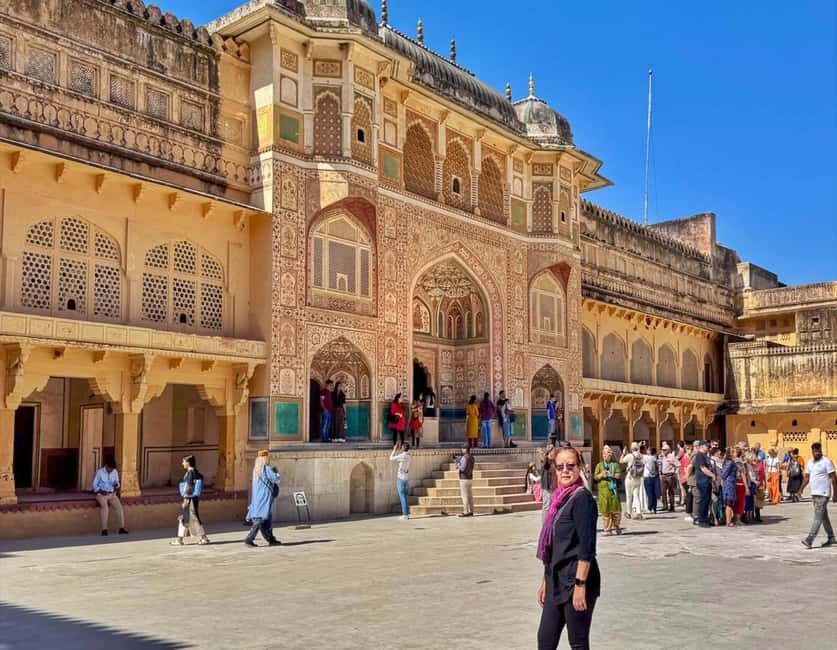
- Amber Fort with courtyards and hilltop views, not just a quick photo run
- Panna Meena ka Kund near Amber Fort, a symmetrical stepwell worth pausing for
- Jal Mahal for a lake-side water palace photo stop and quick look
- Royal Gaitor for marble cenotaphs in a calmer setting
- City Palace + Hawa Mahal as the core royal-design duo, with guided explanations
- 30-minute old city walk through heritage buildings, markets, historic homes, and gates
From Hawa Mahal meeting point to a full day of Jaipur sights
This tour is set up like a classic heritage sampler, with pickup options if you want it—but the stated meeting point is right in front of Hawa Mahal. That’s useful because it puts you near one of Jaipur’s most recognizable façades before you do the rest of the legwork. If you’re starting from central areas, the logistics often feel painless.
You travel in an air-conditioned vehicle, and you get bottled water to handle the basic “Jaipur is warm” math. The day runs about 8 hours, with a comfortable pace built from short site visits plus a couple longer anchors (Amber Fort and City Palace). That balance is important. Too many Jaipur tours turn into a frantic checklist; this one tries to keep movement steady without making every stop a sprint.
You can also read our reviews of more walking tours in Jaipur


Amber Fort: the hilltop showpiece, explained in human terms
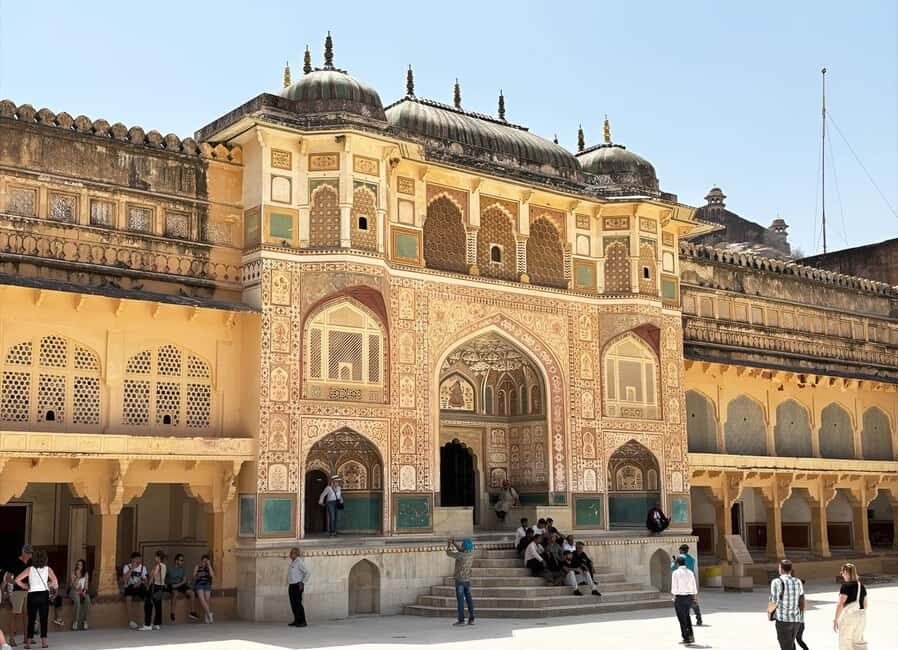
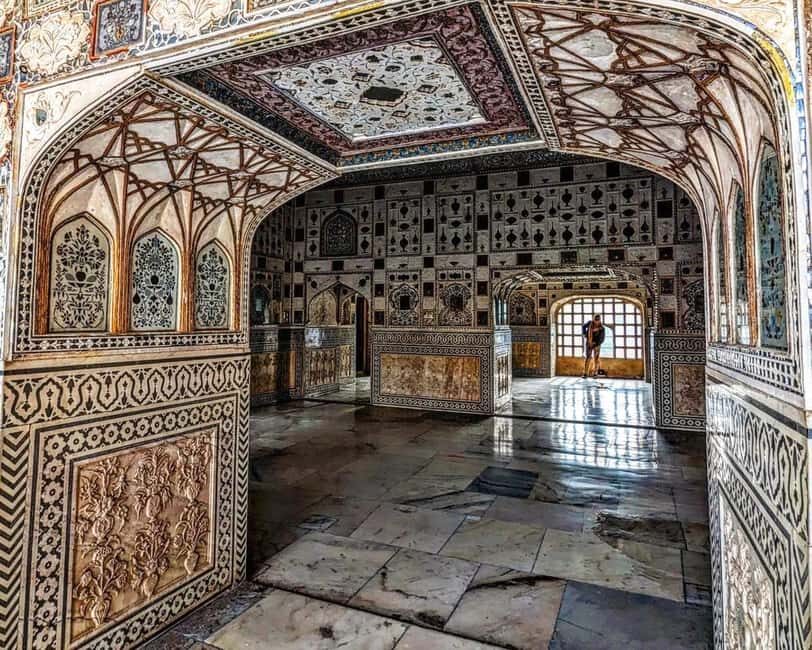
Amber Fort is the morning anchor, and it’s the kind of place where the details matter. You get roughly two hours to explore courtyards and palaces, plus guided stories that help you understand what you’re looking at instead of just guessing. From the upper areas you also get those classic views over the hills—one reason people come early.
Here’s what I love about doing Amber Fort with a guide: they point out how the spaces connect. Courtyard to palace, palace to vantage points, and the fort layout to the way power was displayed. If you’ve only ever seen Amber Fort from afar, inside can feel like a maze. With a guide, you get your bearings faster.
Practical note: expect crowds. Even when you get through the main areas, it can get busy in stairy, narrow spots. Wear comfortable shoes because you’ll be doing real walking on uneven surfaces. If the heat is strong, take short breaks when you can—there’s no prize for suffering.
Panna Meena ka Kund: the symmetry you notice only when someone points it out
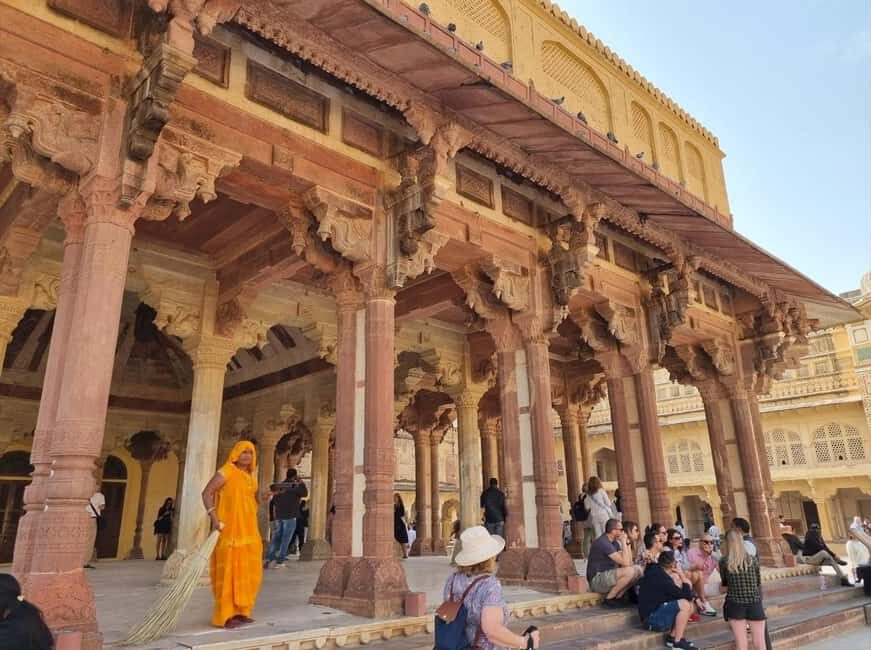
After Amber, the tour stops at Panna Meena ka Kund, the stepwell near the fort. You’ll have about 30 minutes for photos and a guided look. This is one of those heritage spots where the shape is the story.
A stepwell is more than stairs and water architecture. It’s a designed response to climate and daily needs—how people accessed water, cooled themselves, and gathered. With a guide, you’re more likely to notice the symmetry and the intentional patterning, instead of treating it like a quick photo moment.
It’s also a nice breather. After the fort’s scale, the stepwell feels more intimate. You can step back, take a breath, and actually look at the structure. If you care about how people lived here—not just what royals built—this stop pays off.
Jal Mahal photo stop, plus Royal Gaitor for the quieter marble side
Then you hit Jal Mahal as a photo stop. It’s around 15 minutes, mainly for the iconic view of the Water Palace floating over Man Sagar Lake. Even if you don’t spend hours there, it’s still a worthwhile pause. The sight reminds you that Jaipur isn’t only forts on hills; it also uses water and scenery as part of the visual language.
Right after that, the itinerary includes Gaitor Ki Chhatriyan (Royal Gaitor) for about one hour. This is the calmer counterweight to the louder sightseeing. You’ll see royal cenotaphs, and the setting is peaceful enough that the guide’s pacing can slow down. The marble carvings also become the point. Instead of crowds and gate lines, you get time to notice details.
If your travel style is “show me the main highlights, but let me breathe too,” this pairing works. You get the famous lake moment, then you switch gears to the quieter craft and memorial atmosphere.
City Palace: where royal space and daily life overlap
City Palace is one of the core stops and gets about two hours. This is where you feel the scale of Jaipur’s royal world in a more immediate way—courtyards, museums, and the historic residences connected to the former royal family.
What makes this stop valuable isn’t only that it’s grand. It’s that it’s structured. With guided explanations, you can connect what you’re seeing to the way royal power was staged and practiced. The palace isn’t just one building. It’s a set of connected spaces, and understanding that helps your brain keep the tour organized.
One thing I like for sites like this: you can often go at two speeds. If you’re into design and storytelling, you follow the guide’s thread. If you’re tired, you still get enough time to look around and then regroup without feeling like you must absorb everything at once.
You can also read our reviews of more guided tours in Jaipur






Hawa Mahal exterior: a 30-minute lesson in form and function
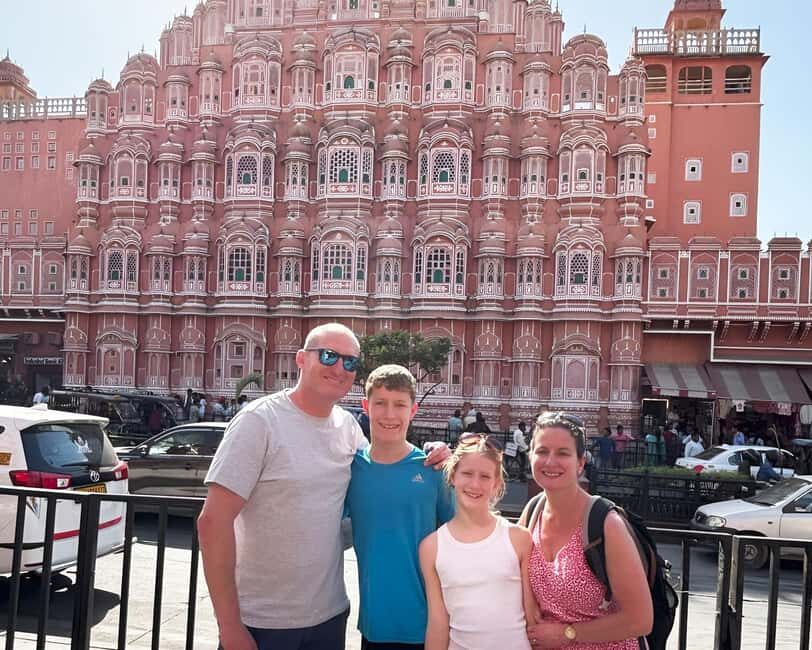
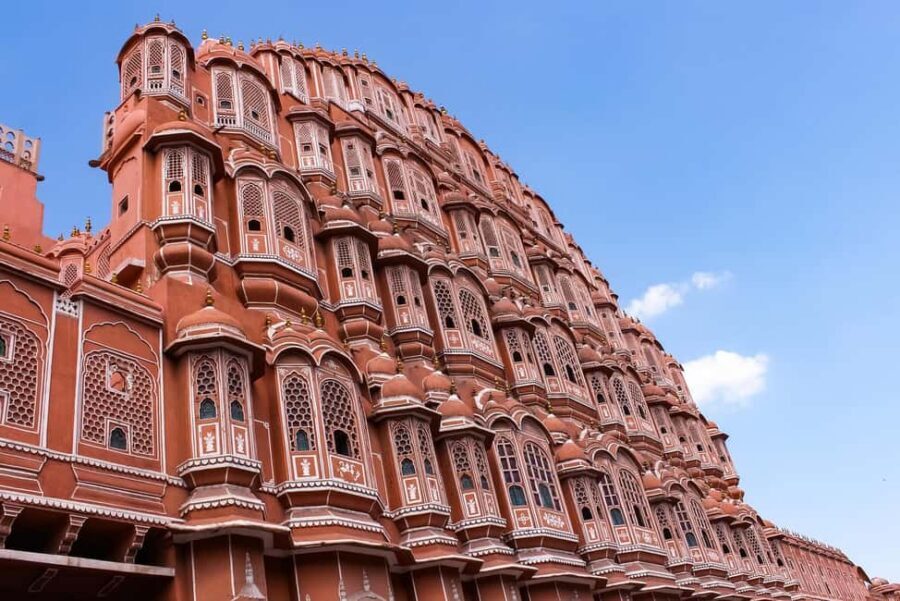
Next is Hawa Mahal. You’ll get around 30 minutes for exterior viewing and a guided explanation. The Palace of Winds is an instantly recognizable shape, but it’s easy to reduce it to a postcard without context.
With the guide here, you’ll learn the purpose behind the unique design—why it exists and how it relates to the daily needs of the people who used that space. Even though the time is shorter, it’s enough to understand what you’re looking at. And yes, you’ll want photos, but try to take a few from angles that show the façade pattern, not only straight-on shots.
Because it’s close to where you meet, it also acts like a bookend: you start near it and you finish near the old-city rhythm.
Pink City streets and a shopping-friendly pace
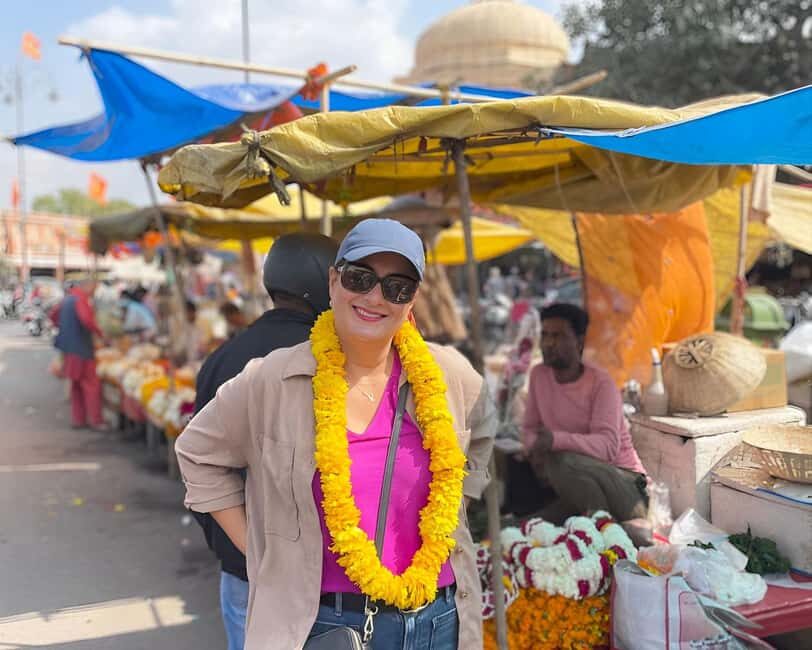
After Hawa Mahal, the tour brings you into the Pink City area for about 30 minutes. There’s time for sightseeing and shopping, and this is where you can shift from monuments back to everyday Jaipur.
Important: the “right” way to shop here is not to sprint. If you want souvenirs, use the guided portion as your story framework, then browse as a second activity. Look for practical items you’ll actually use—textiles, small crafts, things that make sense to pack and carry.
Also keep an eye on your time. Thirty minutes goes fast when you’re pulled toward stalls. If you love markets, you might consider planning extra time in the Pink City after the tour ends so you can return at your own pace.
The 30-minute old city heritage walk: where you feel Jaipur living
The last featured portion is a 30-minute guided walk through the old city. This isn’t meant to be long or exhausting. It’s meant to give you a sense of texture: heritage buildings, traditional markets, historic homes, and the grand entrance gates.
This kind of walk is the secret sauce on many city tours, because it connects the big monuments to the living street grid. You’ll get a feel for what’s still here, how the streets function, and where the historic elements blend into everyday routines.
You also learn how to navigate. Once you’ve walked a few blocks with a guide, you start to understand the logic of distances and sight lines. That makes it easier to explore more later—without getting turned around.
And yes, you’ll want your camera ready, but keep your water and your head in the heat too.
Guides and drivers: why the human touch matters here
The biggest praise across the experiences was about the people running the day. Names that came up include Suraj and Raghuveer, and their style seems consistent: helpful, friendly, and culturally aware.
One reviewer noted Suraj’s reliability and humor, plus that he has cultural knowledge and can speak multiple languages. Another specifically mentioned Raghuveer for showing the places and describing them clearly. If you get a guide like that, the tour becomes more than movement between sites. You start to notice the “why” behind architecture choices and historical layout.
There’s also a fun detail from a review about Surej being associated with the film scene (including a note about being an extra at a hotel tied to a famous Hollywood production). I bring this up because it hints at a guide who pays attention to storytelling and presentation, not only facts.
Price and value: $8 for a full-day route that covers real ground
At about $8 per person, this is one of those deals that makes you double-check the day schedule. The value comes from what’s included: hotel pickup/drop-off, transport by air-conditioned vehicle, fuel and parking, bottled water, a guided professional (when selected), and monument entrance tickets if you choose that option.
Two thoughts to keep it balanced:
- You still pay for time and access. If entrance tickets are optional in your booking, confirm whether your “skip the ticket line” will apply to all sites or only certain ones.
- Meals are not included, so you should plan for lunch breaks. The tour says food is available for purchase at various points, but availability and price will vary by spot.
If you’re in Jaipur for a short visit and want the top heritage hits in one go, this is strong value. If you want a slow, museum-deep day, you may want to pair it with separate time after for the places that grab you.
What to bring, and how to survive Jaipur heat with less annoyance
This tour gives clear practical guidance, and you should follow it. Bring comfortable shoes, a hat, sunscreen, and a camera. Most importantly, bring water (even though bottled water is provided). In real life, it’s easier to have your own bottle so you don’t ration.
Other helpful rules:
- Photography is allowed, but drones are not permitted.
- Restrooms are available at each site.
- Keep personal belongings secure.
- Don’t bring pets or large luggage, and no smoking in the vehicle.
If you’re the type who gets grumpy when you’re tired, treat this as an active day. Build in a low-key evening after.
Who should book this Jaipur like a local walk
This tour fits best if you:
- Want a guided day that hits Amber Fort, City Palace, and Hawa Mahal in one itinerary
- Like cultural explanations, not just sightseeing photos
- Prefer a mix of major landmarks and smaller heritage stops like Panna Meena ka Kund and Royal Gaitor
- Don’t need a wheelchair-friendly route (this tour isn’t suitable for mobility impairments)
If you’re traveling solo, it can also feel reassuring because you’re not guessing your way between sites. Just be honest with yourself: you’ll be walking moderately and spending time in crowded areas.
Should you book it?
Yes—if your goal is a well-paced, guided heritage day that covers the big Jaipur icons plus the older street feel. The strongest reason to book is the combination of key landmarks and human guidance. When you get a guide like Suraj or Raghuveer, the day feels like it has a thread, not a random set of stops.
Pass or adjust your expectations if you hate walking, want long museum time at one stop, or plan to eat only at sit-down restaurants. Also consider booking entrance tickets if that option matters for your budget and comfort.
If you’re visiting Jaipur for the first time and want to leave with the city’s main shapes and stories in your head, this is a very practical start.
FAQ
How long is the Jaipur heritage walk experience?
It lasts 8 hours.
Where does the guide meet?
The guide meets you in front of Hawa Mahal.
Is hotel pickup and drop-off included?
Yes, hotel pickup and drop-off are included, and pickup is also available at your hotel or another location of your choice (optional).
What’s included in the price?
Included items can include transport in an air-conditioned vehicle, fuel and parking, bottled water, guided support (if selected), and entrance tickets to monuments (if chosen).
Are meals included?
No. Meals are not included, though food and drinks are available for purchase at various points during the tour.
Is the tour suitable if I have mobility issues or use a wheelchair?
No. It is not suitable for people with mobility impairments or wheelchair users.