REVIEW · NEW DELHI
Delhi: Explore Old Delhi on Tuk Tuk with Shopping and Street Food
Book on Viator →Operated by Shadow Trips · Bookable on Viator
Tuk-tuk lanes turn Old Delhi into your classroom. This private tour gets you started right near the action at Sunehri Masjid, then rolls you through tight streets where a regular car just can’t go. You also get a live guide who helps you connect what you’re seeing to what it means in daily life and big-picture history.
What I like most is the pair of major anchors: Red Fort area context and a full Jama Masjid stop where you’re not just passing by. The second big win is food and senses: you’ll get sugary treats from Bikaner Sweets and hands-on spice talk around Chandni Chowk and Khari Baoli.
The only caution: the big landmarks are timed for a smooth 4-hour flow, so some stops feel more like a focused visit than a long sit-and-stare session. If you want hours inside one site, plan extra time on your own.
In This Review
- Key highlights you’ll feel on the ground
- Getting oriented fast at Sunehri Masjid and rolling by tuk-tuk
- Chandni Chowk and Khari Baoli: spices, street scale, and what to expect
- Bikaner Sweets and the sweet side of Old Delhi
- Jama Masjid: a religious landmark with context, not just photos
- Gurudwara stop (Bangla Sahib / Sis Ganj area): faith you can feel in the streets
- Red Fort area timing: UNESCO vibes with a focused visit
- Ugrasen ki Baoli: step well engineering that still feels human
- India Gate and Rashtrapati Bhavan: quick passes that add modern contrast
- Price and value: why $5 can still be a smart deal
- Timing and how to survive 4 hours without feeling rushed
- Who this tour fits best (and who should choose something else)
- Should you book this Old Delhi tuk-tuk tour?
- FAQ
- What is the duration of the Delhi Old Delhi tuk-tuk tour?
- Where does the tour meet, and where does it end?
- Is this tour private?
- What is included in the tour price?
- Are entrance fees included for monuments?
- Is pickup available?
- What is the cancellation policy?
Key highlights you’ll feel on the ground
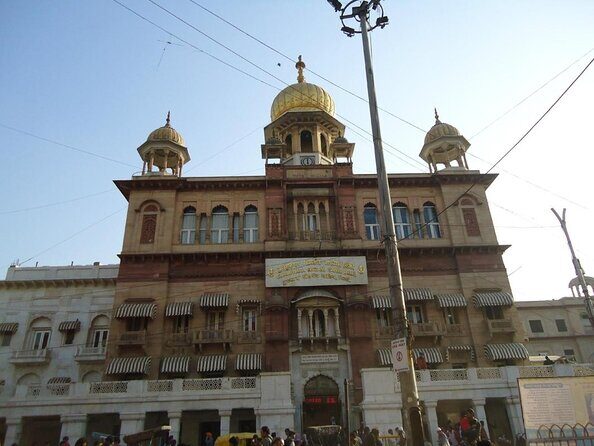
- Start at Sunehri Masjid, near Red Fort parking, so you don’t lose time figuring out where to meet
- Tuk-tuk route through Chandni Chowk, including a ride past Khari Baoli spice market
- Jama Masjid gets real time (about an hour), not a quick photo stop
- Spice “facts and uses” at Khari Baoli, including medicinal and health benefits information
- Ugrasen ki Baoli step well details (60 meters deep, 15 meters wide, 14th century origin)
- Street snack moments included in the option that covers local market bites
Getting oriented fast at Sunehri Masjid and rolling by tuk-tuk
I like tours that help you get your bearings early, and this one starts in a very practical spot: Sunehri Masjid on Nishad Raj Marg, close to Red Fort parking. That matters in Delhi, where navigation can eat up your energy before you even start sightseeing.
Once you meet your guide, you’re moving by local tuk-tuk ride (included in the tickets option). The tuk-tuk format isn’t just for fun. Old Delhi streets are narrow and chaotic in the best way, and a tuk-tuk lets you slide into that rhythm. You’re not stuck outside the thick of it, staring at a sea of people and traffic lights.
This is also a private tour for your group, so the pace is more controllable than a large shared group. Your guide keeps you moving, but you still get that small freedom to pause when something catches your attention—like a stall, a doorway, or a view down an alley.
You can also read our reviews of more food & drink experiences in New Delhi



Chandni Chowk and Khari Baoli: spices, street scale, and what to expect
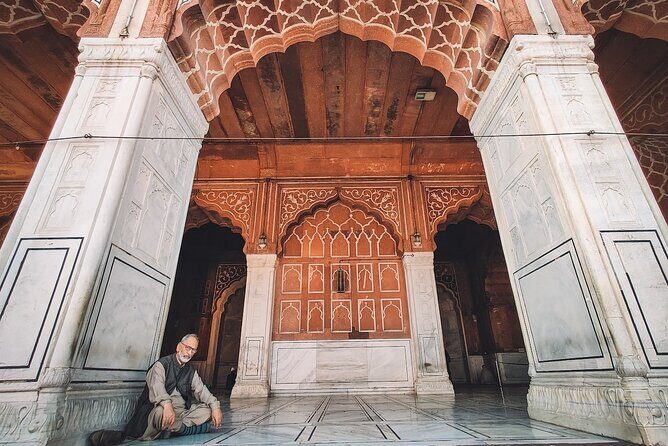
Chandni Chowk is the part of Delhi that makes you stop talking for a minute. It’s sensory overload in the literal sense: people, shops, movement, and the smell of spices hanging in the air.
Here, the tour focuses on Khari Baoli, famous for spices and described as Asia’s largest spice market since the 17th century. You’ll ride through the area and get hands-on information about spices—especially their uses and medicinal/health-benefit angle. Even if you don’t go home trying to reproduce everything in your kitchen, you’ll walk away understanding what you’re actually looking at when you see jars, powders, and blends.
Timing is tight but realistic: there’s about 30 minutes around the Chandni Chowk/Khari Baoli zone, with another shorter stop later that also centers on Khari Baoli. Translation: you get both the “see it now” experience and the “look closer” moment.
A practical note: markets like this can be hot, crowded, and loud. If you’re sensitive to noise or heavy crowds, wear something light and be ready to keep your wits about you. You’ll want to stay close to your guide, especially in the densest lanes.
Bikaner Sweets and the sweet side of Old Delhi

One of the easiest ways to understand a city is through snacks, and this tour makes space for that. A key stop is Bikaner Sweets, where you’ll try some sugary goodies.
I like this placement because it’s not a random food stop to fill time. It’s right in the middle of an Old Delhi day when your senses are already working overtime. A sweet break gives you a quick reset before the next religious landmark and the next stretch of walking through market corridors.
If you’re traveling with kids or you simply want something memorable that doesn’t involve a ticket booth, this is an advantage. You get a direct taste of local food culture without turning the day into a full meal itinerary.
Jama Masjid: a religious landmark with context, not just photos

After the market energy, the tour shifts to Jama Masjid, one of the major religious sights in the area. This is where the guide’s job really shows: you’re not only looking at a large mosque, you’re learning how it fits into Delhi’s cultural and historical layers.
You’ll have about 1 hour at this stop, which is enough time to slow down and take in scale. The setting is also a reminder that Old Delhi isn’t only about history for tourists. It’s a working, living place with worship and community at its center.
This stop is also where you’ll get your first real “big landmark” story moments, especially around how the city’s political and religious identity shows up in physical space. If you’re the type who likes to understand why a place looks the way it does, you’ll appreciate the explanation during your visit.
What to watch: this is a place of worship. Dress and behavior matter. Keep your volume reasonable and follow the guide’s lead for what’s appropriate.
Gurudwara stop (Bangla Sahib / Sis Ganj area): faith you can feel in the streets
The tour includes a Sikh gurdwara visit listed as Gurudwara Bangla Sahib, with the description mentioning Gurudwara Sis Ganj as a prominent shrine. Either way, you’re stepping into a different part of Old Delhi’s spiritual map.
This stop runs about 1 hour, which is important because gurdwaras aren’t just “see it and move on” sights. They’re active places, and having time means you can observe the rhythm without feeling rushed.
I also like that the day covers more than one faith landmark. Old Delhi is where different communities sit side by side through history. When you see that in person—on foot, not through a museum label—it makes the city feel more understandable.
You can also read our reviews of more tours and experiences in New Delhi





Red Fort area timing: UNESCO vibes with a focused visit

Next up is the Red Fort (Lal Qila) area, a UNESCO World Heritage site and a symbol of India’s history. Even when the fort itself isn’t the only stop, the location sets the tone: red sandstone walls, big defensive design, and that sense of imperial scale.
You’ll get about 30 minutes around the Red Fort stop, and in practice it’s often a “learn and look” moment rather than a long inside-only visit. The guide’s explanations are key here. The fort can look like impressive architecture, but history context is what makes it click: why it mattered, and how it shaped what came after.
If you’re a history buff who wants longer time at the fort itself, this tour may not be enough on its own. But it’s a smart orientation day. Think of it as getting the main story beats so you can return later with clearer questions.
Ugrasen ki Baoli: step well engineering that still feels human
Between the big landmarks, you get something different: Ugrasen ki Baoli. This is described as a step well, about 60 meters deep and 15 meters wide, made in the 14th century by King Agarsen.
I love this stop because it’s not the kind of site everyone thinks to prioritize on a first Delhi trip. It’s also a reminder that Old Delhi is full of functional history—water systems, architecture, and practical design—rather than only monuments meant to impress.
The stop lasts about 15 minutes, which may sound short, but step wells are the kind of place where a quick explanation plus a careful look goes a long way. You’ll understand why people built these spaces and how water access shaped daily life.
If you’re photographing, it helps to slow your steps and take a second look before you move on. The geometry of the steps pulls your eye in, even if you’re just passing through.
India Gate and Rashtrapati Bhavan: quick passes that add modern contrast
After Old Delhi’s tighter lanes, the tour brings you to some pass-by landmarks: India Gate and Rashtrapati Bhavan.
India Gate is tied to the memory of World War One. You’ll have about 15 minutes, which is enough for a stop, a few photos, and a bit of context. It’s a short moment, but it helps balance the day: you’re not only in the old imperial core; you’re also seeing how later national memory shows up in public space.
Then there’s Rashtrapati Bhavan and the nearby Parliament House, passed by as symbols of India’s democracy. Another 15 minutes. Again, this isn’t a full guided walking tour of government precincts. It’s more like a snapshot that helps you connect what you saw earlier to the India that exists today.
If you hate rushed “photo turns,” this is the part of the day you’ll like least. On the other hand, if you want a first-day overview that keeps your itinerary moving without burning the whole day, those pass-by stops work.
Price and value: why $5 can still be a smart deal
At $5.00 per person, this tour is priced like a value play, but you should look at the structure to understand what you’re actually getting. The tour includes:
- a personalized live guide following the itinerary
- a bottled water
- all parking fees, tolls, fuel, and taxes
- in the tickets option: the local tuk-tuk ride and local bites/snacks in the market
That last point is the key for value. If you pick the option that includes the tuk-tuk and snacks, you’re getting the full “Old Delhi street day” experience—transport + food + storytelling. If you choose a different option, you might lose some of that street-level convenience.
Either way, the guide role is the main reason this feels worth it. Old Delhi is not a place where you can easily “read your way through” without help. The guide’s explanations—spice uses, religious context, and historical significance—are what turn a list of sites into a story you can remember.
Finally, tip that the tour notes that tips aren’t included. If your guide helped you navigate the day smoothly, it’s fair to budget some gratuity.
Timing and how to survive 4 hours without feeling rushed
The full experience is about 4 hours. Inside that, the time slices look modest on paper, but the bigger challenge in Old Delhi is the reality of movement: crowds, traffic near entrances, and the short distance between stalls and stops.
Here’s how I’d plan for it:
- Wear comfortable shoes. You’ll spend most of the day on your feet even if some legs are by tuk-tuk.
- Keep your phone power handy. You’ll want photos at Red Fort area and India Gate, but you’ll also likely use maps and photos to remember what you saw.
- Bring small cash for souvenirs. The route includes market shopping opportunities, and souvenirs may be easier when you can pay quickly.
You don’t need to sprint from stop to stop. The tour is private for your group, so you can ask for a quick pause if something takes your interest. Still, it’s a good idea to decide what you care about most: food, photos, or deeper explanations. That way you can use the time your way.
Who this tour fits best (and who should choose something else)
This tour is a strong match if you want:
- a first-time Old Delhi orientation
- a tuk-tuk way of getting into narrow lanes
- a guide to connect Red Fort, Jama Masjid, and the spiritual landmarks to the city’s daily rhythm
- included snack moments and spice talk
It may be less ideal if you:
- want to spend a long time inside major monuments rather than getting a focused, timed visit
- dislike busy markets or prefer quiet, spacious sightseeing days
Should you book this Old Delhi tuk-tuk tour?
I’d book it if you’re trying to get the most “Delhi feel” in one half-day. The combination of market spices, a Jama Masjid visit with real time, and the historical anchor of the Red Fort area gives you a balanced mix. The tuk-tuk format also makes the day easier and more authentic—because you’re not stuck outside the parts you want to experience.
I’d think twice if you already plan to return to Red Fort or Jama Masjid separately and want a longer, slower deep-dive inside those sites. In that case, this still works as a smart intro, but you should plan extra time elsewhere for a second look.
FAQ
What is the duration of the Delhi Old Delhi tuk-tuk tour?
The tour is approximately 4 hours.
Where does the tour meet, and where does it end?
It starts at Sunehri Masjid near Red Fort parking in Old Delhi and ends back at the same meeting point.
Is this tour private?
Yes. It’s a private tour/activity, and only your group will participate.
What is included in the tour price?
The tour includes a personalized live guide, bottled water, and all parking fees, tolls, fuel, and taxes. A local tuk-tuk ride and local market snacks are included only in the tickets option.
Are entrance fees included for monuments?
Entrance fees are listed as included if you select the option that includes them. Some stops are shown as ticket free, and at least one stop includes an admission ticket.
Is pickup available?
Pickup is offered.
What is the cancellation policy?
Free cancellation is available. You can cancel up to 24 hours in advance for a full refund. If you cancel less than 24 hours before the start time, the amount paid is not refunded.