REVIEW · NEW DELHI
Delhi: City Sightseeing Private tour Half or Full-Day Option
Book on Viator →Operated by Afran India Tours · Bookable on Viator
Delhi feels bigger than life at every turn. This private tour stitches together Old and New Delhi so you can see major sights without spending your day haggling for rides. I like the private air-conditioned vehicle and hotel pickup because it makes the route feel organized, even when the city isn’t. I also like that you get a guided route with meaningful stops, like walking time at Jama Masjid and a focused visit to the spice market area near Khari Baoli. One catch: it runs about 4 to 8 hours and lunch isn’t included, so you’ll want to plan food and water accordingly.
What makes this route especially fun is the mix of time periods and styles. You go from a giant Mughal-era mosque to a UNESCO garden tomb, then into New Delhi’s calmer monuments like the Lotus Temple and Lodhi Garden. In the names people have shared, guides like Vasu, Nikhil, Mehda, Aabid, Samer, Karan, and Aakil show up as the kind of guides who stay patient, explain clearly, and adapt when you ask for small changes.
This is also a smart choice if you want a low-stress first visit. You get a local guide, bottled water, and a mobile ticket, and you only share the experience with your group. Just remember: you’re doing several major landmarks in one day, so it’s more walking-and-looking than a slow sit-down tour.
In This Review
- Key things I’d pin on this tour
- A route that makes sense for first-timers
- Pickup and AC driving: why it matters in Delhi
- Jama Masjid: the best place to start because you learn the scale fast
- Chandni Chowk and Khari Baoli: spices, senses, and useful shopping time
- Red Fort and India Gate: passing the big names without losing your whole day
- Qutub Minar: the skyline icon with numbers you can actually picture
- Humayun’s Tomb: UNESCO garden design with a story behind it
- Lotus Temple, Parliament House area, and Bangla Sahib: Delhi’s calmer religious contrasts
- Agrasen Ki Baoli and Lodhi Garden: the quieter chapter that saves your day
- Half-day vs full-day: how to choose your right length
- Price and value: what $15 buys you here
- Should you book this Delhi tour?
- FAQ
- How long is the Delhi City Sightseeing private tour?
- Is this tour private or shared with other people?
- Do I get hotel pickup and drop-off?
- What kind of transportation is included?
- Is bottled water included?
- Are entrance fees included?
- Is lunch included?
- Which stops are free to enter?
- Do I visit India Gate and Parliament House?
- Can I cancel for a full refund?
- Do I receive tickets on my phone?
Key things I’d pin on this tour

- Old Delhi + New Delhi in one route: you’ll hit markets, Mughal monuments, and modern landmarks without switching plans.
- Private car with hotel/airport pickup: you save time navigating Delhi and waiting for taxis.
- Guided walking time where it counts: Jama Masjid and the Chandni Chowk spice area are built for getting your bearings on foot.
- Entrance fees are partly covered: entry is included for some sites, including Jama Masjid and Humayun’s Tomb when you select the option that includes them.
- Free entry spots are sprinkled in: Lotus Temple, Gurudwara Bangla Sahib, Agrasen ki Baoli, and Lodhi Garden are listed as free.
- Guides tend to be flexible: people highlight being able to adjust the day a bit if time allows.
A route that makes sense for first-timers

Delhi is the kind of city where “just show me the highlights” can turn chaotic fast. This tour avoids that by pairing two different Delhi moods in one outing: the intense, historic Old Delhi side and the broader, more spaced-out New Delhi side.
You’ll start with Jama Masjid, move into the spice-market lane areas around Chandni Chowk and Khari Baoli, then swing over to major landmarks like Qutub Minar and Humayun’s Tomb. After that, you get a set of sights that feel calmer and more spread out: Lotus Temple, Gurudwara Bangla Sahib, Parliament House area, and Lodhi Garden. The pacing can work well for you whether you choose a shorter half-day plan or a longer full-day run.
You can also read our reviews of more city tours in New Delhi


Pickup and AC driving: why it matters in Delhi
The biggest practical win is the door-to-door pickup and drop in Delhi NCR (Delhi, Gurgaon, Noida, Faridabad, and Ghaziabad). That means you spend less time figuring out transport and more time actually seeing things.
It’s also in a private, air-conditioned vehicle, which you’ll appreciate if your day starts warm or if you’re traveling during hotter months. With Delhi traffic, the value here is less about speed and more about not wasting energy on logistics.
And because it’s a private tour, you’re not locked into a group pace. If you want to linger at a market stall while your guide keeps you moving safely, you can do that without slowing down strangers.
Jama Masjid: the best place to start because you learn the scale fast

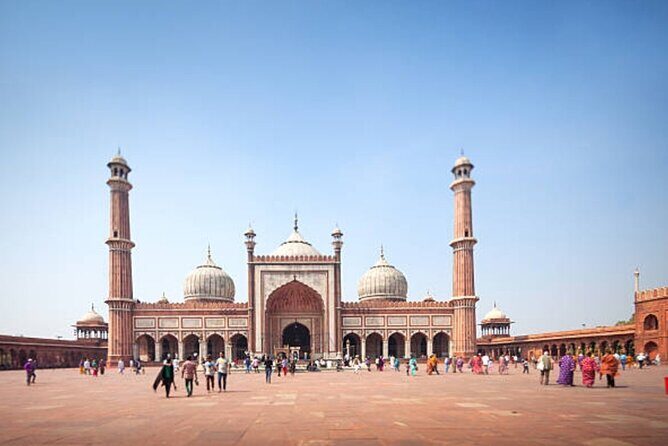
Jama Masjid is the kind of landmark that makes everything around it feel more meaningful. You’ll spend about one hour walking around the red sandstone courtyard of India’s largest mosque, built in 1656 with the help of 5,000 workers.
Why this stop is a smart first move: it gives you a visual anchor. Once you’ve seen the size and geometry of the courtyard, the rest of Old Delhi feels less random. The time also works well because you’re not just arriving for photos—you’re given a chance to wander and take in the space.
Watch-outs to consider: courtyards are often busy, and this is a walking stop. If you’re short on energy, plan water breaks early rather than waiting until you’re tired.
Chandni Chowk and Khari Baoli: spices, senses, and useful shopping time
From Jama Masjid, you head into the Chandni Chowk area, with a specific stop at Khari Baoli. You’ll have about one hour here, focused on the spice market experience.
This part matters because spices aren’t just a souvenir. They’re a gateway to how Indian cooking and everyday culture work. The tour’s framing is practical: you’ll see the market and you’ll get facts and uses of spices, which turns shopping from random browsing into something you understand.
You might also like that guides on this kind of route often help you avoid common shopping pain points—like getting overwhelmed by too many choices at once. People connected with the tour have highlighted that their guides were flexible enough to include time for related browsing, such as handicrafts and small shopping stops, when the day’s schedule allowed it.
How to get more out of the spice stop: go in with a few ideas. Even if you don’t know exactly what to buy, think about dishes you cook at home or flavors you already like. That makes it easier to evaluate what you’re seeing.
Red Fort and India Gate: passing the big names without losing your whole day
Between Old Delhi and the next major UNESCO stop, you’ll pass major New Delhi highlights by road.
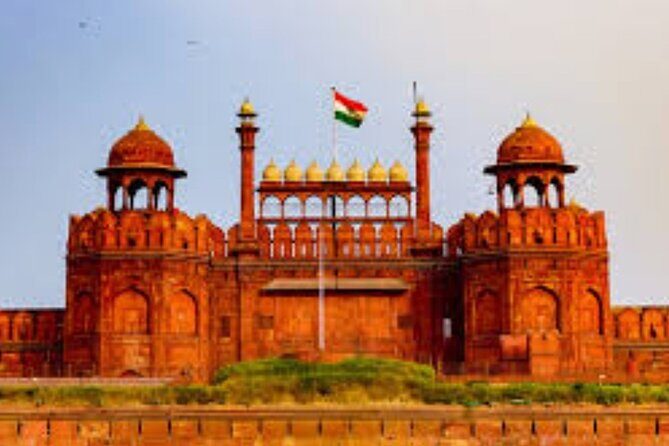
You’ll pass the Red Fort, built by Shah Jahan between 1639 and 1648, where Mughal emperors lived as the main residence. You’ll also pass India Gate on Rajpath, including the Tomb of the Unknown Soldier with 13,300 names carved in honor of Indian army servicemen who died during the First World War.
These are strong landmarks, but they’re also the kind of places where the “best” experience can vary. Passing them keeps your day efficient. It lets you spend your time on stops designed for longer visits, like the mosque, tomb, and market.
If you care about photos: bring your camera ready. These roadsides give you enough to frame the monuments even when you’re not stopping inside for a full walk.
You can also read our reviews of more private tours in New Delhi






Qutub Minar: the skyline icon with numbers you can actually picture

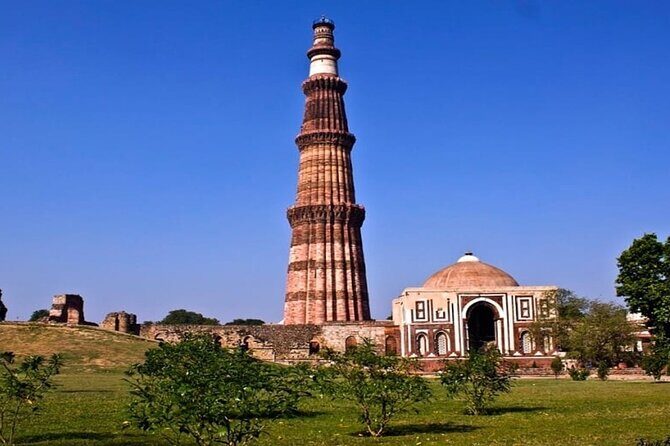
Next comes Qutub Minar, and it lives up to the hype. It’s described as the tallest masonry tower in India, at 72.5 meters high, with projecting balconies used by the muezzins for prayer calls.
You’ll have about one hour here, which is enough time to take in the structure and read it with your guide rather than just looking up at it.
Why I like this stop in a private format: if you’re used to quick, crowded “hit and run” sightseeing, this gives you a steadier rhythm. The guide can point out what you should notice, and you can decide how long to linger at details.
Humayun’s Tomb: UNESCO garden design with a story behind it
Humayun’s Tomb is a UNESCO World Heritage Site and is noted as the first garden tomb of India. You’ll have about one hour here, and the tour includes entry for this stop.
This tomb also comes with the story that it was built by Humayun’s wife after his death. That kind of backstory helps you look at the complex with more intention, not just treat it like another grand building in a city full of them.
The garden-tomb idea matters because it changes the mood. You’re not only looking at architecture—you’re moving through a designed outdoor space. If you’re trying to balance crowds in Old Delhi with calmer sights later, Humayun’s Tomb is a good midpoint.
Lotus Temple, Parliament House area, and Bangla Sahib: Delhi’s calmer religious contrasts
After the Mughal era, the tour shifts tone.
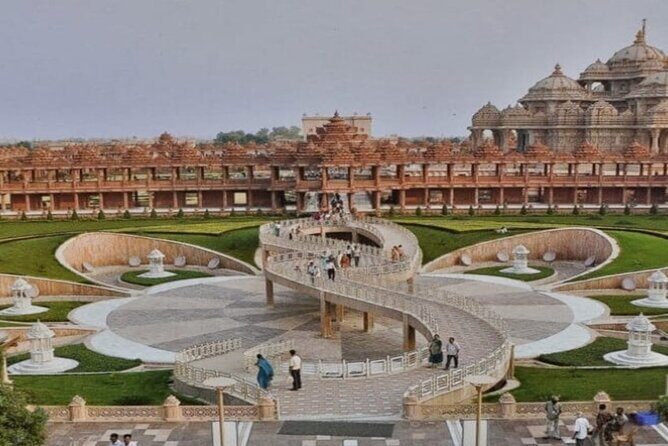
You’ll visit the Lotus Temple, with about 45 minutes on-site. The temple is described as having nine doors that open onto a central hall about 34 meters high, with a capacity of 1,300 people. The tour lists admission here as free.
Then you pass Parliament House on Sansad Marg. It’s described as housing both the Lok Sabha and Rajya Sabha, and the stop is listed as pass by with around 20 minutes for viewing from the route (no admission noted).
Finally, you head to Gurudwara Bangla Sahib for about 45 minutes, and admission is listed as free. This stop is tied to the 8th Sikh Guru, who stayed here in 1664 and is associated with healing people during a cholera epidemic. The guide points you toward the holy pond, called Sarovar, which is one of the ways this site feels different from a purely architectural visit.
What you gain from this section: you get contrasts in how people use sacred spaces—mosque courtyard, garden tomb design, then a modern religious building and a Sikh gurdwara with its pond-centered layout. It helps your understanding of Delhi feel less like a checklist.
Agrasen Ki Baoli and Lodhi Garden: the quieter chapter that saves your day
By this point, you’ve seen big monuments and religious landmarks. Now the tour goes for the more atmospheric, slower-feeling stops.
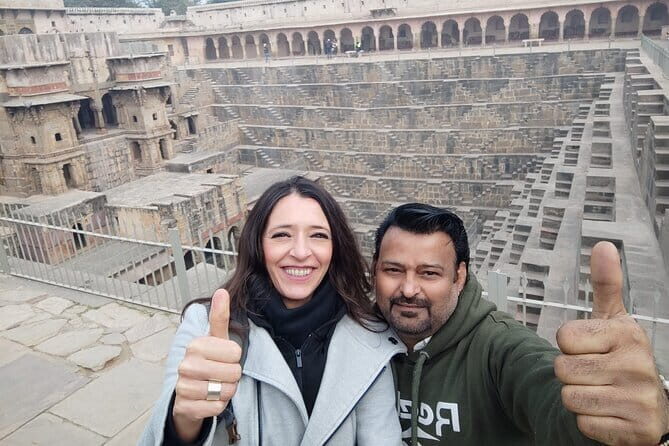
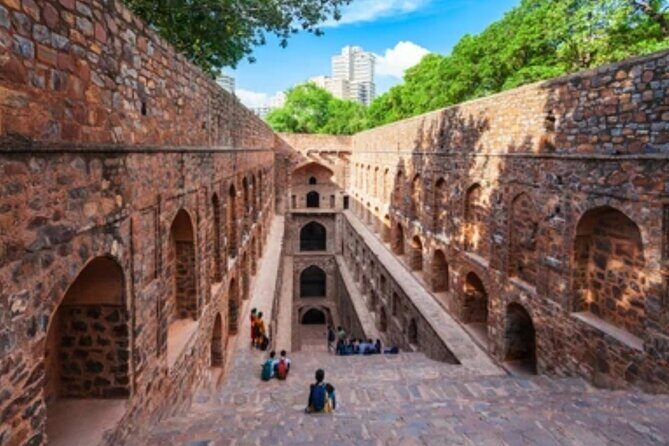
You’ll visit Agrasen Ki Baoli, a centuries-old stepwell known for its 108 steps descending toward the well. The stop is listed as about 30 minutes, with admission listed as free. This is the kind of place that works well with a guide because the scale and layout can feel mysterious until someone explains what you’re looking at.
After that, you’ll have about 35 minutes at Lodhi Garden, spread across 90 acres in central Delhi. It’s described as containing impressive monuments from the 15th and 16th centuries, and the stop is listed as free.
This combo is great for you if your legs are getting tired but you still want a meaningful final block. Stepwells and gardens are natural decompression zones. They also make your day feel more uniquely Delhi, not just “famous Indian landmarks #1 to #10.”
Half-day vs full-day: how to choose your right length
The tour runs around 4 to 8 hours, with half-day and full-day options.
If you’re doing a first visit in a limited time window, a half-day plan can give you the core of Old Delhi and at least a couple of major monuments. You’ll likely focus on getting oriented fast: Jama Masjid, the Chandni Chowk/Khari Baoli spice stop, and one or two of the major architectural hits like Qutub Minar or Humayun’s Tomb.
If you want the day to feel less rushed and more like a story, choose the full-day option. You’ll have room to include Lotus Temple, Gurudwara Bangla Sahib, and the quieter finishers like Agrasen Ki Baoli and Lodhi Garden.
A simple rule: if you hate feeling rushed, go full-day. If you want highlights and you’re also planning other activities later, go half-day.
Price and value: what $15 buys you here
The price is listed as $15.00 per person, and it’s common for people to book about 7 days in advance. That’s a low number for a private tour that includes an air-conditioned vehicle, a local guide, bottled water, and hotel pickup/drop in Delhi NCR.
Here’s how to think about value rather than just cost:
- You’re paying for time savings. Getting pickup and drop handled means you lose less time figuring out transport.
- You’re paying for guidance. Several stops are meaningful even when you already know the names, because a guide can help you notice what you’d otherwise miss.
- Entrance fees are partly covered. The inclusion list specifically mentions entry for Jama Masjid and Humayun’s Tomb, and the overall description says entrance fees are included if you choose the option that includes them.
- Lunch isn’t included. That’s the main budget gap. If you don’t want to spend time hunting for food, factor in the cost and plan snacks or a quick meal on your own.
If you’re traveling solo, $15 can feel like you’re getting a lot for not much. If you’re traveling in a small group, you may get even more comfort out of the private vehicle since you’re splitting the day’s logistics.
Should you book this Delhi tour?
You should book if you want a stress-reduced, guide-led way to see Old Delhi and New Delhi in one go. It’s especially worth it when you care about getting the context behind big sights like Jama Masjid, Qutub Minar, and Humayun’s Tomb, and you also like markets and religious sites that feel different from one another.
Skip it or adjust your expectations if you want a super slow pace with long sit-down breaks. This is built for moving through several major stops in a single day. Also, since lunch isn’t included, you’ll need to manage food yourself.
If you’re the kind of traveler who enjoys asking questions and likes a guide who can shape the day around what you’re curious about, this tour format fits you well.
FAQ
How long is the Delhi City Sightseeing private tour?
It runs about 4 to 8 hours, depending on whether you choose the half-day or full-day option.
Is this tour private or shared with other people?
It’s private. Only your group participates.
Do I get hotel pickup and drop-off?
Yes. Pickup and drop-off are included from your hotel in Delhi, Gurgaon, Noida, Faridabad, and Ghaziabad, and also from the airport or train departure.
What kind of transportation is included?
You travel in a private air-conditioned vehicle.
Is bottled water included?
Yes, bottled water is included.
Are entrance fees included?
Entrance fees are included if you select the option that includes them. The included details specifically mention entry for Jama Masjid and Humayun’s Tomb.
Is lunch included?
No. Lunch is not included.
Which stops are free to enter?
From the listed schedule, Lotus Temple, Gurudwara Bangla Sahib, Agrasen Ki Baoli, and Lodhi Garden are marked as free entry.
Do I visit India Gate and Parliament House?
You pass by India Gate and you pass by Parliament House as part of the route.
Can I cancel for a full refund?
Yes. Cancellation is free up to 24 hours in advance for a full refund.
Do I receive tickets on my phone?
Yes. The tour includes a mobile ticket.