REVIEW · NEW DELHI
Jaipur: Full Day City Highlights Tour with Tour Guide
Book on Viator →Operated by Tripstro · Bookable on Viator
Jaipur can feel like a lot—this tour keeps it organized. You’ll hit the major stops that define the Pink City’s royal look, from Amber Fort and its mirror-palace legend to Jantar Mantar’s giant stone instruments, plus quick scenic breaks like Jal Mahal. It’s built for seeing the essentials without turning the day into a logistics puzzle.
I particularly like the human side of this experience: the guides (for example, Vishen and Mohsin in past trips) are punctual, keep the schedule moving, and still allow small flexibility. I also like that you’re in an air-conditioned vehicle for the transfer time between sites, so the day doesn’t turn into pure heat-management.
One consideration: you need to pay attention to site admission details. The experience description says monument entrance fees are not included, but it also lists admission tickets for several stops—so double-check what’s covered before you arrive at each gate.
In This Review
- Key things to know before you go
- Why This Jaipur Day Works: Forts, Palaces, and One Efficient Route
- Getting Set for the Day: Pickup, Air-Conditioned Ride, and Private Group Feel
- Amber Fort and Panna Meena ka Kund: Mirror Palace Views and Stepwell Symmetry
- Jal Mahal Photo Stop and Gaitore Ki Chhatriyan: Lake Drama and Royal Memorials
- City Palace of Jaipur: Courtyards, Museums, and Where the Royal Story Continues
- Jantar Mantar’s Giant Instruments: Astronomy Built from Stone
- Hawa Mahal’s 953 Windows: How to See Jaipur’s Wind Palace Fast
- Price and Logistics: What Your $17.23 Day Buys
- Tips to Make the Day Smoother (and Take Better Photos)
- Should You Book This Jaipur Highlights Tour?
- FAQ
- How long is the Jaipur highlights tour?
- What sights are included in the day?
- Is pickup and drop-off included?
- Is the tour private?
- Is lunch included?
- Are monument entrance fees included?
- What about tickets—do I need to print anything?
- What’s the price per person?
- What should I budget for besides the tour price?
- Can I cancel and get a refund?
Key things to know before you go
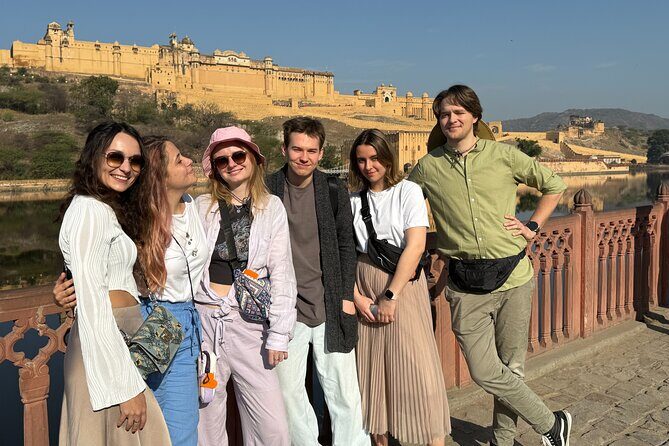
- A private-group feel: only your group participates, so it’s less chaotic than big public tours.
- Short, efficient visits: most stops are 30 minutes to 1 hour, meaning you’ll see highlights, not every corner.
- UNESCO heavyweights: Amber Fort and Jantar Mantar are both UNESCO-listed stops on the same day.
- Royal architecture in layers: Rajput and Mughal influences show up repeatedly (especially Amber Fort and City Palace).
- A schedule guide who stays serious and clear: English clarity and on-time pacing show up in guide feedback.
- Drop-off where you want to end: you’ll be taken back to your preferred location in Jaipur.
Why This Jaipur Day Works: Forts, Palaces, and One Efficient Route
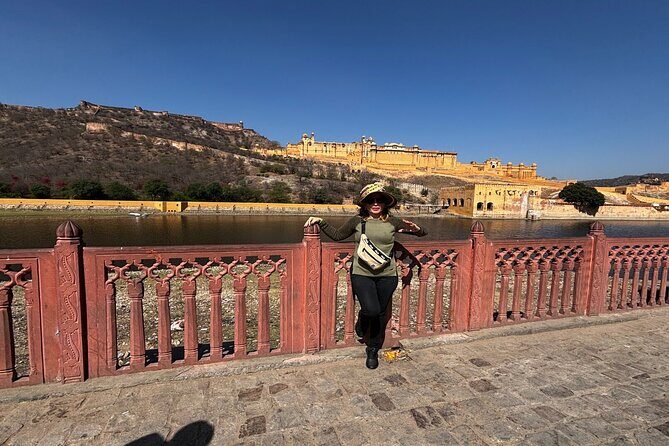
This is the kind of Jaipur day that makes sense if you have limited time. The stops are chosen to represent the city’s big themes: fort power, royal water, palace life, and even the science of astronomy—plus a signature facade shot of Hawa Mahal.
The pacing is practical. You don’t spend hours waiting or wandering blindly; you get just enough time at each place to understand what you’re seeing, take photos, and move on before the day gets too tiring.
You can also read our reviews of more guided tours in New Delhi



Getting Set for the Day: Pickup, Air-Conditioned Ride, and Private Group Feel
You start with pickup and drop-off, and the transfer is handled in an air-conditioned vehicle for sightseeing. That matters more than it sounds. Jaipur’s heat and traffic can drain energy fast, and a comfortable ride keeps you ready for the next stop.
You’ll have a professional guide in your language, and the tour is described as private for your group. Practically, that usually means you can ask questions without fighting for attention, and your guide can steer the group to the best viewing points inside each site.
A small bonus: there’s a mobile ticket. It’s one less paper thing to manage while you’re juggling sun, bags, and site entrances.
Amber Fort and Panna Meena ka Kund: Mirror Palace Views and Stepwell Symmetry
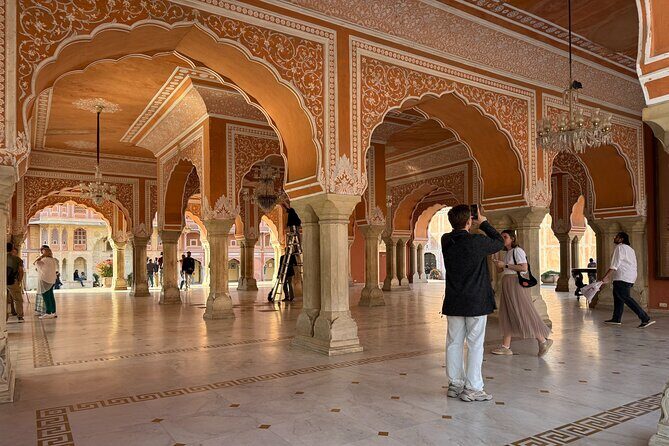
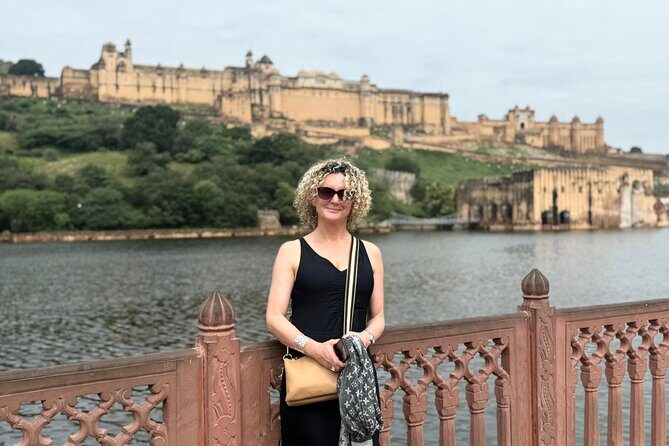
Your first anchor stop is Amber Fort, a hill fort outside Jaipur that blends Rajput and Mughal architecture. The views from here are part of the experience: the fort overlooks Maota Lake, so you get that classic elevated look even before you reach the palaces inside.
Look for the palatial interiors tied to royal life, especially the Sheesh Mahal (Mirror Palace). Even if you don’t study the details, the name alone points you toward why this section is famous—reflections and decorative surfaces meant to impress.
The fort is also a UNESCO site, which is useful context when you’re trying to make sense of why it’s treated as a major landmark rather than just another fort on a map.
Then you move to Panna Meena ka Kund, a stepwell near Amer Fort known for its striking criss-cross staircases and symmetrical layout. It’s an older water-structure built in the 16th century, and the layout was meant to support real community use, not just decoration.
What I like about pairing these two stops: they show two sides of the same regional logic. Amber Fort is about power and display; Panna Meena ka Kund is about function, water, and how people moved through a space that had to work every day.
Possible drawback here: time is limited (about 30 minutes for Panna Meena ka Kund). If you enjoy slow, detailed exploring, you’ll want to arrive with a mindset of seeing the main geometry and standout angles rather than going museum-deep.
Jal Mahal Photo Stop and Gaitore Ki Chhatriyan: Lake Drama and Royal Memorials

Next comes Jal Mahal, the so-called Water Palace sitting in Man Sagar Lake. The structure looks like it’s floating, and the effect is the point—built in the 18th century, it leaves only one floor visible above the water.
This is mostly a photo-stop, but it’s still worth it if you know what you’re trying to capture. Ask your guide where to stand for the clearest view so you’re not guessing while the light shifts.
Then you head to Gaitore Ki Chhatriyan, the royal cremation ground for Jaipur’s Kachwaha rulers. Here you’ll see marble and sandstone chhatris (cenotaphs) and a Rajput-Mughal architectural mix.
Unlike palace buildings that signal daily life, this space is about remembrance and royal presence after death. It gives the day a quieter tone, and it’s a helpful reminder that royal architecture wasn’t only about celebrations and spectacle.
Time is short again (about 30 minutes). If you want to read every carving, you may need to return later on your own—but for most people, the guided route gives you the highlights with less fatigue.
City Palace of Jaipur: Courtyards, Museums, and Where the Royal Story Continues
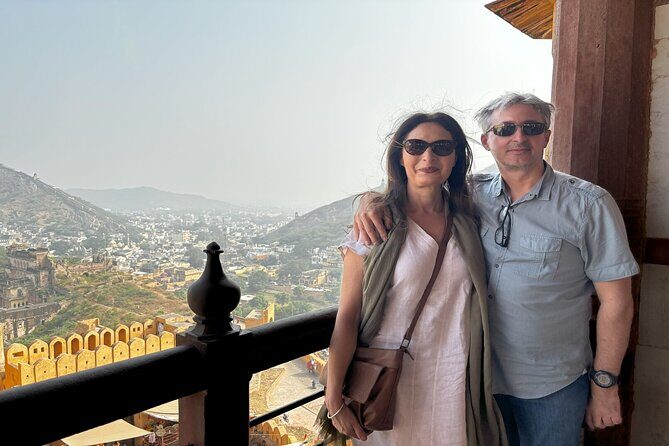
The heart-of-town stop is City Palace of Jaipur, a complex that fuses Rajput and Mughal styles. It sits in the center of Jaipur, so it also helps you reconnect the day’s earlier fort-and-lake scenery back to the living city.
Inside, you’ll find courtyards, museums, and parts of the current royal family residence. That blend is why City Palace is more than a pretty building: it’s a still-evolving place where history is treated as a living narrative rather than a sealed exhibit.
I like this stop because it anchors everything you’ve seen so far. When you move from Amber Fort’s royal display to City Palace’s interiors and museums, the architectural language starts to feel connected instead of random.
In practical terms, you’ll get about an hour here. That’s enough to see the main areas with your guide’s explanation, but not enough for a full, slow museum day.
You can also read our reviews of more city tours in New Delhi





Jantar Mantar’s Giant Instruments: Astronomy Built from Stone
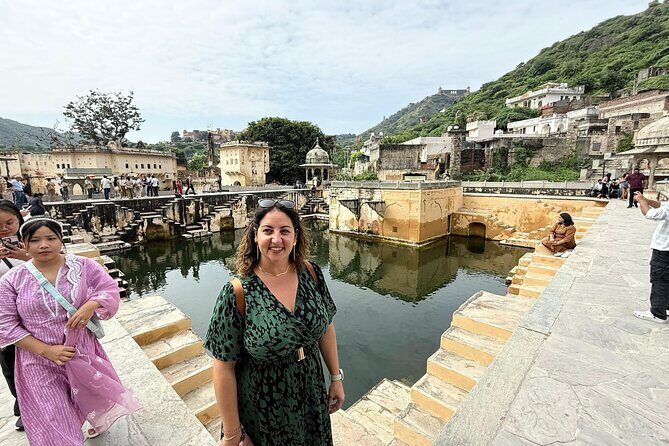
Then you reach Jantar Mantar, a UNESCO-listed astronomical observatory built in the 18th century by Maharaja Sawai Jai Singh II. If you’ve only ever thought of astronomy as telescopes and computers, this place surprises you with how much science can be made with masonry.
You’ll see a set of large instruments, including the world’s largest stone sundial. The idea is simple but powerful: these tools were designed to measure celestial movement with precision using the built environment.
This is the stop where a good guide makes a noticeable difference. You can walk around the structures without fully understanding what they’re for, but with clear explanations, the instruments become meaningful instead of just shapes.
Time is around one hour, which is enough to understand the big concepts and take photos without turning it into a school lecture.
Hawa Mahal’s 953 Windows: How to See Jaipur’s Wind Palace Fast
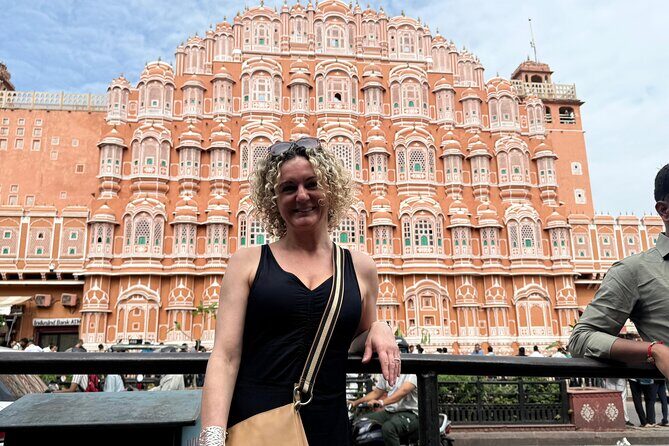
The final classic facade stop is Hawa Mahal (Palace of Winds), built in 1799 and famous for its pink-red sandstone frontage. The headline detail is 953 intricate windows, designed so royal women could observe street life while staying sheltered.
Even if you only have 30 minutes, you can still get value if you move with intention. Look for the window rhythm and how the facade layers feel from different angles. Your guide can help you pinpoint the best viewing spots so you don’t waste time on the wrong side of the street.
This is a quick stop by design. It’s more about the landmark moment than deep interior exploration.
Price and Logistics: What Your $17.23 Day Buys
At around $17.23 per person, this tour can be good value if you’re comfortable with a highlights-only schedule. You’re paying for access support, guided interpretation, and efficient movement between major Jaipur landmarks in a single day.
Included items listed for the experience include:
- All fees and taxes
- A professional tour guide
- Pickup and drop-off
- An air-conditioned vehicle
- Buffet lunch only if you select that option
Then there’s a key nuance: monument entrance fees are listed as not included, even though admission tickets are shown for several stops. That means you should confirm what’s actually covered for each site before you go. If you arrive expecting something included and it isn’t, it can slow the day and reduce the value.
Also note tips aren’t included, so build that into your budget.
If you want the cleanest experience, I suggest doing a quick check right before departure:
- What entrances are included versus not included
- Whether lunch is selected
- Where your guide will meet you for pickup
That small prep prevents the most common “surprise” problem on day trips.
Tips to Make the Day Smoother (and Take Better Photos)
For a tour like this, your best strategy is mindset plus a few practical choices.
First, plan for short stops: you’ll get the “main viewpoints” quickly, then you’ll move on. If you love photography, tell your guide early what you want—facades, lake views, or architectural details—so you spend your 30 minutes in the right spots.
Second, bring a light layer and water. Even with a comfortable vehicle, you’ll still be outside during fort viewpoints, the lake area at Jal Mahal, and the open-air parts of memorial grounds.
Third, be ready to walk. Even short time windows can still add up across the day, especially on fort terrain and within large complexes.
Finally, use your guide’s pacing skills. In guide feedback, punctuality and schedule control show up as a big win. If you let the group run ahead, you lose the flow and the guide’s timing magic.
Should You Book This Jaipur Highlights Tour?
Book it if:
- You have only one day and want a high-ROI route through Jaipur’s biggest sights
- You like guided explanations that turn architecture and astronomy into something you can actually picture
- You want an easy day with pickup, air-conditioning, and private group handling
Skip it or plan more carefully if:
- You hate short visits and prefer slow, deep museum-style time at each site
- You’re a strict budget planner and need total certainty on entrance fees—confirm what’s included before you go
- You expect every stop to be equal time and equal depth (this day is designed for highlights)
If your goal is a smart, organized Jaipur “greatest hits” day—Amber Fort, stepwell symmetry, Water Palace photos, City Palace grounding, Jantar Mantar’s stone astronomy, and Hawa Mahal’s 953-window facade—this tour style fits that goal really well.
FAQ
How long is the Jaipur highlights tour?
It runs about 6 to 7 hours.
What sights are included in the day?
You’ll visit Amber Fort, Panna Meena ka Kund, Jal Mahal (photo stop), Gaitore Ki Chhatriyan, City Palace of Jaipur, Jantar Mantar, and Hawa Mahal.
Is pickup and drop-off included?
Yes. Pickup is offered, and the driver will drop you off at your preferred location in Jaipur.
Is the tour private?
Yes. It’s described as a private tour/activity, with only your group participating.
Is lunch included?
A buffet lunch is included only if you select the lunch option.
Are monument entrance fees included?
Monument entrance fees are listed as not included, even though admission is shown for some stops. You should confirm what’s actually covered before you enter each site.
What about tickets—do I need to print anything?
You get a mobile ticket.
What’s the price per person?
The price is $17.23 per person.
What should I budget for besides the tour price?
Tips for the guide and driver are not included, and any personal expenses are not included. Also, monument entrance fees may apply depending on what’s covered.
Can I cancel and get a refund?
Yes, free cancellation is available. You can cancel up to 24 hours in advance for a full refund. If you cancel within 24 hours, there’s no refund.