REVIEW · NEW DELHI
5-Days Private Luxury Golden Triangle Tour Agra Jaipur New Delhi
Book on Viator →Operated by Golden Triangle Tours India · Bookable on Viator
A trip that saves your brain for the sights. This private 5-day Golden Triangle route is built for convenience, with a dedicated driver and English-speaking local guides handling the turns and the on-site context. You’ll cover Delhi highlights, then Agra’s Mughal icons, then Jaipur’s forts and observatories without stitching together buses, trains, and ticket counters on your own.
I especially like two things: the pacing gives you proper time at major stops, and the mix of big-name monuments plus quieter photo moments (like the Taj sunset viewpoint) helps the trip feel less rushed. The main thing to consider is budget: entrance fees are not included, and the tour lists a total estimate of about $90 per person for monuments.
In This Review
- Key highlights to watch for
- Private vehicle, real guidance, and how that changes your day
- Delhi day: Humayun’s Tomb, Qutub Minar, and the Old Delhi rhythm
- Agra day: Forts, the “Baby Taj,” and a Taj sunset viewpoint
- Day 3: Sunrise Taj Mahal plus Fatehpur Sikri and Chand Baori to fuel Jaipur
- Jaipur day: Amber Palace, City Palace, Jantar Mantar, plus the best photo stops
- Day 5 in Jaipur: Birla Mandir and Galtaji, then back to Delhi
- Value check: what you’re really paying for at about $205.72 per person
- Who this private Golden Triangle works best for
- Should you book the 5-Days Private Luxury Golden Triangle?
- FAQ
- Is this tour private?
- Where does the tour start and end?
- Are hotel stays included?
- Are monument entrance fees included?
- Does the tour include breakfast?
- Do I get a guide, and what language?
- How does the tour handle buying entrance tickets?
- Is pickup offered?
- What about drinks during the trip?
- What if the weather is bad?
- Is there free cancellation?
Key highlights to watch for
- Private vehicle with your own driver means no waiting for other groups
- Local guided sightseeing included for every day’s core stops
- Sunrise Taj Mahal plus a separate sunset viewpoint gives two very different moods
- Old Delhi Rickshaw Ride adds street-level energy without long planning
- Hotel options (4 or 5-star) are available, with breakfast included if you choose hotels
- Guide helps with entrance fees so you avoid long ticket lines
Private vehicle, real guidance, and how that changes your day
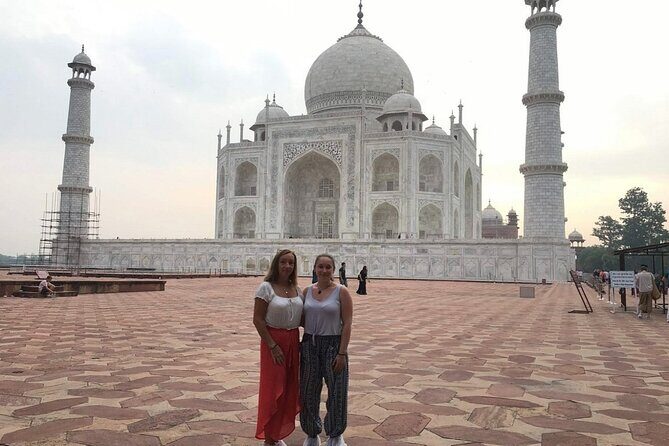
A Golden Triangle tour can be a blur. The value here is that you don’t spend your time figuring out routes, meeting points, or where to stand for the best angles. You travel in a private, air-conditioned car with a driver, and each day includes local guiding for the sightseeing stops.
That matters because the monuments are not just photo targets. Humayun’s Tomb, Qutub Minar, Agra Fort, Amber Palace, and Jantar Mantar each reward you when someone explains what you’re looking at. The tour also notes that guides are available in English, with other languages possible if you request them in advance. Add in daily mineral water and the included hotel/airport pickup and drop-off, and you’re set up for a smoother start and finish each day.
One more practical detail: you’ll have a guide to assist with buying entrance fees at monuments, with the promise you won’t have to wait in any queue to buy tickets. Even if lines move fast, that time saved can be the difference between a relaxed visit and a stressed one.
You can also read our reviews of more private tours in New Delhi


Delhi day: Humayun’s Tomb, Qutub Minar, and the Old Delhi rhythm
Day 1 strings together a strong Delhi sampler: Mughal-era landmarks, an early taste of Islamic architecture, and a classic Old Delhi street experience. Expect a full day of walking and sightseeing, but it’s structured so you’re not bouncing between random neighborhoods without a plan.
Start with Humayun’s Tomb (about 1 hour). It’s a Mughal masterpiece and also a key stepping stone to understanding later Taj Mahal design ideas, including the way gardens and symmetry frame the monument. Next up, Qutub Minar (about 30 minutes). The tower is tall and visually obvious, but the real payoff is learning how it fits into the larger Qutub complex—so you’re not just looking at height.
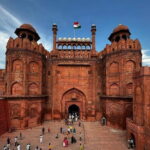
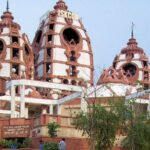
Then comes Red Fort (about 1 hour), the Mughal power symbol that’s also a reminder of how long empires can shape a city. After that you shift to spiritual and civic landmarks: Lotus Temple (about 30 minutes, free admission) for modern, simple forms; Jama Masjid (about 30 minutes, free admission), a major mosque that gives you a sense of scale and historic continuity; and India Gate (about 30 minutes, free admission), which is both a war memorial and a popular place to pause.
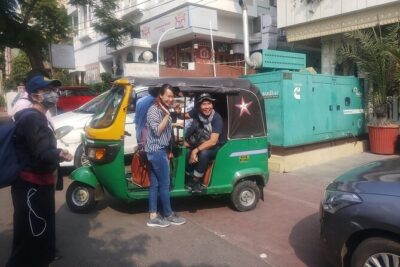
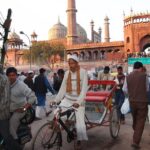
Two spots that make Day 1 feel more lived-in: Agrasen Ki Baoli (about 15 minutes, free) and the Old Delhi Rickshaw Ride (about 1 hour, free). The stepwell is a compact detour that tends to feel calmer than the big-ticket forts, and the rickshaw ride drops you into the texture of Chandni Chowk area markets. If you like people-watching, spice-and-stall energy, and tight street scenes, this is the part that makes Delhi feel like more than monuments.
Agra day: Forts, the “Baby Taj,” and a Taj sunset viewpoint

Day 2 is where the tour turns from Delhi’s broad highlights to Agra’s Mughal concentration. After breakfast you check out and drive through an expressway to your Agra hotel, then you start in earnest.
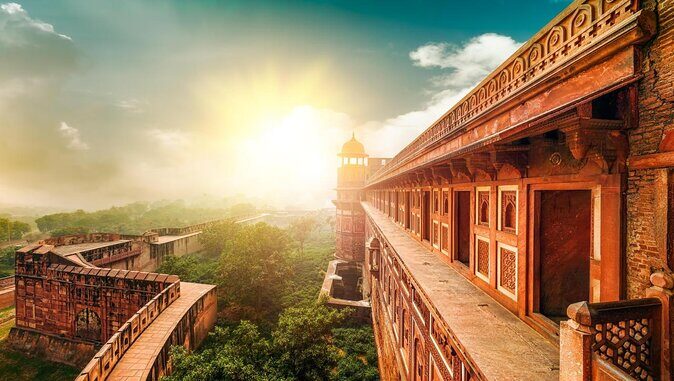
First: Agra Fort (about 1 hour, entrance ticket not included). It’s massive and gives you a sense of how rulers defended and lived within stone walls. The fort also connects visually to the Taj Mahal era, so it helps you “set the stage” before the star attraction.
Next is Mehtab Bagh (about 30 minutes). This garden stop is a big-picture breather. It’s also a strategic move: you’re positioned for open views across the river, which makes later Taj photos feel more grounded in location rather than just front-facing glamour.
Then you hit Itmad-ud-Daula (about 1 hour), often called the Baby Taj. It’s smaller than the Taj but incredibly important for understanding the evolution of marble detailing in Mughal architecture. If you enjoy close-up craftsmanship—arches, inlaid patterns, and the mood of mausoleums—this stop is a worthwhile payoff.
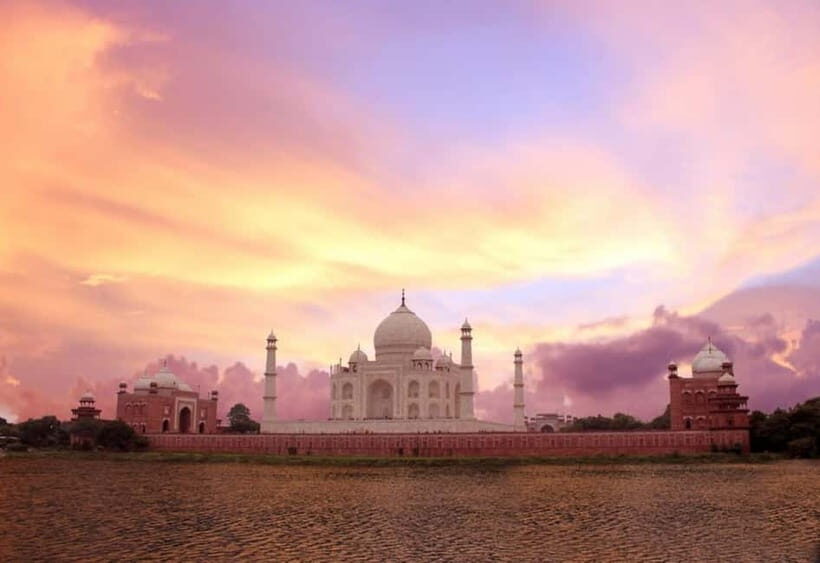
Finally, Taj Mahal Sunset View Point (about 2 hours). This is not the same experience as sunrise. At sunset the lighting is warmer, the crowds can shift, and the Taj’s color tones change in a way that feels almost different from one hour to the next. The tour does not include entrance here, so you’ll likely spend this segment in the viewpoint approach rather than the full ticketed interior experience.
The main consideration on this day is timing. A sunset plan means you’ll want to stay flexible if your day runs a bit behind due to traffic or monument pacing. Still, the structure is smart because the Taj moment is built in as its own highlight instead of tacked on at the end.
Day 3: Sunrise Taj Mahal plus Fatehpur Sikri and Chand Baori to fuel Jaipur
Day 3 starts with one of the best-known “view strategy” choices on the entire route: Taj Mahal at sunrise (about 2 hours, entrance ticket not included). Sunrise is chosen for a reason—cooler light, less haze, and often a different crowd feel than later in the day. Even if you only care about photos, sunrise tends to look better because the sky cooperates more often.
Once you’ve taken in the Taj early, you shift to a different kind of Mughal story: Fatehpur Sikri (about 1 hour, free). It was a Mughal capital for a short period, and the ruins are spread in a way that makes them feel like a “city you can read.” It’s a great contrast to Agra because it’s broader in layout and less about one single iconic tomb.
Then comes a quieter, off-the-usual-path stop: Chand Baori (about 30 minutes, entrance not included). This stepwell in Abhaneri is all geometry and repetition. If you like architecture that’s more about pattern than palace drama, this stop can be surprisingly satisfying.
After that, you drive to Jaipur and check in. The tour notes the arrival and overnight stay after reaching Jaipur, with a longer travel block listed for the day’s transition. Practically, this is helpful because you’re not trying to do Jaipur’s big sights before you’re fully rested.
Jaipur day: Amber Palace, City Palace, Jantar Mantar, plus the best photo stops
Day 4 is Jaipur in full color—forts, royal interiors, and the city’s famed planning. The tour also includes a guided city sightseeing stretch, which helps because Jaipur can feel like “pretty buildings” until someone points out what’s behind the scenes.
Start at Panna Meena ka Kund (about 15 minutes, free), near Amber Fort. Like Agrasen Ki Baoli in Delhi, this is another stepwell that adds variety and a sense of local water engineering. It’s short, but it keeps the day from feeling only about palaces.
Then you climb into Amber Palace (about 2 hours, entrance ticket not included). Amber is one of those sites where the design details reward patience: courtyards, palace rooms, and the way the complex sits on the hillside. This stop is usually the main “fort-palace” anchor of Jaipur, so it’s smart that the day gives it real time.
For quick views, you’ll stop for photos at Jal Mahal (about 15 minutes, entrance not included). This is the palace-in-the-lake look many people remember from Jaipur photos. Don’t over-plan your expectations for it like it’s a full museum stop; it’s more about the view and that iconic composition.
Next is Maharaja’s City Palace (about 1 hour, entrance not included). City Palace works best when you treat it as a living administrative and ceremonial complex, not just a pretty courtyard. It’s a clear step from Amber’s hillside strength to Jaipur’s urban royal center.
Then comes Jantar Mantar (about 1 hour, entrance not included), the UNESCO-listed set of astronomical instruments. It’s one of Jaipur’s most unique experiences because it’s science turned into architecture. If you’ve ever wondered how people measured the sky before modern tech, this helps connect the dots.
The tour also includes Hawa Mahal (about 30 minutes, entrance not included). The pink-and-red sandstone façade is the famous part—get your photos, but also look at the repeating window structure because that’s the design logic.
Finally, there’s a brief stop at Albert Hall Museum (about 15 minutes, entrance not included). It’s short here, so use it as a “taste,” not a deep museum day. If you want more museum time, you’d likely plan that separately on another trip.
You can also read our reviews of more tours and experiences in New Delhi






Day 5 in Jaipur: Birla Mandir and Galtaji, then back to Delhi
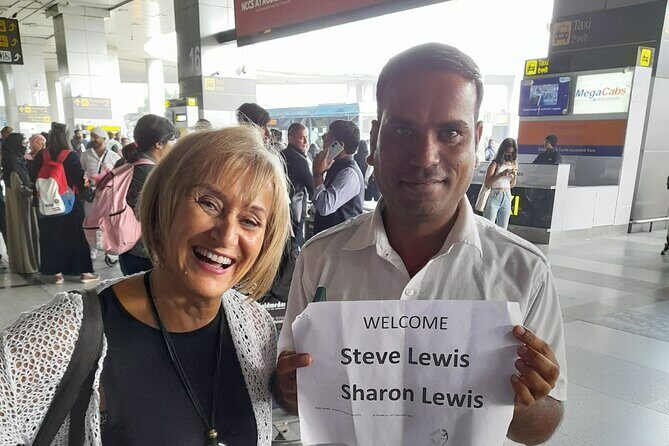
Day 5 keeps things calmer before your return drive to New Delhi. It starts at Birla Mandir (about 30 minutes, free). This temple is known for its white marble lattice look, and the quick stop works well because it gives you a clean visual reset after days of palaces and forts.
Next is Monkey Temple, also called Galtaji (about 30 minutes, free). This is one of those places where the setting and the pools are part of the atmosphere. Because monkeys are literally part of the experience, you’ll want to keep your phone secured and stay aware near feeding areas, even if you’re just passing through for photos.
After that, the tour drives you back to Delhi. The itinerary states around 5 hours for the transfer, and drop-off is flexible: the tour ends back at the meeting point in Delhi and you can be dropped at the airport, your hotel, or another desired location in the city.
This final day is a practical finish. You’re not packing in another “big ticket” monument that would force a late-day scramble. Instead, you end with religious sites and an easy return.
Value check: what you’re really paying for at about $205.72 per person
The listed price is about $205.72 per person for a 5-day private Golden Triangle itinerary. That price doesn’t include monument entrance fees (the tour lists about $90 per person for entrances), and it doesn’t include meals beyond breakfast on hotel days.
So what are you getting for the base cost?
- A private air-conditioned car with an assigned driver for the route between Delhi, Agra, and Jaipur
- Hotel pickup and drop-off, plus airport-area meeting
- Private local guides for sightseeing days
- A plan that includes both sunrise and sunset Taj experiences (sunrise as a core plan, sunset viewpoint as a separate highlight)
- Daily hotel breakfast when you choose the hotel-included option
- Daily mineral water
- The kind of coordination that makes check-ins smoother, which really matters on multi-city trips
Now the “private luxury” label needs a reality check. The tour is private, and that’s the big value driver, but the quality of the experience will still depend on your hotel selection and what you personally expect from a luxury trip. The itinerary also includes an optional accommodation upgrade, with stays described as 4- or 5-star in the overall tour overview.
If you want maximum flexibility—your own vehicle, your own guides, and less time wasted hunting tickets and transport—this type of private Golden Triangle is usually a good match. If you’re very price-sensitive and happy to plan trains and tickets yourself, you could likely do it cheaper. But you’d give up the time-savings and the guided context.
Who this private Golden Triangle works best for

This tour is a strong fit for people who want the headlines—Delhi, Agra, Jaipur—but don’t want the headache of arranging everything. It’s also a good option if you value English-speaking guidance and you want help with entrance fees so you’re not stuck in ticket lines.
It’s especially suitable for:
- Couples or small groups who want a private rhythm instead of group-tour pacing
- First-time visitors to North India who want the most iconic sites with context
- Travelers who care about the Taj Mahal timing and like the idea of sunrise plus a sunset viewpoint
And it may be less ideal if:
- You want a lot of free time every day to wander without structure
- You dislike paying separate entrance fees and tracking costs
- You’re trying to do this with only the simplest budget possible
Should you book the 5-Days Private Luxury Golden Triangle?
I’d book this if you want a smooth, guided, private route through the Golden Triangle with smart planning around the Taj Mahal. The itinerary also covers both the big names and the smaller add-ons that make the trip feel more like a journey than a checklist.
I’ll also point out a signal worth trusting: the highest praise centers on smooth organization, smooth hotel check-ins, strong guides, and a standout driver named Mr. Dev. That combination usually shows up when a company is good at logistics and daily timing—exactly what you want on a 5-day multi-city trip.
If you’re okay budgeting for entrance fees and you like having days structured for you, this is an easy yes.
FAQ
Is this tour private?
Yes. It’s a private tour/activity, and only your group participates. You travel in a private, air-conditioned car with your own driver.
Where does the tour start and end?
The tour starts at Indira Gandhi Intl Airport, New Delhi 110037 India. It ends back at the meeting point in Delhi, with drop-off options that can include the airport or your hotel.
Are hotel stays included?
Hotel inclusion depends on the option you choose. The tour states 4-nights accommodation is included if you book with an option including hotels, along with daily hotel breakfast.
Are monument entrance fees included?
No. Entrance fees are not included, and the tour lists an estimate of about $90 per person for monuments.
Does the tour include breakfast?
Breakfast is included if you choose the hotel option, listed as breakfast on 4 days.
Do I get a guide, and what language?
Yes. The tour includes English-speaking guides. If you need another language, you’re asked to inform the provider in special requirements when booking.
How does the tour handle buying entrance tickets?
The tour notes that your guide will help you buy entrance fees at monuments so you won’t have to wait in any queue to buy tickets.
Is pickup offered?
Yes. Hotel or airport pickup and drop-off are included.
What about drinks during the trip?
The tour includes complementary mineral water per day.
What if the weather is bad?
The experience requires good weather. If it’s canceled due to poor weather, you’ll be offered a different date or a full refund.
Is there free cancellation?
Yes. You can cancel up to 24 hours in advance for a full refund, based on the experience’s local time.