REVIEW · NEW DELHI
Delhi Agra Jaipur 4 Days Tour – Golden Triangle India
Book on Viator →Operated by Roame Roots · Bookable on Viator
Four days can feel like a greatest-hits reel. This Golden Triangle route is built around big visual payoffs: the Sunrise Taj Mahal, Delhi’s Mughal-era icons, and Jaipur’s royal sites.
I like two things most here. First, timing Taj for sunrise gives you the kind of light that makes marble look extra alive. Second, the trip leans on a real, hands-on live guide; names that come up include Amir Khan, Amet, and Ahmed, and the common thread is caring, problem-solving help.
One drawback to plan for: the days are packed, and the package says lunch and dinner aren’t included (and entrance-ticket details can vary by how your option is set). If you want lots of free time each evening, this may feel like a sprint.
In This Review
- Key highlights
- Golden Triangle in 4 days: what the pace really feels like
- Delhi day: Rashtrapati Bhavan, India Gate, Humayun’s Tomb, Qutub Minar
- Jaipur day: Amber Fort, Hawa Mahal, Jantar Mantar, City Palace
- Abhaneri and Fatehpur Sikri on Day 3: stepwells and Akbar’s stone city
- Agra day: Taj Mahal sunrise, Agra Fort, and the “Baby Taj” style stop
- Price and value: what $170.21 really buys (and what it won’t)
- Transport comfort, guide support, and why it matters on this route
- Who should book this Delhi-Agra-Jaipur tour?
- Should you book this Delhi Agra Jaipur 4-day Golden Triangle tour?
- FAQ
- How much does the Delhi Agra Jaipur 4 Days Tour – Golden Triangle India cost?
- How long is the tour?
- What’s included in the tour package?
- Are lunch and dinner included?
- Are entrance tickets included for the monuments?
- Is pickup offered, and is this a private group?
- Which cities and major monuments are visited?
- What is the cancellation policy for a full refund?
Key highlights

- Sunrise Taj Mahal for that early, calm start
- Private air-conditioned car with an experienced licensed driver
- Live tour guide support from guides such as Amir Khan, Amet, and Ahmed
- Unlimited water bottles during travel and sightseeing
- A balanced mix of major monuments plus stepwells and forts (Humayun’s Tomb, Chand Baori, Agra Fort)
- 3/4/5-star hotel options (if you choose accommodation)
Golden Triangle in 4 days: what the pace really feels like
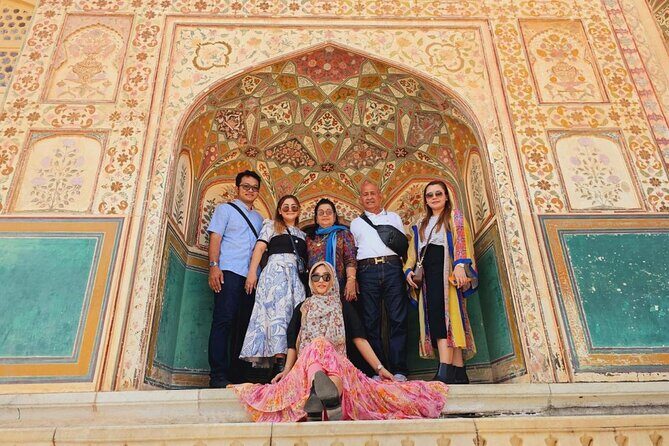
This tour tries to squeeze three cities into four days without pretending that travel time doesn’t exist. You’ll start early, sightsee in short-but-meaningful blocks, then move on again. That rhythm works well if you like momentum and hate wasting days on logistics.
The value in the structure is clear: each day has a theme. Day 1 focuses on Delhi’s landmark monuments. Day 2 is Jaipur’s royal and architectural hits. Day 3 adds a change of scenery with Abhaneri’s stepwell and Fatehpur Sikri’s stone city feel. Day 4 saves the biggest “wow” moment for the start of your Agra day with the Taj.
Just keep your expectations practical. This isn’t a slow, wander-at-your-own-speed vacation. It’s a guided route designed to hit the major monuments efficiently, with transport handled for you.
You can also read our reviews of more tours and experiences in New Delhi


Delhi day: Rashtrapati Bhavan, India Gate, Humayun’s Tomb, Qutub Minar

Delhi’s Day 1 is set up like a tour of how power gets built into stone.
You begin at Rashtrapati Bhavan, completed in 1929 and originally the Viceroy’s House. After independence, it became the home of India’s President. Even in a short stop, the building size and formal layout help you see how the city grew into a capital with major ceremonial space.
Then you head to India Gate, the war memorial built in 1931. It’s dedicated to Indian soldiers who died during World War I, and it was designed by Sir Edwin Lutyens. It’s one of those monuments where you can read the meaning quickly, then just sit with it for a minute and watch Delhi life move around it.
Next is Humayun’s Tomb (UNESCO), commissioned in memory of Mughal Emperor Humayun by Empress Bega Begum. The included time is long enough to appreciate its garden-tomb design instead of just rushing past walls.
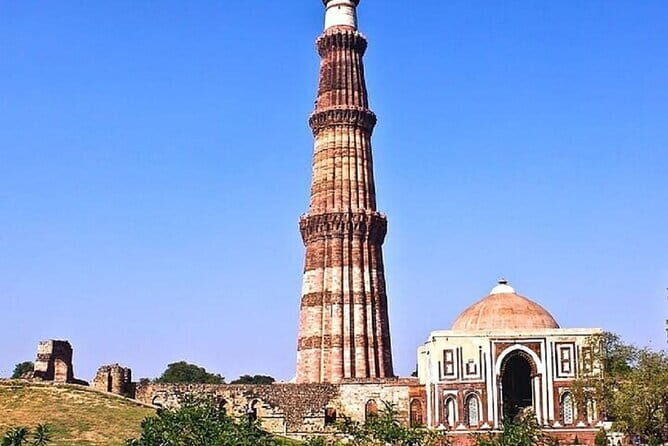
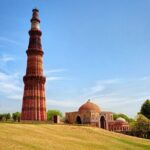
You finish at Qutub Minar, rising to 73 meters. It’s known as a towering brick minaret built in 1193 by Qutb-ud-Din Aibak. If you only remember one thing from Day 1, make it the vertical scale here—this is history you feel in your neck muscles.
Practical tip: This day mixes free-admission sights with ticketed monuments, so plan for a day where you’ll be stopping, walking, and getting photos quickly. Comfortable shoes matter more than extra outfits.
Jaipur day: Amber Fort, Hawa Mahal, Jantar Mantar, City Palace
Jaipur gets the full royal-treatment arc on Day 2: forts first, then architecture, then science-and-court-life in the same neighborhood.
Amber Fort is the big opening move. Built in the 16th century by Maharaja Man Singh and connected with Akbar through alliance history, it’s a showpiece of Rajput architecture. The 2-hour block gives you time to see why forts weren’t just defensive structures—they were stages for power.
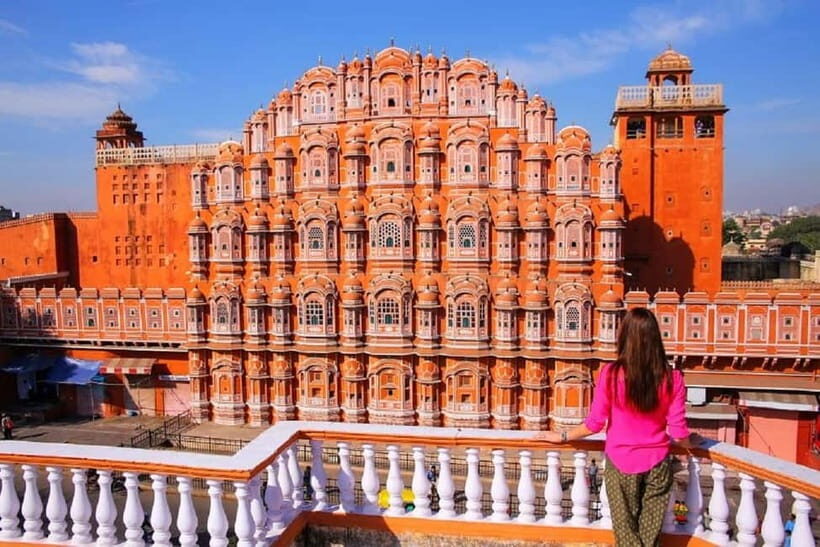
After that, you get the iconic photo moment at Hawa Mahal, the Palace of Winds. Built in 1799 by Maharaja Sawai Pratap Singh, it’s famous for its five stories and 953 intricately designed windows. The stop is short, but it’s exactly what it should be: a quick hit of pattern and facade drama.
Then comes Jantar Mantar, Jaipur’s astronomical observatory built in 1734 by Maharaja Jai Singh II. Expect huge instruments, including the Samrat Yantra giant sundial. The value here is that it’s not only pretty—it’s functional design for observing the sky.
Finally, you end at the City Palace of Jaipur. Built in the 18th century by Maharaja Sawai Jai Singh II, it mixes Rajput, Mughal, and European architectural styles. That blend is why this stop is more than a wall-and-gate experience—you can actually feel the city’s shifting influences in one place.
Practical tip: Jaipur is where you’ll do more “look up” sightseeing. Plan extra time for photos and keep your water bottle plan tight, since you’re using a full circuit of monuments.
Abhaneri and Fatehpur Sikri on Day 3: stepwells and Akbar’s stone city

Day 3 shifts the vibe away from typical city sightseeing and into more unusual structures.
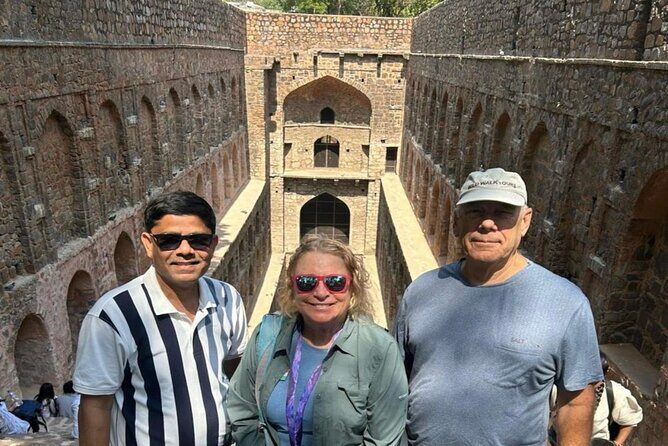
You start with Chand Baori in Abhaneri, one of the deepest and largest stepwells. It’s described as having around 3,500 narrow steps, built around the 9th century. The sheer repetition of steps makes it feel almost mathematical. Even if you’re not a “stepwell person” normally, the scale is the point.
Then you go to Fatehpur Sikri, described as an Akbar-era capital city. The stop specifically mentions Panch Mahal within Fatehpur Sikri. The site is known in your itinerary details for major architectural elements like the Buland Darwaza and Jama Masjid. The value of this kind of stop in a short tour is variety: you get courtyards and monuments that feel like a whole world, not just one building.
One thing to watch: this is a day where you’ll likely do more walking than you expect, because big heritage sites usually mean ground coverage. The good news is your transport is private and planned, so you won’t waste time figuring out how to get between points.
Practical tip: If you’re sensitive to heat or glare, you’ll want hat coverage and a clear plan for shade breaks. Your itinerary doesn’t mention built-in breaks, so pacing yourself is on you.
Agra day: Taj Mahal sunrise, Agra Fort, and the “Baby Taj” style stop
Agra is where the tour earns its name “Golden Triangle,” because the icons are real and close together—so the schedule actually makes sense.
You start with the Taj Mahal, timed in the overview for sunrise. It’s built in the 17th century by Emperor Shah Jahan as a memorial for Mumtaz Mahal, and the experience lasts about 2 hours in the plan. That early start matters because it changes how marble reads, and it also reduces the feel of rushing from one landmark to the next.
After Taj, you go to Agra Fort, built by Akbar in 1565. It’s a strong red sandstone fort just 2.5 km from the Taj area and was a center of Mughal power. A 1-hour visit is long enough to see the fort as a functioning complex, not just a silhouette.
Then you finish with Itmad-ud-Daula, often called the Baby Taj. Built in the 1620s by Empress Noor Jahan for her father Mirza Ghiyas Beg, it’s made of white marble. This stop is valuable on a tour like this because it prevents Agra from becoming Taj-only. You get a different scale and mood: more delicate, more intimate, less “monumental spectacle.”
Practical tip: After a sunrise Taj, you’ll probably need mental recovery time even if you keep moving. Use your hotel evening to reset, and don’t overbook any extra plans.





Price and value: what $170.21 really buys (and what it won’t)
At $170.21 per person for the 4-day format, the deal looks best when you compare what’s included versus what most independent travel would cost you in time and hassle.
Included items in the package description are strong for first-timers:
- Transport by private air-conditioned car
- Experienced licenced driver
- Professional live tour guide
- Unlimited water bottles during travel and sightseeing
- Accommodation in 3/4/5-star hotels if you select that option
Where the money still gets you later: the package states lunch & dinner aren’t included, and it also states entrance tickets of the mentioned monuments aren’t included. At the same time, your itinerary details show several stops with admission ticket included or ticket free.
That mismatch is exactly the kind of thing you should clarify before you pay the final amount. Ask the operator one simple question: are monument entrance fees included for your exact dates and hotel option, or are you expected to pay at each site?
If you’re okay budgeting for meals and possibly tickets, the price can feel fair. If you want full predictability with everything included, treat entrance fees as the only big uncertainty to confirm.
Transport comfort, guide support, and why it matters on this route
Golden Triangle routes live or die by logistics. This one is built with private transport and a licensed driver, which helps you avoid the common pain of group tours that cram in too many transfers.
It also includes a live guide. The helpfulness shows up in the way different guide names get mentioned: Amir Khan, Amet, and Ahmed, with comments that they were friendly, caring, entertaining, and good at handling issues. In practical terms, that means you spend less time stuck and more time getting your bearings at each stop.
The guide value is especially important in places like Jantar Mantar, where the “what am I looking at?” question can otherwise swallow half your visit. In Jaipur and Agra, that explanation angle can also help you notice why certain buildings were made the way they were.
Finally, unlimited water bottles sound small, but on hot or crowded days it’s the difference between snapping at each other in transit and keeping a relaxed pace. The plan supports that.
Who should book this Delhi-Agra-Jaipur tour?

This tour fits best if you:
- Want to see Delhi, Jaipur, and Agra in a tight window without planning transport between cities
- Like guided structure and prefer not to hunt for tickets and directions on your own
- Appreciate iconic sites like Taj Mahal, Amber Fort, Humayun’s Tomb, and Agra Fort
It’s less ideal if you:
- Want lots of downtime each day
- Get irritated by a schedule where you move from stop to stop in planned time blocks
- Need full cost predictability and don’t want to deal with the entrance-ticket detail (confirm it)
Should you book this Delhi Agra Jaipur 4-day Golden Triangle tour?
If your goal is classic highlights—Taj at sunrise, Amber Fort, Fatehpur Sikri, and Agra Fort—this is a smart way to do it with the heavy lifting handled. The guide support (names like Amir Khan, Amet, and Ahmed come up) is a real strength, and the private car keeps your day from turning into a travel scavenger hunt.
Book it if you’re fine budgeting for meals and you confirm whether monument entrance tickets are truly included for your exact option. Skip it or ask more questions if you want a slower pace or everything packaged with zero extra spend.
FAQ
How much does the Delhi Agra Jaipur 4 Days Tour – Golden Triangle India cost?
The price listed is $170.21 per person.
How long is the tour?
It runs for about 4 days.
What’s included in the tour package?
The package includes transport by a private air-conditioned car, an experienced licensed driver, a professional live tour guide, unlimited water bottles during traveling and sightseeing, and accommodation in 3/4/5-star hotels if you select the accommodation option.
Are lunch and dinner included?
No. Lunch and dinner are listed as not included.
Are entrance tickets included for the monuments?
The package details list entrance tickets as not included, even though the itinerary shows some stops with admission ticket included or free. Confirm with the operator for your specific booking.
Is pickup offered, and is this a private group?
Pickup is offered, and it’s described as private, with only your group participating.
Which cities and major monuments are visited?
You’ll cover New Delhi, Jaipur, and Agra, with stops including Rashtrapati Bhavan, India Gate, Humayun’s Tomb, Qutub Minar, Amber Fort, Hawa Mahal, Jantar Mantar, City Palace of Jaipur, Chand Baori, Fatehpur Sikri (Panch Mahal), Taj Mahal, Agra Fort, and Itmad-ud-Daula.
What is the cancellation policy for a full refund?
You can cancel up to 24 hours in advance for a full refund. If you cancel less than 24 hours before the experience starts, the amount paid is not refunded.