REVIEW · AGRA
Agra Fort: Guided UNESCO Heritage Walking Tour
Book on GetYourGuide →Operated by Crystal India Holidays · Bookable on GetYourGuide
Fort walls have better stories than you expect. This Agra Fort UNESCO visit is a focused, guide-led way to read the Mughal Empire in stone—fast enough for tight schedules, detailed enough to feel worth the time. In about an hour, you’ll move from gates and audience chambers to the places tied to Shah Jahan’s final chapter and Aurangzeb’s prison story, all with a plan for good pacing and photo stops.
I especially like two things here. First, the tour hits the big interpretive rooms people care about, like Diwan-i-Am and Diwan-i-Khas, so you understand what you’re seeing instead of just walking past it. Second, you’ll also get the visually sharp Mughal side—mirrored palace moments and the geometric layout of Anguri Bagh—so the tour isn’t only about names and dates.
One consideration: the fort is huge, with uneven surfaces and lots of walking, and you’ll also face entry bag checks. Add in the 1-hour duration, and you’ll cover the highlights well, but it’s not a full-day “every corner” experience.
In This Review
- Key highlights I’d circle
- Amar Singh Gate: Your fast entry into Mughal Agra
- Diwan-i-Am and Diwan-i-Khas: Where rulers performed power
- Jahangiri Mahal: Architecture with mixed-style signals
- The Peacock Throne area: A point of imagination
- Shah Jahan’s imprisonment spot and Musamman Burj: The emotional punch
- Mirrored palace moments and Anguri Bagh geometry
- A 1-hour private tour: fast pacing, smarter choices
- Price value: why $6 is surprisingly good for what you get
- Pairing Agra Fort with the Taj Mahal (2.5 km apart)
- What to bring and what to expect at the entrance
- Should you book this Agra Fort walking tour?
- FAQ
- How long is the Agra Fort guided UNESCO walking tour?
- What languages are the guides available in?
- Is transportation included?
- Where do I get the guide’s details before the tour?
- Is photography allowed inside Agra Fort?
- How far is Agra Fort from the Taj Mahal?
Key highlights I’d circle
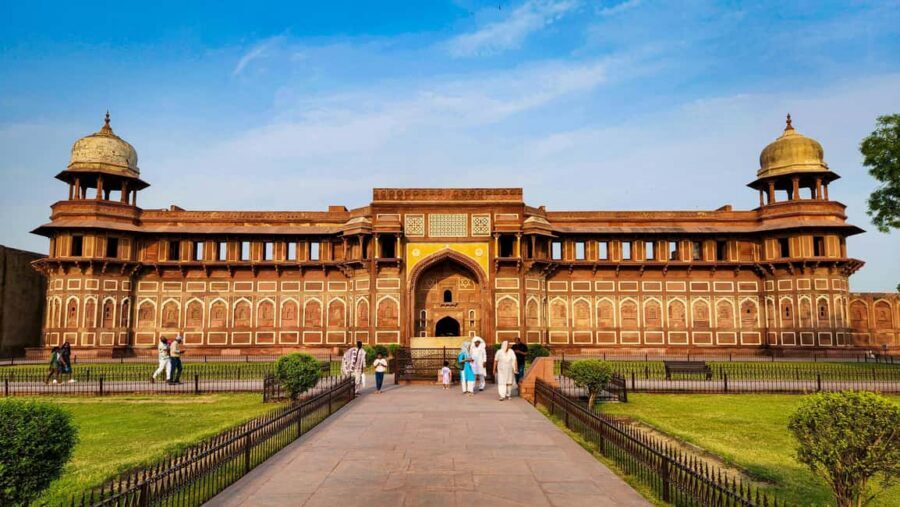
- Amar Singh Gate start: the main entry point that sets up your route through the fort
- Diwan-i-Am and Diwan-i-Khas: public and private audience spaces you can actually make sense of
- Jahangiri Mahal: a stop that helps connect architecture to Mughal-era life
- Shah Jahan’s imprisonment area and Musamman Burj: emotionally heavy stops tied to the end of an era
- Mirrored palace and Anguri Bagh: geometry and reflections for photos (with guided positioning)
Amar Singh Gate: Your fast entry into Mughal Agra
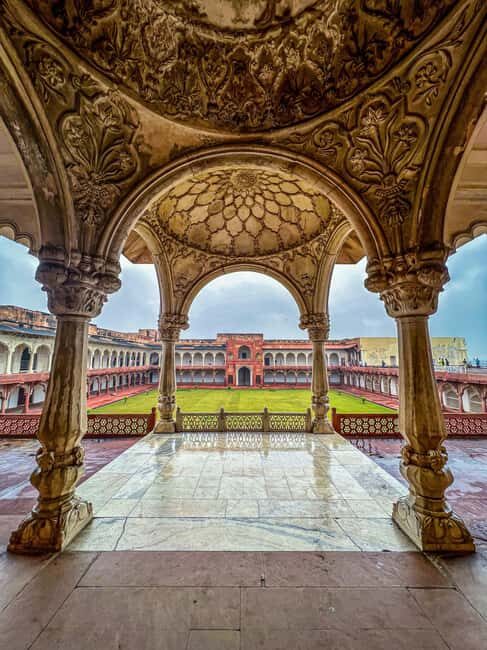
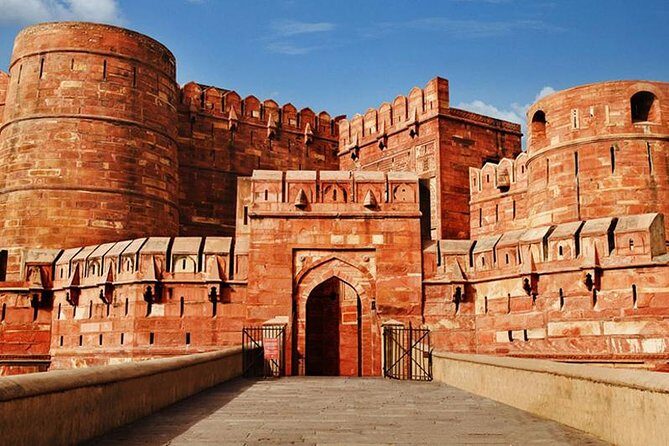
The tour begins at Amar Singh Gate, and that matters more than it sounds. A fort like this can feel like a maze if you’re going in cold, but starting at a clear entry gives you an immediate sense of direction and structure. Your guide’s job is basically to turn “big walls and corridors” into a story you can follow.
From the gate, you’ll trace how Agra Fort worked on two levels: as a military stronghold and as a royal residence. That dual purpose shows up in the layout, the scale, and the way different spaces feel built for different kinds of power. If you like when architecture explains politics, this is a great way to read it.
Expect your first walking burst soon, because ramparts and paths don’t just sit there for decoration. Even on a 1-hour plan, you’ll still want comfortable shoes, because the ground can be uneven and the distances add up quickly.
You can also read our reviews of more walking tours in Agra



Diwan-i-Am and Diwan-i-Khas: Where rulers performed power
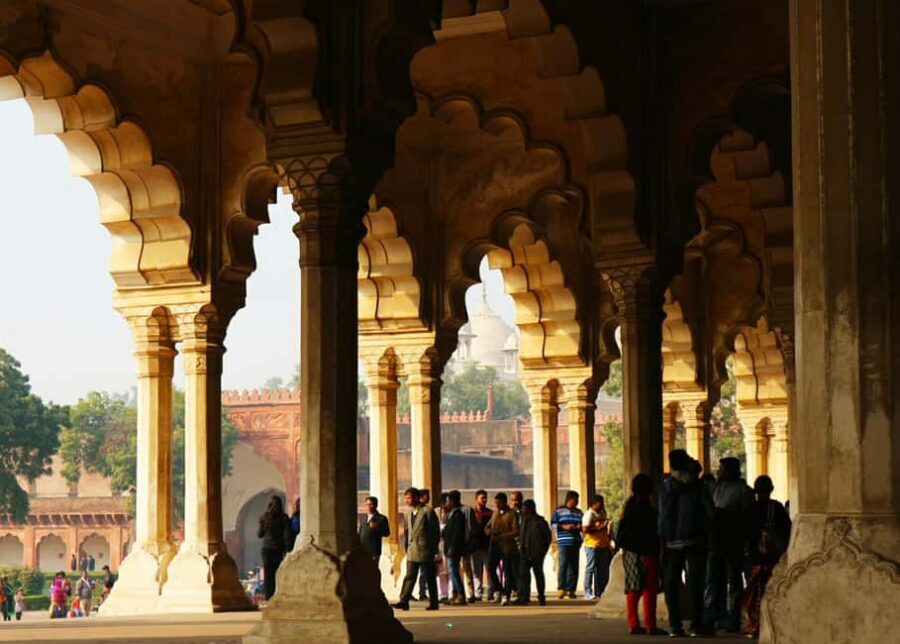
Agra Fort’s audience halls are where the Mughal story gets practical. The Diwan-i-Am is the space associated with public audiences—so it helps you understand how an emperor was seen as reachable, at least in ceremony. Then Diwan-i-Khas shifts to the more private world of select audiences and elite court life.
What I like about having a guide here is that these places are easy to misunderstand on your own. Without context, you might just notice arches, pillars, and carved details. With context, you start to see how the room shape supports visibility, authority, and ritual.
You’ll also notice the Mughal arch language and the refined decorative elements that helped define imperial taste. The guide’s pacing matters too. With only 1 hour total, you want just enough time to appreciate the space without feeling rushed past the best parts.
Jahangiri Mahal: Architecture with mixed-style signals
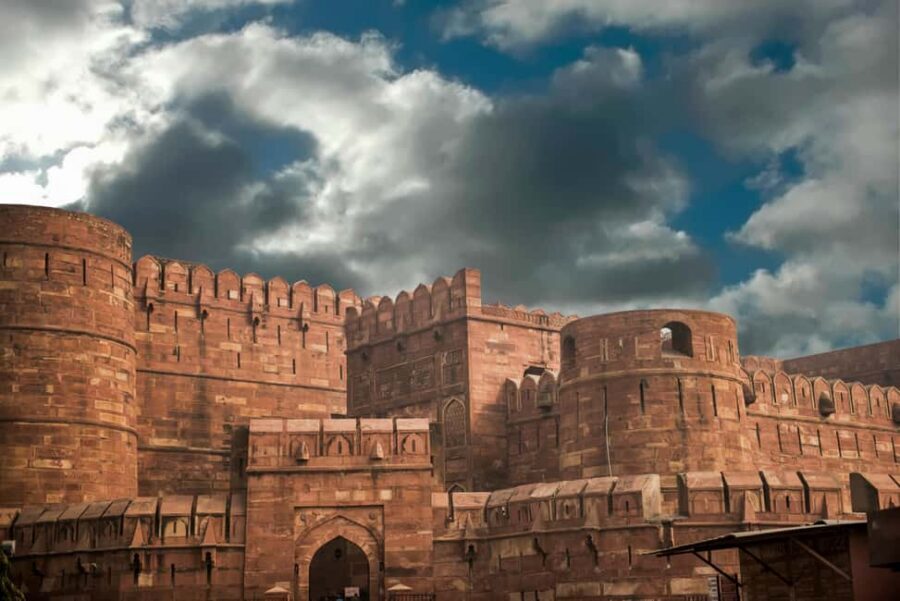
Next comes the Jahangiri Mahal, a stop that helps connect the dots between different cultural influences in Agra’s Mughal architecture. The tour frames these palaces as blends—Rajput, Persian, and Islamic styles appear in ways you can spot if your guide points them out.
This is one of those areas where a short tour can still deliver value. You don’t need hours to understand the theme if someone explains what to look for: the design logic, the aesthetic choices, and why the palace form looks the way it does.
If you’re the type who likes “okay, what am I actually seeing,” this stop is useful. It’s not just scenery. It’s a design lesson in how power expressed itself through style.
The Peacock Throne area: A point of imagination
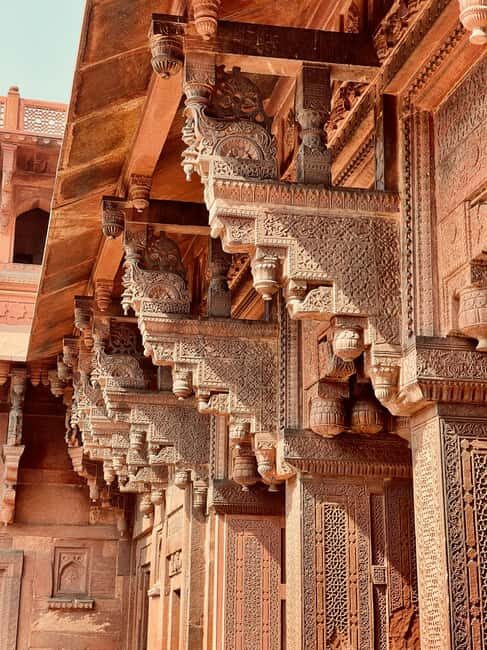
The tour includes the spot connected with the Peacock Throne. Even if you can’t picture the original itself here, the point is that this location is tied to a moment of Mughal spectacle—where the empire’s wealth and status were made theatrical.
This is exactly where a guide earns their fee. The fort is full of strong visuals, but your experience improves when you’re given a mental picture of what once happened in the space. A good guide turns an empty-looking corner into a meaningful stage.
If you’re into photography, you’ll likely want to pause here and take a few frames at different angles. The fort’s geometry helps you find compositions quickly, especially with a guide pointing you toward good sightlines.
Shah Jahan’s imprisonment spot and Musamman Burj: The emotional punch
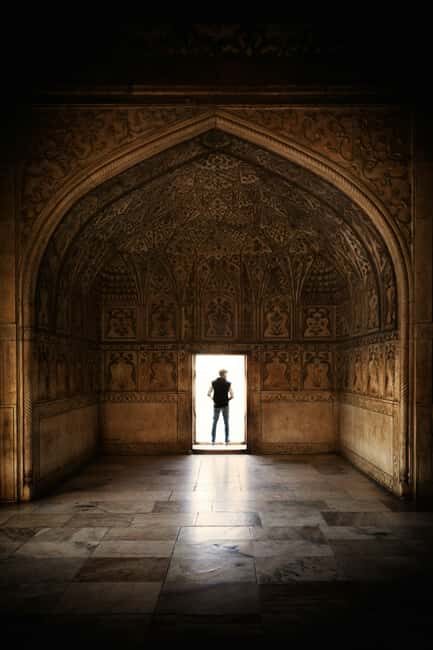
Agra Fort becomes heavier when you get to the story of Shah Jahan being imprisoned by his son Aurangzeb. The tour takes you to the area associated with that dramatic turning point, which is a big reason many people choose this guided route instead of doing it solo.
Then comes Musamman Burj, the kind of stop that makes time feel weird. This is where Shah Jahan spent his final days gazing toward the Taj Mahal. The tour frames it as bittersweet—because the view is breathtaking, but the context is tragic.
This is also where your guide’s pacing becomes extra important. You want a minute to take it in. You don’t want to be yanked along before the story lands. In a fast fort, emotional stops need breathing room.
If you plan to pair Agra Fort with the Taj Mahal (more on timing later), this stop makes that second visit feel more personal. You’re not just seeing a monument. You’re following a life story across the skyline.
You can also read our reviews of more guided tours in Agra






Mirrored palace moments and Anguri Bagh geometry
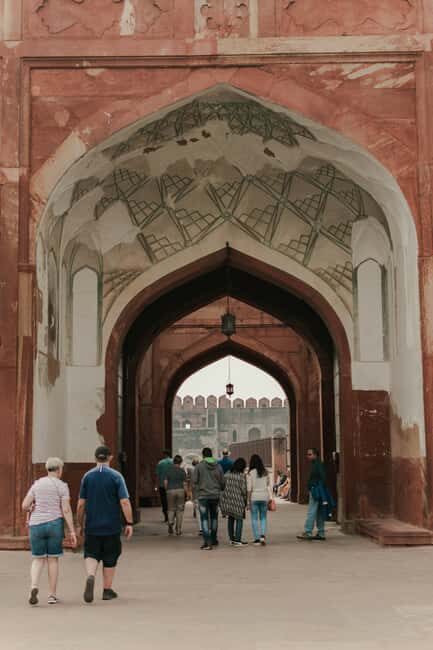
After the heavy story, the tour shifts back to what people come to Agra Fort for visually. If access is possible, you’ll visit the mirrored palace, a place that’s meant to catch light and reflections in a way that feels almost theatrical.
Even if the palace isn’t fully open at every moment (your guide will let you know what you can enter), the guide still helps you understand why mirrored surfaces were used in Mughal design. It’s not just decoration. It’s about atmosphere—how a space makes you feel inside it.
Then you get Anguri Bagh, the geometric garden. This is a photography-friendly stop because geometry gives your camera something clean to work with. Your guide can also help you spot where the light hits and where reflections or garden lines will look strongest in photos.
One practical note: the fort is full of photo opportunities, but tripods and drones are usually prohibited without special permission. Bring your camera, take your shots, and stay flexible with angles if rules limit certain equipment.
A 1-hour private tour: fast pacing, smarter choices
This tour is designed around a tight time window: 1 hour. That’s the biggest reason it can feel so satisfying. You get the meaningful stops—audience halls, palace areas, Shah Jahan’s story points, and the garden-and-mirror visual highlights—without losing half your day to “where do I go next?”
It’s also a private group, which changes the vibe. You’re not stuck behind a wall of strangers moving as one unit. It’s easier for your guide to adjust pace if someone needs a slow moment or a photo break, and it’s easier to ask practical questions.
From the guide-style feedback, two skills really stand out. One is handling the crowd pressure near the entrance area—some guides are careful about navigating weekend rush and protecting you from scammy photographers and vendors hovering right at the start. The other is photo help: guides like Gagan (who has been giving tours for 17 years) and Shahid Khan (known for enthusiasm and steering people to good viewing/photo spots) can be effective at getting you solid pictures without you wandering blindly.
Even when you’re moving quickly, safety and flow matter. A good guide helps you keep your bearings fast and not get pulled into side conversations that cost time.
Price value: why $6 is surprisingly good for what you get
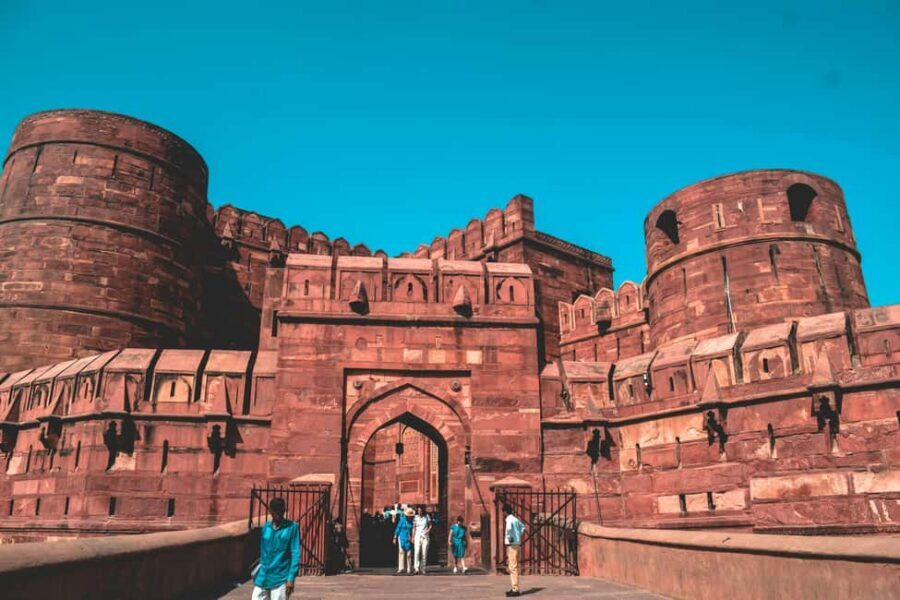
At $6 per person for a guided UNESCO heritage walk, the value is strong—especially if you’re trying to see Agra Fort in a single window. You’re not paying for a long coach ride or a full-day program. You’re paying for a guide who can interpret the complex spaces efficiently.
What makes the price feel fair is that the tour isn’t just “here are walls.” It’s built around specific interpretation points: Diwan-i-Am, Diwan-i-Khas, Jahangiri Mahal, Shah Jahan and Aurangzeb context, Musamman Burj, and then mirrored palace and Anguri Bagh photo stops. In a fort that can easily turn into random walking, those anchored moments matter.
The main tradeoff is that transfers aren’t included. So you’ll need to handle getting there on your own. If your plans already put you in Agra Fort’s area, that’s fine. If you’re relying on someone to manage everything end-to-end, you may want to pair this with separate local transport.
Pairing Agra Fort with the Taj Mahal (2.5 km apart)
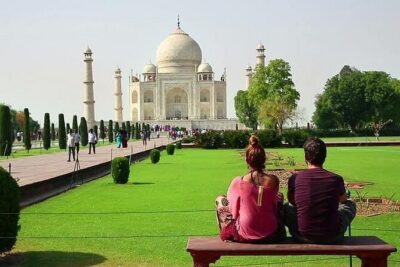
The fort is about 2.5 km from the Taj Mahal, and that distance is doable in a planned day. What’s helpful is that Agra Fort sets up the Taj visit emotionally. When you’ve already visited Musamman Burj and the Shah Jahan story points, the Taj Mahal feels less like a standalone sight and more like the ending of a narrative.
To make the day work, think about your order and energy. Fort walking is uneven and active, so don’t schedule it as your “sit around and graze” activity. Do it while you’re still fresh, then let the Taj Mahal be the heavier, slower payoff after.
If you’re trying to see both on the same day, a timed guided format like this can reduce decision fatigue. You stop spending your energy figuring out routes and start spending it absorbing details.
What to bring and what to expect at the entrance
This is one of those tours where packing makes a difference. Bring comfortable shoes and a camera. The fort involves uneven surfaces and a fair amount of walking in a short duration, so sneaker comfort beats style here.
Also expect bag checks at the entrance. The rule of thumb: keep your bag small and avoid prohibited items. This is usually where tours live or die in the first few minutes—so don’t show up carrying a backpack that’s going to slow you down.
Photography is allowed, but rules around drones and tripods are typically strict unless you get special permission. If photography is a big part of your plan, plan to shoot handheld and rely on your guide for good angles and sightlines.
Should you book this Agra Fort walking tour?
Book it if you want a time-efficient guided route through Agra Fort’s biggest meaning points—audience halls, key palace areas, Shah Jahan’s imprisonment story and Musamman Burj, plus mirror-and-garden photo highlights—without turning your day into a self-guided puzzle. The $6 price is a big plus, especially for first-timers who would otherwise miss context.
Skip it or rethink it if you’re expecting a slow, full-exploration experience. The fort is huge, surfaces can be uneven, and the 1-hour format covers highlights rather than everything. If you want a deep archaeological stroll or need minimal walking, you’ll probably want a different plan.
If you do book, do one smart thing: show up ready for walking, keep your bag light for the check, and let your guide handle the crowd flow at the entrance. It’s the kind of small decision that makes the whole fort visit feel smoother.
FAQ
How long is the Agra Fort guided UNESCO walking tour?
The tour lasts 1 hour.
What languages are the guides available in?
The live guide offers English and Hindi.
Is transportation included?
No. Transfers are not included.
Where do I get the guide’s details before the tour?
You’ll receive the guide’s contact details one day before via WhatsApp (or by email if you don’t use WhatsApp). Your booking voucher also lists the local service provider’s WhatsApp number.
Is photography allowed inside Agra Fort?
Photography is allowed. Drones and tripods are usually prohibited without special permission.
How far is Agra Fort from the Taj Mahal?
The Taj Mahal is about 2.5 km away, making it practical to visit both in the same day.