Agra has a street-level side. This walking tour is built for people who want more than the Taj Mahal postcard view. You’ll move through local lanes and markets with a professional guide, plus transportation to keep things practical.
I love the mix of stops: sacred landmarks (like Jama Masjid and a 650-year-old temple) followed by everyday Agra shopping streets. I also like the pace, which is short, focused, and designed for wandering without turning it into an all-day marathon.
One thing to consider: the full experience is only about 2 to 3 hours, so it can feel a bit short if you’re hoping for extra time at entrances or long explanations at every site. If a mosque door, a specific view, or an extra photo spot matters to you, plan to ask your guide clearly.
In This Review
- Key things that make this Agra walk worth it
- Why this Agra walk feels like the real city
- What you get for about $11: value that actually adds up
- Jama Masjid: a huge landmark with a quick, useful orientation
- Shri Mankameshwar Mandir: the 650-year-old temple that rewards listening
- Agra Fort Railway Station: British-era architecture you’d otherwise miss
- Kinari Bazar and Subash Bazar: two old markets, different vibes
- Johri Bazar pethe: sweet, quick, and very Agra
- The final 25 minutes in Agra: small places off the Google map
- How to make the timing work (and not feel rushed)
- Who should book this walking tour (and who might want something else)
- Should you book this Agra walking tour?
- FAQ
- How long is the Agra walking tour?
- Does the tour include pickup or transportation?
- Is this a private tour?
- Where do I meet for the tour?
- Are tickets and admissions included?
- Is the pethe included, and is food included?
- What’s the tour schedule window?
- What if the weather is bad or I need to cancel?
- Is the guide English-speaking?
Key things that make this Agra walk worth it
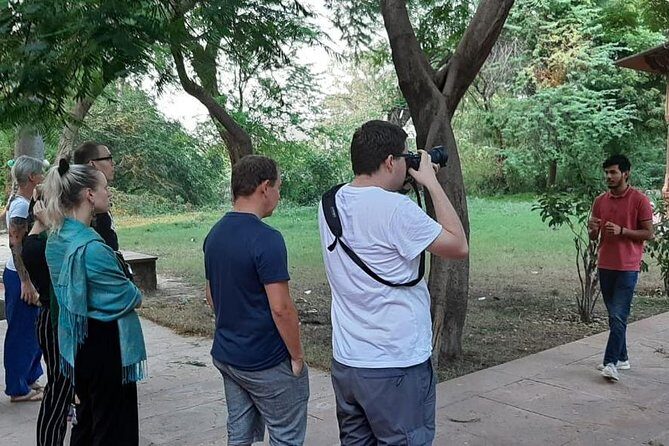
- Private, small-group feel: you get personal attention rather than being swept along with a crowd.
- Transport is included: you’re not forced to walk everything in traffic or across long gaps.
- Free stops with quick context: the route balances free admission sites with a couple of paid-included moments.
- Historic markets in active neighborhoods: Kinari Bazar and Subash Bazar bring you into how people actually shop.
- Pethe stop with a known name: you’ll try Agra’s pumpkin sweet at Gopal Das Pethe Wale in Johri Bazar.
Why this Agra walk feels like the real city
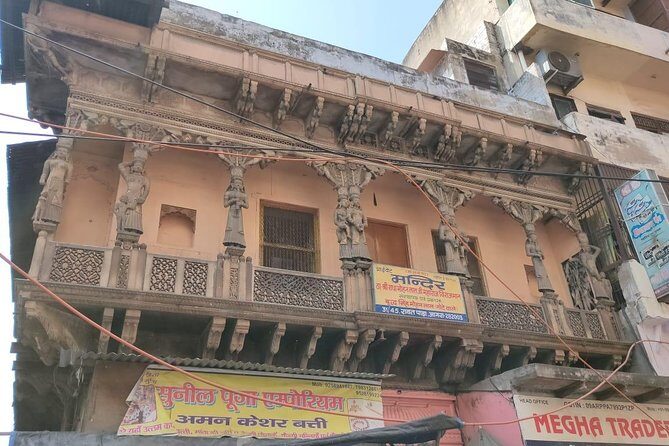
If your Agra plan is just monuments, you’ll miss the daily rhythm that makes the city feel alive. This tour is intentionally angled away from the obvious tourist path. Instead of treating Agra Fort and markets like background scenery, it puts them into a sensible order so you can understand how the city flows: places of worship, then old commerce lanes, then a food break that locals talk about.
The private format matters here. You can ask questions on the spot, and your guide can adjust for your pace. In the way guides like Amit describe Agra, you get energy plus context. Another guide, Ritik, is described as easy company who helps you feel comfortable moving through neighborhoods with confidence.
And yes, it’s a walking tour. But it doesn’t feel like a punishment walk. Transportation is included, so you’re meant to spend your energy where it counts: the lanes, the markets, the details on doors and walls, and the small scenes you’d otherwise walk right past.
You can also read our reviews of more walking tours in Agra

What you get for about $11: value that actually adds up
At around $11 for a 2 to 3 hour private experience, the value comes from the combination of things that are hard to bundle on your own:
- A guide who speaks English and can explain what you’re looking at.
- Transportation to connect stops efficiently.
- A route that uses free admission for multiple major stops, plus included entry for a couple of key parts (the railway station area and the pethe moment).
The itinerary is built like this on purpose. Some stops are free, so you’re not paying gate fees every step. Other stops include admission, so you’re not stuck figuring out what needs tickets and what doesn’t.
One practical note: tickets are handled via mobile ticket, so you’re not scrambling at the door. And the tour offers a meeting point around Jama Masjid, meaning you start in a location that’s easy to orient yourself from.
Is it “cheap” in the sense of being bare-bones? No. The money is mostly paying for the guide and the structured route through areas you might not choose on your own.
Jama Masjid: a huge landmark with a quick, useful orientation
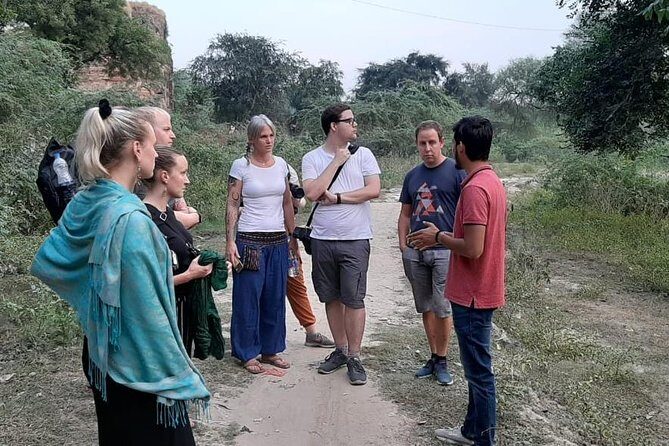
You begin at Jama Masjid, one of the biggest mosque spaces in Agra. Your stop here is short (about 20 minutes), but the point isn’t to turn it into a half-day religious visit. It’s to help you get bearings fast: what you’re looking at, how the space is used, and what makes this mosque a big deal in the city.
Since admission is free, it’s one of those stops where the value is almost entirely about interpretation. Without a guide, you might admire the scale and move on. With a guide, you’re more likely to notice the meaningful details—areas people pay attention to, and the layout that shapes movement through the complex.
Possible drawback: because your time is limited, you might want to be specific about what you care about. Some people prefer seeing entrances and certain architectural angles. If that’s you, ask early so your guide can route your attention appropriately.
Shri Mankameshwar Mandir: the 650-year-old temple that rewards listening
Next is Shri Mankameshwar Mandir, a temple described as about 650 years old. This is another free stop, again around 20 minutes, but it’s the kind of place where the experience improves when you have stories to hold onto.
A good guide helps you read a temple like a living place, not just a stone object. You’ll be able to focus on what’s inside and what the temple is known for, rather than wandering without a trail of meaning.
Keep your expectations realistic: you’re not spending hours here. You’re getting the “why it matters” version of the stop. If you want a longer temple visit, you can use this tour as a primer, then plan your own extra time afterward.
Agra Fort Railway Station: British-era architecture you’d otherwise miss
Then comes an unexpected highlight: Agra Fort Railway Station. The tour frames it as the city’s oldest railway station, built by the Britishers, and known for rare architecture with many stories attached.
This is exactly the kind of stop that makes the tour feel different. Even if you’ve heard of Agra Fort, you might not connect it to the station’s architectural character. The time here is about 20 minutes, and admission is included, which is helpful if you’re trying to keep the trip friction-free.
What I like about this stop for practical travelers: it’s not a “stand and stare for photos” experience. You’re walking and looking at how the built environment carries layers of the city’s past. A guide can point out the features you’d likely overlook.
One caution: because the tour is time-boxed, try not to treat this as your only chance to see Agra Fort architecture. It’s more like a focused snapshot. If you’re a serious architecture fan, consider pairing it with a longer Fort visit on a separate outing.






Kinari Bazar and Subash Bazar: two old markets, different vibes
After the religious and architectural stops, the tour turns into a shopping stroll through neighborhoods that feel older than the tourist brochures.
First up is Kinari Bazar, described as a 400-years-old market where time feels slower. This is a great place for sensory travel: you’ll see how people actually shop, you’ll notice the kinds of goods that dominate, and you can watch the micro-scenes that make markets feel human.
Next is Subash Bazar, described as the kind of place where local shopping energy takes over. It’s a wholesale market for Indian wear, so it’s built for selection and comparison. If you’ve ever walked through a tourist market and wondered where the serious buyers go, this is the direction the tour takes you.
Practical tip: bring a little patience. Markets move fast. Prices aren’t always structured like malls, and people may talk to you while you look. A guide helps with timing and navigation, but your job is to keep your pace steady and avoid getting swept into decision fatigue.
Johri Bazar pethe: sweet, quick, and very Agra
You finish the market portion with a food stop that’s small in time but big in payoff: pethe at Gopal Das Pethe Wale Johri Bazar. The tour describes it as Agra’s most famous sweet, made from white pumpkin, and framed as a story you’ll enjoy.
This is the moment where the tour becomes memorable in a simple way. You’re not just seeing places; you’re tasting a local specialty tied to the city’s identity. Since admission is included, you’re not dealing with the guesswork of whether you’re paying for a tasting or a full purchase.
One thing to watch: pethe can be sticky and sweet, so plan for a light snack feeling rather than a full meal. It’s ideal if you’ve been walking and you want something that tastes like Agra—not a generic dessert you can get anywhere.
The final 25 minutes in Agra: small places off the Google map
The last stop is where the tour earns its off-the-beaten-path promise. You’ll spend about 25 minutes exploring smaller areas whose locations might not show up easily in a search. These places aren’t presented as famous monuments. The value is the stories and the lived-in details.
This part is less about ticking sights and more about giving you a mental map of the city. You’ll probably end up with a few images and a few new reference points for future independent exploring.
And because the group time is limited, this section is best used for curiosity, not perfection. If you try to photograph everything, you’ll lose the human moments that make these neighborhoods interesting.
How to make the timing work (and not feel rushed)
This is a compact tour, so your best strategy is to decide what you want more of:
- If you love architecture and landmarks, focus your questions at Jama Masjid and Agra Fort Railway Station.
- If you’re into shopping and street life, spend your energy on Kinari Bazar and Subash Bazar.
- If food is your priority, be ready at the pethe stop so you’re not scanning menu boards while the group moves on.
Wear comfortable shoes. The walking isn’t described as extreme, but you’ll be moving through busy streets and market lanes. Also think about timing in terms of the day: the activity runs from 4:00 AM to 10:00 PM, so you can often pick a window that matches your comfort level in Agra’s heat.
Weather matters too. The experience notes a good-weather requirement. If the day is miserable, you might have an alternative date offered, rather than a cancellation that wipes the effort out.
Who should book this walking tour (and who might want something else)
This tour is a strong fit if you:
- Want a private guide who can explain what you’re seeing in real time.
- Prefer local markets over just monument-hopping.
- Like short, structured outings that still feel personal.
It’s also a good option if you’re arriving in Agra with limited free time. The stops are arranged so you get variety in just a few hours.
I’d be a bit cautious if you:
- Need long, slow visits and deep explanations at every stop.
- Want guaranteed door-by-door coverage of a specific mosque area or architectural angle.
- Are extremely sensitive to delays. While many experiences run smoothly, one concern that can pop up is the tour feeling shorter than expected if a guide starts late.
If you fall into that cautious category, don’t skip the tour entirely. Just message your priorities before you go and set expectations with your guide at the start.
Should you book this Agra walking tour?
My take: yes, if you want Agra to feel like a city you can picture beyond the obvious landmarks. The route makes sense, the price is reasonable for what’s included, and the tour balances free sights with a couple of paid-included moments so you don’t constantly manage tickets yourself.
Book it especially if you’re the type who enjoys markets, street scenes, and quick storytelling stops. The Jama Masjid → temple → railway station architecture → old bazaars → pethe flow is an efficient way to learn how the city works.
Skip it or pair it with other plans if your main goal is a long, uninterrupted deep dive into one monument. This is designed for breadth and local texture, not for hours of one-site study.
FAQ
How long is the Agra walking tour?
The tour runs about 2 to 3 hours.
Does the tour include pickup or transportation?
Yes. Pickup is offered, and transportation is provided as part of the experience.
Is this a private tour?
Yes. It’s listed as a private tour/activity, so only your group participates.
Where do I meet for the tour?
The start point is at Jama Masjid Agra, and the meeting point area is around Jama Masjid / Subash Bazar / Kinari Bazar / Hing ki Mandi / Mantola, Agra.
Are tickets and admissions included?
Some stops are free, and some have admission included. In particular, the tour includes admission for Agra Fort Railway Station and for the pethe stop.
Is the pethe included, and is food included?
Pethe at Gopal Das Pethe Wale Johri Bazar is part of the experience with admission included. Food expenses are not included, so you should plan your budget for anything beyond what’s included in the tour.
What’s the tour schedule window?
It operates Monday to Sunday from 4:00 AM to 10:00 PM.
What if the weather is bad or I need to cancel?
The experience requires good weather. If it’s canceled due to poor weather, you’ll be offered a different date or a full refund. You can also cancel for a full refund up to 24 hours in advance; within 24 hours, the amount paid is not refunded.
Is the guide English-speaking?
Yes. The tour includes an English-speaking local guide.