REVIEW · NEW DELHI
7 Night & 8 Days Private Luxury Golden Triangle with Mumbai Tour
Book on Viator →Operated by Golden Triangle Tours India · Bookable on Viator
From first stops to final goodbyes, this route moves fast.
In a single trip, you’ll cover Delhi, Agra, Jaipur, and Mumbai with private local guides and a dedicated driver, so the logistics feel calmer than doing it on your own. I especially like the Taj Mahal timing built into the plan (sunset viewpoint and a sunrise visit), and I also like the practical comforts that reduce friction, like bottled mineral water during drives and battery-bus service for the Taj area.
One consideration: entrance fees and flights aren’t included, so your final spend depends on how you plan tickets and your Jaipur-to-Mumbai flight timing.
In This Review
- Key things that make this tour a strong value
- Golden Triangle With Mumbai in 8 Days: The Smart Reason This Plan Works
- Who this tour fits best
- Money Matters: What You Pay vs What You Still Need to Budget
- Delhi Day 1: Gurudwara Bangla Sahib and Agrasen ki Baoli Stepwell
- Delhi Day 2: Qutub Minar, Lotus Temple, Humayun’s Tomb, Jama Masjid, and Chandni Chowk
- The Delhi to Agra Shift: 4-Hour Drive and the First Taj Angle
- Day 4 Agra and Beyond: Taj Mahal Sunrise Plus Fatehpur Sikri and Chand Baori
- Jaipur Day 5: Amer Fort Area, City Palace, Jantar Mantar, and Hawa Mahal
- Jaipur Day 6: Birla Mandir, Monkey Temple (Galtaji), Patrika Gate, Then Off to Mumbai
- Mumbai Day 7: Gateway of India, CSMVS Museum, Mani Bhavan, Dhobi Ghat, and a Jain Temple Stop
- Day 8: Your Easy Fly-Out from Mumbai
- Hotel Comfort and Group Setup: Twin Rooms, AC, and Private Attention
- Drivers and Guides: Where the Trip Gets Personal
- Should You Book This Golden Triangle With Mumbai Tour?
- FAQ
- How long is the Golden Triangle with Mumbai tour?
- Is this tour private?
- Do you get hotel or airport pickup and drop-off?
- Are monument entrance fees included?
- Is the Taj Mahal battery bus included?
- Are flights included in the price?
- What meals are included?
- What vehicles are used for transportation?
- FAQ
- Is free cancellation available?
- Can the itinerary be adjusted?
Key things that make this tour a strong value

- Private, local-guided sightseeing across all four cities, not just transportation
- Taj Mahal sunrise and sunset moments built into two different days
- AC vehicle + personal attention, with hotel or airport pickup and drop-off
- Battery bus to Taj Mahal parking included, saving time and walking
- Flexible room setup (twin-sharing by default), which affects cost if you prefer separate rooms
Golden Triangle With Mumbai in 8 Days: The Smart Reason This Plan Works
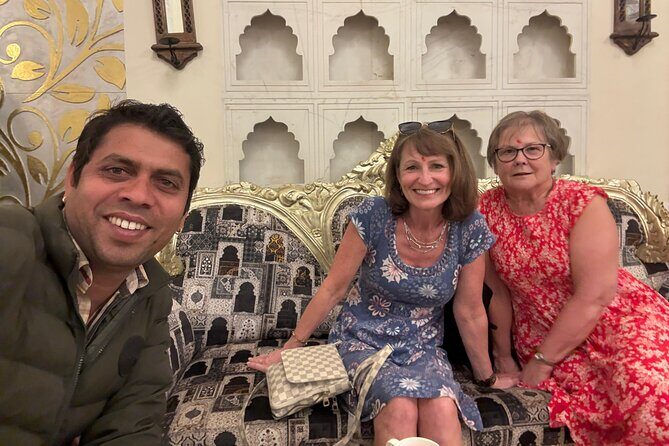
The biggest reason this tour feels worth it is simple: you’re not just ticking off famous names. You’re pairing the iconic sights of the Golden Triangle with a full Mumbai day, without trying to cram in extra countries or weird detours. It’s a classic route, yes, but it’s also a good fit for first-timers because it connects major monuments with the human texture around them.
Also, this is a private tour, so the pace and order matter. You’ll have someone guiding you through each location’s story, and you’ll be able to ask questions as you go. That changes the experience at places like Mughal architecture or astronomical instruments, where reading a sign never quite explains what you’re looking at.
The other value point is comfort. You ride in a private, air-conditioned vehicle, and you get bottled water during journeys. On an itinerary that includes several long drives and early timing for sunrise, those little things add up.
You can also read our reviews of more private tours in New Delhi
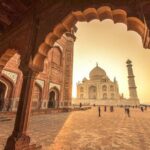


Who this tour fits best
If you want a first India trip (or a repeat visit that still feels structured), this works well. It’s also a strong choice if you’d rather spend your energy looking at monuments than negotiating transport. The private format tends to suit couples, small families, and groups who want to travel together without waiting around for a big schedule.
Money Matters: What You Pay vs What You Still Need to Budget

The listed price is $413.48 per person for an 8-day private experience. That number covers a lot of the trip’s hardest parts: private transport with a driver, door-to-door pickup and drop-off, and guided sightseeing with local guides throughout.
What it does not cover is where your expenses can quietly grow: monument entrance fees are not included, and flight and train tickets are not included either. The itinerary clearly expects you to fly from Jaipur to Mumbai on Day 6, since you’ll be dropped at Jaipur International Airport to board your flight for Mumbai, and then you’ll be transferred to a hotel after arrival.
If you’re booking the option that includes hotels, you also get 7 nights of accommodation and daily hotel breakfast. Rooms are generally twin-sharing, with triple-sharing used by default for 3 travelers unless you pay extra for 2 rooms.
My practical take: this tour is usually best value when you’re ready to handle (1) entrances and (2) your flight. If those are already planned and you don’t mind budgeting a bit extra for them, the overall package feels balanced.
Delhi Day 1: Gurudwara Bangla Sahib and Agrasen ki Baoli Stepwell
Day 1 starts with Gurudwara Bangla Sahib. The setting is calm in a way that helps your trip feel real from the first hour. It’s a Sikh temple complex built around a story of healing during a major outbreak, and even if you’re not religious, you’ll likely feel the atmosphere: water, ritual, and a sense of community that’s very much Delhi.
Then you head to Agrasen ki Baoli, a protected stepwell monument. This is the kind of place where you stop taking photos and start noticing the details: stonework, the depth, and how the space changes as you move around it. It’s also a useful contrast to the bigger mega-monuments later in the trip.
Timing note: both stops are short on paper, so you’ll feel like you’re getting your bearings fast, not stuck all day. That’s a good setup for what comes the next day.
Delhi Day 2: Qutub Minar, Lotus Temple, Humayun’s Tomb, Jama Masjid, and Chandni Chowk

Day 2 is your “Delhi greatest hits” day, and it’s packed, but not random. You’ll start at Qutub Minar, a UNESCO World Heritage site. The key here is context: this is a landmark of Delhi Sultanate-era architecture, and the height and layered construction make it easy to understand why people treat it like a must-see.
Next comes Lotus Temple, which is famous for being open to everyone regardless of religion. It’s a modern counterpoint to the older stone and brick you’ll see across Delhi.
Then you move toward the India Gate area, with quick time there, and continue to Parliament House (Sansad Bhavan). Even if you’re not going inside, it’s worth seeing as part of how Delhi balances history and governance.
From there, the itinerary turns toward Old Delhi’s scale and energy. You visit Jama Masjid, one of the largest mosques in the city, built by Shah Jahan between 1650 and 1656. After that, you’re in Chandni Chowk, with shopping streets known for spices, dried fruit, jewelry, and everyday chaos in the best possible way.
One small drawback to keep in mind: this day moves from monument to monument and then into a market environment. If you prefer slow travel, you’ll want breaks. The upside is that your guide can help you spot what’s worth your attention in each area rather than wandering endlessly.
You can also read our reviews of more tours and experiences in New Delhi






The Delhi to Agra Shift: 4-Hour Drive and the First Taj Angle
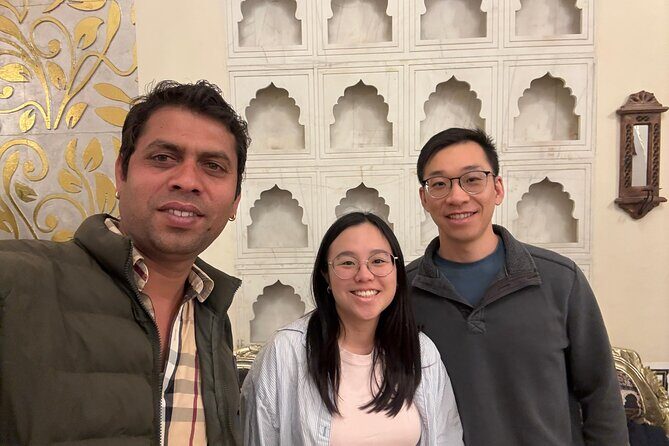
On Day 3, you’ll drive from Delhi to Agra, about 222 km and roughly 4 hours. This is where having a private driver matters. You’re not waiting on shared taxis or guessing schedules, and the focus stays on the trip.
Once you arrive, you’ll visit Agra Fort and then Itmad-ud-Daula—often called the Baby Taj. If you’ve only ever seen the Taj Mahal itself, this is a great chance to learn how Mughal designers used beauty and symmetry in a smaller format.
Then comes the first big Taj moment of the trip: a sunset view point across the river. Sunset gives you softer light and a different mood than daytime. And it’s also a clever way to enjoy the Taj without fighting the full crowd energy in the same moment as sunrise.
You’ll also stop at Mehtab Bagh, a garden viewpoint area connected with views back toward the Taj. Even if you don’t spend a full long session there, it’s a good “Taj framed by nature” perspective.
Day 4 Agra and Beyond: Taj Mahal Sunrise Plus Fatehpur Sikri and Chand Baori

Day 4 starts with Taj Mahal at sunrise. This is the moment most people plan the whole trip around, and it’s also the one where you’ll want your energy. Sunrise typically means cooler temperatures and very different lighting, plus the experience has a quieter feel than most later in the day moments.
After the Taj, you head to Fatehpur Sikri, Akbar’s former capital. The attraction here is the sense of place: you’re looking at a complex designed for a world-class imperial center, and it’s easy to see why it became a symbol of Mughal ambition.
Then there’s a detour that many Golden Triangle trips skip: Chand Baori, a major stepwell in Abhaneri. The structure is deep and dramatic, and it’s the kind of sight that rewards patience. It also keeps the itinerary from being only palaces and tombs.
At some point you’ll move onward to Jaipur and check in for overnight.
Jaipur Day 5: Amer Fort Area, City Palace, Jantar Mantar, and Hawa Mahal
Jaipur Day 5 feels like the classic Pink City highlights day, but with good variety.
You’ll start at Panna Meena ka Kund, a stepwell near the palace area. It’s short, but it sets up the city theme: Jaipur loves water architecture, forts, and visual geometry.
Then you’ll visit Jaipur District Fort (the fort-focused part of Amer/Jaipur’s hill system) with a guided tour of palaces, squares, and monuments. Fort time is where you can really feel the scale of Jaipur’s power.
Next is Jal Mahal, a photo opportunity by the lake. It’s quick, but it’s also one of those views that instantly looks like Rajasthan, even from a distance.
You’ll also see Maharaja’s City Palace, followed by Jantar Mantar, the UNESCO site with astronomical instruments built by Sawai Jai Singh II. This is one of the most rewarding stops for curious minds because it turns observation into design.
Finally, you’ll end with Hawa Mahal, the Palace of Breeze. Even without an interior focus, the exterior pattern and window structure make it a memorable visual.
Jaipur Day 6: Birla Mandir, Monkey Temple (Galtaji), Patrika Gate, Then Off to Mumbai
Day 6 keeps Jaipur from feeling too museum-like. You’ll visit Birla Mandir, known for its white marble latticework and dedication to Lord Vishnu. It’s a peaceful stop that breaks up the more historical fort-and-palace rhythm.
Then you head to Galtaji Temple, also called the Monkey Temple. The whole area has pools and temple complexes that feel active, and it’s a fun contrast to the stone symmetry earlier days.
After that, you visit Patrika Gate, a landmark circle park. It’s a more modern Jaipur stop, and it helps balance the older monuments you’ve already seen.
Then the day shifts hard into logistics: you’ll be taken to Jaipur International Airport to board your flight to Mumbai. Your hotel in Mumbai is next, so plan for an airport day rather than a relaxing one.
Mumbai Day 7: Gateway of India, CSMVS Museum, Mani Bhavan, Dhobi Ghat, and a Jain Temple Stop
Mumbai day is a well-chosen mix of waterfront, museums, and working-city texture.
You start at Gateway of India, a famous monument at the waterfront built to commemorate the 1911 royal visit. It’s both photo-worthy and useful for launching your understanding of South Mumbai’s layout.
Then you see Oval Maidan and landmarks around it, including Mumbai University, Rajabai Clock Tower, and Bombay High Court. This area is a good “big city” viewpoint—wide open, formal, and clearly planned.
Next comes Chhatrapati Shivaji Maharaj Vastu Sangrahalaya (CSMVS), formerly known as the Prince of Wales Museum. This is your cultural pause, and the museum stop helps balance the day between monuments and streets.
You’ll also visit Mani Bhavan Gandhi Museum, dedicated to Gandhi. It’s a short stop, but it adds depth to what you’ve been learning about India throughout the trip.
Then there’s Dhobi Ghat, the open-air laundromat. It’s not a monument in the traditional sense, but it’s one of the most vivid “this is how the city works” experiences on the itinerary.
The day closes with a Jain Temple stop, keeping the religious landscape varied.
Day 8: Your Easy Fly-Out from Mumbai
Day 8 is straightforward: check out, transfer to Mumbai airport, and depart. This is a good way to end after a full week, because you’re not forced into another long sightseeing block on the last morning.
Hotel Comfort and Group Setup: Twin Rooms, AC, and Private Attention
One thing I like about this tour structure is the emphasis on comfort without mystery. You ride in an air-conditioned vehicle with a driver, you get bottled mineral water, and (when you choose the hotel-inclusive option) you get 7 nights of accommodation plus breakfast.
Room setup matters for value. Twin-sharing is the default, and if you book three people, the default may be triple-sharing unless you pay extra to have 2 rooms. If separate rooms are a priority, confirm the arrangement early so you don’t end up paying late.
Drivers and Guides: Where the Trip Gets Personal
The strongest praise in the reviews centers on people. Names that pop up include Gopal for coordination, and drivers like Surendra and Maan Singh described as polite and helpful. The consistent theme is that you don’t feel lost in translation. Local guides provide history and can answer questions, which is a big deal when you’re visiting sites built over different empires and time periods.
It’s also worth noting that the tour company emphasizes personal care and attention. That shows up in the private format: you get a team focused on your group, not a rotating stream of people.
Should You Book This Golden Triangle With Mumbai Tour?
Book it if you want a tight, well-structured first trip that still includes real guide-led context. The combo of Delhi monuments, Agra with Taj sunrise and sunset, Jaipur forts and instruments, and a full Mumbai day gives you variety without making the schedule chaotic. The private driver and AC transport are also a big plus if you’d rather not treat India like a scavenger hunt.
Don’t book it if you hate scheduling around an airport flight or you’re expecting entrance fees to be included. Also, since monument tickets are separate, your total cost may rise depending on how many paid entries you choose.
If you want an 8-day plan that’s famous for a reason, and you like the idea of having someone handle the hard parts so you can focus on the sights, this one is a solid pick.
FAQ
How long is the Golden Triangle with Mumbai tour?
It’s listed as 8 days (approx.).
Is this tour private?
Yes. It’s a private tour/activity, meaning only your group participates.
Do you get hotel or airport pickup and drop-off?
Yes. Pickup and drop-off are included (hotel or airport).
Are monument entrance fees included?
No. Monument entrance fees are not included. Some stops are marked free, but paid entries are not covered overall.
Is the Taj Mahal battery bus included?
Yes. A battery bus ride to and from the Taj Mahal parking lot up to the monument is included.
Are flights included in the price?
No. Flight and train tickets are not included. The itinerary includes transfer to Jaipur International Airport for your flight to Mumbai.
What meals are included?
Breakfast is included daily for 7 days (hotel breakfast). Lunch and dinner are not included.
What vehicles are used for transportation?
For 1–2 people, it’s a 4-seater sedan. For 3–4 people, it’s a 6-seater wagon. For 5–10 people, it’s a 10-seater minivan.
FAQ
Is free cancellation available?
Yes. Free cancellation is available up to 24 hours in advance for a full refund.
Can the itinerary be adjusted?
The summary says you’ll have flexibility to customize your itinerary, but no specific rules are listed in the provided details.