REVIEW · NEW DELHI
7 Days Ranthambore Tiger Safari and The Golden Triangle Tour
Book on Viator →Operated by Way Of India · Bookable on Viator
Two tigers and three cities in a week.
I love this tour for the chance to do two Ranthambore safaris and for how the Golden Triangle history is packed into one organized loop instead of you guessing what comes next. It’s a strong contrast: big-city Mughal landmarks on one end, then real wildlife time in Rajasthan.
I also like the practical comfort points that make long days easier. You ride in an air-conditioned vehicle with WiFi on board, and the itinerary hits major sights without wasting your time figuring out transport or tickets.
One consideration: the schedule is tight. Some stops are quick photo-and-walk visits, so if you like slow travel and lots of downtime, you may find the pace a bit intense.
In This Review
- Quick hits before you go
- How this 7-day Delhi–Agra–Jaipur + Ranthambore circuit really feels
- The transport and flow that keep your week from turning into a headache
- Day 1 in Delhi: Lotus Temple calm, Old Delhi power, and Chandni Chowk street life
- Day 2 Agra: Agra Fort weight, then a sunset Taj view from the back side
- Day 3: Taj Mahal time that isn’t just a quick photo stop
- Day 4 Ranthambore: two safari sessions, morning and evening
- Day 5 Jaipur: Birla Mandir and Albert Hall for a balanced mix
- Day 6 Jaipur icons: Hawa Mahal, City Palace, Patrika Gate, Jantar Mantar, and gems
- Day 7 Delhi: Humayun’s Tomb to close the Mughal loop
- Where the value shows: price, inclusions, and what you’re really paying for
- The guide factor: why Raje’s style comes up again and again
- Who should book this tour, and who should think twice
- Should you book 7 Days Ranthambore Tiger Safari and the Golden Triangle?
- FAQ
- How long is the tour?
- What cities and areas does the itinerary cover?
- How many tiger safaris are included?
- Are meals included?
- Is pickup included?
- Is the tour private?
- What travel comforts are included during transit?
- Are entrance fees included?
- What is the cancellation refund policy?
- Does the guide speak any specific languages?
Quick hits before you go
- Two safari drives in Ranthambore give you a second attempt the same day (morning and evening)
- Private tour style means it’s just your group, not a mixed crowd
- Comfort on the move: AC vehicle and WiFi on board help between cities
- Mughal classics + Jaipur icons: Taj Mahal, Agra Fort, City Palace, Hawa Mahal, Humayun’s Tomb
- Meals are covered: 7 breakfasts and 6 dinners
- Guide energy matters: guides like Raje are praised for friendly, patient explanations (and good Italian in some cases)
How this 7-day Delhi–Agra–Jaipur + Ranthambore circuit really feels
This trip is built like a classic Indian sampler. You start in Delhi with landmark architecture and market energy, then move to Agra for the heavy hitters, and finally you land in Jaipur for palaces, observatory shapes, and a bit of royal craft. The wild card—and the reason many people sign up—is Ranthambore, where you trade streets for forest tracks and two safari sessions on the same day.
The best part is the rhythm. You’re not just sightseeing buildings; you’re going from one “world” to another: urban history, Mughal power, Rajput-era design, and then the unpredictable timing of wildlife drives. If you’re the kind of traveler who gets bored by cookie-cutter checklists, the mix here keeps your attention.
It also helps that the itinerary doesn’t pretend you’ll spend all day at every stop. Many monuments are timed to give you a meaningful visit, then you move on while the schedule is still working in your favor.
You can also read our reviews of more tours and experiences in New Delhi



The transport and flow that keep your week from turning into a headache
You’ll be using an air-conditioned vehicle, and the tour includes WiFi on board. That matters more than it sounds when you’re moving between Delhi, Agra, Jaipur, and Ranthambore. Long drives can feel draining, but this setup takes the edge off and helps you plan small things like what you want to photograph next.
Pickup is also offered, so you’re not left hunting for the correct meeting point on day one. And because this is described as a private tour/activity with only your group participating, the logistics feel more controlled than the usual big-coach chaos.
You should still expect a day-to-day “go, see, move, repeat” pace. With multiple cities and many sights scheduled, you’ll want to travel light and keep essentials easy to grab.
Day 1 in Delhi: Lotus Temple calm, Old Delhi power, and Chandni Chowk street life
Delhi on day one gives you mood swings—in a good way.
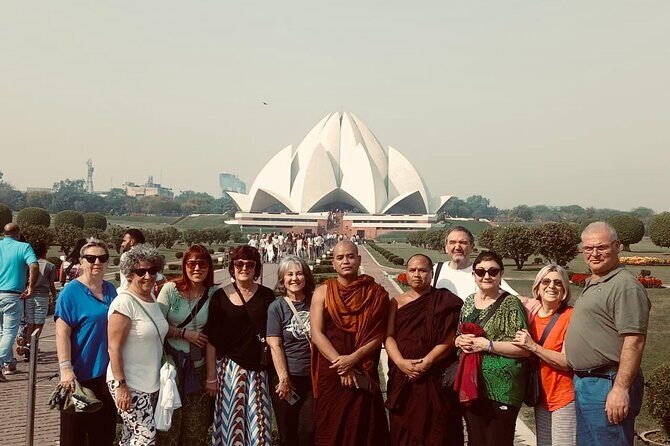
First comes the Lotus Temple. It’s a Bahá’í House of Worship with white marble lotus-like architecture, open to all religions. The time block is short (about 30 minutes), so think of it as a reset button. You arrive, you take in the symmetry, and you set your eyes up for the contrast later in the day.
Then you jump into Old Delhi for Jama Masjid. Commissioned by Mughal Emperor Shah Jahan in 1650 and completed in 1656, it’s one of the largest mosques in India. The visit is also about 30 minutes, but it’s the kind of place where even a short stop makes an impression because the scale is hard to fake.
After that, you stop at India Gate, a war memorial designed by Sir Edwin Lutyens, with the Amar Jawan Jyoti detail. The time is brief (around 20 minutes), and it works as a quick pause before you head to the market.
Finally, you get Chandni Chowk, one of Delhi’s oldest and busiest markets. The itinerary doesn’t put a single fixed duration next to it, but the intention is clear: use this slot for food, spice browsing, and people-watching.
Practical note: day one is where you’ll decide how you like to travel in cities. If you enjoy markets and street scenes, this day will feel rewarding. If you prefer quieter sights, you’ll still want to sample Chandni Chowk for at least part of the time—just don’t plan on shopping for hours.
Day 2 Agra: Agra Fort weight, then a sunset Taj view from the back side
Day two centers on Agra Fort and a Taj Mahal viewpoint.
Agra Fort is UNESCO-listed and tied to Mughal rule, with Akbar listed as the builder in the 16th century. You get about 2 hours here, which is an ideal chunk of time for a fort because it lets you walk enough to feel the layout rather than treating it like a fast museum stop.
Then you switch to the Taj Mahal View Point described as a sunset perspective from the backside where the Yamuna flows. It’s about 1 hour, and it’s a smart pairing after the fort. Fort first helps you understand the political muscle behind the monuments. Viewpoint later gives you the softer, iconic payoff—especially if you like photos with golden light.
This is one of those “small timing decisions” that can make a tour feel well planned. Too many itineraries only do the main Taj Mahal and forget the surrounding viewpoints. Here, you get a second chance at atmosphere.
Day 3: Taj Mahal time that isn’t just a quick photo stop

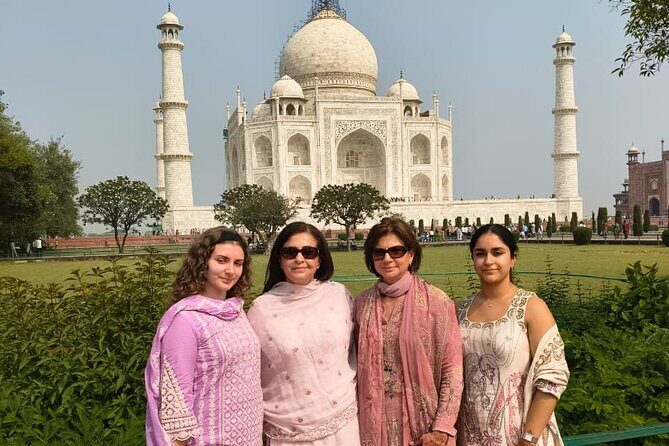
On day three, it’s the Taj Mahal itself, with about 2 hours allocated and admission included.
The Taj Mahal is built by Emperor Shah Jahan in memory of Mumtaz Mahal, and even if you’ve seen pictures before, standing there changes how you notice details. The big advantage of a 2-hour block is that you’re not forced to rush through everything in 12 minutes. You can take your time with angles, let the crowds move around you, and actually look.
This is also the day where you’ll feel the benefit of having a guide if you care about context. You’ll get explanations tied to the monument’s meaning, not just a list of facts.
If you’re a repeat Taj visitor, you might find day three a little “more of the same” compared with day two’s viewpoint. But for first-timers, this is the right structure: viewpoint first, full visit next.
You can also read our reviews of more tours and experiences in New Delhi



Day 4 Ranthambore: two safari sessions, morning and evening

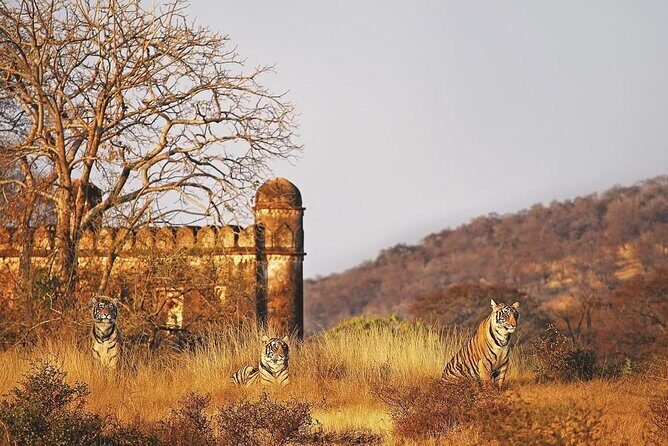
This is the heart of the whole trip. Day four is Ranthambore National Park with two safaris: one scheduled for the earlier part of the day and a second safari in the evening.
Each safari is about 3 hours, and admission is included. The itinerary also specifically notes that the evening safari is a chance to go again if you missed getting those tiger shots. That’s a rare gift on wildlife trips, because it gives you a second swing without adding an extra travel day.
The park setting is described as dry deciduous forests, lakes, and ancient ruins. That matters because you’re not driving through a single flat landscape. The scenery can change as the safari route shifts, so even on days when wildlife spotting takes patience, you’re still moving through an interesting environment.
How to enjoy this day: treat it like a timing game. You’re going to sit, watch, and react when you see movement. Pack yourself for waiting, and keep your camera ready but your expectations realistic. Two safaris help, but nature decides the final score.
Day 5 Jaipur: Birla Mandir and Albert Hall for a balanced mix

Day five moves you into Jaipur with two cultural stops that complement each other.
You start at Birla Mandir, also known as Laxmi Narayan Temple, dedicated to Lord Vishnu (Narayan) and Goddess Lakshmi. It’s described as modern and located at the base of Moti Dungari Hill, with about 30 minutes set aside. This short visit gives you a quieter temple experience compared with the big-ticket palace days later.
Then you head to Albert Hall Museum. It’s one of the oldest museums in Rajasthan, built in 1876, and designed in an Indo-Saracenic style. You’ll have time to walk through at a museum pace that still fits the day’s schedule.
Why this pairing works: after Delhi and Agra’s Mughal-heavy focus, Jaipur day one feels like a shift to both faith and preserved culture. It’s not “royal palace only,” which makes the trip feel more like the whole city instead of one style of landmark.
Day 6 Jaipur icons: Hawa Mahal, City Palace, Patrika Gate, Jantar Mantar, and gems
Day six is Jaipur’s highlight reel, with multiple stops stacked.
You start with Hawa Mahal (Palace of Wind). It’s a five-story structure built in 1799 by Maharaja Sawai Pratap Singh, designed in the shape of a crown. The scheduled time is short (about 4 minutes) and admission is free, so this is a quick hit—more about spotting the façade and getting your bearings than doing a full deep look.
Right after, there’s a palace of water photo point slot of about 10 minutes. It’s literally positioned for photos, so use it as a breather and set your camera angles.
Next is the big one: City Palace of Jaipur, described as a blend of Rajasthani and Mughal architecture, built by Maharaja Sawai Jai Singh II in the 18th century. You get about 2 hours, and this is the kind of stop where your guide’s explanations can make a big difference because you’re looking at layers of design and royal purpose.
Then comes Patrika Gate at the entrance of Jawahar Circle Garden. It’s a short 10-minute photo and walk stop, admission free. After that, you visit Jantar Mantar, a UNESCO-listed astronomical observatory built in the 18th century by Maharaja Jai Singh II. The time is about 30 minutes, which is enough to appreciate the idea of giant instruments without turning it into a lecture.
Finally, there’s a Jaipur Gems & Jewellery stop. Jaipur is known for gem cutting, polishing, and gemstone trading, and the itinerary gives about 15 minutes for this segment with admission noted as included. This part won’t be everyone’s favorite, but it can be a useful window into a craft Jaipur is famous for, especially if you like seeing how local industries work.
My advice for day six: move with intention. If you’re the type who hates rushing, focus your energy on City Palace and Jantar Mantar, then treat the shorter stops (Hawa Mahal and Patrika Gate) as quick snapshots.
Day 7 Delhi: Humayun’s Tomb to close the Mughal loop
The final day returns you to Delhi with Humayun’s Tomb, a UNESCO World Heritage site and a major Mughal architecture landmark. Built in 1570, it’s commissioned as the tomb of the second Mughal Emperor, Humayun.
You’ll get about 1 hour, and admission is included. This is a fitting closer because your trip already started with Mughal-era Delhi sights (Lotus Temple and Jama Masjid), and Agra gave you the monumental Taj Mahal peak. Humayun’s Tomb ties the story together with another key stop—less iconic in pop culture than the Taj, but still important.
The biggest value of this last day is pacing. You’re not cramming in an extra major city attraction like on earlier days. It’s a calm wrap-up that lets you absorb what you already saw.
Where the value shows: price, inclusions, and what you’re really paying for
At $765.99 per person, you’re not just paying for a list of monuments. You’re paying for the structure that makes the route work: a private tour style, an air-conditioned vehicle, WiFi on board, pickup offered, entrance fees for the listed paid sites, and a set number of meals.
Here’s what’s clearly included in the tour details:
- Two tiger safaris (Ranthambore), each around 3 hours
- 7 breakfasts and 6 dinners
- Air-conditioned vehicle and WiFi on board
- Entrance fees are indicated as included, and multiple stops show admission tickets included
That meal coverage matters because it saves you from constant decision-making. When you’re moving between cities, hunting for food every day can feel exhausting. You’ll still want to snack or hydrate on your own, but the built-in meals reduce friction.
Also, the listing notes group discounts. If you’re traveling with friends or family, ask about how that price changes with your group size. It’s one of those small questions that can noticeably improve the deal.
The guide factor: why Raje’s style comes up again and again
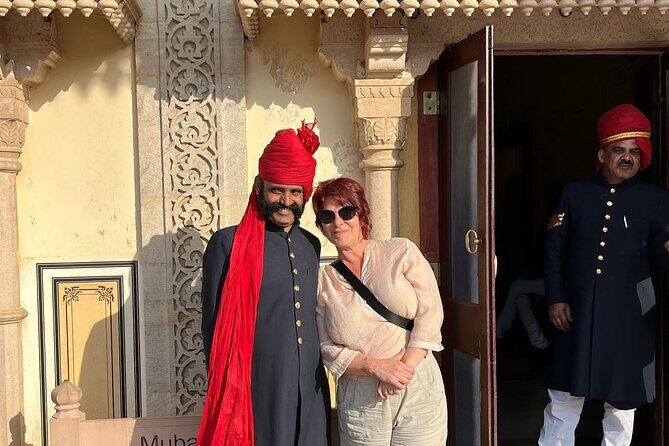
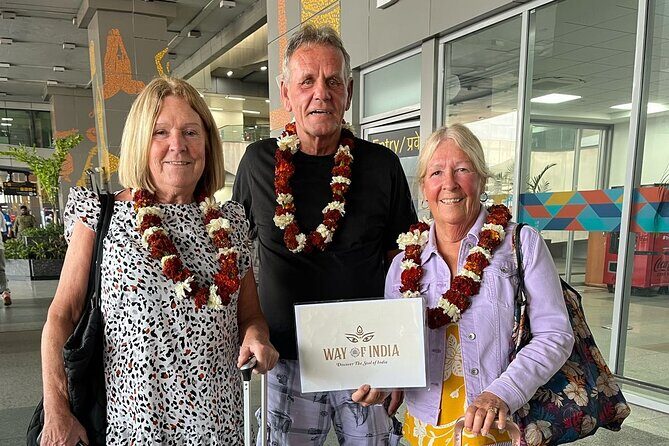
The tour’s success depends a lot on the guide, and the names you’ll see in feedback point to a specific kind of guiding style. You may meet Raje (spelled a few ways), and multiple comments highlight him as friendly, patient, and knowledgeable about Indian history and culture.
If you travel in Italian, one review specifically mentions that Raje speaks good Italian, and another notes perfect Italian. That’s a real advantage if you want explanations you can actually follow without straining.
There’s also a human, practical side mentioned: he waits for people, advises when you’re at markets, and helps with little choices like henna drawing plans and purchases. That kind of support matters because markets can be chaotic, and you don’t always know what is a good buy or when to step back.
So if you care about context, this is one of the strongest parts of the experience. You’re not just looking at monuments; you’re learning what they meant and how they fit together across Delhi, Agra, Jaipur, and Ranthambore.
Who should book this tour, and who should think twice
This tour is a great match if you want:
- A one-week route that covers Delhi, Agra, Jaipur, plus Ranthambore
- Two Ranthambore safaris in one day rather than a single wildlife attempt
- A mix of Mughal monuments and Rajasthan icons
- Built-in structure: AC transport, WiFi, pickup offered, meals, and paid entries handled
You might think twice if:
- You dislike tight schedules. Several stops are timed very short (like a few minutes at Hawa Mahal), and the week moves fast.
- You prefer to spend half a day at one site instead of hopping between highlights.
If you’re traveling with a “less planning, more seeing” mindset, this should feel satisfying. If you want long stretches of downtime, you may feel rushed.
Should you book 7 Days Ranthambore Tiger Safari and the Golden Triangle?
Book it if you want the classic India hits plus wildlife, and you like being carried along a plan that’s already mapped out. The two Ranthambore safaris are the big draw, and the rest of the itinerary is built around famous, meaningful landmarks: Agra Fort, Taj Mahal, City Palace, Jantar Mantar, and Humayun’s Tomb.
I’d also lean toward booking if you value a guide who explains things clearly and keeps you calm during market moments. The praised guides like Raje seem to do that well, including guidance in Italian in some cases.
Skip or reconsider if your travel style is slow and unstructured. This is an itinerary with lots of “next stop” energy. But if that sounds like your kind of adventure, this circuit is an efficient way to get a lot of India into one trip.
FAQ
How long is the tour?
The tour duration is listed as 7 days (approx.).
What cities and areas does the itinerary cover?
It covers New Delhi (including Lotus Temple, Jama Masjid, India Gate, Chandni Chowk, and Humayun’s Tomb), Agra (Agra Fort, Taj Mahal view point, and Taj Mahal), Jaipur (Birla Mandir, Albert Hall Museum, Hawa Mahal, City Palace, Patrika Gate, Jantar Mantar, and Jaipur Gems & Jewellery), and Ranthambore National Park for tiger safaris.
How many tiger safaris are included?
The tour includes 2 tiger safaris at Ranthambore National Park. The first is scheduled on day 4, and the second is also on day 4 in the evening.
Are meals included?
Yes. The tour includes 7 breakfasts and 6 dinners.
Is pickup included?
Pickup is offered.
Is the tour private?
Yes. It’s described as a private tour/activity, and only your group participates.
What travel comforts are included during transit?
The tour includes an air-conditioned vehicle and WiFi on board.
Are entrance fees included?
Entrance fees are listed as included, and many stops show admission tickets included in the itinerary details.
What is the cancellation refund policy?
You can cancel up to 6 days in advance for a full refund. Canceling 2–6 days before gives a 50% refund. Less than 2 days before does not receive a refund.
Does the guide speak any specific languages?
Some reviews mention Raje speaking good Italian. The tour details also describe a knowledgeable, friendly guide in general terms, but specific languages may depend on the guide assigned.