REVIEW · NEW DELHI
7 Days Golden Triangle Tour with Ranthambore Safari
Book on Viator →Operated by Khera Tour & Travels · Bookable on Viator
Golden Triangle hits the big-name classics fast. Then Ranthambore turns the dial toward real wildlife. What makes this trip interesting is the mix: Taj Mahal at sunrise, plus two Ranthambore jungle safaris, all stitched together with a private air-conditioned car and a professional local guide. I like the simple, guided flow so you spend less time figuring things out and more time looking. I also like that you get both comfort (3, 4, 5-star hotel options) and tiger-country access. One consideration: monument entry fees are not included, so you’ll need to budget for those before you go.
The pace is built for sightseeing days that start early. You’ll be up for Delhi-to-Agra travel, then another early Taj moment, and then a full day heading into Ranthambore. A day-by-day route like this works best if you’re okay with long drives and early starts.
If you want your Golden Triangle trip to feel structured (not chaotic) and you truly care about seeing a tiger in the wild, this is a strong value play at $499 per person—as long as you’re cool with shared safari jeeps and paying monument entries.
In This Review
- Key highlights worth your attention
- Golden Triangle with a tiger detour: what this trip really feels like
- Day 1 in Delhi: Qutub Minar and getting your bearings
- Agra transfer and the Red Fort day: comfort first, then history
- Sunrise at the Taj Mahal: the only time to do it
- Ranthambore National Park safari days: two tries at tiger country
- Jaipur travel day with Abhaneri Stepwell: a break from the big monuments
- Jaipur sightseeing days: Hawa Mahal and City Palace in one rhythm
- The final day back to Delhi: 280 km of reality
- Price and value: is $499 really a good deal here?
- Guide and driver quality: the comfort factor that matters
- Timing and transport: private car, shared safari jeeps
- Best fit: who should book this tour
- Should you book? my quick decision guide
- FAQ
- FAQ
- What does this tour include for meals?
- Are pickups and drop-offs included?
- How are transfers handled between cities?
- How many Ranthambore safaris are included?
- Is the Taj Mahal sunrise visit included?
- What are the main sightseeing cities on this route?
- What hotel standard is included?
- What is not included in the price?
- What is the cancellation refund policy?
- Is this a private tour or shared with strangers?
- Is mobile ticketing included?
Key highlights worth your attention
- Sunrise Taj Mahal timing that beats the daytime crowds
- Two Ranthambore safaris from shared jeep/canter setups
- Private air-conditioned car for city-to-city transfers
- 3–5 star hotels (twin sharing, based on your selected option)
- Local guide support across the main sights
- Hotel/airport pickup and drop-off so arrival and departure are less stressful
Golden Triangle with a tiger detour: what this trip really feels like

This is a classic North India route—Delhi, Agra, Jaipur—plus the one thing that makes most Golden Triangle trips feel different. Ranthambore is where the trip stops being only about monuments and starts being about chance, weather, and animal behavior.
You’ll move in a mostly straight line, with comfortable hotel stays covering six nights. You get breakfast most days (six breakfasts), plus two dinners, and you’re kept supplied with packaged drinking water. On top of that, the logistics are handled by a private air-conditioned car and a professional local guide—so you’re not left bargaining your way through every stop.
The “authentic” part here isn’t some marketing slogan. It’s in the mechanics: early-morning Taj light, the way forts and palaces change tone as the day heats up, and the fact that tiger safaris can’t be staged. You’re in a natural habitat, waiting, scanning, and reacting when an animal shows itself.
You can also read our reviews of more tours and experiences in New Delhi



Day 1 in Delhi: Qutub Minar and getting your bearings
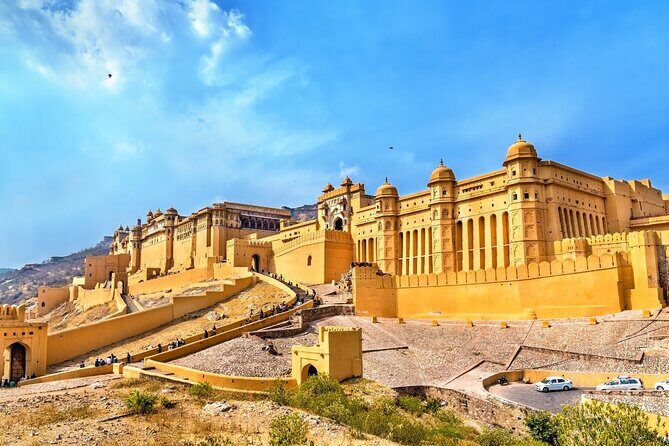
Delhi can feel like five cities stitched together. The first day starts with a calm approach: pickup from your hotel, airport, or railway station, then a guided visit to Qutub Minar.
This is a smart opener because Qutub Minar is one of those places you can look at in a “slow, I get it now” way. It gives you context for Delhi’s layered history without immediately throwing you into a marathon of stops.
Timing matters too. The day is scheduled like a full sightseeing block, and the Qutub Minar stop is listed with about 12 hours total. That means you’ll likely see the area in the daylight, get the introductions you need, and then be ready for the next day’s big travel day.
One practical note: admission details can vary by site and package. The trip lists a city monuments entrance fee separately, so don’t assume every monument is included. Plan to pay what’s required on the ground.
Agra transfer and the Red Fort day: comfort first, then history
On day 2, you leave Delhi for Agra around 8:00 AM after breakfast. The drive is listed as about 200 km, roughly 3–4 hours using an express highway. That’s a useful detail: you’re not doing a back-road crawl. You’re moving with purpose.
Once you arrive, you check in, freshen up, and then go straight into sightseeing with your guide. The plan focuses on the Red Fort of Agra, a major landmark tied to the Mughal era. Forts are great on tours like this because they reward attention. You can connect architecture, power, and the layout of the site without needing a ton of background homework.
Here’s the reality check: Agra days can feel long because of travel + check-in + guided time. If you’re the type who runs on momentum, you’ll love it. If you’re sensitive to a schedule, you’ll want to keep your own “quiet breaks” in mind—water, shade, and time to cool down between photo stops.
Sunrise at the Taj Mahal: the only time to do it
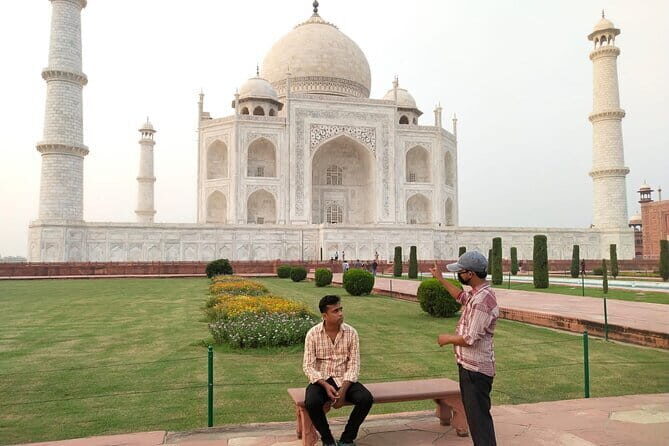
Day 3 is a standout: Taj Mahal sunrise. You meet your private guide in the hotel lobby at 5:45 AM to head out early.
Why that matters is simple. At sunrise, the Taj shifts color as the light changes, and you’re more likely to get the iconic view without mid-day glare. Also, the early start tends to feel like a full experience instead of just a photo stop. You get the sense of why people fall hard for this place.
The tradeoff is obvious: you’ll sacrifice sleep. This is the kind of day where you should pack a small comfort kit—water, something to cover your eyes if the sun hits hard, and a light layer. Mornings can be cool enough to surprise you, especially when you’re up before the city wakes.
Admission for the Taj Mahal is noted as not included, so you’ll want to treat the Taj visit as a paid highlight in your budget. Once you’re inside, though, it’s one of those sights where your brain starts narrating the geometry for you.
Ranthambore National Park safari days: two tries at tiger country
Day 4 is the first Ranthambore day. Day 5 is your second Jaipur travel day, so the safari experience concentrates into this segment. The tour includes two jungle safaris at Ranthambore Tiger Reserve in a shared jeep (listed as canter).
This is the make-or-break part of many bookings. The rules of tiger viewing are not fully in human control. Tigers may show. Tigers may not. But Ranthambore is still worth the effort because you’re going into a protected landscape designed for exactly this type of wildlife encounter.
A big practical advantage in this plan is that you get two safari rides, not just one. Two chances can change your odds—not guaranteed, but better than hoping for one perfect moment.
What you’ll experience in the safari isn’t only tiger-sight drama. You’ll also be scanning for other wildlife in the same habitat. That’s often where the day becomes fun even when a tiger doesn’t make an appearance right away.
Because it’s a shared jeep/canter setup, think of it as “organized cooperation.” You’re not getting your own private vehicle for the ride. That can mean a bit more waiting and positioning. On the other hand, the shared format is common for this area, and it keeps the experience within a realistic value range.
You can also read our reviews of more tours and experiences in New Delhi




Jaipur travel day with Abhaneri Stepwell: a break from the big monuments
Day 5 begins with a drive to Jaipur. The itinerary adds a stop on the way at Abhaneri Stepwell, also known as Chand Baori.
This is a clever palate cleanser. In a trip dominated by mega-sites (Taj, palace complexes), the stepwell gives you something more quietly astonishing. It’s described as an 8th-century well designed to save water, and that design purpose makes the structure make sense even before a guide explains it.
The best way to enjoy a stop like Chand Baori is to slow down and look at the lines. Stepwells are basically geometry you can stand next to. They’re also a reminder that “history” isn’t only about royal power—it’s about engineering for survival in a hot climate.
Admission is listed as free for this stop in the route notes, but since the tour also lists a separate city monuments entrance fee, treat it as: your final cost depends on what’s covered by that package. Ask your guide or driver what’s included before you pay any onsite entry.
Jaipur sightseeing days: Hawa Mahal and City Palace in one rhythm
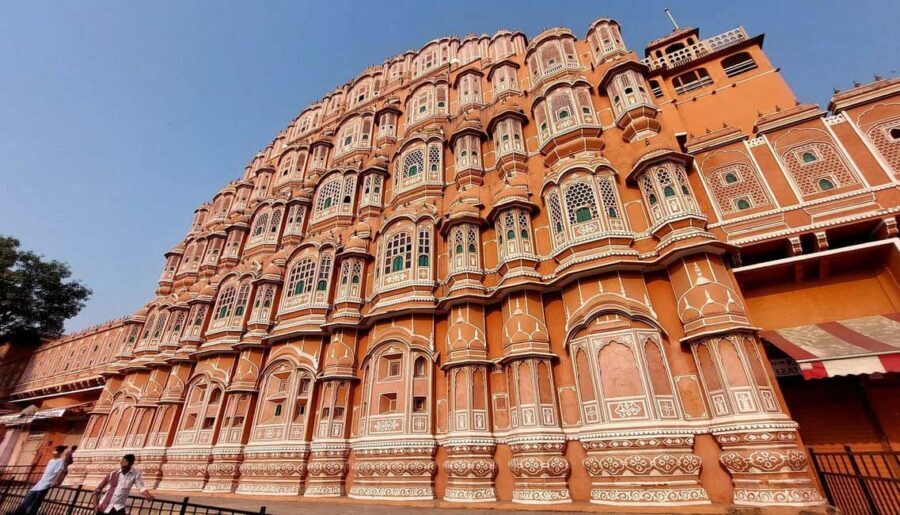
Day 6 is Jaipur sightseeing starting with Hawa Mahal (Palace of Wind). The plan also includes the broader set of highlights around the fort area and City Palace, described as the seat of the Maharaja of Jaipur.
This is a strong pairing because the style shifts. Hawa Mahal is all about the façade—those windows and how light and shadow play across a dramatic surface. City Palace gives you more of the power-center feeling, with Mughal and Rajput architectural blending mentioned directly in the route description.
In practical terms, Jaipur is where you’ll want to wear shoes that handle uneven stone and be ready for crowds around the popular photo points. Your local guide helps here, because they can steer you toward what’s worth your time, not just where the biggest line forms.
Also: don’t rush the palace areas. You’ll get more out of it if you take breaks. Jaipur can bake you a little. Keep drinking water handy and use shade when you see it.
The final day back to Delhi: 280 km of reality
Day 7 is a departure day. After breakfast, you head from Jaipur to Delhi based on your flight schedule. The journey is listed around 5 hours for about 280 km, depending on traffic.
This final day is mostly about timing. You don’t want to be late, and in North India, traffic swings are real. The good news: the plan states that the driver drops you at the Delhi hotel/airport as needed. That “handoff” matters when you’re tired and carrying bags.
If your flight is early, consider getting a little organized the night before: keep passport, money, and the monument entry receipts (if you have them) in one place. It’s the boring stuff that makes the travel day feel smooth.
Price and value: is $499 really a good deal here?
At $499 per person, the value depends on what you want most: sights, comfort, and reduced stress—or the cheapest possible trip.
Here’s what you’re getting in the included package:
- 6 nights of hotel stay (3, 4, or 5-star, chosen in the option you select) on twin sharing
- Private air-conditioned car for transfers and sightseeing
- 2 Ranthambore safaris in a shared jeep/canter
- Professional local tour guide
- Packaged drinking water
- Hotel/airport pickup and drop-off
- Breakfast (6) and Dinner (2)
And the part you should plan for:
- Entrance fee for city monuments listed as $60 per person
- Anything not specifically mentioned in inclusions
So where does the money land? You’re paying for convenience and organization across four cities plus two safari rides. If you were to hire cars and guides separately, or book hotels plus safaris on your own, you’d likely spend more time coordinating and more money once you add up everything. The key tradeoff is that you’re not getting private safari vehicles; you’re sharing.
Guide and driver quality: the comfort factor that matters
This kind of trip rises or falls on the human side. The route is long and the days start early. You need someone who keeps timing realistic and treats your safety like it’s part of the job.
In the feedback shared for this operator, a driver named Rajeev ji (also spelled Rajiv) comes up as responsible, reliable, and attentive to comfort and safety—especially when the group includes families. That’s the kind of “invisible value” you don’t see in a brochure. It’s also the kind of value you feel when you’re tired from early mornings and traffic.
Even if you don’t talk to your guide constantly, a good driver/guide combination helps you avoid the common problems: waiting too long, misunderstandings about pickup, and unnecessary detours. You want your time to go to the sites, not to logistics.
Timing and transport: private car, shared safari jeeps
The mix of private and shared is important for expectations.
You get a private air-conditioned car for your transfers and sightseeing. That makes long drives easier and gives your guide room to control pacing. The private car setup also helps your pickup/drop-off run cleanly, especially on day 1 and day 7.
The safaris are different: they run in a shared jeep/canter format. That’s how many tiger reserves operate. It’s not a flaw; it’s the structure of the safari system. What it changes is your level of control. You’ll follow the vehicle plan and positioning for the ride instead of choosing your exact viewpoint.
If you’re okay with that, you’ll likely enjoy the day more. Expect a lot of waiting and listening. Bring patience. Wildlife doesn’t follow schedules, and tigers definitely don’t care about your camera battery.
Best fit: who should book this tour
This tour is a good match if:
- You want the Golden Triangle with clear guidance and less planning stress
- You care about the Taj Mahal sunrise timing
- You want two Ranthambore safaris instead of one
- You prefer comfort with 3–5 star hotel options and included meals
It may not be ideal if:
- You hate early starts (the 5:45 AM Taj pickup is real)
- You want a slow travel pace with lots of free time
- You’re trying to keep costs to the absolute minimum after monument fees
Should you book? my quick decision guide
Book this tour if your priority order looks like this: major landmarks, smooth transportation, and at least two shots at seeing tigers. The structure is built to reduce stress. That’s valuable when you’re juggling Delhi, Agra, Jaipur, and a wildlife reserve in one week.
Pass or compare if you’re highly budget-sensitive once the $60 monument entrance fee is added, or if you want total independence during the safari rides.
FAQ
FAQ
What does this tour include for meals?
Breakfast is included for 6 days, and dinner is included for 2 days. You’ll also receive packaged drinking water bottles.
Are pickups and drop-offs included?
Yes. The tour includes hotel/airport pickup and drop-off.
How are transfers handled between cities?
Transfers and sightseeing are done using a private air-conditioned car.
How many Ranthambore safaris are included?
The tour includes 2 jungle safaris at Ranthambore Tiger Reserve, in a shared jeep/canter.
Is the Taj Mahal sunrise visit included?
The itinerary includes a sunrise visit to the Taj Mahal with a meeting time of 5:45 AM in the hotel lobby. Entrance fees for city monuments are listed as not included.
What are the main sightseeing cities on this route?
The route covers Delhi, Agra, and Jaipur, with Ranthambore National Park as the wildlife highlight.
What hotel standard is included?
The tour includes 6 nights of accommodation in a selected 3, 4, or 5-star hotel on twin sharing.
What is not included in the price?
City monument entrance fees are listed as not included, at $60.00 per person. Anything not specifically mentioned in the inclusions is also not included.
What is the cancellation refund policy?
You can cancel up to 3 days in advance for a full refund. If you cancel less than 3 days before the experience start time, the amount paid is not refunded.
Is this a private tour or shared with strangers?
The tour is private in the sense that only your group participates, though the safari rides themselves are shared jeep/canter.
Is mobile ticketing included?
Yes, mobile ticket is listed as a feature. Confirmation is received at booking.