REVIEW · NEW DELHI
Private Golden Triangle 4 Day Tour from New Delhi
Book on Viator →Operated by Akbran Tours · Bookable on Viator
Delhi feels like a sprint—this tour helps you slow down.
This private Golden Triangle circuit is built for first-timers who want a guide-led route and fewer headaches with directions. I like that it’s packed with major sights in tight time blocks, yet the logistics are handled—plus you get 5-star accommodation (if chosen) and included transfers. The main trade-off is that lunch and dinner aren’t included, so you’ll need to plan on paying for meals along the way.
You’ll move between New Delhi, Agra, and Jaipur over four days, with a driver and guide for full-day sightseeing in each city. One standout moment is the early-morning Taj Mahal plan, timed for sunrise so you’re not just ticking a box. If you hate early starts or long car rides, this itinerary might feel like a lot.
In This Review
- Key Things I’d Watch for on This 4-Day Route
- Why This Private Golden Triangle Works for First-Timers
- Day 1 in New Delhi: Mosques, Memorials, and Mughal Gardens
- Jama Masjid: A Massive First Stop
- Red Fort and a Peek at Old Delhi Bazaars
- Lotus Temple: The Bahá’í House of Worship
- India Gate: War Memorial Perspective
- Government Area Views from the Road
- Humayun’s Tomb: Mughal Garden Planning
- Day 2 in Agra: Sunrise Taj Mahal and Akbar’s Fort
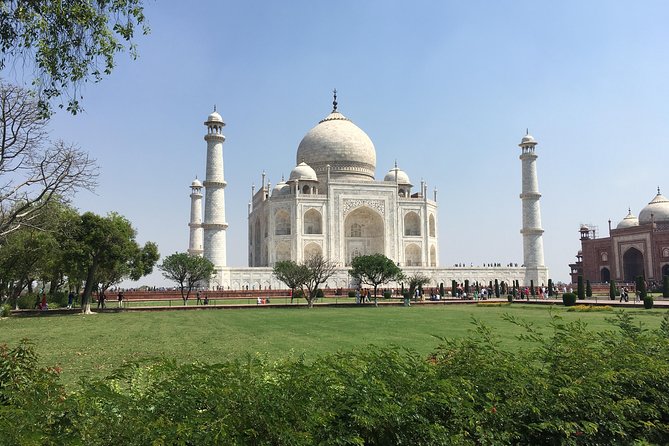
- Taj Mahal at Sunrise: More Than a Photo
- Agra Fort: Royal Life and Big Taj Views
- Fatehpur Sikri: A Mughal Capital You Can Feel
- Day 2’s Extra Stop: Chand Baori Stepwell
- Day 3 in Jaipur: Amber Fort, Hawa Mahal, City Palace, and More
- Amber Palace (Amber Fort): Hill Fort Views and Big Time
- Hawa Mahal: The Palace of Breeze and Its 953 Windows
- City Palace: Museum + Royal Residence
- Jantar Mantar: Observing Time with Instruments
- Panna Meena ka Kund: A Stepwell with a Room
- Gaitore Ki Chhatriyan: Royal Cremation Grounds
- Day 4 Back to Delhi: A Clean Exit
- Transfers, Hotels, and the Real Meaning of the Included Stuff
- Guides in Each City
- Entrances and Skip-the-Line Options
- Hotel Category: 5-Star If Chosen
- Vehicle Size and Your Group Comfort
- Price and Value: What You’re Paying For
- Should You Book This Private Golden Triangle Tour?
- FAQ
- What does pickup include on this tour?
- Which cities are included in the 4 days?
- How early do you go for the Taj Mahal?
- Are monument entrance tickets included?
- How many breakfasts are included?
- Is lunch or dinner included?
- Is this tour private or shared with other groups?
- What kind of vehicle will you use?
- Can the itinerary be changed to fit your needs?
- Does the tour run in bad weather?
Key Things I’d Watch for on This 4-Day Route
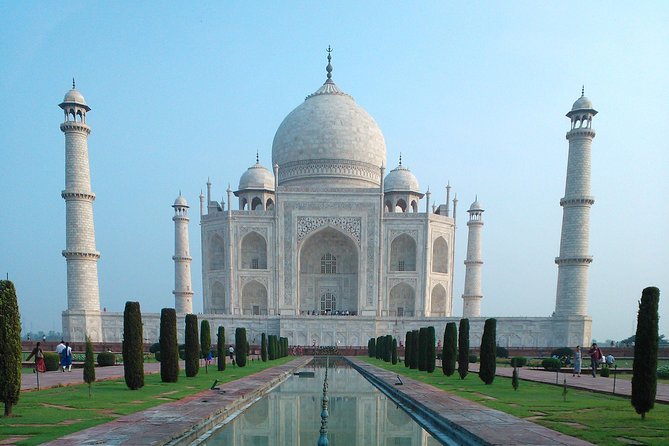
- Sunrise Taj Mahal at 0600 so you catch that first-light look on the marble
- Guide in each city for full-day sightseeing to cut through confusion and language barriers
- Most monument entry included (if option chosen) including potentially skip-the-line Taj Mahal
- 5-star hotel stays for 3 nights (if chosen) so you get real downtime between drives
- Private group experience with your own driver and guide, not a mixed crowd
- All-weather operation with guidance to dress appropriately for conditions
Why This Private Golden Triangle Works for First-Timers
The Golden Triangle usually feels like three famous cities crammed into a calendar. What I like about this version is that it’s designed to reduce the planning stress: you’re met at your hotel or the airport, then you’re carried from stop to stop with a guide explaining what you’re actually looking at.
You’re also not stuck making constant decisions about transport and tickets. The tour includes transfers, bottled water, and (depending on the option you choose) monument entrances. That matters because in India, small delays can snowball quickly—especially when you’re trying to get between Delhi, Agra, and Jaipur on a schedule that still includes meaningful sightseeing.
The other smart piece is the structure: early Taj Mahal on Day 2, then Jaipur’s forts and viewpoints on Day 3, then a straightforward return to Delhi on Day 4. It’s efficient without feeling like you’re trapped in a museum line all day.
You can also read our reviews of more tours and experiences in New Delhi.



Day 1 in New Delhi: Mosques, Memorials, and Mughal Gardens
Day 1 is all about getting your bearings in Delhi fast, then transitioning toward Agra for an overnight stay. You meet your driver and guide at your hotel or the airport, then start with a mix of religious, governmental, and monumental stops.
Jama Masjid: A Massive First Stop
Jama Masjid is one of India’s largest mosques, built in 1652 and able to hold around 25,000 worshipers at a time. For me, that scale changes how you experience the place—you don’t just look at architecture, you feel the space. It’s a strong early anchor because it sets a tone for Delhi beyond temples and tourist photos.
Practical tip: dress modestly, and expect security checks or rules inside the complex. If you’ve never visited a working mosque, a guide helps you understand what areas are appropriate and how to behave respectfully.
Red Fort and a Peek at Old Delhi Bazaars
After Jama Masjid, you drive past the Red Fort and stop for photos from outside. You also get a glimpse of an older market area, where you can see daily bazaars without having to plan a separate shopping route.
This portion is brief on purpose. It’s a taste of Old Delhi street life while keeping the day moving—because you still have Lotus Temple, India Gate, and Humayun’s Tomb coming.
Lotus Temple: The Bahá’í House of Worship
The Lotus Temple is famous for its lotus-like shape, and it’s a Bahá’í house of worship. The vibe here is calmer than the busy bazaar areas. It’s also a good contrast stop, showing Delhi as more than just Mughal-era icons.



India Gate: War Memorial Perspective
India Gate is a memorial built in 1930 in memory of Indian soldiers who died in World War 1. This is one of those stops where a guide’s context makes a difference: it’s not just a landmark photo spot, it’s part of how modern India remembers its past.
Government Area Views from the Road
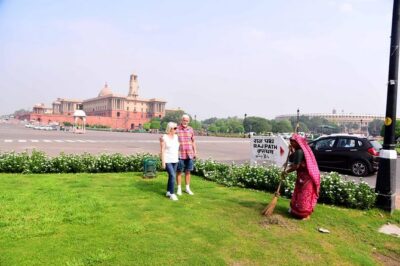
You also drive past the President’s House and you can see Parliament and other government offices. You don’t spend long here, but it helps you understand how the historic city sits alongside the country’s political core.
Humayun’s Tomb: Mughal Garden Planning
Humayun’s Tomb was built in 1570 and is considered the first garden tomb in India. It’s also a World Heritage site. Even if you know the Taj Mahal story, this place teaches you the Mughal approach to symmetry, landscaping, and monument design.
You’ll have lunch at a local restaurant (not included), then drive to Agra (about three hours) and check in for the night.
Day 2 in Agra: Sunrise Taj Mahal and Akbar’s Fort
Day 2 is where the tour earns its reputation. The plan starts early, with a 0600 meeting time at your hotel so you can reach the Taj Mahal in time for sunrise.
Taj Mahal at Sunrise: More Than a Photo
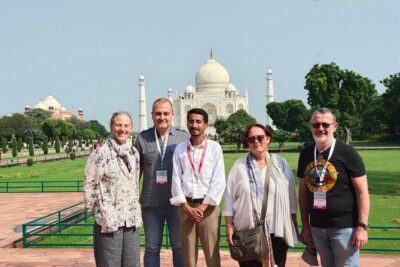
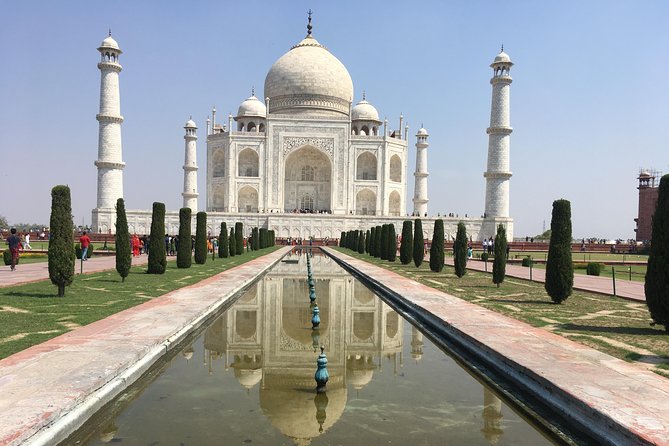
The itinerary is built around that early light on marble—when the sun rays reflect, the building looks different from daytime. A guide will explain what you’re seeing, which I appreciate because it keeps you from just staring at the surface.
This is also a “go early or miss it” kind of stop. You get better light, calmer crowds, and more time to absorb the scale.
Agra Fort: Royal Life and Big Taj Views
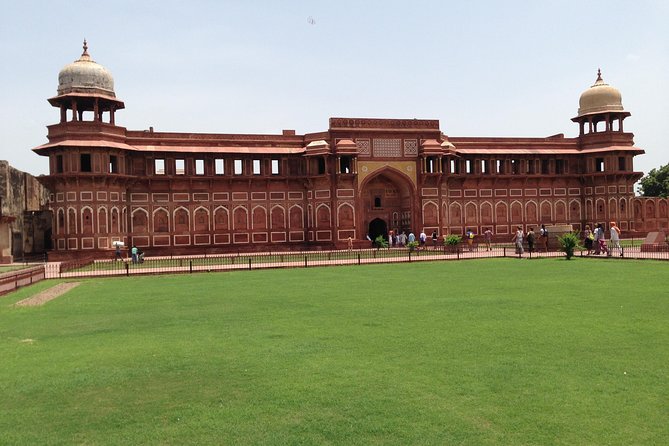
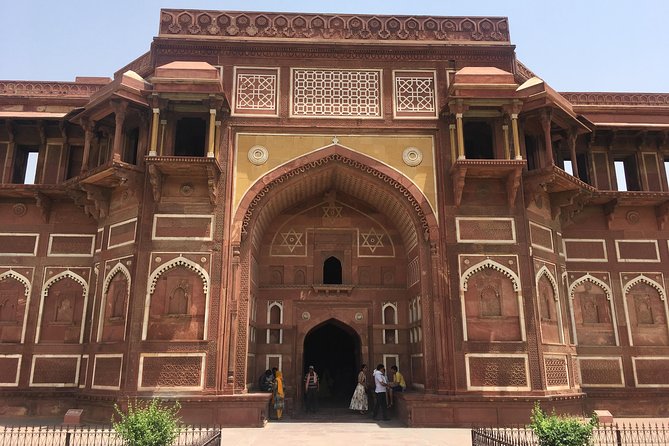
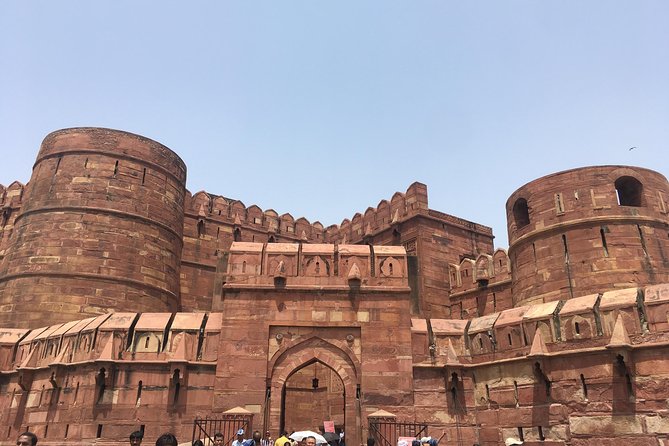
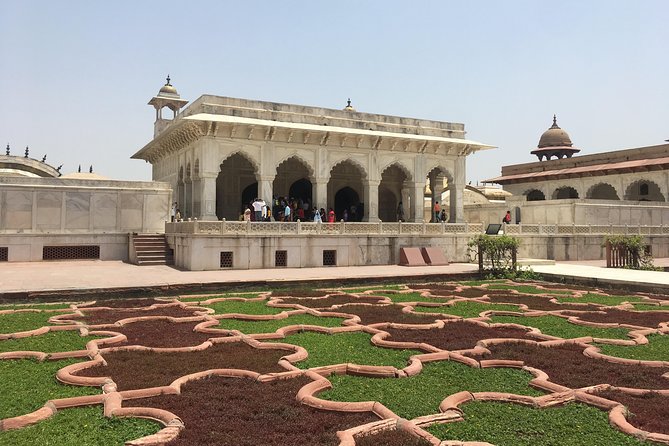
Next comes Agra Fort, built in 1556 by Emperor Akbar. You’ll see parts of the palace area where the royal family lived, plus you’ll get those classic views of the Taj Mahal from the fort.
A guide helps connect the dots here: you see how power, defense, and sightlines worked together. It’s a great match after sunrise Taj, because you shift from pure beauty to how the city was controlled.
Fatehpur Sikri: A Mughal Capital You Can Feel
After the fort, you drive to Fatehpur Sikri, a Mughal capital from around 1570. The distance is described as about a one-hour drive. This stop gives you something different from the “same three cities” rhythm—suddenly you’re in a place that feels like an entire administrative world.
Then you continue on toward Jaipur, with about four hours of driving and a hotel drop-off for an overnight stay.
Day 2’s Extra Stop: Chand Baori Stepwell
The tour includes Chand Baori, a stepwell used to store water and built in the 8th century. It goes approximately 30 meters (about 100 feet) down and is described as one of the deepest and largest stepwells in India.
This is one of those sights that’s easy to underestimate if you just think it’s a “pretty well.” It’s actually a window into how communities handled water—architecture shaped by real needs. If you enjoy offbeat-but-important structures, this is a highlight.
It also gives you a breather from fort-palace intensity. Even if you’re not a big photography person, the scale is hard to ignore.
Day 3 in Jaipur: Amber Fort, Hawa Mahal, City Palace, and More
Jaipur is packed into one day, but it doesn’t feel random. The itinerary flows from the hills (Amber Fort) into the iconic face of the city (Hawa Mahal), then into museums and observatories, ending with stepwells and royal memorial grounds.
Amber Palace (Amber Fort): Hill Fort Views and Big Time
Amber Palace is a hill fort built in 1592 by Raja Mansingh I. The tour gives it about two hours, which is enough time to explore without feeling rushed.
A guide-led visit helps because Amber is not just “a fort.” It’s palace design with defensive strategy built in. You’ll also get a view over the city from the fort.
There’s also a side mention of a water palace area, described as a hunting palace for royal family members, where you can take photos from outside. That’s a nice extra layer if you like learning how different parts of a palace served daily life and leisure.
Hawa Mahal: The Palace of Breeze and Its 953 Windows
Hawa Mahal was built in 1799 using red and pink sandstone. Its most famous feature is the 953 small windows, made so women could observe daily life without being seen.
This stop is short—about 15 minutes—but it’s one of the most “you know it instantly” Jaipur sights. If you stand in the right place, you’ll start seeing why the windows matter. A guide can point out how the design supports observation and airflow.
City Palace: Museum + Royal Residence
Then you move to the City Palace, a museum and the residence of the king of Jaipur. You’ll get about one hour here, with admission included.
This is where the day becomes less about exterior viewpoints and more about understanding how modern royalty and historical identity coexist in the same complex.
Jantar Mantar: Observing Time with Instruments
Jantar Mantar is an observatory with 19 instruments for the calculation of time, and it’s noted for having the largest sundial of the world. You’re given about an hour.
If you like science-in-stone, this is a satisfying stop. A guide’s explanations help you see how the instruments work rather than just viewing them as old metal. This is also a good counterbalance after forts and palaces.
Panna Meena ka Kund: A Stepwell with a Room
Panna Meena ka Kund is a square-shaped stepwell with stairs on all four sides and a room on the northern wall. It’s included for about 30 minutes.
The description notes the northern room is believed to have been used for religious ceremonies before weddings or around wedding events, though the text cuts off mid-sentence. Still, the big point is that this isn’t only utilitarian water access—it also had social and spiritual connections.
Gaitore Ki Chhatriyan: Royal Cremation Grounds
Finally, you visit Gaitore Ki Chhatriyan, described as the royal crematorium grounds for the Kachwaha Rajput clan. The site is said to have been designated by the founder of Jaipur in the 18th century, with royal cenotaphs spread across the grounds.
This stop slows you down near the end of the day. It’s not the flashy “must-see” for everyone, but if you want a fuller picture of Jaipur beyond tourist icons, it adds depth.
Day 4 Back to Delhi: A Clean Exit
On Day 4, you check out of your Jaipur hotel after breakfast and drive back to New Delhi. The transfer time is about four hours, and you’re dropped off at either your hotel in Delhi or at the airport.
This final day is simple and predictable, which I really like. You’re not scrambling for one last impossible viewpoint while you’re tired. It’s the kind of ending that keeps the trip feeling organized.
Transfers, Hotels, and the Real Meaning of the Included Stuff
Here’s how I think about the “included” pieces in a tour like this.
Guides in Each City
A professional guide for full-day sightseeing in each city is the big value-add. It solves the language barrier in a practical way: you understand what you’re seeing and why it matters, instead of relying on a few plaques and your best guess.
Entrances and Skip-the-Line Options
The tour notes monument entrance tickets are included if you choose that option, and there’s also a skip-the-line ticket option for the Taj Mahal. If your budget allows it, I’d lean toward selecting the entrance coverage—because you’ll spend less time dealing with ticket logistics and more time absorbing the sights.
Hotel Category: 5-Star If Chosen
Accommodation is listed as 3 nights in 5-star category hotels if the option is chosen. That matters because comfort changes how you handle long drive days. You’ll get proper rest after sunrise timing and after Jaipur’s big stop list.
If you’re watching costs, confirm what hotel category you’re selecting before you pay.
Vehicle Size and Your Group Comfort
Vehicle choice depends on group size: sedan for 1–2 people, SUV for 3–4, mini bus for 5–8, and a 15-seater for larger groups. That matters because a cramped vehicle turns a travel day into misery. This setup is at least sized for the group.
Price and Value: What You’re Paying For
At about $113.39 per person (approx.), you’re paying for a “managed experience” more than a sightseeing list. The pricing ties to included transfers, guide services, bottled water, and accommodation for three nights (if you select the 5-star option), plus 3 breakfasts.
What’s not included is just as important: lunch and dinner are on you. That’s normal, and in India it can be budget-friendly compared with some Western-style tours. Still, you should set aside daily meal costs so the trip doesn’t feel cheaper on paper than it is in real life.
Also note the tour mentions mandatory Christmas or New Year gala dinner charges if your dates fall on those holidays. That’s something you’d pay directly to the hotel, so it’s smart to check dates before booking.
Should You Book This Private Golden Triangle Tour?
I’d recommend it if you want a structured Golden Triangle with less planning. This is a good fit for first-timers, people who don’t want to wrestle with tickets and transit, and anyone who values a guide’s explanations—especially for Taj Mahal at sunrise and for Jaipur’s observatory and fort complex.
Skip this only if you know you hate early starts or you want lots of free time to wander alone in each city. With a schedule this tight, most of your time is guided and timed. You’ll see a lot, but you won’t have the kind of day where you disappear into side streets for hours.
If you’re the type who likes getting your bearings fast and then enjoying the ride, this private 4-day loop is a solid way to do it.
FAQ
What does pickup include on this tour?
Pickup is offered, and you’re met at your hotel or at the airport in New Delhi.
Which cities are included in the 4 days?
The tour covers New Delhi, Agra, and Jaipur.
How early do you go for the Taj Mahal?
The Taj Mahal plan is set for sunrise, with a 0600 meeting time at your hotel.
Are monument entrance tickets included?
Entrance tickets are included if you choose the option to include them. The itinerary also notes Taj Mahal skip-the-line if the option is chosen.
How many breakfasts are included?
Breakfast is included three times across the tour.
Is lunch or dinner included?
Lunch and dinner are not included.
Is this tour private or shared with other groups?
It’s private. Only your group participates.
What kind of vehicle will you use?
Vehicle type depends on group size: sedan (1–2 people), SUV (3–4), mini bus (5–8), and larger bus options for bigger groups.
Can the itinerary be changed to fit your needs?
Yes, the tour can be customized based on your requirements.
Does the tour run in bad weather?
It operates in all weather conditions, and you’re advised to dress appropriately.