REVIEW · NEW DELHI
6-Day Private Tour of Delhi, Agra, Jaipur, and Pushkar from Delhi
Book on Viator →Operated by Limra Holiday · Bookable on Viator
A whirlwind of sacred sights and big sights.
This private 6-day loop links Delhi’s Mughal landmarks, Agra’s famous white marble, and Jaipur’s royal-era city plan—then adds Pushkar’s religious evenings. I love the private pace (it stays focused on your group, not a constant shuffle), and I love the Taj Mahal timing with a sunrise visit plus a sunset viewpoint. One thing to consider: the itinerary is packed, so you’ll spend plenty of time in the car between cities and attractions.
I also like how the tour builds in variety without feeling random: old markets, major monuments, and then spiritual stops that slow your brain down. The days can feel fast-moving, so it helps to travel with a realistic expectation: you’re here to see a lot, not to linger for hours at every single spot.
With a luxury AC car and pickup from your Delhi hotel, the logistics feel much less stressful than DIY. That matters when you’re hopping between four cities in six days, and when you want your sightseeing to start right away.
In This Review
- Key highlights worth knowing
- How This Private 6-Day Loop Works From Delhi
- Day 1 in Delhi: India Gate, Jama Masjid, Akshardham, Qutub Minar
- Day 2 to Agra: Yamuna Expressway, a Sunset Taj View, and Itmad-ud-Daula
- Day 3: Sunrise Taj Mahal, Agra Fort, Fatehpur Sikri, and the Drive to Jaipur
- Jaipur Day 4: Stepwell Legends, Jal Mahal Views, and Hawa Mahal to Jantar Mantar
- Pushkar Day 5: Brahma Ghat Aarti, Varaha Temple, Gurudwara Sahib, and the Main Market
- Day 6: Getting Back to Delhi Around 09:00
- Price and Value: Is $570 a Good Deal for This Route?
- Who This Tour Suits Best (and Who Should Skip It)
- Should You Book This Private Delhi-Agra-Jaipur-Pushkar Tour?
- FAQ
- What cities are included in this 6-day private tour?
- How much does the tour cost?
- What’s included in the price?
- Are lunch and dinner included?
- What time does the return trip to Delhi start on the last day?
- Can I get a full refund if I cancel?
Key highlights worth knowing
- Sunrise Taj Mahal visit plus an alternate Taj viewpoint at sunset the next day
- Old Delhi walking mix: Jama Masjid and Chandni Chowk in the same day
- Delhi landmarks across eras from India Gate to Qutub Minar and Humayun’s Tomb
- Jaipur classics in a tight circuit: Hawa Mahal, City Palace, Jal Mahal, Jantar Mantar
- Pushkar’s evening ritual focus with Brahma Ghat and the Brahma Temple
- Hotel nights and entrance fees handled with 5 nights’ accommodation and monument tickets included
How This Private 6-Day Loop Works From Delhi
This is a private tour, meaning only your group participates, with a luxury AC car handling transport between New Delhi, Agra, Jaipur, and Pushkar. You also get pickup and drop-off from your hotel or airport in New Delhi, and you’ll carry a mobile ticket. That combination is handy because the schedule depends on efficient starts—especially on the Taj Mahal day.
You’re covered with 5 nights accommodation (single or double occupancy) and breakfast, plus taxes. Entrance fees for monuments are included, so you’re not constantly pulling out cash at ticket counters. Your guide is English speaking for Delhi, Agra, and Jaipur, which is a big deal when you want context for what you’re seeing rather than just photos.
Two practical notes you’ll feel during the week. First, lunch and dinner are not included, so you’ll plan for meals on your own during the day. Second, the route is built around seeing many major sites, which means you should pack a flexible mindset: short stops, lots of transitions, and a few long transfer drives.
You can also read our reviews of more private tours in New Delhi


Day 1 in Delhi: India Gate, Jama Masjid, Akshardham, Qutub Minar
Delhi Day 1 is a best-of mix across eras, religions, and styles—starting with major memorial and government sites, then moving into Old Delhi’s market energy, and ending with a cluster of iconic spiritual monuments.
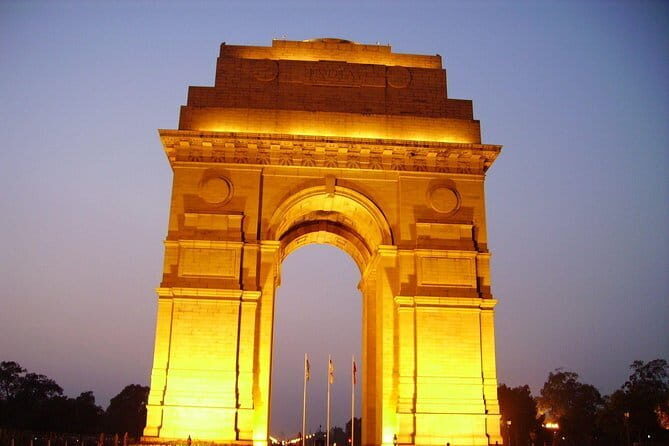
India Gate (15 minutes) is your opener. It’s dedicated to Indian soldiers and built by Edwin Lutyens to honor 90,000 soldiers who lost their lives in World War I. This stop works well early because it gives you a clear sense of Delhi as a capital of modern national memory, not only an ancient city.
Then you’ll head to Raj Ghat (30 minutes), the memorial for Mahatma Gandhi. It began as part of a historic ghat of Old Delhi, and it sits near the old walled city gate area. The practical value here is that it sets a tone of reflection before you enter the heavier sightseeing zones.
Parliament House / Sansad Bhavan (15 minutes) adds a different layer: Delhi as a living political center. Even if you’re just looking in the time you’re given, it helps you understand why so much of this city is built for formal institutions.
Jama Masjid (1 hour) brings you to Mughal Delhi. Built by Emperor Shah Jahan between 1650 and 1656, this is one of the largest mosques in India. It’s a stop where you’ll notice scale fast. The main drawback: it’s also the kind of place where you need to be ready for crowds, movement, and people-watching. Plan your pace and keep your camera ready, but don’t rush the space.
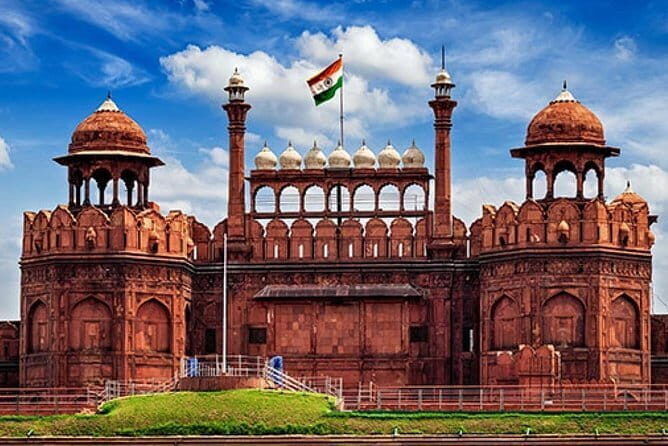
Next is Chandni Chowk (30 minutes). This is Old Delhi’s classic market corridor. It’s one of the oldest and busiest markets, and it runs near the Old Delhi Railway Station with the Red Fort monument at the eastern end. In a short window, you’ll mostly be getting the feel: lanes, textures, and the rhythm of everyday shopping.
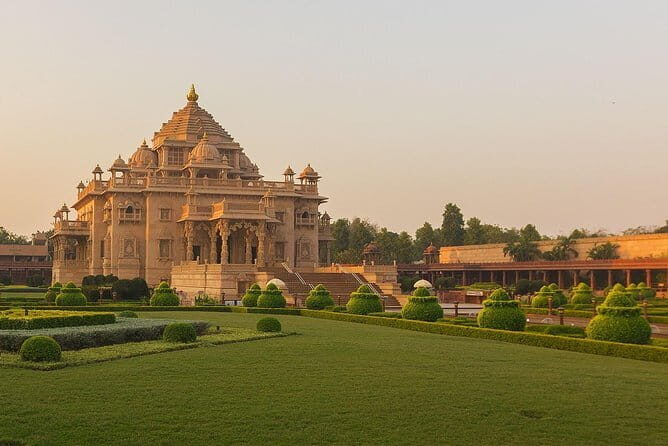
Then the tour shifts toward modern religious architecture with Swaminarayan Akshardham (1 hour) and the Lotus Temple (30 minutes). Akshardham is a Hindu temple and spiritual campus near the border with Noida, while the Lotus Temple is a Bahá’í House of Worship opened in December 1986. The difference between these stops is exactly the point: you’re not just seeing Mughal Delhi over and over.
After that, the pace turns historic again with Qutub Minar (1 hour). This “victory tower” is part of the Qutb complex at Lal Kot, Delhi’s oldest fortified city site. Qutub Minar is UNESCO-listed, and it’s one of those monuments that makes you understand why locals and visitors still treat Delhi as a layers city.
Finally, Humayun’s Tomb (1 hour) rounds out the day. Built for Mughal Emperor Humayun and commissioned in 1569–70, it’s designed by Mirak Mirza Ghiyas and offers a Mughal burial-complex feel that’s easy to compare with later masterpieces you’ll see in Agra.
Day 2 to Agra: Yamuna Expressway, a Sunset Taj View, and Itmad-ud-Daula
Day 2 starts with travel. After breakfast, you proceed to Agra, and the itinerary specifically notes Yamuna Expressway with a 4-hour transfer time, followed by check-in at your hotel.
This setup matters. It means you’re not arriving in Agra and immediately sprinting through everything. You get some breathing room, then you move into the Taj-zone with a smarter second look.
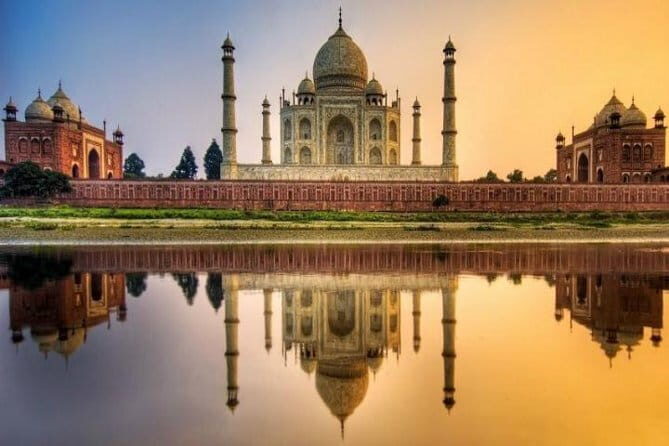
First up is the Taj Mahal Sunset View Point (30 minutes). This is across the river from the main monument, and the itinerary calls it a great way to view Taj beauty away from the crowd during sunset. In practice, this is about lighting and breathing space. Sunrise is for drama. Sunset is for softer color and a calmer viewing rhythm.
Then you visit Itmad-ud-Daula (30 minutes), also known as the tomb often seen as an architectural inspiration behind the Taj Mahal. It’s a great add-on because it teaches you how Mughal elegance can show up in smaller-scale masterpieces. If the Taj feels too big to process emotionally, this stop can help you read the details.
One consideration here: because you’re doing Agra viewpoints and tombs in the same day, you might feel a gentle time squeeze after the sunset viewpoint. Still, it’s a good trade if you want two distinct Taj experiences without losing the rest of the day.
Day 3: Sunrise Taj Mahal, Agra Fort, Fatehpur Sikri, and the Drive to Jaipur

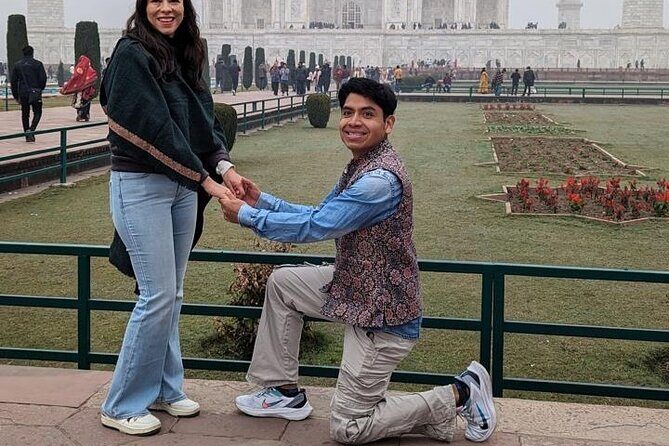
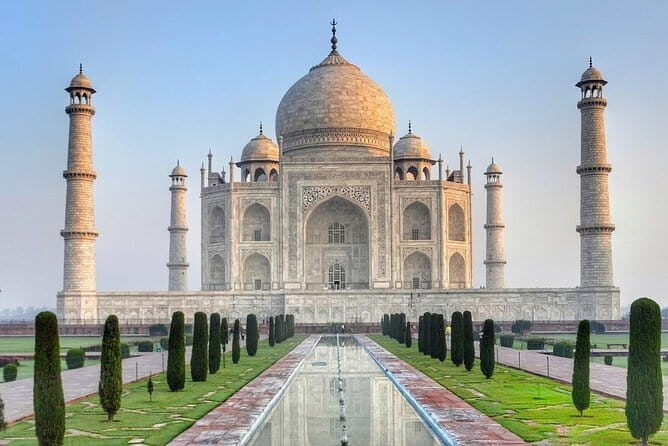
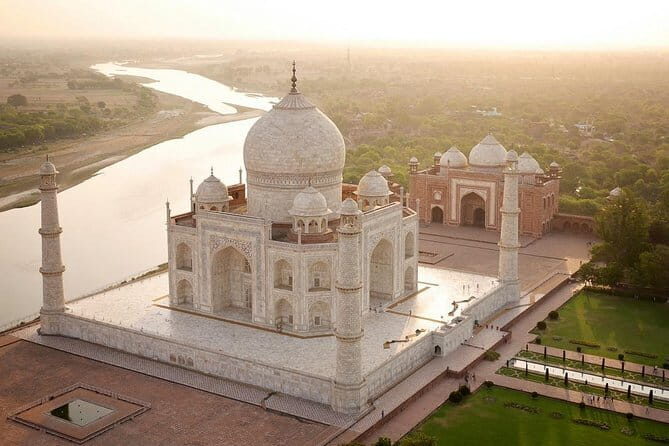
Day 3 is the day most people remember. You start with Taj Mahal at sunrise (2 hours). The itinerary frames it as a monument built by Shah Jahan in memory of Mumtaz Mahal, who died in 1631 while giving birth to their 14th child. Even if you’ve seen photos before, sunrise changes the experience. The light is different, and you’re more likely to appreciate the symmetry rather than just the wow-factor.
Then you move to Agra Fort (1 hour). This fort was the main residence of Mughal emperors until 1638, when the capital shifted from Agra to Delhi. It’s UNESCO-listed, and it gives you a “power center” view of the Mughal story. Taj Mahal is love and memory. Agra Fort is governance and control.
After that, it’s off to Fatehpur Sikri (1 hour). The itinerary notes it’s about 40 km from Agra and calls it a beautiful depiction of Mughal architecture. Even with limited time, this stop helps you understand that Mughal brilliance wasn’t limited to one city. It also acts like a visual reset before the Rajasthan section of the journey.
Then comes the long transition: you continue driving to Jaipur, described as the Pink City, and check in at the hotel after about 4 hours. You’re moving from white marble romance to Rajasthan’s color and stone patterns. It’s a big shift, and it works best if you pack a little energy for change.
A drawback to keep in mind: this is another packed day with an early Taj and then fort/town travel. If you want lots of quiet time in each place, this may feel intense. If you want “see it all” momentum, it’s a strong fit.
Jaipur Day 4: Stepwell Legends, Jal Mahal Views, and Hawa Mahal to Jantar Mantar

Jaipur Day 4 is about mixing everyday-meets-royal sights. It’s not only palaces. It’s also water architecture and astronomy.
You begin with Panna Meena ka Kund (15 minutes). This stepwell is believed to be around 1000 years old, built in the time of the Meena Dynasty. The itinerary notes that its water is used in many Hindu ceremonies, which gives this place more than just a photo value. It’s a working cultural element tied to religious practice.
Then you see Jal Mahal (15 minutes), a palace in the middle of Man Sagar Lake. The building was originally constructed in 1699, and the lake and structure were later renovated. Even in a short time, Jal Mahal is visually memorable because it sits like a crafted pause inside the water.
Next comes Hawa Mahal (15 minutes), the Palace of Wind. Built from red and pink sandstone, it sits on the edge of City Palace and extends to the Zenana, the women’s chambers. In limited time, this is still a strong “Jaipur instantly recognizable” stop.
You then visit the City Palace of Jaipur (1 hour). This is a royal residence and former administrative headquarters of rulers of Jaipur State. If you like understanding how royalty governed, this stop tends to click. You get a sense of scale and the layout of power.
Finally, you wrap with Jantar Mantar (1 hour). This monument is a collection of 19 astronomical instruments built by Rajput king Sawai Jai Singh, completed in 1734. The practical joy here is that it helps you see Jaipur not only as art and architecture, but as science shaped into stone.
One thing to consider: many stops are scheduled for about 15 minutes. That’s enough for photos and orientation, but it means you’ll enjoy it most if you keep your shopping impulses in check and focus on the big picture.
You can also read our reviews of more tours and experiences in New Delhi





Pushkar Day 5: Brahma Ghat Aarti, Varaha Temple, Gurudwara Sahib, and the Main Market
Pushkar is the spiritual turning point of the entire trip. Day 5 blends Hindu sacred sites and a Sikh stop, then finishes with an evening ritual atmosphere around the lake area.
You start with Varaha Temple (25 minutes), dedicated to Lord Vishnu and described as one of the eight Swayambhu Kshetra of Vishnu. It was built in the 12 century by King Anaji Chouh. This temple is a strong opening because it immediately grounds you in Pushkar’s sacred reputation.
Then you visit Gurudwara Sahib (25 minutes). The itinerary notes you can learn about Sikh history and beliefs, and why Pushkar is sacred for Sikh religion too. I like that the tour doesn’t treat faith as one-note. It’s a practical way to understand why Pushkar feels different from the other three cities on your route.
Next is Pushkar Lake / Raj Ghat (Sunset Point) (20 minutes). The itinerary mentions the ghat was constructed by Raja Mann Singh 1 in the early 16th century and later renovated by Jai Singh in the 18th century. This stop gives you the lake context for the evening experience.
Then the highlight: Brahma Ghat (30 minutes) for the fire ceremony and evening Aarti. The itinerary calls these evening rituals mesmerizing and breathtaking, and it’s framed as an experience you shouldn’t miss. If you’re the type who wants a spiritual moment that feels lived-in, this is the part of the day you’ll remember.
After that, you go to the Brahma Temple (30 minutes). It’s described as the only temple in the universe dedicated to Lord Brahma, with structure dating to the 14th century and partly renovated later. The itinerary also notes the temple is made of black and white marble stones. This is the “why Pushkar matters” stop.
There’s an additional religious stop close to Varaha Ghat: the old Rangji temple, noted as about 200 years old and dedicated to Lord Vishnu. It’s a smaller add-on, but it reinforces the theme: many sacred corners, not just one famous monument.
Finally, you end at Pushkar Main Market (30 minutes). You’ll head through narrow lanes and get photo-friendly moments, reaching Halwai Gali, famous for Malpuas, and then Gandhi Ghat. This is a good close because it shifts from ritual to local daily life without leaving the sacred lake area behind.
Day 6: Getting Back to Delhi Around 09:00
On the last morning, the itinerary says your driver comes around 09:00 AM to your hotel for checkout. Then you drive back to Delhi, with a 6-hour travel time noted. It’s a straightforward finish: you’re not adding another big sightseeing day, just closing the loop with some sleep, stretch, and one final look at the route you traveled.
Price and Value: Is $570 a Good Deal for This Route?
At $570 per person, this tour has a clear value story because it bundles major costs that usually add up fast.
Here’s what you’re getting that you’d otherwise pay separately:
- Luxury AC car for intercity transfers and city sightseeing
- Pickup and drop back in New Delhi (hotel or airport)
- 5 nights accommodation with breakfast, plus taxes
- All entrance/monument ticket fees included
- English speaking approved guide for Delhi, Agra, and Jaipur
- Fuel and state taxes included
- Mobile ticket
What’s not included is also clear: tips, and lunch and dinner. That’s normal. It’s just the one area where you’ll have to manage your own budget.
The “value” question comes down to this: do you want a structured circuit across Delhi, Agra, Jaipur, and Pushkar with hotel nights and tickets bundled? If yes, $570 can feel fair, especially because it includes the big-ticket drives and admissions while keeping you with one guide system for much of the trip.
If you’re a slow traveler who hates road time and prefers spending entire afternoons in one place, you might feel like the price buys you movement more than comfort. But for most first-timers, this is a sensible way to cover four cities without the headache of planning every step.
Who This Tour Suits Best (and Who Should Skip It)
This tour is a strong match if you:
- Want a private experience with an organized route and English guidance across key cities
- Like the idea of doing the Taj Mahal at sunrise and then again from a different viewpoint at sunset
- Prefer a sightseeing structure that hits major landmarks without you mapping routes day-by-day
- Are okay with a schedule that includes plenty of short stops (many are 15–30 minutes)
You might reconsider if you:
- Want lots of downtime in the afternoons or prefer to linger slowly
- Don’t like travel days that stretch across multiple drives, especially around Day 3 and Day 6
- Want meals fully handled (since lunch and dinner are not included)
Should You Book This Private Delhi-Agra-Jaipur-Pushkar Tour?
I think this is a book-worthy option if your goal is classic India highlights done in one smooth package. The mix of Delhi’s iconic monuments, Agra’s two-part Taj experience, Jaipur’s palace-and-astronomy day, and Pushkar’s evening ritual focus gives you variety that feels earned, not random.
My decision tip is simple: if you like the idea of getting a sunrise Taj moment and a Brahma Ghat Aarti evening without managing tickets and logistics, this tour fits your style. If you prefer slow travel and minimal driving, you’ll probably want a different pace and fewer stops.
FAQ
What cities are included in this 6-day private tour?
The tour covers New Delhi, Agra, Jaipur, and Pushkar.
How much does the tour cost?
The price is $570.00 per person.
What’s included in the price?
It includes a luxury AC car, pickup and drop back in New Delhi, 5 nights accommodation with bed/breakfast and taxes, all entrance/monument ticket fees, an English speaking approved guide for Delhi, Agra, and Jaipur, and fuel/state taxes.
Are lunch and dinner included?
No. Lunch and dinner at restaurants or hotels are not included.
What time does the return trip to Delhi start on the last day?
On Day 6, the driver comes around 09:00 AM for hotel checkout, then you drive back to Delhi.
Can I get a full refund if I cancel?
Yes. There is free cancellation up to 24 hours in advance for a full refund. If you cancel less than 24 hours before the start time, the amount paid is not refunded.