REVIEW · NEW DELHI
5 Nights 6 Days Private Golden Triangle Tour – Delhi Agra Jaipur
Book on Viator →Operated by Private Driver In India · Bookable on Viator
Golden Triangle is a lot easier when the driving is handled. This 5-night, 6-day private setup links Delhi, Agra, and Jaipur with a comfortable private vehicle and local guides that explain what you’re seeing in plain language. I like that it’s designed for a slower rhythm—so you can actually look, not just rush from photo to photo.
Two more things I really appreciate: the itinerary can be customized, and breakfast is included for three mornings so you start days without hunting. The main thing to plan for is that monument entry fees cost extra, and hotel standards can vary depending on the option you book.
In This Review
- Key things that make this tour work well
- How “private” changes the Golden Triangle
- A smooth start in New Delhi (and what to do with day one)
- Old Delhi + Lutyens Delhi in one long sightseeing day
- Jama Masjid and Old Delhi street energy
- Red Fort and the Republic Day war memorial vibe
- Rashtrapati Bhavan, Parliament House, and classic Delhi architecture
- Humayun’s Tomb, Lotus Temple, Qutub Minar: the layered Delhi stops
- Agra’s three-ticket “must-see” trio
- Taj Mahal: plan time, not just photos
- Agra Fort and the Mughal power backdrop
- Itmad-ud-Daula, also called Baby Taj
- The road to Jaipur: Fatehpur Sikri and Chand Baori
- Fatehpur Sikri as Akbar’s “victory” capital
- Chand Baori’s stepwell geometry
- Jaipur highlights: Amer, City Palace, Jantar Mantar, Hawa Mahal
- Amer Fort: the big opener outside the city
- Jal Mahal: a palace in the middle of Man Sagar Lake
- Royal Gaitor: cenotaphs and clean-feeling grounds
- City Palace and the living-room of the dynasty
- Jantar Mantar: time, math, and stone
- Hawa Mahal: the Palace of Breeze
- Albert Hall Museum: when you want indoor time
- Price and value: what the $240 usually covers (and what it doesn’t)
- Vehicle size: small groups get more comfort
- The human factor: drivers and guides that make it feel easy
- Planning tips that keep this tour comfortable
- Should you book this Delhi–Agra–Jaipur private tour?
- FAQ
- What cities are included in this Golden Triangle tour?
- Does the tour include pickup and drop-off?
- Are monument entry tickets included in the price?
- Is accommodation included?
- What vehicle will you use for transportation?
- What if I need to cancel?
Key things that make this tour work well
- Private car + hotel/airport pickup makes the whole start-to-finish flow much simpler
- Local guide time in each city helps you understand the big UNESCO sights (not just landmarks)
- Leisurely pacing keeps a first trip from feeling like a checklist
- Clear extra ticket costs for Delhi, Agra, and Jaipur so there are no surprise totals later
- Driver-guides get high praise, including names like Abhi, Amit, Manoj, and Pintu
How “private” changes the Golden Triangle

A Golden Triangle tour can either feel smooth or feel like you’re trapped in transit. Here’s the big difference: you’re in your own vehicle and moving at the speed of your group. That matters in Delhi, where traffic and crowd density can scramble a tight schedule. It also helps in Jaipur and Agra, where you’ll want pauses for viewpoints, ticket lines, and simple bathroom breaks.
This is also a tour built for people who don’t want to overthink logistics. You get pickup options (airport, railway station, hotel, or any pickup location in Delhi, Noida, and Gurugram), and the day-to-day flow is already mapped around major sights. If you’re traveling for the first time, that’s a real value.
You can also read our reviews of more private tours in New Delhi


A smooth start in New Delhi (and what to do with day one)
Day one is essentially a soft landing. After you arrive at the New Delhi airport, a tour representative meets you and helps you transfer to your hotel. Then you’re free to spend the day at your leisure, or go explore nearby attractions.
This matters more than it sounds. When you arrive with jet lag, you don’t want Day 1 to be a sprint. Use it to get your bearings, adjust to the heat, and get cash/phone data sorted so tomorrow doesn’t feel chaotic.
If you land early, you might enjoy a gentle first walk or a low-stress meal close to your hotel. If you land late, day one becomes rest—exactly what you need before Old Delhi and the Mughal-era sites.
Old Delhi + Lutyens Delhi in one long sightseeing day
Delhi Day 2 is a full, classic mix: Mughal monuments in Old Delhi, then the grand government architecture of Lutyens Delhi. It’s smart because it gives you two different “Delhi moods” without needing extra travel days.
Jama Masjid and Old Delhi street energy
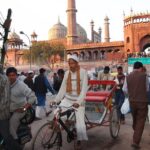
You start with Jama Masjid, one of India’s largest mosques, completed in 1644 under Shah Jahan. The architecture—red sandstone with marble elements—helps you understand why this area became such a focal point for Mughal power and religious life.
After that, you get a drive through Chandni Chowk. You’re not stuck inside it for hours, but you’ll still see the layout and the goods-and-food atmosphere the area is known for. If you like people-watching and shopping streets, this quick look sets up the bigger monuments you’ll see right after.
Red Fort and the Republic Day war memorial vibe
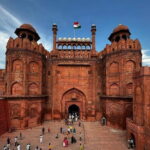
Next is the Red Fort, the unmistakable Old Delhi landmark at the end of the main thoroughfare. It’s listed as about an hour on this tour. Even if you skip extra areas inside, standing in front of the fortress walls gives you a clear sense of scale.
Then you move to India Gate, a major war memorial. It’s free and only scheduled for about 30 minutes, but it’s worth using that short stop well—especially if you want a quick sense of modern India’s public spaces.
You can also read our reviews of more tours and experiences in New Delhi





Rashtrapati Bhavan, Parliament House, and classic Delhi architecture
From there, you pass Rashtrapati Bhavan and Parliament House while driving. You’re looking at the grand design style often tied to Lutyens Delhi—stone, symmetry, and that official-city feeling. This part is more about visual context than hours of time.
If you’re into architecture, don’t treat this as background. These buildings help explain how Delhi shifted from imperial court power to the administrative center of a modern nation.
Humayun’s Tomb, Lotus Temple, Qutub Minar: the layered Delhi stops
The tour then shifts again into Mughal and later landmarks:
- Humayun’s Tomb (built in 1570) is timed for about an hour. The key detail here is that it was the first garden-tomb on the Indian subcontinent, and it helped inspire later designs.
- Lotus Temple is a Bahai House of Worship with lotus-like architecture. It’s quick (about 30 minutes here), but the shape makes it easy to appreciate from multiple angles.
- Qutub Minar takes about an hour. It’s the famous victory tower/minaret in the Qutb complex. If you want to see how stone towers signal status across centuries, this is a must.
- Raj Ghat is the simple memorial marking where Mahatma Gandhi’s funeral took place. It’s listed as free and short (around 30 minutes), but it lands emotionally if you give it a minute of quiet.
One practical note: several Delhi monuments are marked as “not included” for entry fees, while others are free. Your guide can help you figure out what’s worth the ticket time versus what you can view well from outside.
Agra’s three-ticket “must-see” trio
Agra is where the Golden Triangle’s centerpiece earns its fame. Day 3 includes the drive from Delhi to Agra—about 222 km and roughly 4 hours—then hotel check-in and sightseeing.
This is a good pacing choice: you arrive, settle in, and then go for the big sights with local guidance.
Taj Mahal: plan time, not just photos
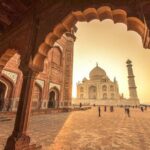
You get Taj Mahal for about two hours. It’s not included in the base entry fees, but it’s the reason most people do this route. The mausoleum is ivory-white marble on the Yamuna river’s southern bank, built by Shah Jahan in 1632 for Mumtaz Mahal.
If you go in late afternoon, light tends to change fast on marble surfaces, and your experience can feel very different from midday. Even on a tight schedule, two hours helps you avoid the “only photo, no time” trap.
Agra Fort and the Mughal power backdrop
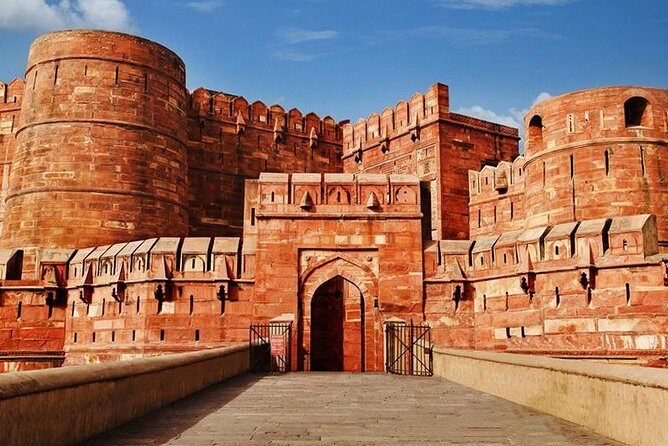
Then it’s Agra Fort (about 1 hour 30 minutes). Like other Mughal forts, it adds context: kings didn’t live in isolation from their monuments—they ruled from fortified sites. This stop is also UNESCO-listed, and it connects Taj Mahal’s story to the political center that supported it.
Itmad-ud-Daula, also called Baby Taj
Finally, you visit Itmad-ud-Daula, sometimes called Baby Taj. You’ll have around an hour. It’s described as a “jewel box” style Mughal mausoleum—smaller than Taj Mahal, but often easier to appreciate in details because you’re not fighting the biggest crowd wave every minute.
If you’re doing this tour for architecture and craftsmanship, I’d argue this third stop is the one you may remember most after the Taj photos fade.
The road to Jaipur: Fatehpur Sikri and Chand Baori

Day 4 is a long-but-interesting transition day. After breakfast, you travel toward Jaipur with a chance to stop at two major sights.
Fatehpur Sikri as Akbar’s “victory” capital
Fatehpur Sikri is scheduled for about an hour and described as Akbar’s built-up capital for roughly a decade, earning the nickname City of Victory. Even without spending all day, it’s a strong stop for understanding Mughal ambition and city planning under Akbar.
Chand Baori’s stepwell geometry
Then there’s Chand Baori (about an hour). This stepwell in Abhaneri is noted as one of India’s largest and deepest, extending roughly 30 meters underground. In a country where water management shaped daily life, stepwells are more than odd structures—they’re a historical response to heat and seasons.
This combo—an imperial city and an engineered water structure—keeps the drive from feeling like dead time. You arrive in Jaipur with your brain already in “history mode.”
Jaipur highlights: Amer, City Palace, Jantar Mantar, Hawa Mahal
In Jaipur, the tour leans into signature stops, with enough time at each to actually enjoy the architecture and views. Day 5 is where you’ll feel the classic Jaipur skyline and the styles that made the city famous.
Amer Fort: the big opener outside the city
You start at Amer (around two hours). It’s described as a historic fort built in 1592, and you’re getting a key piece of Jaipur’s earlier power center—Amer was the former state capital before Jaipur’s founding.
This is one of those places where the walls, courtyards, and elevation help you understand why forts mattered. It also sets the mood for what comes next: palace and observatory design.
Jal Mahal: a palace in the middle of Man Sagar Lake
Next is Jal Mahal, timed around 30 minutes. The palace sits in Man Sagar Lake and is a top tourist attraction. It’s a shorter stop, but it’s visually different from forts and marble halls—great for a break between heavier sightseeing.
Royal Gaitor: cenotaphs and clean-feeling grounds
Then you visit Royal Gaitor Tumbas, the cenotaphs of the Kacchhawa dynasty. It’s described as clean and well-preserved, with architecture worth lingering over briefly (about 30 minutes). Entry here is marked as not included on the tour.
City Palace and the living-room of the dynasty
The City Palace is scheduled for about two hours. It’s inside the walled city area and built by Maharaja Sawai Jai Singh II (the founder of Jaipur), blending Mughal and Rajput elements.
This is a high-value stop for understanding how royal spaces mixed public spectacle and private authority. Even if you don’t go deep into every room, the layout gives you a sense of how the dynasty organized power.
Jantar Mantar: time, math, and stone
Jantar Mantar is short on the schedule—about 1 minute—but it’s worth treating as a photo-and-overview stop unless you want to spend longer on your own. It’s described as one of the oldest astronomical observatories in the world, with the largest stone sundial ever built.
If you’re even a little into how people measured the sky before electronic everything, you’ll appreciate what’s still on display.
Hawa Mahal: the Palace of Breeze
Hawa Mahal is timed around one hour. It’s known for five storeys and a tall design without a foundation, with a curved façade (described as leaning around 87 degrees). Whether you get a full view from the street or from higher viewpoints nearby, this is pure Jaipur silhouette.
Albert Hall Museum: when you want indoor time
Finally, there’s Albert Hall Museum (about one hour). It’s described as having been established in 1887 and named after Prince of Wales Albert Edward. If the heat is intense, this museum stop can be a relief—history, artifacts, and a place to slow down.
One practical note: several Jaipur sites here are marked as not included for entry fees, so plan your budget for tickets as part of the real tour cost.
Price and value: what the $240 usually covers (and what it doesn’t)
At $240 per person for a private 6-day/5-night route, the value comes from the structure. You’re paying for: airport/hotel pickup, a private vehicle sized to your group, and local guide time during sightseeing days.
What’s not included is the part that can change your final total: monument entry fees. Based on the tour’s listed extras:
- Delhi combined entry fee: $30 per person
- Jaipur combined entry fee: $30 per person
- Agra monument entry fees: $35 per person
So your budget isn’t just the $240 base. It’s $240 plus entry fees, plus whatever meals you choose (meals aren’t included). The good news is the ticket costs are spelled out, so you’re not gambling.
Also note the accommodation piece: the tour includes 5 nights of accommodation only if you book the option that includes hotels. If you book without hotels, you’ll handle lodging yourself.
Vehicle size: small groups get more comfort
The vehicle depends on your group size:
- 1–3 travelers: 4-seater sedan
- 4–6 travelers: 7-seater SUV
- 7–10 travelers: 12-seater minivan/Tempo Traveller
That matters in India. A comfortable car with room for luggage and water can turn long days from “fine” into actually enjoyable.
The human factor: drivers and guides that make it feel easy
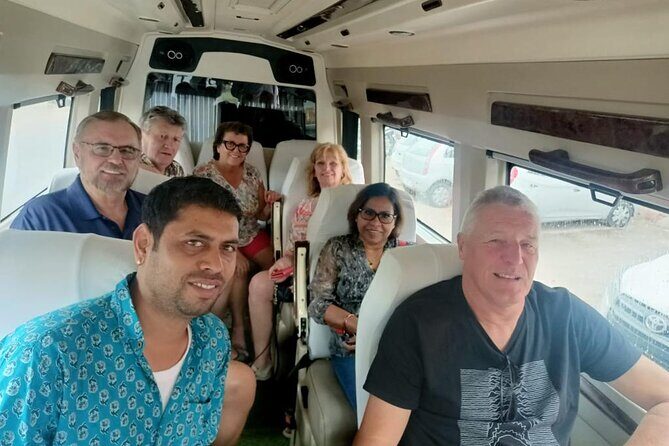
Private tours rise or fall on the person behind the wheel and the person talking beside you. In the feedback I saw, drivers like Abhi and Amit get standout praise, and names like Pintu and Manoj come up with coordination help and smooth communication.
What you should take from that, as a practical traveler: don’t underestimate how much your driver affects your day. A good driver doesn’t just drive. They help you manage timing, keep the vehicle positioned well for pickups, and navigate the schedule without panic when a monument line runs long.
If you want this tour to feel even more like your pace, use the customization option early. Tell the operator what you care about: more architecture, more markets, more gardens, or a lighter day inside forts.
Planning tips that keep this tour comfortable

A few realities to plan around:
- The tour requires good weather. If it cancels due to weather, you’ll be offered another date or a full refund.
- You should have moderate physical fitness since you’ll be moving through forts and large sites.
- Some stops involve longer walking areas even when the scheduled time looks short.
My packing advice is simple: comfortable shoes with grip, a hat, water, and a light layer for mornings and evenings. Also, remember that monument entry tickets are extra—so keep some cash or confirm mobile payment options you’ll use for them.
Should you book this Delhi–Agra–Jaipur private tour?
I’d book it if you want a first Golden Triangle trip that feels organized, not frantic. The private vehicle, hotel/airport pickup, and local guides for major sightseeing stops make it a strong fit for couples, small families, and anyone who hates transit stress.
I’d hesitate if you’re expecting ultra-consistent “five-star” hotel quality by U.S. standards. Some people have flagged that hotels can feel closer to a lower tier depending on the exact property. If that’s your priority, choose your hotel option carefully and ask what level you’re getting.
Finally, if you love history and architecture but still want downtime, this route’s pacing is the selling point. You’ll spend enough time at major sites like the Taj Mahal, plus you’ll also hit the supporting cast—Humayun’s Tomb, Qutub Minar, Agra Fort, Itmad-ud-Daula, Amer, City Palace, Jantar Mantar, and Hawa Mahal—without turning each day into a sprint.
FAQ
What cities are included in this Golden Triangle tour?
It covers Delhi, Agra, and Jaipur over 6 days.
Does the tour include pickup and drop-off?
Yes. Pickup is offered from the airport, railway station, hotel, or any pickup location in Delhi, Noida, and Gurugram. The tour also includes return drop-off in Delhi at the end.
Are monument entry tickets included in the price?
No. Monument entry fees cost extra. The tour lists Delhi monuments combined entry fee at $30 per person, Agra monuments at $35 per person, and Jaipur monuments combined entry fee at $30 per person.
Is accommodation included?
Accommodation is included for 5 nights only if you book the option that includes hotels.
What vehicle will you use for transportation?
It depends on group size: a 4-seater sedan for 1–3 travelers, a 7-seater SUV for 4–6 travelers, and a 12-seater minivan/Tempo Traveller for 7–10 travelers.
What if I need to cancel?
You can cancel for a full refund up to 24 hours before the experience’s start time. The tour can also be rescheduled or refunded if canceled due to poor weather or if minimum passenger numbers aren’t met.