REVIEW · NEW DELHI
6-Day Private Tour of the Golden Triangle
Book on Viator →Operated by Indike Travels · Bookable on Viator
Golden Triangle done right is mostly about avoiding hassle. This private 6-day plan is built for first-time visitors, with a driver and car handling the in-between, so you can focus on the sights. You’ll hit major Delhi landmarks, see the Taj Mahal in soft light, and end in Jaipur’s famous pink-and-stone landmarks.
What I really like is the private, air-conditioned car with your own driver. It keeps the days moving at a human pace, instead of getting stuck in slow, crowded public transport. Second, I like that many monument entry tickets are included, so the day-to-day budgeting is simpler.
One consideration: hotel stays are not included, so you’ll need to plan and pay for your own nights. Also, there’s no mention of a restroom on board, which matters on long drive days.
In This Review
- Key things to know before you go
- Private car from New Delhi: why this Golden Triangle feels calmer
- Day 1 in Delhi: Humayun’s Tomb, Jama Masjid, and Qutub Minar
- Day 2 in Old Delhi: Chandni Chowk shopping time and the Gandhi Museum
- Day 3 to Agra: Akshardham plus a first Taj Mahal visit
- Day 4 in Agra: Taj Mahal again, plus Agra Fort
- Day 5 in Jaipur: Hawa Mahal, City Palace, and Jantar Mantar
- Day 6 near Jaipur: Amer Fort at a relaxed one-hour pace
- What’s included, what you’ll pay for, and how to judge the $400 value
- Flexibility with Indike Travels: how private should feel in real life
- Should you book this private Golden Triangle transfer?
- FAQ
- How long is the Golden Triangle tour?
- What time does the tour start?
- Is this tour private or shared?
- Do I need to arrange hotel stays myself?
- Is the car air-conditioned?
- Are entrance fees to monuments included?
- Is there a restroom on board the vehicle?
- What happens if the weather is poor?
- Is free cancellation available?
Key things to know before you go
- Private transport all day: you’re not sharing a van with strangers.
- Air-conditioned car for the Delhi–Agra–Jaipur routes.
- Most key entry tickets are included for major sites.
- Choose your own hotel since lodging is not part of the package.
- Taj Mahal gets repeated time across two days, letting you see more than one mood of the monument.
- Indike Travels is described as accommodating, including flexibility when you have extra time.
Private car from New Delhi: why this Golden Triangle feels calmer

This tour is designed around a simple idea: you should spend your energy on places, not on logistics. You start at 9:00 am, and from there the plan is a private transfer with an air-conditioned vehicle and driver. That means you can manage your pace. If you want photos earlier, or you’re slower at a monument, the schedule has room to breathe.
The value is not just comfort. It’s time. Between Delhi, Agra, and Jaipur, travel can eat a whole day when you’re improvising. Here, you get the structure of a 6-day route, with enough sightseeing slots to feel complete without feeling rushed.
The other big value point is that many admission fees are included, and the plan also says all fees and taxes are covered. In practice, that means you’re less likely to reach a ticket counter and get surprised. The one clear gap is lodging: hotels aren’t included, so your budget needs to cover your own place to sleep.
You can also read our reviews of more private tours in New Delhi



Day 1 in Delhi: Humayun’s Tomb, Jama Masjid, and Qutub Minar
Delhi starts with Mughal power and then shifts into older religious architecture. Your day begins at Humayun’s Tomb, with about 30 minutes there and the ticket listed as included. This is a strong opener because Humayun’s tomb is a Mughal monument with a serious sense of symmetry and scale. Even with a short visit, you can understand why it matters: it’s designed to feel like a grand, ordered city of stone.
Next you go to Jama Masjid, also about 30 minutes, and here admission is listed as free. Jama Masjid is one of the iconic places to see how a major mosque works as a living space, not just a photo stop. If you’re visiting outside prayer times, you’ll still notice how much the site functions for people day to day.
Then you finish at Qutub Minar, a UNESCO-listed complex, again around 30 minutes, with the ticket included. Qutub Minar is the kind of site that makes you look upward without trying. Even if you don’t spend a long time, it’s memorable because the minaret dominates your view, and the surrounding complex gives you context for the broader history of Delhi’s early Sultanate era.
Practical note: this is a “stacked” day. Short windows at each stop can be great for first-time orientation, but it also means you’ll want to choose what you focus on—architecture, views, or details.
Day 2 in Old Delhi: Chandni Chowk shopping time and the Gandhi Museum
Day 2 gives you two very different experiences: market energy and a museum that grounds the story in personal artifacts.
First is Chandni Chowk, in the heart of Old Delhi. You’ll have about 3 hours here, and there’s no admission ticket listed because this is basically time in the markets—spices, dried fruit, silver jewelry, vivid saris, and plenty of side streets with small shops. This is the part of Delhi where you learn faster than any history book. You get your bearings, you see how people shop and move through the narrow lanes, and you can pick up practical items if you want to.
Then comes the National Gandhi Museum for about 1 hour, with the ticket listed as included. This is a good counterweight to the market. Instead of rushing through crowds, you get a calmer space to connect names and dates to objects—relics, books, art pieces, and other memorabilia tied to Mahatma Gandhi.
A simple strategy for this day: use part of Chandni Chowk time for “broad browsing” (no pressure), then use the rest to pick a few items you’ll actually use. That keeps you from wandering for three hours and coming back with only souvenirs that don’t fit in your luggage.
Day 3 to Agra: Akshardham plus a first Taj Mahal visit
On the way to Agra, the itinerary layers in one major Delhi spiritual-cultural stop and then lands you at the Taj Mahal.
You start at Swaminarayan Akshardham for about 1 hour, with admission included. Akshardham is more than a temple visit. It’s designed like a campus with strong visual storytelling. Even if your time is short, it gives you a different lens on India than the Mughal and mosque sites you saw earlier.
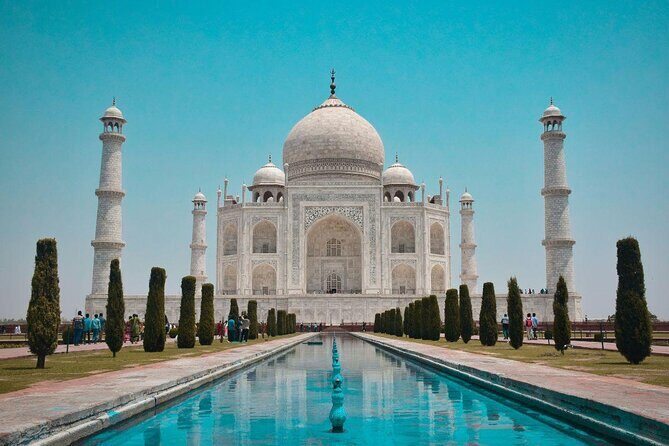
Then you go to the Taj Mahal in Agra for about 2 hours, with the ticket included. This is your anchor sight. The Taj Mahal is famous for a reason, but what makes it work on a tour like this is time allocation. With two hours, you can do more than just walk the perimeter for quick photos. You’ll have time to pause, study the marble details, and step back to see the monument’s overall shape.
The tour plan also notes sunrise at the Taj Mahal. Even if your exact timing depends on scheduling, the point is clear: you’re not limited to midday glare. Soft morning light helps the Taj look more delicate, and it can also feel less crowded than peak afternoon hours.
Day 4 in Agra: Taj Mahal again, plus Agra Fort

Day 4 is built around depth. You return to the Taj Mahal for about 1 hour and then add Agra Fort for about 30 minutes, with admissions included for both.
Returning to the Taj is not a waste. It’s a way to notice what changes between visits: light, crowd rhythm, and how your eye starts to interpret the symmetry. On a private tour, this second Taj block can feel like revisiting a painting from a different distance. If you only had one visit, you might spend all your time trying to capture the perfect shot. With two visits, you can also take in details.
Then Agra Fort gives you the bigger picture. It’s a Mughal fort and was the main residence of Mughal emperors until the capital shifted to Delhi. With only 30 minutes, you won’t absorb everything, but you’ll come away with an important understanding: the Taj Mahal was not an isolated masterpiece. It sat inside a political and architectural world.
If you’re the type who loves “main sight plus context,” Agra Fort is a smart add. If you’re short on patience for forts, at least use the time to get the layout and the feeling of power.
You can also read our reviews of more tours and experiences in New Delhi





Day 5 in Jaipur: Hawa Mahal, City Palace, and Jantar Mantar
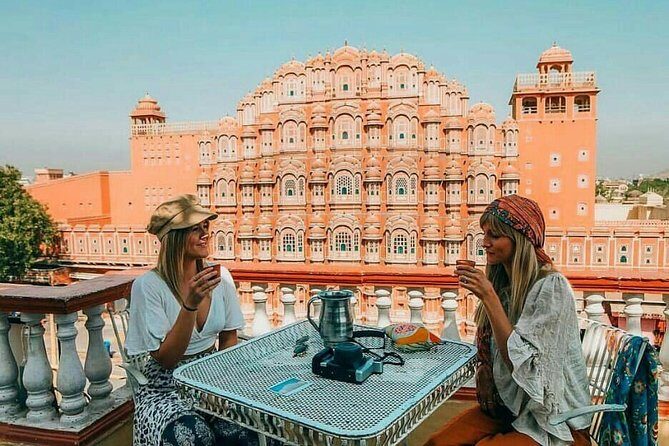
Jaipur is where the route becomes a visual feast of color and geometry. Your first stop is Hawa Mahal (Palace of Wind) for about 15 minutes, with admission included. This stop is short by design, and it works. Hawa Mahal’s famous facade makes its point quickly: red and pink sandstone, a grid of windows, and a structure built in 1799 by Maharaja Sawai Pratap Singh.
From there you move to the City Palace of Jaipur for about 1 hour, with admission included. City Palace connects more directly to power and residence. You’re not just seeing a decorative facade; you’re stepping into the space of the Jaipur royal court. It’s a good shift after Hawa Mahal because it gives you a “why” behind the city’s layout and symbolism.
Then you finish with Jantar Mantar for about 30 minutes, admission included. This is the science surprise. Jantar Mantar is a collection of nineteen architectural astronomical instruments built by Sawai Jai Singh II and completed in 1734. The highlight you can look for is the world’s largest stone sundial.
So day 5 gives you three different flavors of Jaipur: facade theater (Hawa Mahal), royal seat (City Palace), and observational science (Jantar Mantar). That mix keeps you from feeling like you’re only doing one kind of sightseeing.
Day 6 near Jaipur: Amer Fort at a relaxed one-hour pace
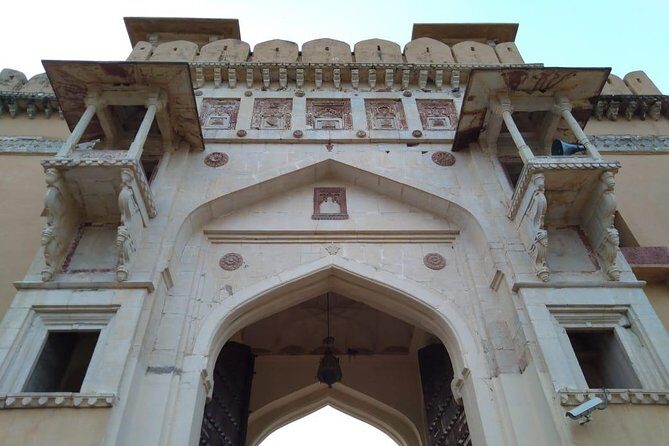
Your final day takes you to Amber Palace (Amer Fort) for about 1 hour, with admission included. Amer is about 11 km from Jaipur, so this is a short trip that still feels like a change of setting.
Amer Fort is all about fortress life: defensive walls, courtyards, and the way the fort sits in the landscape. Even with one hour, it’s a strong send-off because it contrasts with the urban feel of your Jaipur stops.
A practical move here: don’t treat Amer Fort like another quick photo ladder. Pick a couple of angles you want, then slow down for the details in the stonework and gateways. That’s where the fort’s impact lands.
What’s included, what you’ll pay for, and how to judge the $400 value
At $400 for about 6 days, the headline value is simple: you’re paying for a private, air-conditioned car and driver, plus all fees and taxes. That’s not a small thing in this part of India, where transfers between cities can be the most tiring part of the trip.
Most major sightseeing stops list admission as included, like Humayun’s Tomb, Qutub Minar, the National Gandhi Museum, Akshardham, the Taj Mahal, Agra Fort, Hawa Mahal, City Palace, Jantar Mantar, and Amber Palace. Jama Masjid is listed as free, and Chandni Chowk has no admission ticket because it’s market time.
What’s not included is just as important:
- Hotel stay: you choose and pay for your own lodging.
- Restroom on board: not included, so plan your timing and understand you’ll rely on stops and facilities at sights.
So when is this good value? It tends to make sense when you want the comfort and time savings of private transport and you care about seeing a clear set of major sights without negotiating each leg yourself.
Flexibility with Indike Travels: how private should feel in real life
One reason I like private tours is that they can adapt. The feedback on Indike Travels emphasizes that they’re accommodating and transparent, and that they can modify the itinerary when you request changes. They also offered extra sights when there was free time, plus recommendations and services around your days before and after.
You should still set expectations realistically: private means you can request adjustments, but not every change will be possible on the spot. Weather, timing, and the rhythm of crowds always play a role. Still, the overall vibe here is that the company doesn’t just hand you a script and disappear.
The tour is also described as safe and smooth, which matters in a place where traffic flow and navigation can be intense. Having one driver and one vehicle for the whole transfer helps you avoid the stress of constantly re-organizing transportation.
Should you book this private Golden Triangle transfer?
I’d book this if you want a first-time-friendly Golden Triangle that feels organized without feeling like a cattle call. The best fit is:
- You prefer private transport over slow, crowded public systems.
- You want most major admissions handled.
- You’re okay planning your own hotel nights.
I’d think twice if:
- You hate back-to-back big monuments and only want deep, long visits in a few places.
- You need restroom access on the vehicle itself (the plan doesn’t include one).
- You’re traveling in a season where weather may disrupt outdoor timing; the plan notes it requires good weather.
If your goal is to get the essentials of Delhi, Agra, and Jaipur with minimal friction, this one is built for that mission.
FAQ
How long is the Golden Triangle tour?
It runs for about 6 days.
What time does the tour start?
The start time is 9:00 am.
Is this tour private or shared?
This is a private tour/activity, so only your group participates.
Do I need to arrange hotel stays myself?
Yes. Hotel stay is not included, and you choose where to stay at extra cost.
Is the car air-conditioned?
Yes. The tour includes an air-conditioned vehicle and a private driver.
Are entrance fees to monuments included?
Most major sites have admission listed as included in the plan, such as Humayun’s Tomb, Qutub Minar, the National Gandhi Museum, Akshardham, the Taj Mahal, Agra Fort, Hawa Mahal, City Palace, Jantar Mantar, and Amber Palace. Chandni Chowk is market time, and Jama Masjid is listed as free.
Is there a restroom on board the vehicle?
Restroom on board is not included.
What happens if the weather is poor?
The experience requires good weather. If it’s canceled due to poor weather, you’ll be offered a different date or a full refund.
Is free cancellation available?
Yes. You can cancel for a full refund up to 24 hours in advance. If you cancel less than 24 hours before the start time, there’s no refund.