REVIEW · NEW DELHI
5 Nights / 6 Days – Delhi Agra Haridwar Rishikesh Tour
Book on Viator →Operated by Indian Travel Online · Bookable on Viator
This route stitches together four sacred cities. It’s a straight-shot India plan: Haridwar’s Ganga Aarti, Rishikesh’s yoga hubs, and then the big payoff of the Taj Mahal in Agra. I like that the pace is planned for sighting (not wandering) while still keeping flexibility thanks to the private tour setup and a personal guide. The operator also gets consistently positive notes for coordination, with organizer Mr. Ajay Verma and drivers named like Manoj, Vijay, and Anmol getting thanks for being on time and helpful.
Two other things I really like for value: breakfast is included for all five mornings, and your transport costs are handled (fuel, tolls, parking, and taxes). One thing to keep in mind: monument entry tickets and camera charges are not included, so you’ll want to budget extra for those at each stop.
In This Review
- Key Highlights You’ll Actually Feel on This Trip
- The Big Idea: Why This Delhi–Haridwar–Rishikesh–Agra Route Works
- Day 1: Arrival + Haridwar Temples and Har-ki-Pauri Ganga Aarti
- Day 2: Early Rishikesh Sightseeing with Jhulas and Mandirs
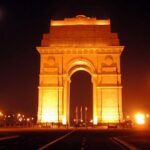
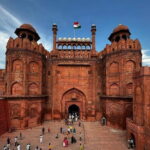
- Day 3: Back to Delhi—Red Fort, Raj Ghat, Humayun’s Tomb, and India Gate
- Day 4: Mathura Temples—Krishna’s Birthplace Area in Real Life
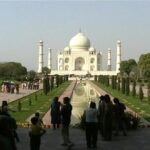
- Day 5: Agra Fort, the Taj Mahal, and a Marble Inlay Workshop Stop
- Day 6: Return Transfer to Delhi for Your Onward Journey
- Price and Logistics: What $450.34 Covers (and What It Doesn’t)
- The Human Touch: Guides, Drivers, and How Service Quality Shows Up
- Should You Book This Delhi–Agra–Haridwar–Rishikesh Tour?
- FAQ
- How long is the Delhi Agra Haridwar Rishikesh tour?
- What’s included in the tour price?
- Are monument entry tickets included?
- Is this a private tour?
- Where does the tour start and end?
- Is free cancellation available?
Key Highlights You’ll Actually Feel on This Trip
- Har-ki-Pauri Ganga Aarti in Haridwar: the evening temple-and-river rhythm you come for
- Rishikesh’s main viewing stops: Ram Jhula, Laxman Jhula, Neelkanth Mahadev, Bharat Mandir, Parmarth Niketan
- Delhi on a “greatest hits” day: Red Fort, Raj Ghat, Humayun’s Tomb, India Gate, plus Jantar Mantar
- Mathura as Krishna’s birthplace area: temples focused on the story of Krishna’s early life
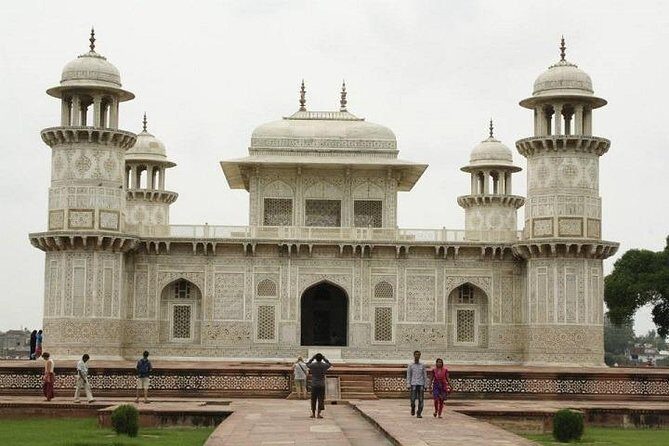
- Agra with the Taj Mahal plus a marble inlay workshop: traditional craftsmen, not just monuments
The Big Idea: Why This Delhi–Haridwar–Rishikesh–Agra Route Works
This tour is built like a strong itinerary, not a loose wish list. You move by private car between cities, which matters in North India where traffic can turn “close by” into “why is this taking so long.” With private transport, you’re not negotiating meetups, random shared shuttles, or waiting your turn.
I also like the way the schedule connects spirituality and culture. You start with temples and the Ganga Aarti energy, then shift to Rishikesh’s spiritual vibe and river views. Later you pivot to Delhi’s historical monuments, then Mathura’s Krishna focus, and finally Agra’s most famous love-story monument—the Taj Mahal. It’s not subtle, but it is satisfying.
Another practical win: breakfast is included for five mornings, which keeps your early starts from turning into a hunt for food. And the tour price includes fuel, tolls, parking fees, and taxes—so you’re not surprised later by transport add-ons.
One caution from a planning standpoint: this is a lot of travel in a short window. You’re moving cities frequently, so you’ll want to pack light, keep essentials easy to grab, and accept that some days feel more “in transit” than “stroll-at-will.”
You can also read our reviews of more tours and experiences in New Delhi


Day 1: Arrival + Haridwar Temples and Har-ki-Pauri Ganga Aarti
Your day starts with arrival at Delhi airport or railway station, then meet-and-assist, followed by driving onward to a temple-filled introduction. The first sights on the list include Mansa Devi Temple, Chandi Devi Temple, and the Daksha Mahadev temples area. If you’ve never done India temple circuits, this is a good way to get your bearings fast: you’ll see how different shrines and deities shape the local devotion.
Later, the schedule lands at Har-ki-Pauri for Ganga Aarti. This is one of the most emotionally memorable things on the whole plan. Even if you’ve read about the Ganga, seeing the riverfront ritual up close hits differently. The Aarti is tied to the river’s sacred role, and the atmosphere tends to be intense—people gather, lamps and chants move through the scene, and you feel the rhythm of the place.
What to expect: temple entry areas can be crowded, and the day can involve waiting and short walks between stops. Wear shoes you can stand in, and bring something for sun and dust.
Possible drawback: you’ll likely start the trip already in motion. If you prefer a “settle in” day, you might find this first day a bit intense.
Day 2: Early Rishikesh Sightseeing with Jhulas and Mandirs
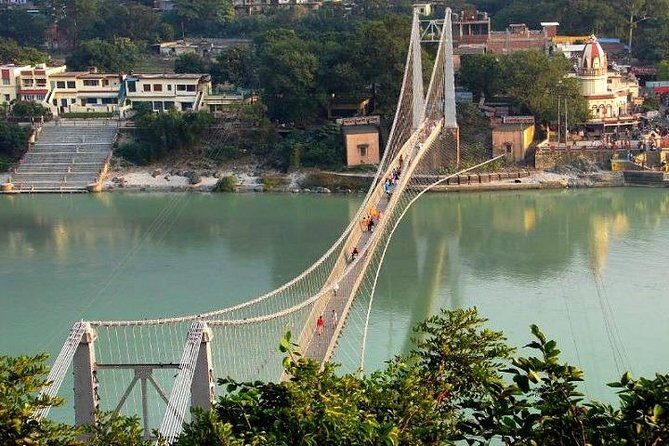
Day two is built for Rishikesh in the morning style: start early, then go for the headline sights. The itinerary focuses on the places most tied to Rishikesh’s spiritual identity, including Ram Jhula and Laxman Jhula (the famous suspension bridges), then key temple stops like Neelkanth Mahadev Mandir, Bharat Mandir, and Parmarth Niketan.
This day is worth it because it shows you the “map” of Rishikesh: river crossing landmarks plus religious anchor points. The bridges aren’t just photo spots. They also give you a sense of how life and devotion travel along the Ganges.
What to expect: you’ll do a mix of walking and brief transit hops. Some viewpoints can be crowded, and you may find you’re sharing space with pilgrims, yoga visitors, and locals.
How to make it better: plan to move calmly. Give yourself a moment before you take photos. The riverfront mood changes quickly, especially with morning light and crowd movement.
Small practical tip: if you’re sensitive to noise, know that Rishikesh can feel lively even before midday. It’s not a silent retreat schedule. It’s a working spiritual town.
Day 3: Back to Delhi—Red Fort, Raj Ghat, Humayun’s Tomb, and India Gate
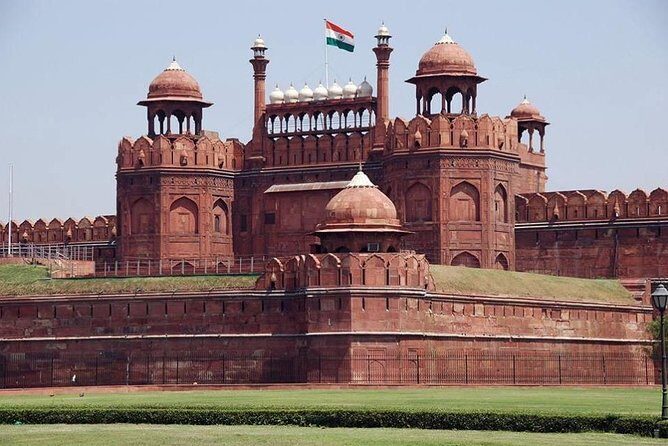
After breakfast, you check out and head back to Delhi for a structured city-sightseeing day. The list is classic Delhi “big names,” and that’s actually smart on a limited-time tour.
You’ll hit:
- Red Fort
- Raj Ghat
- Humayun’s Tomb
- Jantar Mantar
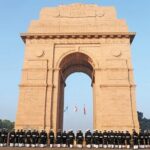
- India Gate
Plus viewpoints/landmarks like Rashtrapati Bhawan and Parliament House.
This is the day for you if you want Delhi without turning it into an all-day logistics puzzle. With a private setup, you don’t spend hours trying to plot routes or figuring out where to start. You also get a single guide flow between sites, which helps your brain connect the dots.
What makes these stops special (even with limited time):
- Humayun’s Tomb gives you an early taste of Mughal architecture logic—symmetry, gardens, and how the complex tells a story.
- Red Fort anchors you in Delhi’s power history.
- India Gate is a major atmospheric landmark that works even if you don’t go inside.
- Raj Ghat shifts the tone toward remembrance and reflection, which balances out the fort-and-tomb focus.
Possible drawback: Delhi can be exhausting. If you’re someone who likes slow museum time, this day may feel like too many “must-sees.” Still, it’s a strong sampler and helps you decide what you’d want to revisit on a future trip.
Day 4: Mathura Temples—Krishna’s Birthplace Area in Real Life
On day four, you drive to Mathura, described as the land where Shri Krishna was born and spent his youth. Then you visit temples in Mathura in the afternoon.
This is one of those stops that feels different from Delhi and Agra because it’s not just famous-world monuments. It’s devotional place-making. Even if you don’t follow every legend detail, the sites communicate through routine: people come, pray, and keep moving through the space.
What to expect: temple areas can be busy. You may see devotional activity right alongside everyday city life. Keep your expectations simple and flexible. You’re there for the spiritual atmosphere and the Krishna story thread.
How to enjoy it: take 10 minutes to sit or watch before you move on. That’s usually the moment when a place stops being a checklist and starts becoming a memory.



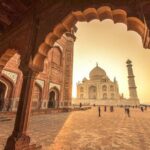

Day 5: Agra Fort, the Taj Mahal, and a Marble Inlay Workshop Stop
This is your heavyweight day: Agra Fort and the Taj Mahal. The tour also includes a stop at marble inlay making factories to see traditional workers.
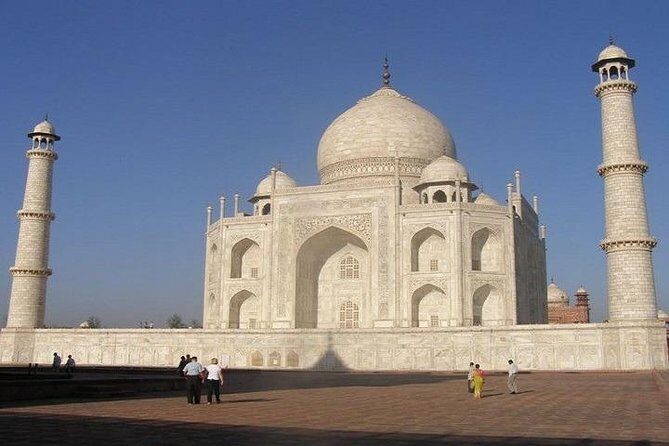
The Taj Mahal needs no sales pitch, but this tour handles it in a practical way: you’re not just dropped into the area and left to figure it out. You get the itinerary flow plus a chance to experience the Taj Mahal as part of the broader Agra story.
Agra Fort adds context. It’s a reminder that the Taj Mahal sits inside a larger history of rulers, power, and city life. When you see the fort and then the Taj, it’s easier to understand how the architecture era makes sense as a whole.
Then the marble inlay workshop stop changes the feel of the day. Instead of only monuments, you’re seeing craft. Those inlay details are what make the Taj feel so detailed up close, and seeing workers making similar patterns gives the monument a human backbone.
Possible drawback: the day can involve long periods outdoors. Plan for heat and crowds. Take breaks even if your instinct is to keep walking.
Budget note: if you want photos, check what charges might apply. Camera use fees are explicitly not included in the tour price.
Day 6: Return Transfer to Delhi for Your Onward Journey
After breakfast, you check out and transfer to Delhi airport or railway station for your next steps. This day is straightforward, which is good because it ends the trip on a clean note.
What to plan: keep essentials in your day bag. Your schedule is likely tight, since transfers need enough buffer time for traffic and airport/railway checks.
Price and Logistics: What $450.34 Covers (and What It Doesn’t)
At about $450.34 per person, this tour is priced for a simple reality: you’re paying for transport, lodging, and guided coordination across multiple cities. The price includes:
- Accommodation for five nights on a double-sharing basis
- Breakfast (five breakfasts)
- All transfers/excursions by private car
- Fuel fees, tolls, parking fees, and driver allowances
- Taxes and GST
- Assistance on arrival
- Mobile ticket
That’s a lot of the “hidden cost” stuff that can make independent travel feel more expensive than it looks.
What’s not included:
- Monument entry tickets
- Camera use charges
- Lunch, dinner, and personal expenses
So the real decision is whether you want to spend time planning logistics or paying to remove friction. For many people, this tour is a good value because it turns Delhi–Haridwar–Rishikesh–Mathura–Agra into one smooth plan instead of five separate decisions.
One more practical point: since double-sharing accommodation is included, your comfort will depend on your room setup and who you’re paired with. If you’re traveling with a friend you trust, that’s less of an issue. If you’re sensitive to shared rooms, you might want to consider alternatives (not specified here).
Also, this tour is often booked about 10 days in advance. I’d treat that as a sign to reserve early if your dates are firm—especially because you’ll want the private transport secured.
The Human Touch: Guides, Drivers, and How Service Quality Shows Up
Service can make or break an India road trip. The feedback here consistently highlights a few human names. The organizer Mr. Ajay Verma is repeatedly thanked for putting trips together smoothly. Drivers are also praised by name—Manoj, Vijay, and Anmol—with comments calling out professionalism, kindness, on-time driving, and a neat/clean cab.
That matters because private-car tours live or die on the driver’s sense of timing and calm. In this region, traffic and crowding are real. A dependable driver helps you arrive with less stress and more time for the actual sights.
You also get “private tour” wording, meaning it’s only your group. For you, that usually translates to fewer compromises: fewer waiting for strangers, fewer time wasted in mid-route coordination, and a more flexible guide flow when your group moves at its own speed.
Should You Book This Delhi–Agra–Haridwar–Rishikesh Tour?
I’d book it if you want a clear, high-impact route with temples, Ganga Aarti, Rishikesh landmarks, Delhi’s major monuments, Mathura’s Krishna focus, and the Taj Mahal, all tied together by a private car plan. It’s also a strong fit if you prefer not to manage daily logistics and you value included basics like lodging and breakfast.
I might skip it (or choose another format) if you’re chasing a slow travel pace, because this plan moves through multiple cities in about six days. I’d also factor in extra money for monument entry tickets and potential camera fees, since those are not part of the included price.
If your ideal trip is structured, spiritual, and cinematic—Haridwar at the river and then Agra’s iconic monument—this is the kind of route that delivers.
FAQ
How long is the Delhi Agra Haridwar Rishikesh tour?
It runs for about 6 days (5 nights), based on the 5-day sightseeing blocks plus a transfer day back to Delhi.
What’s included in the tour price?
Included are 5 nights of double-sharing accommodation, breakfast (5), all transfers and sightseeing by private car, fuel fees, tolls, parking fees, driver allowances, and GST and government taxes. You also get assistance on arrival and a mobile ticket.
Are monument entry tickets included?
No. Entry tickets for monuments and camera use charges are not included.
Is this a private tour?
Yes. It’s listed as a private tour/activity, meaning only your group participates.
Where does the tour start and end?
It starts at the Delhi airport or railway station (meet-and-assist), and it ends back at the meeting point with transfer to Delhi airport or railway station.
Is free cancellation available?
Yes. Free cancellation is available if you cancel up to 24 hours in advance for a full refund.