REVIEW · NEW DELHI
5 Days Private Golden Triangle Tour
Book on Viator →Operated by Rajasthan Cabs · Bookable on Viator
A private car makes India feel manageable.
This 5-day Golden Triangle tour strings together Delhi, Agra, and Jaipur in a classic order, so you spend less time figuring out transfers and more time seeing the sights. I especially like the private setup (just your group) plus pickup, which helps on day one when traffic and crowds can turn even a short hop into a project.
Two more things I like: the driving and timing support, and the way the plan mixes major ticketed monuments with stops listed as free. In the reviews, service is tied to Amit, with guides Rahul and Krishna helping keep things moving and making navigation feel straightforward. One drawback to keep in mind: several top sights have admission tickets listed as not included, so you’ll want to budget for entrances (and plan for long lines on the big names).
In This Review
- Key Highlights You’ll Feel Right Away
- Why the Delhi–Agra–Jaipur Pattern Works So Well
- Day 1 in Delhi: Red Fort, Humayun’s Tomb, and the Old-Delhi Starter Pack
- Day 2 in Agra: Agra Fort and the “Moonlight Garden” Viewpoint
- Day 3: Taj Mahal Time Plus Fatehpur Sikri’s Akbar-Era Detour
- Day 4 in Jaipur: Hawa Mahal, Jantar Mantar, City Palace, Jal Mahal, and Amber
- Day 5 in Delhi: Birla Mandir as a Peaceful Finish
- What Private Pickup and a Toyota Innova Crysta Actually Change
- Price and Value: Why $220 Can Work (and When It Might Not)
- Who This Tour Fits Best
- Should You Book This Private Golden Triangle Tour?
- FAQ
- How long is the Golden Triangle tour?
- What cities are included in this Golden Triangle route?
- Is this a private tour or a group tour?
- Is pickup included?
- What vehicle is used for the tour?
- Is there a mobile ticket?
- Are entrance/admission tickets included for all sights?
- Is Lotus Temple ever closed?
- What is the cancellation policy?
- How far in advance do people usually book this tour?
Key Highlights You’ll Feel Right Away
- Private-only group experience so your day won’t get reshuffled around other schedules.
- Toyota Innova Crysta with pickup for comfortable, practical city-to-city driving.
- UNESCO heavy hitters are on the route (Red Fort, Humayun’s Tomb, and the Taj Mahal area), but entry tickets aren’t included for all stops.
- Clear ticket budgeting clues: some stops are listed as free, others as ticket-required.
- Lotus Temple closure on Mondays (it’s specifically noted), so plan accordingly.
- Service that reviewers link to real people: Amit for support, plus guides Rahul and Krishna for on-the-ground help.
Why the Delhi–Agra–Jaipur Pattern Works So Well
The Golden Triangle is famous for a reason. You get three different flavors of North India—Delhi’s Mughal-era monuments and modern memorials, Agra’s empire-scale architecture, then Jaipur’s rose-toned fort-and-palace look.
The smart part here is that it’s five days and private. That means you don’t have to stitch together buses and ride shares between cities while dragging bags and hunting for meeting points. Also, it’s priced at $220 per person, which can feel fair when you’re paying for a private car for multiple days rather than only one city.
You can also read our reviews of more tours and experiences in New Delhi.



Day 1 in Delhi: Red Fort, Humayun’s Tomb, and the Old-Delhi Starter Pack
Day one is built like a focused sampler of Delhi. You start with the Red Fort (Lal Qila), a UNESCO World Heritage Site and one of India’s most recognizable forts. It’s listed for about an hour, and the admission ticket is not included in the tour price—so think of it as a paid highlight you plan for.
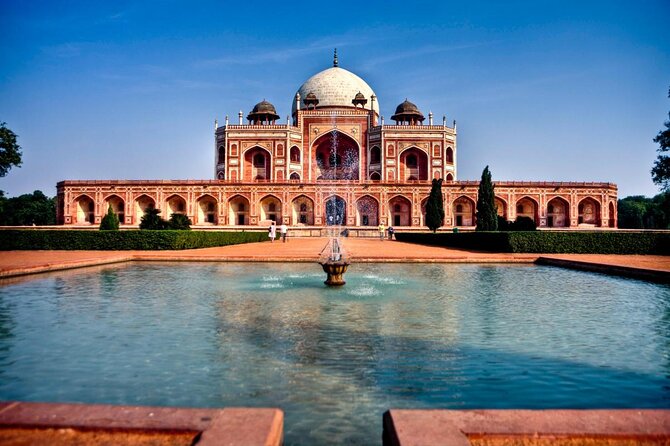
Next up is Humayun’s Tomb, also UNESCO and listed at about 1 hour 30 minutes. It’s a classic stop for Mughal architecture fans, and even if you’re not deep into history, the scale and symmetry make it easy to appreciate without needing a long lecture.
Then the tour drops you into central landmarks that help you reset your brain after Old Delhi’s pace:
- India Gate (free, around 30 minutes) is a war memorial, so it has a quieter mood than the fort stops.
- Lotus Temple (free, around 30 minutes) is known for its lotus-inspired architecture. One key note: it’s closed every Monday, so if your dates land on a Monday, you’ll want to swap it in your own mental itinerary.
- Mehrauli / Qutub Minar (listed free, around 1 hour) gives you Indo-Islamic architecture with the towering Qutub Minar (72.5 meters / 237.8 feet is the height given on the plan).
You finish the day with two more stops that feel calmer and more modern:
- Gandhi Smriti (free, around 30 minutes), a memorial and museum dedicated to Mahatma Gandhi.
- Jama Masjid is on the list for a very short stop (about 1 minute), but admission is noted as not included—so expect it as more of a quick viewing moment than a slow visit in this schedule.
Practical tip: Delhi days can turn humid fast. If you’re serious about photos, bring water and pace yourself. Even with a private car, the sightseeing rhythm is still intense.
Day 2 in Agra: Agra Fort and the “Moonlight Garden” Viewpoint
Agra day two keeps the focus on Mughal-era power and landscape views—before the main Taj Mahal day.
First is Agra Fort, a UNESCO World Heritage Site, listed for about 1 hour 30 minutes with admission not included. Think of it as Agra’s own fortress statement: stone, gates, and the kind of architecture that looks built for control.
Then you head to Mehtab Bagh (Moonlight Garden), listed for about 1 hour. It’s on the opposite side of the Yamuna River from the Taj Mahal, and it’s also noted as admission ticket not included.
Why include this on day two instead of saving it for after the Taj? It gives your eyes a chance to experience Agra in layers. The Taj Mahal is the headline, but Mehtab Bagh helps you understand the broader planning around the palace and river setting. You’ll come to day three with a stronger visual context.
Day 3: Taj Mahal Time Plus Fatehpur Sikri’s Akbar-Era Detour
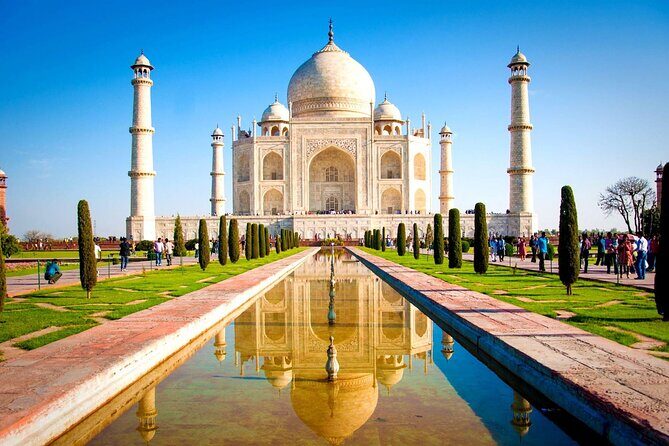
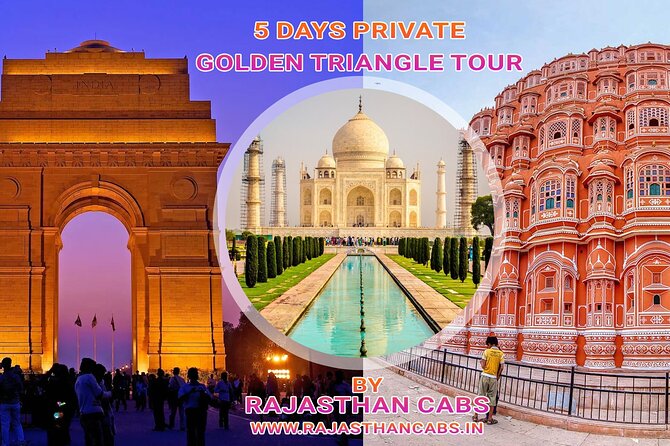
Day three is the big one: Taj Mahal is listed for about 2 hours, with admission ticket not included. This is the moment most people picture when they hear Golden Triangle—and the plan gives it enough time to be more than a quick drive-by.
After that, you move to Fatehpur Sikri, about 1 hour 30 minutes and listed as free on the plan. It’s described as a historic city founded by Emperor Akbar and used as the capital of the Mughal Empire. In other words, it’s not just another building stop. You’re seeing a whole imperial phase of the empire’s story compressed into one site.
My advice for your experience here: Taj Mahal is all about slowing down for angles—lines, symmetry, and the way details change as the light changes. Fatehpur Sikri is more about reading the layout and imagining the scale of an administrative capital. If you rush, you’ll miss the difference.
Day 4 in Jaipur: Hawa Mahal, Jantar Mantar, City Palace, Jal Mahal, and Amber
Jaipur day is packed, but it’s the good kind of packed: each stop has a distinct purpose, so your brain doesn’t get bored.
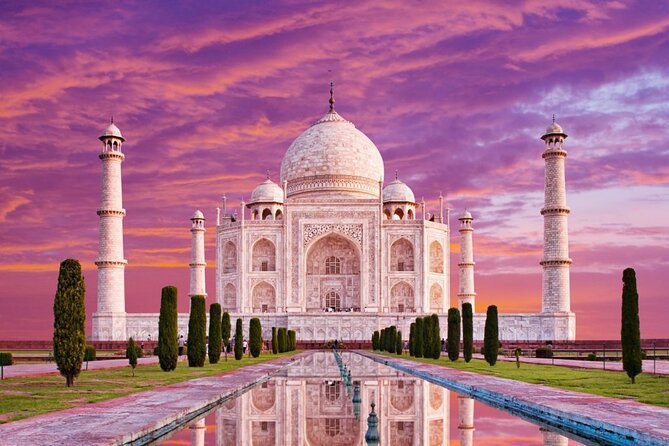
Start with Hawa Mahal (Palace of Breeze), about 30 minutes, and admission not included. Its fame comes from the windowed facade—an architectural idea that’s easy to recognize even if you don’t know the story behind it.
Next is Jantar Mantar (about 1 hour), a historic astronomical observatory and UNESCO World Heritage Site. Admission is listed as not included here. It’s one of those places where you feel smarter just by standing there and watching how old instruments were built to measure the sky.
Then you move to the City Palace (about 1 hour), also not included for admission. It’s the political heart of the city, and even at a moderate pace, it helps you see how Jaipur’s rulers lived and governed.
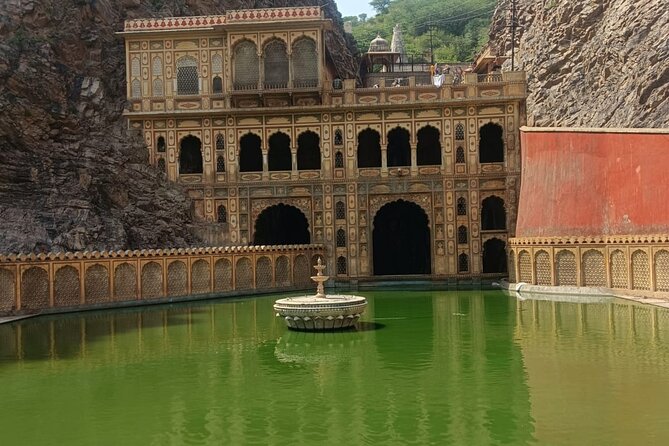
For a break between bigger indoor or complex sites, you get Jal Mahal (Water Palace) (about 30 minutes). It sits in the middle of Man Sagar Lake, and this stop is listed with admission not included. In a tight schedule like this, Jal Mahal works well as a photo and viewpoint pause rather than a full half-day commitment.
You end with Amber Palace (Amer Palace), about 1 hour and admission not included. It’s a fort-and-palace complex on a hill near Jaipur, and this is usually the stop that people remember when they think of Jaipur’s dramatic architecture.
Reality check: This is a long day. If you’re sensitive to walking, you’ll feel it here. The private car helps with transfers, but the sightseeing pace is still your main exertion.



Day 5 in Delhi: Birla Mandir as a Peaceful Finish
You close the tour back in New Delhi with Birla Mandir (Lakshmi Narayan), about 30 minutes, and admission listed as free. It’s a Hindu temple dedicated to Laxminarayan and Goddess Lakshmi.
This final stop is a smart tone-setter. After forts and tombs and palaces, a temple visit gives you a more reflective finish—especially if you’re carrying home a lot of visual impressions.
What Private Pickup and a Toyota Innova Crysta Actually Change
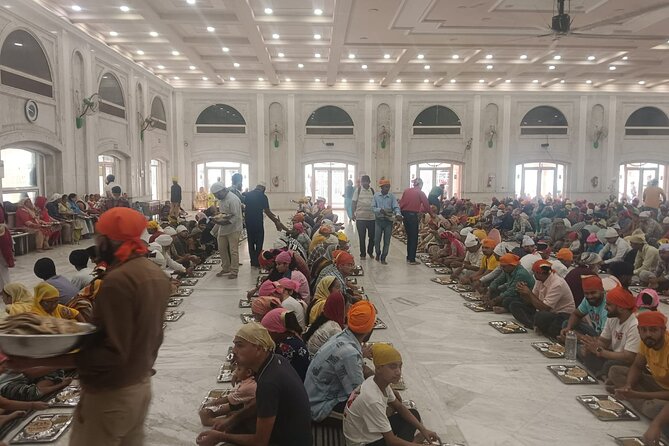
On paper, “private” is a buzzword. In practice, it changes your day in three ways.
First, you’re traveling in a Toyota Innova Crysta, and that matters in India where road conditions can shift fast. Second, you get pickup offered, which reduces the stress of meeting logistics. Third, it’s only your group, so you don’t wait while others scramble for snacks, tickets, or just their sense of direction.
You also get a mobile ticket, which is useful when you’re juggling multiple entrances and timing windows. And the plan notes it’s near public transportation, which is handy if you want options on your own later.
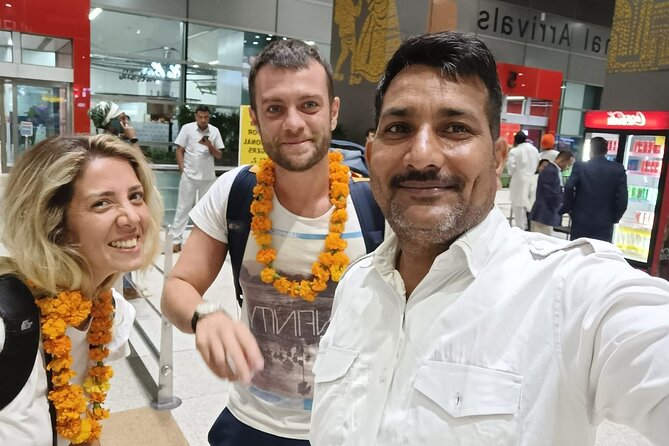
From the reviews, the standout praise is about driving and service. People call out on-time professionalism and navigation help, with Amit named for support and guides Rahul and Krishna mentioned for their assistance. That kind of practical help is exactly what you want in the Golden Triangle, where one missed turn can steal an hour.
Price and Value: Why $220 Can Work (and When It Might Not)
At $220 per person for about five days, you’re paying for a private car plus multiple structured sightseeing stops across Delhi, Agra, and Jaipur. For many people, the value is less about the monuments themselves and more about removing the friction: transfers, timing, and the stress of coordinating entry points.
But here’s the budget reality check. Many of the big attractions in the plan list admission tickets as not included: Red Fort, Humayun’s Tomb, Jama Masjid, Agra Fort, Mehtab Bagh, the Taj Mahal, and several Jaipur sites including Hawa Mahal and Amber Palace. That means the tour price is only part of what you’ll spend.
So how do you decide if it’s worth it?
- If you want comfort, easy transitions, and help with navigating, this price can feel reasonable.
- If you’re a DIY pro who enjoys planning routes and handling every transfer alone, you might prefer a cheaper option with fewer built-in services.
Also note that on average it’s booked about 93 days in advance. That doesn’t guarantee availability, but it does tell you this route is in demand. If your dates are fixed, booking early usually pays off.
Who This Tour Fits Best
This private Golden Triangle tour is a strong match if you want:
- A classic Delhi–Agra–Jaipur overview without the headache of constant transportation planning
- A private car experience with pickup and a consistent driver setup
- A schedule that includes major monuments plus a few free stops so your days don’t feel 100 percent paid-entry only
It may be less ideal if you want lots of unscheduled time in each city. This plan is built to move. It’s also not aimed at people who want to rely on public transit as their default, since the value here is the private driving.
Should You Book This Private Golden Triangle Tour?
If you’re planning your first Golden Triangle trip and you care about comfort and clean logistics, I’d lean toward booking it. The combination of private driving, pickup support, and the on-the-ground help mentioned with Amit plus guides Rahul and Krishna makes it the kind of tour that reduces avoidable stress.
But if your main goal is total independence and you already know how you’ll handle tickets and transfers day by day, you might find better value in a more DIY-focused approach. Also keep in mind the plan notes Lotus Temple is closed on Mondays, so your dates matter.
If you want a smooth, classic introduction to Delhi, Agra, and Jaipur, this tour is built for that job.
FAQ
How long is the Golden Triangle tour?
The tour runs for 5 days approximately.
What cities are included in this Golden Triangle route?
It covers New Delhi, Agra, and Jaipur.
Is this a private tour or a group tour?
It is a private tour/activity, meaning only your group participates.
Is pickup included?
Yes, pickup is offered.
What vehicle is used for the tour?
The tour uses a Toyota Innova Crysta.
Is there a mobile ticket?
Yes, a mobile ticket is provided.
Are entrance/admission tickets included for all sights?
No. Several stops list admission tickets as not included (for example Red Fort, Humayun’s Tomb, Agra Fort, and the Taj Mahal). Some stops are listed as admission free (for example India Gate, Gandhi Smriti, and Birla Mandir).
Is Lotus Temple ever closed?
Yes. The plan notes that Lotus Temple is closed every Monday.
What is the cancellation policy?
Free cancellation is allowed up to 24 hours in advance for a full refund. If you cancel within 24 hours, there is no refund.
How far in advance do people usually book this tour?
On average, it’s booked about 93 days in advance.