REVIEW · NEW DELHI
3-Days Luxury Golden Triangle Tour to Agra and Jaipur from Delhi
Book on Viator →Operated by Private Car and Driver in India · Bookable on Viator
A tight plan, with big payoff. This 3-day Golden Triangle route lines up Delhi, Agra, and Jaipur so you spend less time figuring out transport and more time seeing iconic sites. Two things I like a lot: you get private A/C car and local guides for the sightseeing, and the day-by-day schedule is built around major hits like Taj Mahal sunrise and Amer Fort. One thing to weigh: the pace is very packed, so if you hate early mornings or long car days, you might feel rushed.
On paper, it reads like “luxury,” and the practical details support that vibe. You have pickup options across the Delhi region, bottled water, and airport or hotel transfers included, with help from an English-speaking guide. The one drawback to keep in mind is that hotel nights can vary depending on what your booking confirms, and Taj Mahal operating days can force a change if your trip lands on Friday.
In This Review
- Key highlights worth your attention
- Why This Golden Triangle Loop Works in Just 3 Days
- What’s Included (and What It Means for Your Day-to-Day Comfort)
- Day 1 in New Delhi: Chandni Chowk, Jama Masjid, Qutub Minar, and Akshardham
- Chandni Chowk to Jama Masjid via tuk-tuk
- Gurudwara Bangla Sahib and a short walk through the memorial city
- Humayun’s Tomb, Qutub Minar, and Akshardham: a spread of eras
- End-of-day transfer to Agra
- Day 2: Taj Mahal Sunrise, Agra Fort, Itmad-ud-Daula, and Fatehpur Sikri on the Way to Jaipur
- Agra Fort: power and design in the same space
- Itmad-ud-Daula: quieter, marble-heavy Mughal style
- Fatehpur Sikri en route: the bonus stop that saves time
- Jaipur arrival
- Jaipur on Day 3: Amer Fort, Hawa Mahal, City Palace, Jantar Mantar, and Jal Mahal
- Amer Fort: 600 years of palace energy
- Hawa Mahal: the famous facade with its 953 windows
- City Palace: the center of old Jaipur
- Jantar Mantar: time and the sky, in stone instruments
- Jal Mahal: a calm pause on Man Sagar Lake
- Return to Delhi (or drop at Jaipur airport)
- The Pace, Dress Code, and the Ticket Notes You Should Confirm
- Is $206 a Good Deal for Delhi–Agra–Jaipur Luxury Time?
- Should You Book This 3-Day Golden Triangle Tour?
- FAQ
- What time is pickup in Delhi available?
- Does the tour include airport or hotel transfers?
- Are breakfast and dinners included?
- Is Taj Mahal included, and when do you visit?
- Are monument entrance fees included?
- Which days can affect the Taj Mahal schedule?
- Is this a private tour?
Key highlights worth your attention
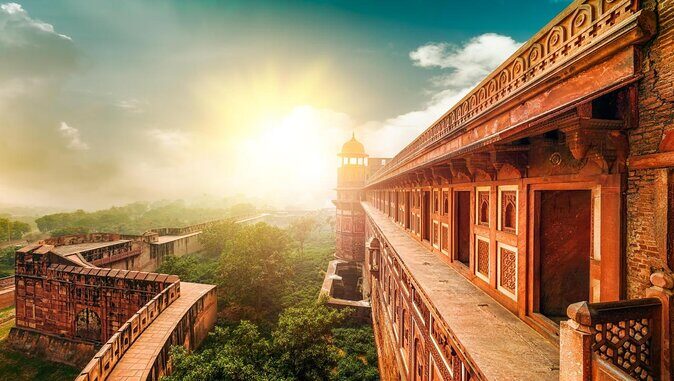
- Taj Mahal sunrise timing with return transfer to breakfast, plus a battery bus ride from the parking area
- Delhi’s Old City + New City mix: Chandni Chowk tuk-tuk run, Jama Masjid, plus Qutub Minar and Akshardham
- Agra UNESCO trio: Taj Mahal, Agra Fort, and Itmad-ud-Daula on Day 2
- Fatehpur Sikri stop en route to Jaipur, so you don’t lose time on only driving days
- Jaipur’s core monuments: Amer Fort, Hawa Mahal, City Palace, and Jantar Mantar
- Car-and-guide structure that stays organized, with your driver handling continuity across cities
Why This Golden Triangle Loop Works in Just 3 Days
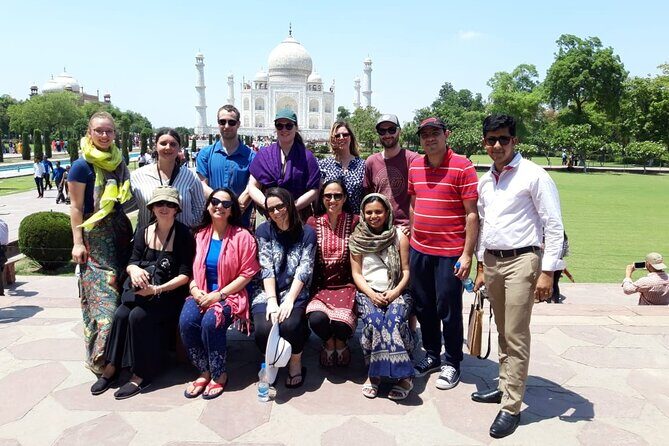
A Golden Triangle trip sounds simple until you try to do it on your own. Distances are manageable, but logistics pile up fast: where to stay each night, how to time entry tickets, which driver you trust, and how to keep sightseeing from turning into a taxi shuffle. This plan solves that by bundling the big-city highlights into a tight, guided loop.
The itinerary also makes smart choices about sequencing. Delhi goes first, then Agra, then Jaipur. That matters because you’ll already be closer to Agra when Taj Mahal sunrise happens, and you’ll already be in Rajasthan when you hit the Jaipur fort and palace area.
And yes, it’s still a lot of movement. But the structure is what you’re paying for: private transport, local guide time on the monuments, and fewer decisions on the fly. That’s often the difference between a trip that feels exciting and one that feels like a checklist.
You can also read our reviews of more tours and experiences in New Delhi



What’s Included (and What It Means for Your Day-to-Day Comfort)

This tour is built around comfort and simplification. You’re traveling in an air-conditioned private car, with hotel pickup/drop-off and city-to-city transfers handled for you. You also get bottled water, and the journey includes bottled mineral water and soft drinks.
Meals are part of the value too, but double-check what your exact package confirms. The overview says three nights in luxurious 5-star accommodation, while the included section describes two nights with breakfast and dinner if you choose the 3-star or 5-star option. Since those two statements don’t perfectly match, the safest move is to read your booking confirmation closely so you know whether you’re working with two or three hotel nights.
Guides are another big comfort factor. You have private local guides for sightseeing, and the tour provides an English-speaking guide by default. If you need another language, the notes say you should request it in special requirements when booking.
One more detail that affects comfort: the tour offers complimentary water bottles, and it’s not asking you to solve transport between stops. In Delhi and Jaipur especially, that time adds up fast when you’re trying to move between attractions with traffic.
Day 1 in New Delhi: Chandni Chowk, Jama Masjid, Qutub Minar, and Akshardham
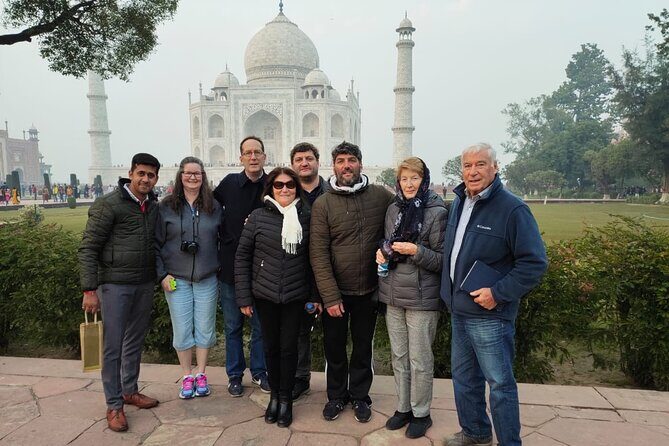
Your day starts with pickup across a wide Delhi-region area (Delhi, Noida, Gurugram, Ghaziabad, Faridabad), with pick-up time options between 9 AM and 11 AM. That flexibility is useful if you’re coming in on a morning flight or you want a slower start.
Chandni Chowk to Jama Masjid via tuk-tuk
The first sightseeing stop leans into Old Delhi’s energy. You meet the guide at Sunheri Masjid and then hop into a tuk-tuk for a ride through the markets around Chandni Chowk. It’s not a long sit-down museum day; it’s about getting your bearings quickly and seeing how locals and visitors move through the bazaar streets.
Then you shift to Jama Masjid, described as India’s largest and built in 1656 with help from 5,000 workers. Expect a major courtyard experience, plus views of the surrounding landmark area. If you care about architecture and scale, this stop gives you a clear “wow” moment early.
Gurudwara Bangla Sahib and a short walk through the memorial city
Next up is Gurudwara Bangla Sahib. The notes share the story tied to the tank inside the complex and the tradition of people visiting for healing. Even if you don’t focus on the story, you’ll likely appreciate the calm contrast it offers after the market streets.
After that, there’s a quick stop at India Gate, built as a tribute to the Indian army servicemen who died in the First World War. It’s brief—about 15 minutes—but it sets a sense of place beyond temples and forts.






Humayun’s Tomb, Qutub Minar, and Akshardham: a spread of eras
The plan then jumps across landmarks you can’t easily combine with public transport. Humayun’s Tomb is a UNESCO site and is noted as India’s first garden tomb, built by Humayun’s wife as a tribute after his death.
You also visit Qutub Minar, listed at 72.5 meters tall and part of the UNESCO Qutub complex. This is the kind of stop where one photo can’t do it justice. Up close, you notice the brickwork scale and the way the site feels preserved.
Finally comes Swaminarayan Akshardham. Even though it was constructed in 2005, the architecture is meant to feel older in style. The time is short (about 30 minutes), so think of this as your “big modern monument” taste at the end of a heavy Delhi day.
End-of-day transfer to Agra
After Delhi sightseeing, your driver moves you to Agra and drops you at your hotel. The transfer time is about 3 hours. This is a good time to remember you’re doing a luxury tour, but it’s still road travel—pack your patience with snacks, water, and comfortable shoes for monument walking.
Day 2: Taj Mahal Sunrise, Agra Fort, Itmad-ud-Daula, and Fatehpur Sikri on the Way to Jaipur
Day 2 is the emotional centerpiece. You start with Taj Mahal for sunrise, then return for breakfast. Sunrise matters because you’re visiting in the best light for photos and because the crowds can feel lighter than later hours (still expect other visitors).
The tour notes say Taj Mahal is the 1630 mausoleum built by Emperor Shah Jahan for his wife. Whether you’re into romance or architecture, the Taj experience hits because it’s both grand and precise in detail.
Agra Fort: power and design in the same space
After Taj, the itinerary moves to Agra Fort, another UNESCO site. The notes describe it as a 17th-century structure that shows Indian and Islamic art and architecture in the same place. Expect a more fortress-like feel than the Taj’s open elegance.
Itmad-ud-Daula: quieter, marble-heavy Mughal style
Then you visit Itmad-ud-Daula, described as the first Mughal structure made entirely from marble and the first to feature pietra dura extensively. This is one of those monuments that works well if you like carvings and craftsmanship more than dramatic scale.
It’s about an hour here, which is enough to appreciate it if you don’t rush.
Fatehpur Sikri en route: the bonus stop that saves time
Later, you go to Fatehpur Sikri, about 40 km west of Agra, described as a fortified ancient city that served as a capital. It’s a smart inclusion because it breaks up the monotony of a pure driving day and gives you another UNESCO-style site without adding an extra night.
Jaipur arrival
Finally, the driver takes you from Fatehpur Sikri to Jaipur and drops you at your hotel. The transfer time is about 3 hours. This isn’t a “stay out late” day; it’s built to get you into position for a full Jaipur morning.
Jaipur on Day 3: Amer Fort, Hawa Mahal, City Palace, Jantar Mantar, and Jal Mahal
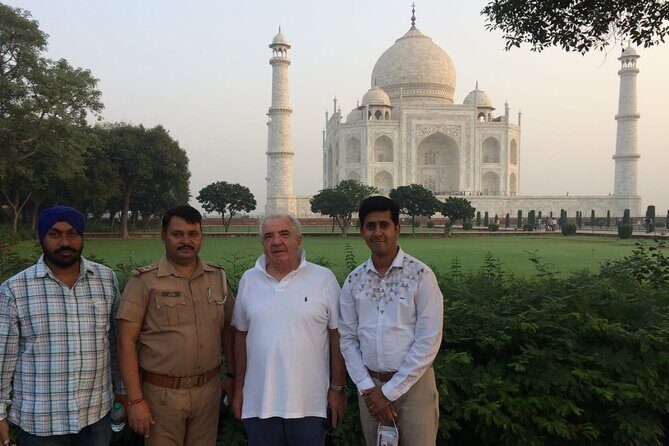
Jaipur gets the full focus on Day 3, and the tour strings the stops together so you can walk between several of them without backtracking too much.
Amer Fort: 600 years of palace energy
You start with Amer (Amer Fort) after breakfast. The notes call it a 600-year-old site and highlight Hindu-style architecture made with marble and red sandstone. Amer is also one of the places where guide time really helps, because you’ll understand what you’re looking at instead of just scanning for best angles.
The visit time is about 2 hours, which is usually enough for key courtyards and viewpoints.
Hawa Mahal: the famous facade with its 953 windows
Next: Hawa Mahal, described as the Palace of Breeze built in 1799 for the royal ladies of Jaipur. The big talking point is the 953 intricately designed windows in red and pink sandstone. You’ll likely spend most of your time looking outward and around the facade area, then using the guide to understand why the windows were designed that way.
City Palace: the center of old Jaipur
After that comes City Palace, the former seat of the Maharaja of Jaipur, with parts now reserved for a museum. This stop gets about 2 hours, so it’s not just a photo break. It’s your chance to connect the city’s monuments to how power and daily life worked.
Jantar Mantar: time and the sky, in stone instruments
Then you go to Jantar Mantar, an astronomical observatory built in the 18th century. It’s described as a collection of architectural instruments used to measure time and track celestial bodies. The visit is shorter (about 30 minutes), but it’s one of the most interesting “how did they figure this out” stops on the whole route.
Jal Mahal: a calm pause on Man Sagar Lake
You finish with Jal Mahal, described as a 17th-century Rajput-style architectural marvel in Man Sagar Lake. The time is about 30 minutes. This is your chance for a quieter moment after forts and palaces.
Return to Delhi (or drop at Jaipur airport)
The plan ends with the 4-hour journey back to Delhi, or you can be dropped at Jaipur airport if you prefer.
The Pace, Dress Code, and the Ticket Notes You Should Confirm
This tour is marketed as luxury, but “luxury” here really means organized transport and hotel support—not slow travel. Expect a full schedule with multiple major monuments each day. If you’re the type who needs downtime to recover between stops, plan for it by taking quick water breaks and building in a few minutes of rest at each site.
Two practical items to keep in mind:
- Taj Mahal closure: The notes say Taj Mahal is closed every Friday. If your dates fall on a Friday, expect your schedule to adapt.
- Monday closures in the Delhi area: Akshardham and Gandhi Smriti are noted as closed on Monday. If your day falls on Monday, you may be taken to Gurudwara Bangla Sahib and Birla Temple instead.
Dress code is also explicit: avoid clothing that is too revealing. You’ll save yourself stress by choosing modest, comfortable clothes that cover shoulders and avoid overly short or tight items.
Finally, tickets and entrances can be confusing because the data includes both included-ticket notes and a statement that monument entrance fees are not included. In practice, the itinerary shows many sites marked as ticket included, so the best move is simple: confirm what your booking option includes for monument entry fees before you leave. That way you won’t hit an unexpected payment at the gate.
Is $206 a Good Deal for Delhi–Agra–Jaipur Luxury Time?
At around $206 for 3 days, the value depends on two things: what hotel tier you chose (3-star vs 5-star) and what the ticket option covers.
Here’s the practical math from the package design. You’re paying for a private A/C car and driver across multiple cities, plus local guides and city-to-city transfers. You also get breakfast and dinners included (per the package’s hotel meal notes), bottled water, and comfort items like soft drinks during journeys.
If your monument tickets are included under your selected option, then you’re also covering major entry costs for huge-name sites like Taj Mahal, Agra Fort, and the Jaipur and Delhi monument set. If those fees are not included and you must pay at the door, the total can rise quickly in a route packed with UNESCO-level attractions.
So my advice is straightforward: use the $206 headline as a starting point, then verify:
- whether your hotel matches the luxury level you want,
- whether monument entry fees are included for your selected option,
- and whether any substitutions are likely based on your day of travel (Taj Friday closure is the big one).
Should You Book This 3-Day Golden Triangle Tour?
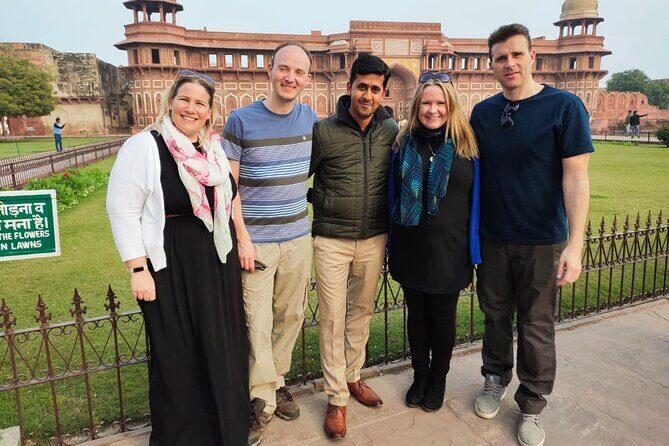
Book it if you want a guided, comfortable sprint through Delhi, Agra, and Jaipur without handling transport, timing, and ticket planning yourself. This is especially a good fit if it’s your first trip to India’s Golden Triangle or if you have limited days and still want the headline monuments.
Skip it or choose dates carefully if you’re sensitive to early starts and long drives. Sunrise Taj Mahal means you’ll be moving before the day is fully awake, and the overall schedule is tight.
One extra pro tip: ask who your driver is when you book and whether the driver stays consistent between cities. In some trips, continuity is a big part of why the whole flow feels smooth, and a steady driver helps connect the timing between multiple guides.
If you’re ready for a structured whirlwind with real guided time at the main sites, this route is a strong way to see the big three with less friction.
FAQ
What time is pickup in Delhi available?
Pickup is offered between 9 AM and 11 AM, and it covers areas in Delhi, Noida, Gurugram, Ghaziabad, and Faridabad.
Does the tour include airport or hotel transfers?
Yes. The tour includes hotel or airport pick-up and drop-off, along with transfers between the cities.
Are breakfast and dinners included?
Breakfast and dinner are included with the hotel stay, based on the accommodation option you choose (the package notes mention breakfast and dinners with 3-star or 5-star selection).
Is Taj Mahal included, and when do you visit?
Taj Mahal is included and the tour is scheduled for sunrise on Day 2, with a return to your hotel for breakfast afterward.
Are monument entrance fees included?
The details show monument tickets as part of an option, but the notes also say monument entrance fees are not included. Confirm what your selected option covers before travel.
Which days can affect the Taj Mahal schedule?
Taj Mahal is closed every Friday, so your itinerary may need to adjust if your travel dates fall on a Friday.
Is this a private tour?
Yes. It is described as private, meaning only your group participates.