REVIEW · NEW DELHI
5-Day Private Luxury Golden Triangle Tour: Delhi, Agra & Jaipur
Book on Viator →Operated by Aiza tours · Bookable on Viator
5 days is a tight sprint through India’s heavy hitters. What makes this one work is the mix of World Heritage Sites and the human-scale neighborhoods that give the Golden Triangle its real flavor. You’ll start in Delhi with Mughal-era icons and Old Delhi street life, then head to Agra for the Taj Mahal at sunrise, and finish in Jaipur with forts and palace architecture you can’t fake in photos.
I especially like the private, air-conditioned vehicle and the way the schedule keeps you moving without feeling like you’re wrestling logistics. I also like that local licensed guides are built into the plan, and you get help with entrance tickets so you can spend less time in lines and more time actually looking.
One thing to consider: monument entrance tickets are not included, and that can add up—especially with Taj Mahal, Qutub Minar, and several Jaipur sites on the list.
In This Review
- Key moments that make this tour worth your time
- Private luxury Golden Triangle: what you really pay for
- Delhi Old City first: Jama Masjid, Chandni Chowk, and Khari Baoli
- Delhi monuments after dark? Not here. It’s the mix that counts.
- Qutub Minar timing and the entrance-ticket reality
- The drive to Agra: how to make a long transfer feel short
- Sunrise Taj Mahal: the best kind of early wake-up
- Agra after Taj: Baby Taj (Itmad-ud-Daula) and Agra Fort
- Jaipur day: Amber Fort plus stepwell geometry (Panna Meena ka Kund)
- Hawa Mahal and Jal Mahal: facades, function, and views
- City Palace and Jantar Mantar: the royal and the scientific
- Price and logistics: what’s included, what to budget, and how to judge value
- Who should book this 5-day private luxury Golden Triangle
- Should you book it
- FAQ
- What does the tour include each day?
- Are monument entrance tickets included?
- Is the Taj Mahal visit at sunrise included?
- Do I need to worry about ticket lines for major sights?
- What’s the drive time between Delhi and Agra?
- When do I return to Delhi?
- Which days is the Taj Mahal closed?
- Are there any closures in Delhi to know about?
- How are hotel rooms arranged?
- What car will I use on the tour?
Key moments that make this tour worth your time
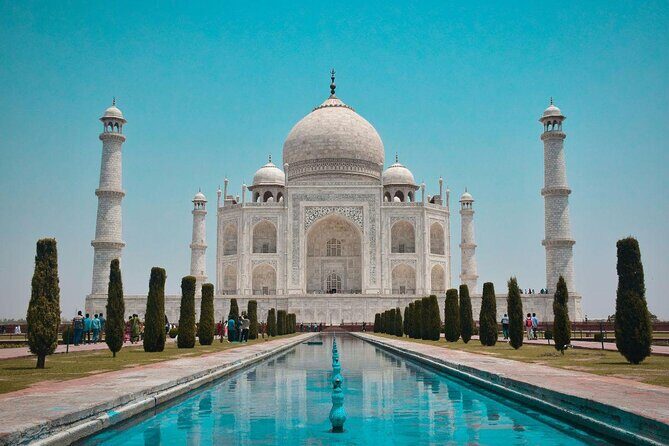
- Sunrise Taj Mahal with a big-picture plan for early timing (plus the convenience of the battery bus to the Taj area)
- Old Delhi route that combines grand monuments with spice-market time and a rickshaw ride through Chandni Chowk
- Delhi’s variety in one day: Gandhi memorial, India Gate, Lotus Temple, and the Sikh community kitchen at Gurudwara Bangla Sahib
- Agra beyond the postcard with Baby Taj (Itmad-ud-Daula) and Agra Fort after you’ve seen the main attraction
- Jaipur architecture mix: Amber Fort, Hawa Mahal, City Palace, and the UNESCO-listed Jantar Mantar observatory
Private luxury Golden Triangle: what you really pay for

This is called a luxury tour for a reason that matters on the ground: you get a private setup. That means your time isn’t chopped up by other groups, and you’re not negotiating seat space while you’re trying to see monuments. The vehicle is air-conditioned, and the car choice scales with group size (sedan for 1–2, SUV for 3–4, van for 5–10).
The value also sits in the structure. You’re not just swapping one famous sight for another. You’re getting a guided circuit where your guide can explain what you’re looking at, from Mughal design choices to why Jaipur’s observatory is laid out the way it is. That context turns India’s big-name sights from a checklist into a story you can follow.
Here’s the tradeoff: because it’s private and guide-led, your budget should account for entrance fees and your own lunch/dinner. If you want to control costs tightly, you’ll need to plan for those separate items.
You can also read our reviews of more private tours in New Delhi



Delhi Old City first: Jama Masjid, Chandni Chowk, and Khari Baoli
Delhi starts with the kind of contrast that makes the Golden Triangle feel real. In Old Delhi, you’ll visit Jama Masjid, one of India’s biggest Mughal mosques, built under Shah Jahan. It’s a powerful “step in the past” moment, with red sandstone and marble playing against the scale of the mosque complex.
Then comes Chandni Chowk, with a rickshaw ride that helps you glide through the narrow lanes without exhausting yourself too early. You get market energy, food smells, and a street-level view of how people still live around the old walls. After that, Khari Baoli brings you into spice-market territory—often described as Asia’s largest spice market—where you can see dried herbs, spices, and traditional condiments in action.
The drawback is simple: Old Delhi can feel intense if you’re sensitive to crowds or noise. Wear comfortable shoes and keep expectations flexible. This day is more about experiencing than standing around posing for pictures.
Delhi monuments after dark? Not here. It’s the mix that counts.
Later in the Delhi plan, you move into quieter, ceremonial spaces. Raj Ghat is a reflective memorial for Mahatma Gandhi, with landscaped gardens and a simple black marble platform. India Gate follows, a 42-meter war memorial with lawns around it and an eternal flame.
You also get the kind of “different faiths in one city” balance that makes Delhi worth more than just sightseeing. Gurudwara Bangla Sahib is known for its golden dome, its sarovar (holy pond), and langar, the community kitchen that serves free meals to all. It’s one of those places where you feel the culture, not just the architecture.
Then the itinerary shifts again into official landmarks. Parliament House and Rashtrapati Bhawan come up as architectural symbols of India’s governance, designed by British architects Lutyens and Baker for Parliament House. You’ll also visit Gandhi Smriti, the museum at the site where Gandhi spent his last days, and the Lotus Temple, a Bahá’í House of Worship open to people of all faiths.
Possible consideration: this is a lot of stops in a single city day. If you like slow travel, you’ll want your breaks. The good news is your driver and guide help keep transitions efficient.
Qutub Minar timing and the entrance-ticket reality
Qutub Minar is the centerpiece UNESCO stop in Delhi here, rising to about 73 meters and famous as a tall brick minaret. It’s an easy “wow” moment—historically significant, visually distinctive, and a nice contrast to the Taj Mahal later in Agra.
But there’s a key planning point: Qutub Minar’s admission is not included in the package. That means your total cost will rise once you start adding entrance fees across multiple sites.
The upside is that your guide can help you handle ticket purchasing on-site, and the plan includes guided time at each stop. So you’re not wasting half the day trying to figure out the right window, the right line, or the right entry process.
The drive to Agra: how to make a long transfer feel short
Between Delhi and Agra, you’ll do a 3 to 4-hour transfer by private car with a professional driver. It’s not a bullet train experience, but it’s reliable: you’re traveling with your own vehicle, not searching for local connections.
Your tour also includes complimentary bottled mineral water during car journeys, which sounds basic but matters on routes where convenience stores can be hit-or-miss. For most people, this is the part where you want to plan your pacing for the rest of the trip. The Taj Mahal day is timed early, so treat this transfer as your chance to reset.
A practical tip: pack a small day bag with water, sunglasses, and a layer for early hours. Not everything about Agra is “comfortable by default,” especially when you’re headed out before sunrise.
You can also read our reviews of more tours and experiences in New Delhi






Sunrise Taj Mahal: the best kind of early wake-up

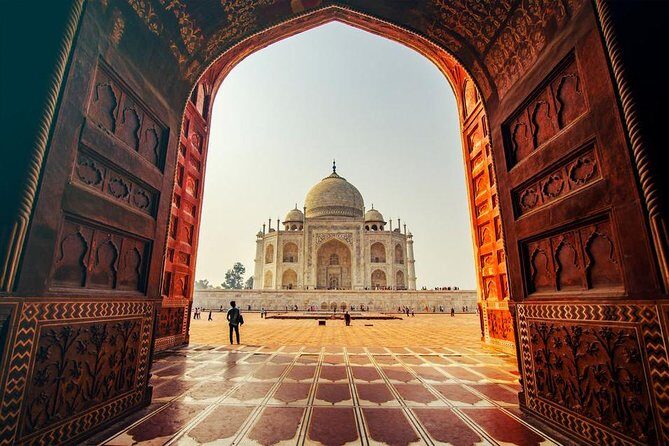
If you do only one thing in the Golden Triangle, it’s usually the Taj Mahal. Here, you go at sunrise, listed for around 6 AM. That early light is the difference between seeing the Taj and actually feeling it. The first rays bring out the white marble’s glow in a way that daytime crowds can flatten.
Two helpful logistics details make a difference:
- You get access to a battery bus ride to and from the Taj parking area up to the monument area.
- Your guide assists with entrance tickets so you can spend less time stuck at ticket queues.
One consideration you must plan around: the Taj Mahal is closed every Friday. If your start day places the Taj on Friday, the operator notes the schedule shifts so you still get the best possible timing.
And because sunrise means early morning, it’s smart to set your expectations around waking up and moving. Once you’re there, it’s worth it.
Agra after Taj: Baby Taj (Itmad-ud-Daula) and Agra Fort
After the Taj visit, you get Itmad-ud-Daula (often nicknamed the Baby Taj). This is one of the best “slow down and look closer” stops in Agra because the details are the point—intricate marble inlay work, carved surfaces, and a mausoleum style that rewards close attention.
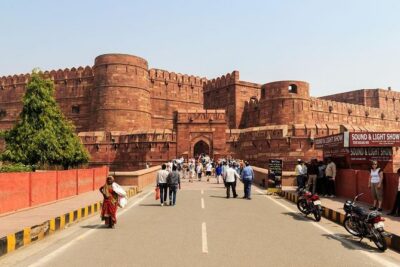
Then comes Agra Fort, a major Mughal fort site that ties the Taj to the broader power story of the city. Forts can feel heavy if you’re monument-fatigued, but the guide-led format helps you connect what you’re seeing to who built and used these spaces.
A real-world consideration: Taj days can be exhausting. You’ll likely want to keep your photos efficient and let the guide’s explanation steer where you spend your attention.
Jaipur day: Amber Fort plus stepwell geometry (Panna Meena ka Kund)
Jaipur is where the tour switches from Mughal refinement to Rajasthan’s fort-and-palace spectacle. Amber Fort is the big one: rugged hills, imposing walls, and a fortress layout that gives you a lot to interpret in person rather than on a postcard.
Near Amber Fort, you’ll also visit Panna Meena ka Kund, a stepwell built in the 16th century. This is the kind of stop that many itineraries skip. Here it’s included because it’s architecture tied to daily survival: a water reservoir designed into stone steps and chambers.
The benefit for you is variety. A fort tells you power. A stepwell tells you how people actually made living possible in a hot climate. That mix is part of why Jaipur feels more layered than just “pretty buildings.”
Entrance tickets aren’t included for these stops, so budget for them. Your guide’s ticket help can reduce friction, but the fees still matter.
Hawa Mahal and Jal Mahal: facades, function, and views
Hawa Mahal (Palace of Breeze) is a signature Jaipur sight. It’s built in 1799 with a facade designed around 953 small windows (jharokhas). The point isn’t just looks: it’s about ventilation and viewing, a clever piece of design that helped women of the royal household observe street life while staying out of direct exposure.
Next, you get Jal Mahal, the Water Palace, sitting in Man Sagar Lake. From shore it’s dramatic, and it can look like it’s floating on the water. It’s a great contrast to Amber Fort’s solid stone.
Then the itinerary includes Gaitor Ki Chhatriyan (royal cenotaphs). It’s less loud than the palace sights and gives you a calmer pacing moment.
Practical drawback: the itinerary includes many Jaipur locations that are mostly outdoors or partially open. If you’re traveling in hotter months, plan hydration and sun protection. Even in cooler seasons, mornings can be crisp and afternoons can shift fast.
City Palace and Jantar Mantar: the royal and the scientific
Jaipur finishes with two powerful “big ideas” stops. City Palace is a palace complex that shows Rajasthan’s royal legacy through its sprawling design and how it connects different eras of power.
Then Jantar Mantar brings the UNESCO-listed science angle: an open-air observatory built in the 18th century by Maharaja Sawai Jai Singh II. When you stand inside these instruments, it stops being abstract. You start seeing how observation shaped planning, navigation, and daily life.
If you’re the type who likes a bit of logic mixed into sightseeing, this is a good ending. If you’re purely here for the most photogenic corners, you might find Jantar Mantar slower. The guide-led time helps most people find the meaning quickly.
Price and logistics: what’s included, what to budget, and how to judge value
The tour price is listed at $205 per person. For a private, air-conditioned, guide-led Golden Triangle route with four nights of accommodation (when booked with the hotel option), that’s often strong value—especially if you’re comparing it to self-guided travel where you still need guides, internal transfers, and ticket handling.
What’s included:
- Hotel stays for four nights with the hotel option
- Daily breakfast for four days
- Private air-conditioned transportation and a professional driver
- Licensed and approved private guides
- Battery bus to and from the Taj area
- Bottled mineral water during car journeys
- Hotel and taxes (as stated in the inclusions)
What’s not included:
- Monument entrance tickets
- Lunch and dinner (and drinks)
- Optional gratuities
So the real budgeting question is this: do you prefer paying a bit more up front to reduce planning stress, or would you rather build your own itinerary and handle tickets and guides separately? If you want a clean, guided route where you’re not micromanaging, this package makes sense.
Who should book this 5-day private luxury Golden Triangle
This is a good fit if you:
- Want private touring with a dedicated guide and driver
- Care about seeing major UNESCO highlights without fighting ticket lines
- Like a balance of top sights plus a few “not just postcard” stops like Khari Baoli and Panna Meena ka Kund
It may feel like a lot if you:
- Need a slow, low-effort pace
- Hate early mornings (sunrise Taj is the whole point here)
- Are trying to keep all-in costs as low as possible, since entrances and meals add up
One more practical note: the tour data says elephant activity is not organized, which many people will see as a comfort point.
Also, if you’re worried about safe travel execution, the operator’s guide team has shown up in feedback for being organized and attentive to safety, with names like Kanran and Hyder getting called out for prepared guiding and clear explanations, and other guides like Farzan and Bilal being noted for professionalism and planning.
Should you book it
If you want a first-rate Golden Triangle that prioritizes timing, guide explanations, and low-stress logistics, I’d say this is a solid booking. The biggest reasons are simple: sunrise Taj Mahal, private transport, and guided pacing across Delhi, Agra, and Jaipur.
I’d only hesitate if you’re counting every dollar and you’d rather handle entrances and meal plans yourself. If you do book, plan for entrance fees, pack for early mornings, and choose comfortable shoes for Old Delhi lanes and Jaipur forts.
Either way, you’ll walk away with a clear sense of how Mughal and Rajasthani design shaped India’s most famous cities.
FAQ
What does the tour include each day?
You get private air-conditioned transportation, private guided sightseeing with licensed guides, and daily breakfast (with the hotel option). It also includes hotel or airport pick-up and drop-off, bottled mineral water during car journeys, and a battery bus ride to and from the Taj Mahal parking area up to the monument.
Are monument entrance tickets included?
No. Entrance tickets for monuments are not included in the package price.
Is the Taj Mahal visit at sunrise included?
Yes. The plan lists sunrise at the Taj Mahal at around 6 AM.
Do I need to worry about ticket lines for major sights?
Your guides assist you with purchasing entrance tickets at the monuments, helping you skip ticket queues for a hassle-free experience.
What’s the drive time between Delhi and Agra?
The itinerary states a comfortable 3 to 4-hour drive from Delhi to Agra after breakfast.
When do I return to Delhi?
On Day 5, you return to Delhi by around 2 PM. If you prefer an earlier or later arrival, the schedule can be adjusted.
Which days is the Taj Mahal closed?
The Taj Mahal remains closed every Friday.
Are there any closures in Delhi to know about?
The Lotus Temple and Red Fort in Delhi remain closed every Monday.
How are hotel rooms arranged?
Rooms are generally provided on a twin-sharing basis. If you book for 3 people, rooms are provided on triple-sharing by default, and choosing 2 rooms for 3 guests may require an additional charge.
What car will I use on the tour?
It depends on group size: a four-seater sedan for 1–2 people, a six-seater SUV for 3–4 people, and a ten-seater van for 5–10 people.