REVIEW · NEW DELHI
Delhi to Agra and Taj Mahal Day Trip by Express Train with Lunch
Book on Viator →Operated by Same Day Tour Taj Mahal · Bookable on Viator
Taj Mahal day, minus the traffic. This fast-paced but well-run trip is built around Express train timing, so you spend your hours in Agra instead of stuck on roads. I like how it pairs a private guide with a tight schedule, so you know where to look and when to move for the best views.
Two things really win me over: the smooth station pickup and drop-off in Delhi, and the way the day is paced so you can actually see more than just the Taj. One possible drawback is that the day starts early (pickup around 7:00 am), so you’ll want to be ready for a long but efficient 14-hour stretch.
In This Review
- Key highlights to know before you go
- The value of a Delhi–Agra express day trip
- Your morning: Delhi pickup and the ride from Nizamuddin
- Meeting your guide at the Taj Mahal entrance
- Taj Mahal photography: when 2 hours is enough
- Agra Fort after the Taj: a different side of the city
- Baby Taj (Itmad-ud-Daulah Tomb): the quieter companion
- Lunch in Agra and staying fueled for the long day
- Train ride back to Delhi: arriving before dinner ends
- What the professional coordination looks like in real life
- Tickets, monument entrances, and what you might still need to plan
- Price and logistics: is $90 per person worth it?
- Who this Taj Mahal express day trip suits best
- Should you book this Delhi to Agra Taj Mahal day trip by express train?
- FAQ
- What time does the pickup happen in Delhi?
- Which train do you take from Delhi to Agra?
- How long is the train ride between Delhi and Agra?
- What are the main sightseeing stops in Agra?
- Is lunch included?
- Are monument entrance tickets included?
- Do you provide a private guide?
- What is included with the train ride?
- What happens if I cancel?
Key highlights to know before you go
- Gatimaan Express chair car cuts the biggest Delhi-to-Agra pain point: traffic.
- Private guide meet-up in Agra helps you get moving fast after you arrive.
- Taj Mahal + Agra Fort + Baby Taj in one day keeps the sights connected.
- Lunch in Agra is included only if you choose the all-inclusive option.
- Breakfast and dinner on the train plus bottled water keep the day steadier.
The value of a Delhi–Agra express day trip
If your goal is the Taj Mahal and you only have one day, this kind of plan makes sense. Road travel can eat up your day before you even reach Agra, and time is what you don’t get back. The whole approach here is simple: get you to Agra quickly, keep you with a guide, and bring you back late afternoon.
I also like that the experience is designed around logistics. Pickup happens in the Delhi NCR area around 7:00 am, and you’re routed to Nizamuddin Railway Station for a morning departure. That means less guessing, fewer last-minute hassles, and more time inside the monuments.
Another quiet win is the rhythm. You’re not just riding a train and wandering. You’re visiting the Taj Mahal first, then expanding to Agra Fort and the Baby Taj, with lunch slotted in after the main highlights.
Price-wise, $90 per person is reasonable when you consider what’s handled for you: transport in Delhi, train tickets, a guide, and (depending on your chosen option) monument entrance fees and lunch. If you’ve ever tried to piece together a one-day Taj trip on your own, you’ll know the hidden cost is your time and stress.
You can also read our reviews of more tours and experiences in New Delhi


Your morning: Delhi pickup and the ride from Nizamuddin
The day starts with pickup from your airport or hotel in the Delhi NCR area around 7:00 am. From there, you head to Nizamuddin Railway Station, which is where the morning Gatimaan Express departure fits the schedule.
The train journey is about 90 minutes, with departure at 8:10 am from Nizamuddin. This is the part that makes the trip feel efficient without feeling rushed in a panicked way. You’re not arriving in Agra as the day is collapsing; you’re arriving early enough to visit the Taj at a good time of day.
You’ll have a comfort layer on the rails too. The inclusions list breakfast and dinner in the train, plus bottled water. You should still plan for a full day, but those meals help you avoid buying everything separately while you’re moving between sights.
If you’re the kind of person who hates coordinating taxis, booking tickets, and asking strangers for directions at 9:30 am, this structure is built for you.
Meeting your guide at the Taj Mahal entrance
Once you arrive in Agra, your day shifts from travel mode to sightseeing mode. After you exit the area, you’ll be met by your private guide with a name sign, so you can connect quickly without a time-wasting search.
This is a big deal. The Taj Mahal area can be busy, and the fastest way to lose time is to stand around. With a guide, you get oriented sooner and you can start looking for the details that make the building special instead of just chasing a famous photo angle.
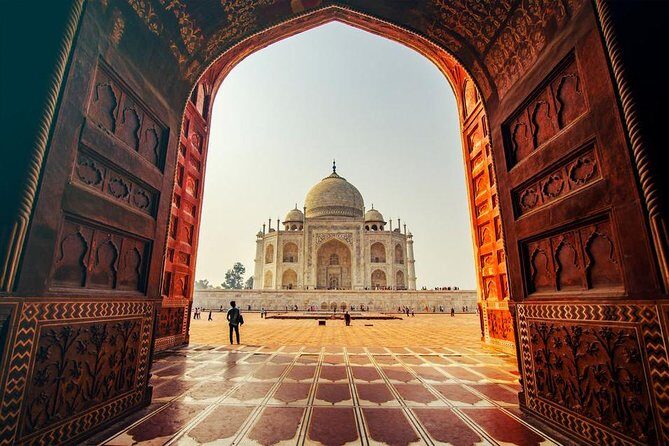
The Taj Mahal visit is set for about 2 hours with guided touring. You’re going to see it as a UNESCO World Heritage Site, described here as the 16th-century marble mausoleum built by Emperor Shah Jahan. That framing matters because it turns your visit from simple sightseeing into understanding what you’re looking at.
The best part about a guided Taj Mahal stop is not just facts. It’s pacing. A guide helps you plan your movement so you don’t feel like you’re sprinting through one of the most photographed places on earth.
Also, the trip is built around maximizing your Taj time without sitting in long traffic jams. That’s the point: if the Taj is your priority, you want your eyes on the Taj, not on your watch.
Taj Mahal photography: when 2 hours is enough
Two hours can sound short when you’re staring at one of the world’s most famous buildings. But with a structured visit, it’s enough to do two essential things: get the iconic views and notice the elements people miss when they rush.
The tour’s approach makes sense. You’re not only getting a fast look; you’re spending time with a guide who helps you interpret what you see, and you’re not forced to juggle ticket lines or random route planning.
Here’s practical advice for your photos. Go in with a simple plan: one wide shot for context, then move closer for the textures and patterns. When crowds get too thick, step aside and let your guide reposition you. That’s where private guiding helps: you can shift your angle without losing your spot in the day.
If you care about photos, I suggest you wear comfortable shoes and expect at least some walking around the complex. The “best photos” promise in the experience details is really about not wasting time, not about magic lighting.
Agra Fort after the Taj: a different side of the city
After the Taj Mahal, the schedule moves you to Agra Fort, about 1 hour of guided time. This stops a common problem: people see the Taj, feel satisfied, and then leave with only one memory. You get a second monument with a different feel.
Agra Fort is described here as a UNESCO World Heritage Site built by Emperor Akbar in 1565. It’s also known as Lal Qila (Red Fort) or Qila-i-Akbari. That matters because the fort is a reminder that Agra wasn’t just a backdrop for one ruler’s monument. It was a power center.
From a pacing standpoint, visiting Agra Fort right after the Taj is smart. You’ve already started your Agra day by seeing the most famous structure. Then you can shift to fort walls, gateways, and the broader story of the city. It feels like moving from a single masterpiece to the bigger setting that shaped it.
Practical note: fort sites can feel wider and less linear than palace mausoleums. So give yourself time to move. The included schedule keeps it to about an hour, which is enough for an overview if you stay focused.
You can also read our reviews of more tours and experiences in New Delhi






Baby Taj (Itmad-ud-Daulah Tomb): the quieter companion
Once lunch is handled, the tour heads to Itmad-ud-Daulah’s Tomb, often called the Baby Taj. This stop is shorter, about 30 minutes, but it’s one of the better choices to add on because it offers a different kind of beauty.
The experience description calls it one of Agra’s architectural wonders and notes it’s considered a design inspiration behind the Taj. That line is a helpful mental cue while you’re there. Instead of treating it as a separate stop, you can compare how artistry and detail show up across both monuments.
The shorter time makes sense. You’re not trying to cram in a third major attraction with a full tour. You’re adding a complementary perspective after the bigger two.
If you like watching how styles echo across buildings, this is a great “bridge” stop. And if you want quiet time after the crowds around the Taj, the Baby Taj can feel like a gentler landing.
Lunch in Agra and staying fueled for the long day
Lunch is included only if you choose the all-inclusive option. That’s important, because some tours list meals in a way that’s easy to misunderstand. Here, the inclusion list clearly separates whether lunch and monument entrances are included based on your chosen option.
When lunch is included, it helps you avoid the scramble of finding a place at peak time. It also keeps your energy steady for the late-afternoon train.
The rest of your day is tight, so I’d plan your appetite accordingly. You’ll have breakfast on the train before arriving, then lunch in Agra, and later you’ll have dinner on the train as part of the inclusions. That meal rhythm is exactly what you want on a day trip that runs about 14 hours.
If you skip the all-inclusive option, you may need to budget separately for lunch and/or entrances, depending on what you’re covering on your own.
Train ride back to Delhi: arriving before dinner ends
The timing for the return is one of the reasons the itinerary holds together. You arrive at Agra Cantonment around 5:30 pm, with the train back to Delhi starting at 5:50 pm. The return Gatimaan Express ride is listed as about 1 hour 30 minutes, arriving at Nizamuddin Railway Station at 7:30 pm.
That’s late enough to feel like a true day trip without draining your entire evening. Then the Delhi driver picks you up right outside your train coach and drives you back.
This is also where having a chauffeur-based transfer matters. If you’ve ever tried to navigate your way out of a station with a tired body and a tight schedule, you know how fast plans unravel. Here, the logistics are pre-planned so you can focus on getting home.
What the professional coordination looks like in real life
The reviews and responses behind this experience point to one recurring theme: people feel looked after from start to finish. In particular, the name Arun shows up in the way the day is coordinated, and the tone of that coordination is consistent: on-time service, clear communication, and guides who keep the pace under control.
In practical terms, that means fewer moments where you’re standing around wondering what comes next. It also means you spend less time working out group logistics, because it’s a private tour for just your group.
That private setup matters more than many people expect. Even if you’re traveling in a small group, a private guide can adjust pacing. If your group moves a bit slower through a monument entrance, you don’t have to fall behind a larger tour herd.
And yes, this is the type of day trip that can feel stressful if you’re nervous about running on a schedule. The design here reduces those spikes by handling the transport and guiding structure for you.
Tickets, monument entrances, and what you might still need to plan
The inclusions say monument entrance fees are included if you select the all-inclusive option. If you don’t select that option, entrance fees may not be covered.
This is the biggest “watch this” item when you compare similar Taj Mahal day trips. Two tours can both mention monuments, but only one includes tickets. That changes your total cost and your ability to move quickly.
The good news: the schedule gives you guided time at the Taj Mahal (about 2 hours), Agra Fort (about 1 hour), and the Baby Taj (about 30 minutes). Those blocks usually work best when entrances are handled cleanly.
So, check what you’re buying. If you want the smoothest experience with the fewest surprises, choose the option that covers monument entries and lunch.
Price and logistics: is $90 per person worth it?
For $90 per person, you’re paying for more than a sightseeing checklist. You’re paying for a whole set of services that are hard to recreate on your own quickly: pickup and drop-off in Delhi, a private guide, air-conditioned transport in Agra, and round-trip chair car train tickets.
You’re also paying for the schedule discipline. The route uses a morning departure and a late-afternoon return that squeezes in the Taj and a couple of major companion stops. If you tried to replicate it on your own, you’d spend time coordinating rail tickets, transfers, and guide logistics. That time has value.
The main “cost” you should consider isn’t money; it’s attention. This is a long day at about 14 hours, and you’re up early. If you want a relaxed pace with no fixed clock, you may find it exhausting.
But if you’re chasing the key sights in one run and you want them handled, this is solid value.
Who this Taj Mahal express day trip suits best
This experience is a good fit for first-time visitors who want the Taj Mahal without getting trapped by road traffic. If you’re a photo-focused traveler, the guide-led pacing helps you spend time where it matters.
It’s also ideal if you want a private group setup. You get a guide who meets you with your name sign, and you don’t have to share time slots with strangers.
If you’re traveling as a couple, a family group, or a small group of friends and you value clear structure, you’ll likely find this day trip feels “taken care of.”
Should you book this Delhi to Agra Taj Mahal day trip by express train?
I’d book it if your priority is the Taj Mahal and you want the day optimized. The mix of fast train travel, guided sightseeing, and transport in both Delhi and Agra reduces the biggest sources of hassle.
Skip it only if you know you’re sensitive to early starts, and you’d rather travel slower to enjoy time buffering between sights. This trip is built for efficiency, not for wandering at your own pace.
One last decision tip: confirm whether your option includes lunch and monument entrance fees. If you want the cleanest, most stress-free day, that all-inclusive setup is the way to go.
FAQ
What time does the pickup happen in Delhi?
Pickup is offered in the Delhi NCR area around 7:00 am, before you head to Nizamuddin Railway Station.
Which train do you take from Delhi to Agra?
You take the Gatimaan Express from Nizamuddin Railway Station to Agra. The morning departure is listed at 8:10 am.
How long is the train ride between Delhi and Agra?
The rail journey duration is listed as about 90 minutes for the Delhi to Agra trip, and about 1 hour 30 minutes for the return.
What are the main sightseeing stops in Agra?
You visit the Taj Mahal, Agra Fort, and Itmad-ud-Daulah’s Tomb (Baby Taj).
Is lunch included?
Lunch is included only if you choose the all-inclusive option. The base inclusions mention lunch under that option.
Are monument entrance tickets included?
Monument entrance fees are included only if you choose the all-inclusive option.
Do you provide a private guide?
Yes. This is a private tour/activity, and you’ll have a professional tour guide who meets you in Agra with a name sign.
What is included with the train ride?
The inclusions list chair car train tickets, plus breakfast and dinner in the train, along with bottled water.
What happens if I cancel?
This experience is non-refundable and cannot be changed for any reason.