Three days can feel like a blink. This private triangle tour strings together Delhi, Agra, and Jaipur’s biggest UNESCO stops with pick-up and drop-off plus a private cab, so you spend less time figuring out logistics and more time looking up at history.
What I like most is the way the route balances world-famous moments with details that feel specific to India’s older layers. You’ll get early access to the Taj Mahal and also work in sights like the stepwell at Chand Baori, which is the kind of place you remember because it’s unlike anything at home. The one thing to consider is pacing: the schedule is packed, and meals and accommodations are not part of the package.
In This Review
- Key highlights worth knowing before you go
- How this Delhi–Agra–Jaipur triangle tour really works
- Day 1 in Delhi: from Qutub Minar down to Chandni Chowk and Red Fort
- The Delhi-to-Agra transfer: time on the road plus a real lunch window
- Day 2 in Agra: sunrise at Taj Mahal and the fort-and-mausoleum trio
- Day 3 in Jaipur: Amber, Jal Mahal, City Palace, and Jantar Mantar
- Price and what you’re really paying for at $135.99 per person
- What the itinerary style means for your time and energy
- Who should book this tour (and who might want a different pace)
- Should you book Pal Travel’s 3-day Delhi–Agra–Jaipur triangle?
- FAQ
- Does the tour include pick-up and drop-off?
- How long is the tour?
- Is this a private tour?
- What’s included in the price?
- Are accommodations included?
- Are entrance tickets included?
- Are meals included?
- Can I cancel for a full refund?
Key highlights worth knowing before you go
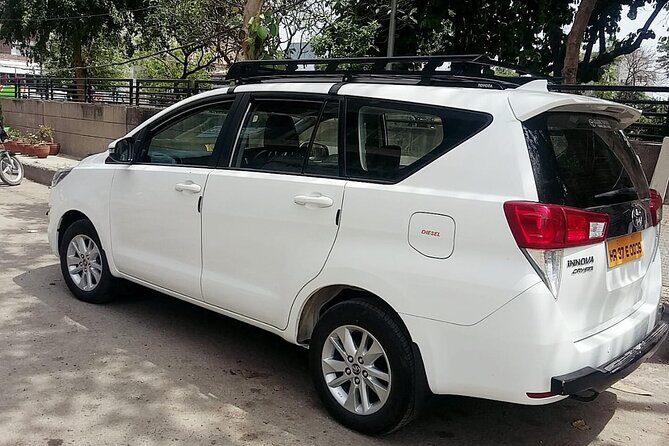
- Door-to-door private transport between Delhi, Agra, and Jaipur, with parking, tolls, fuel, and taxes handled
- Sunrise Taj Mahal time with a guided visit inside for about two hours (admission included)
- UNESCO pairing in Agra: Taj Mahal plus Agra Fort, both with admission included
- Stepwell stops that add variety, including Chand Baori (3,500 steps) and Panna Meena ka Kund
- A full Jaipur day with Amber Fort, Jal Mahal, City Palace, and Jantar Mantar (UNESCO)
- Small-group style: it’s a private tour/activity, so only your group participates
How this Delhi–Agra–Jaipur triangle tour really works
This is a 3-day private itinerary covering the core of India’s North Triangle: New Delhi, Agra, and Jaipur. You’ll move by private cab throughout, and you get real help with the handoff between cities. That matters because this route is far enough that doing it on your own can become a second job.
The tour also gives you a few small comforts that add up on long days. You get a mobile charger, plus a complimentary water bottle and umbrella. You’ll also receive a mobile ticket. In plain terms: fewer extra things to manage while you’re trying to keep your day on schedule.
One more practical point: the package doesn’t include accommodations, food and drinks, or air/train fares. So even though sightseeing is scheduled tightly, you’ll still need to plan where and when you eat and where you sleep.
You can also read our reviews of more private tours in New Delhi



Day 1 in Delhi: from Qutub Minar down to Chandni Chowk and Red Fort
Day 1 is built like a greatest-hits tour, but it’s not only about big monuments. It starts with Qutub Minar, a UNESCO World Heritage site tied to the Delhi Sultanate. It was established by Qutub-ud-din Aibak in 1193 and is known for its spiral staircase, with design ideas said to be based on the Minaret of Jam. You’ll have about 30 minutes here, with admission included.
Next comes a change in mood: Lotus Temple. It’s famous for its flower-like shape and was built in 1986. The tour gives you around 30 minutes, and admission is free. If you want variety after older stone monuments, this stop helps reset your eyes.
Then you head to India Gate, a war memorial near Rajpath dedicated to soldiers of British India who died in wars. Admission is free, and the stop is about 30 minutes. Close by are landmarks tied to modern India’s institutions, including Rashtrapati Bhavan, the president’s official residence with gardens and open spaces, plus about 15 minutes at that stop.
The itinerary also includes Parliament House (Sansad Bhavan), described as having a shape based on the Ashoka Chakra. This is a quick photo-and-look stop, so you’ll want to keep your questions ready for your guide if you have them.
For a “wait, what is that?” moment, you go to Agrasen ki Baoli, a protected stepwell of the Ancient Monuments and Archaeological Sites and Remains Act. It’s listed as 60 meters long, with admission free, and you’ll have about 15 minutes. Even with limited time, stepwells tend to surprise people because they’re practical architecture that also becomes a visual landmark.
After that, the day moves into Mughal-era mood with Humayun’s Tomb, commissioned in 1558 by Humayun’s chief consort. You’ll spend about 45 minutes, and admission is free.
Lunch time isn’t a listed stop in Day 1, but the itinerary moves you into Old Delhi via Chandni Chowk. This is where the tour shifts from “monument viewing” to “market watching.” Chandni Chowk is described as a busy shopping area with spices, dried fruit, silver jewelry, saris, and tiny shops with essential oil. You’ll have about 45 minutes and admission is free—enough time to browse without feeling trapped.
The day ends with Red Fort, a historic Mughal residence for nearly 200 years until 1856. You’ll have about 1 hour here and admission is included. If you want one strong memory from Day 1, it’s the contrast: Delhi can look like centuries stacked on top of each other, and Red Fort is one of the clearest examples.
The Delhi-to-Agra transfer: time on the road plus a real lunch window
After Red Fort, you’ll have lunch at a local restaurant before heading toward Agra. The plan includes a drive via Yamuna Expressway with the Yamuna Bridge mentioned. The itinerary lists about 3 hours for this segment, and then you arrive, check in, and get the rest of the day at leisure in Agra.
That “rest of the day free” is important. After a day full of stops, you’ll likely want downtime before sunrise plans the next morning.
Day 2 in Agra: sunrise at Taj Mahal and the fort-and-mausoleum trio
Day 2 starts early. The tour focuses on Taj Mahal first, with time for a sunrise view. The sightseeing inside is described as about two hours, with admission included. The Taj Mahal is mentioned as UNESCO, so you’re not just seeing a landmark—you’re visiting one of the world’s best-known monuments under structured timing.
Then you shift from the palace of love mood into a more fortress mood with Agra Fort. You’ll have about 1 hour here, and admission is included. Agra Fort is described as a historical fort and UNESCO World Heritage site. If you’re the kind of traveler who likes architecture that tells you how power and defense worked, this pairing with Taj Mahal makes a lot of sense.
Next is Itmad-ud-Daula, also called Baby Taj. The itinerary lists it as a Mughal mausoleum and gives about 30 minutes, with admission included. This stop is valuable because it breaks the repetition of “big main monument.” Smaller stops like this tend to feel more intimate, even though you only get a limited time slot.
Then the tour adds something totally different: Chand Baori in Abhaneri, a massive ornate stepwell described as from the 8th and 9th centuries. It’s reached by 3,500 steps, and you’ll have about 1 hour with admission included. Stepwell architecture has a special kind of logic: water management turned into public structure. Even if your day includes major monuments, this stop can be the one that turns on your imagination.
After Chand Baori, you move to Jaipur and check in. The Jaipur arrival stop is listed as about 5 hours of travel, with the rest of Day 2 being overnight in Jaipur.
Day 3 in Jaipur: Amber, Jal Mahal, City Palace, and Jantar Mantar
Jaipur Day 3 is a classic “big views plus big icons” plan. You begin with Panna Meena ka Kund, a stepwell located near Amber Fort. The stop is about 15 minutes and admission is free. Even in short time, it sets you up for the next fort-focused stop.
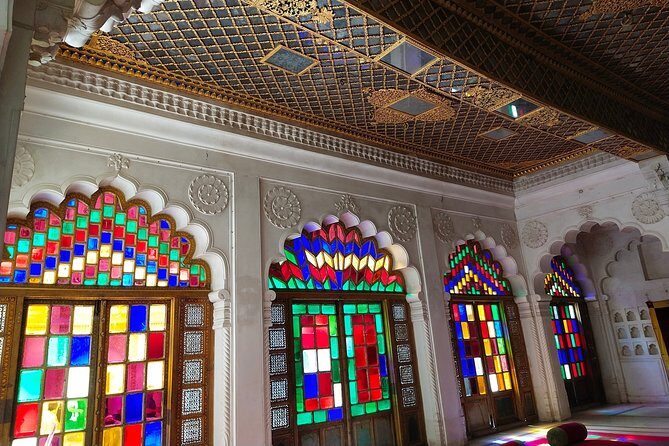
Amber Palace / Amber Fort is next, and it’s one of the core anchors of the day. You’ll spend about 2 hours here, with admission included. The itinerary describes Amber Fort as built by Raja Man Singh I, known for artistic elements, and it mentions Maota Lake in front of the monument as a source. The payoff of this stop is the setting: you’re going to feel like Jaipur isn’t just a city of museums—it’s a city built around forts and strategic viewpoints.
Next is Jal Mahal, the palace in the middle of Man Sagar Lake. Admission is included, and the stop is about 30 minutes. The itinerary notes it was renovated and enlarged by Maharaja Jai Singh II in the 18th century. Jal Mahal works as a pacing reset after forts. Instead of focusing on walls and gates, you get a calmer scene that’s meant to be seen from a distance.
Then you go into the administrative and ceremonial center with City Palace of Jaipur, described as constructed in 1721. You’ll have about 1 hour and admission is included. It’s framed as the seat of the Maharaja for administrative and ceremonial life, and it’s still used for cultural events in the way it’s presented by the itinerary.
After City Palace, you hit Jantar Mantar, a UNESCO World Heritage site built in 1734. It’s described as a collection of nineteen architectural astronomical instruments built by the Rajput king Sawai Jai Singh II, the founder of Jaipur. You’ll have about 1 hour with admission included. This is one of those sights where you’ll enjoy it more if you look closely at how the instruments are laid out. Even if you only get the tour’s allotted time, it’s a strong contrast to fortress sightseeing.
A quick capstone photo stop follows: Hawa Mahal, the Palace of Wind. The itinerary notes the building is made with red and pink sandstone and that it’s distinguished from its surroundings. Admission is free, and the stop is about 15 minutes. It’s short on time here, so think of it as a quick look for the iconic façade rather than a deep interior visit.
Finally, the tour includes the long return ride back toward New Delhi. The itinerary lists about 5 hours to get back, and you’ll be dropped off in Delhi or taken to Jaipur airport depending on your situation.
You can also read our reviews of more tours and experiences in New Delhi





Price and what you’re really paying for at $135.99 per person
At $135.99 per person for a 3-day private triangle, the value depends on how you’d do this trip on your own. A route like Delhi–Agra–Jaipur involves multiple days, multiple long road segments, and a stack of entrance tickets and timing windows. This package wraps those moving parts into one schedule.
Here’s what you do get that supports the price:
- All sightseeing with a private cab
- All parking fees, tolls, fuel, and taxes
- Pick-Up and Drop-Off Service
- Mobile charger plus complimentary water bottle and umbrella
- A private tour/activity, meaning only your group participates
- Many key admission tickets are marked as included in the itinerary (for example Qutub Minar, Red Fort, Taj Mahal, Agra Fort, Itmad-ud-Daula, Chand Baori, Amber Fort, Jal Mahal, City Palace, and Jantar Mantar)
What you don’t get, and this matters for value: accommodations and food and drinks are not included, and there’s no mention of beer or wine or anything else being covered for adults. So you’ll want to budget for meals separately, even though you’re getting help with transport and sightseeing.
Also, while the itinerary marks admission ticket inclusion for many major stops, it lists some sites as free. That’s normal for India sightseeing days, but it does mean you should still plan for a mix of included and free stops rather than assuming every site is fully paid.
What the itinerary style means for your time and energy
This tour is built around fixed blocks of time per stop—some are 15 minutes, others are longer. For example, Day 1 includes shorter museum-and-monument breaks (like India Gate and Humayun’s Tomb) and longer anchors (like Red Fort and Chandni Chowk). Day 2 gives you a major interior visit at Taj Mahal and a timed mix of fort, mausoleum, and the stepwell. Day 3 is structured as Amber and City Palace for bigger time chunks, with Jantar Mantar as a UNESCO “thinky” stop.
That structure has a benefit: you won’t spend the whole trip chasing the next ticket counter. The drawback is that if you fall behind at any one stop, you can feel it later. It’s not a slow-travel itinerary. It’s built for people who want the highlights, efficiently.
One small data point that helps you manage expectations: it’s a private tour, so your day is designed around your group’s timing rather than random joins or regrouping. A past guest specifically thanked Ram for making the tour memorable and said the whole thing felt smooth and well planned, including enjoyable touring with photo moments. That lines up with what the itinerary is trying to do—reduce stress while keeping the day moving.
Who should book this tour (and who might want a different pace)
This is a strong match if you:
- want a private way to cover Delhi, Agra, and Jaipur without stacking separate bookings
- care about seeing the headline UNESCO names across all three cities
- like having a planned sequence with most major admissions handled
- don’t want to spend your vacation day figuring out transport, parking, and tolls
It may feel less ideal if you:
- prefer long stays at fewer places
- hate early mornings (Day 2 starts for the sunrise at Taj Mahal)
- want food fully included, since meals and drinks are not part of the package
Also, since the plan includes stepwell visits like Chand Baori (3,500 steps) and Panna Meena ka Kund, it helps if you’re comfortable with the idea of steps as part of the sightseeing style—especially at Chand Baori, where that number is explicitly part of the experience.
Should you book Pal Travel’s 3-day Delhi–Agra–Jaipur triangle?
If you want a clean, efficient triangle with private transport and a schedule that hits the biggest UNESCO sites in each city, I think this one is worth considering. You’re paying for convenience: private cab between cities, parking/tolls/fuel handled, and admissions marked as included for many key sights. The itinerary also keeps you from seeing only one type of attraction—forts, tombs, and stepwells are all in the mix.
I’d book it if your priority is check-off-and-remember: Taj Mahal at sunrise, Red Fort, Amber Fort, Jantar Mantar, plus the stepwells that add variety.
I’d skip (or look for a slower option) if you want unstructured time, fully included meals, or more breathing room between stops. This tour is designed to move.
FAQ
Does the tour include pick-up and drop-off?
Yes. The package includes pick-up and drop-off service, plus private cab sightseeing in Delhi, Agra, and Jaipur.
How long is the tour?
It’s listed as 3 days (approx.).
Is this a private tour?
Yes. It’s a private tour/activity, and only your group participates.
What’s included in the price?
The included items list covers all sightseeing with a private cab, parking fees, tolls, fuel, and taxes, plus a mobile charger, complimentary water bottle, and umbrella.
Are accommodations included?
No. Accommodations are not included, though you do check in to your hotel when you arrive in Agra and Jaipur.
Are entrance tickets included?
Many major sites are marked as having admission tickets included in the itinerary (for example Qutub Minar, Red Fort, Taj Mahal, Agra Fort, Itmad-ud-Daula, Chand Baori, Amber Palace/Fort, Jal Mahal, City Palace, and Jantar Mantar). Some stops are listed as free in the plan.
Are meals included?
No. Foods and drinks are not included.
Can I cancel for a full refund?
Yes. Free cancellation is offered if you cancel up to 24 hours in advance of the experience start time.