REVIEW · NEW DELHI
2-Days Private Luxury Golden Triangle Tour Agra Jaipur New Delhi
Book on Viator →Operated by Golden Triangle Tours India · Bookable on Viator
In two days, you can hit the Taj Mahal and Jaipur’s main sights without juggling tickets or timing. This tour is interesting because it’s built for time-pressed travelers: private car transport from Delhi (including airport or hotel pickup), local guides in Agra and Jaipur, and a tight sightseeing plan with an overnight in Jaipur if you choose the hotel option. I especially like the private setup (only your group) and the sunrise Taj Mahal approach with the included battery bus ride to the monument area. The main consideration: most monument entrance tickets are not included, so you’ll want to budget for those separately.
What makes it feel “luxury” in practice is the flow—air-conditioned private transport, bottled water, breakfast included, and local guides doing the heavy lifting on interpretation. Also, the schedule is realistic for a 2-day Golden Triangle: you drive via Yamuna Expressway, then split your sightseeing cleanly between Agra and Jaipur.
One more thing to watch: Taj Mahal admission isn’t included, and the Taj itself is a long stop. If you’re very sensitive to early mornings or crowded sites, plan your energy for Day 1.
In This Review
- Key highlights at a glance
- Two days that connect Delhi to the Taj and Jaipur
- Getting picked up in Delhi, then going all-in on Agra
- Sunrise Taj Mahal: the morning strategy that pays off
- Agra Fort, Baby Taj, and Chand Baori stepwell
- Agra Fort: Mughal power in red sandstone
- Itmad-ud-Daula (Baby Taj): smaller, but gorgeous
- Chand Baori: the stepwell that stops you
- Day 1 into Jaipur: check in, then reset
- Jaipur Day 2: Panna Meena ka Kund, Jal Mahal, and the “postcard” stops
- City Palace: where Jaipur’s power center lived
- Jantar Mantar UNESCO: astronomy made public
- Hawa Mahal: the Palace of Breeze
- Returning to Delhi: the last drive is part of the deal
- Transportation, comfort, and how the group size affects your ride
- Price and value: what $131.54 gets you, and what to budget
- Who this 2-day private Golden Triangle tour suits best
- Should you book this 2-day private Golden Triangle?
- FAQ
- How long is the 2-days Golden Triangle tour?
- Where does pickup happen?
- Are monument entrance tickets included?
- Is breakfast included?
- Do I get a hotel overnight?
- Is this tour private or group-based?
- What vehicle will I ride in?
Key highlights at a glance
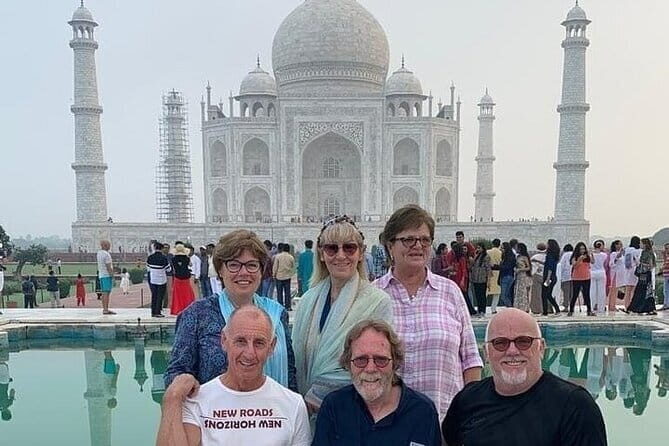
- Sunrise-style Taj Mahal timing with the included battery bus from the parking area
- Private local guides in both Agra and Jaipur so you don’t get lost in the details
- A/C private transfers from Delhi, Noida, or Gurgaon (hotel or airport pickup)
- Agra essentials plus extras: Agra Fort, Itmad-ud-Daula (Baby Taj), and Chand Baori stepwell
- Jaipur’s headline monuments: City Palace, Jantar Mantar, and Hawa Mahal on Day 2
- Optional hotel night in Jaipur so you’re not racing the clock both days
Two days that connect Delhi to the Taj and Jaipur
This is the Golden Triangle format, but compressed into a true “do it now” itinerary. You start from New Delhi (or nearby pickup in Delhi/Noida/Gurgaon), then point your car at Agra first and Jaipur second. It works because the distances are manageable by road when you have a driver and an efficient plan—rather than hopping between trains and buses while you’re trying to stay sane.
The private luxury part is less about fancy fluff and more about comfort and control. You travel in an air-conditioned vehicle with a dedicated driver, and you get private local guides for sightseeing stops. That matters when you’re moving quickly: you don’t waste time guessing what’s worth your attention or figuring out practical entrances and viewpoints.
The other big value piece is the structure. Day 1 is mostly Agra. Day 2 is mostly Jaipur, with a return drive back to Delhi. You’re not constantly packing and unpacking your brain. It’s a logical split that keeps the day from feeling like a chaotic checklist.
And yes, the booking profile suggests people take this seriously. It’s commonly reserved about 41 days in advance, which is a decent sign that it’s popular for short visits—especially for people landing in Delhi and wanting the highlights without delays.
You can also read our reviews of more private tours in New Delhi


Getting picked up in Delhi, then going all-in on Agra

Your day begins with pickup from your Delhi hotel or the airport (the meeting point listed is Indira Gandhi Intl Airport). The tour also covers pickup from Noida and Gurgaon, which is handy if you’re not staying in central Delhi.
Then comes the drive: about 3 hours to Agra via the Yamuna Expressway. If you’ve ever done Golden Triangle trips with public transport, you know the tradeoff: you save money, but you lose control of your timing. Here, you’re paying for time—so you can spend more minutes at places that matter.
You’ll also have bottled water during the journey. That sounds basic, but in hot weather it’s exactly the kind of small detail that helps you stay comfortable when you’re moving from parking areas to gates.
Sunrise Taj Mahal: the morning strategy that pays off
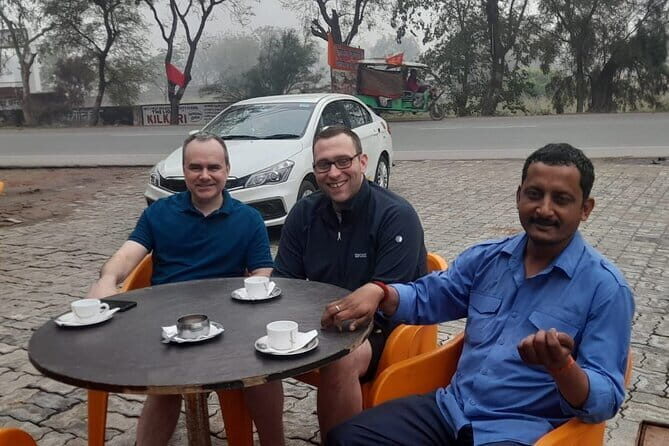
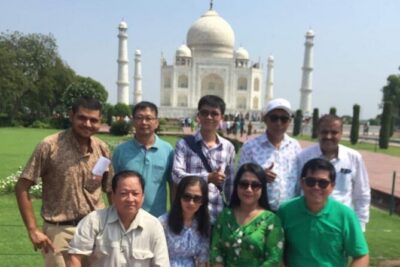
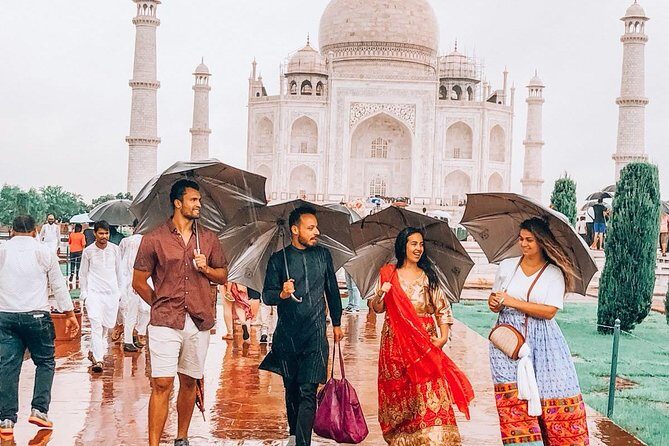
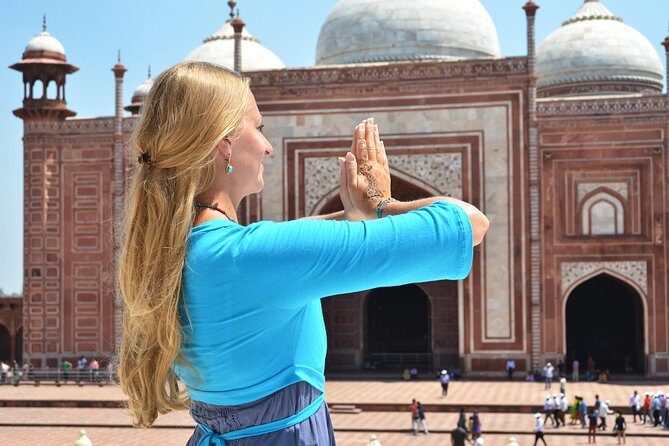
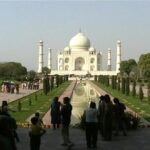
The Taj Mahal stop is the headline for a reason. You’ll visit the Taj Mahal described as an ivory-white marble mausoleum on the south bank of the Yamuna River. It was commissioned in 1632 by Emperor Shah Jahan to house the tomb of Mumtaz Mahal.
The tour frames this as a sunrise-style visit. Even if you don’t obsess over the perfect photo, the morning timing is practical. Morning light helps with marble contrast, and it usually makes the whole experience feel more vivid than midday glare. Plus, you’re not fighting the rest of the day’s schedule by burning your energy on planning.
Two practical notes to keep you comfortable:
- Taj Mahal admission is not included in the package price, so you’ll likely pay an entrance fee separately.
- The tour includes a battery bus ride from the parking area up to the Taj Mahal monument area. That’s a real time-saver when you’re on a tight schedule and helps avoid unnecessary walking.
Inside, you’ll want to slow down. The Taj isn’t a “look once and move on” place. The guide time is valuable here because the monument’s design details can be easy to miss if you’re only snapping photos. You’ll get context on what you’re seeing and why the layout and materials matter.
Agra Fort, Baby Taj, and Chand Baori stepwell
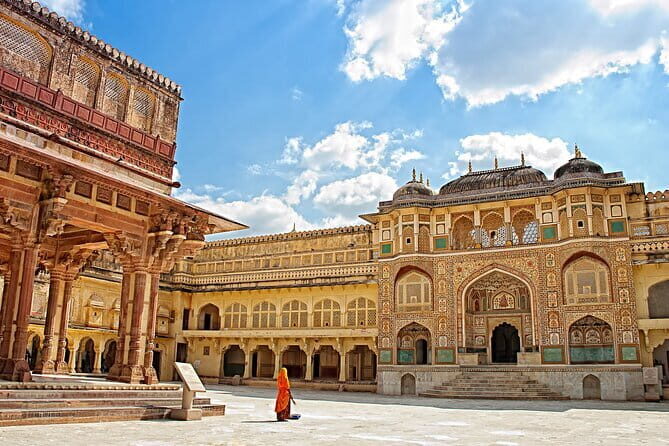
After the Taj, your Day 1 continues with a smart sequence of Agra’s major sites. This is where the tour earns its “high value for short time” label: you don’t only see the obvious. You also get a spread of Mughal-era architecture and a unique stepwell.
Agra Fort: Mughal power in red sandstone
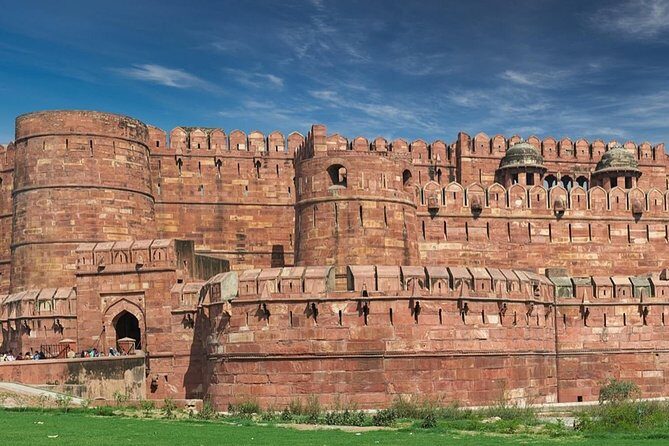
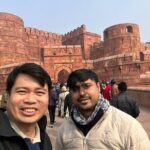
Next is Agra Fort, described as a massive fort made of red sandstone, connected to Mughal Emperor Akbar. The itinerary notes key areas like Diwan-e-Aam and other palaces.
Agra Fort can feel like a lot of walking, but it’s also a great contrast to the Taj. The Taj is about marble elegance and mausoleum symbolism. The fort is more about scale—power, defense, and the way rulers lived and staged ceremonies.
Entrance tickets here are not included, so you’ll want to budget for that too. But if you love architecture or want the “bigger Mughal picture,” it’s one of the stops that makes Agra feel more complete.
You can also read our reviews of more tours and experiences in New Delhi






Itmad-ud-Daula (Baby Taj): smaller, but gorgeous
Then you’ll visit Itmad-ud-Daula, often called the Baby Taj. It’s a Mughal mausoleum with gardens and multiple outbuildings.
Baby Taj is a good choice in a two-day plan because it’s less exhausting than the Taj and still looks stunning. It also helps you see how Mughal funerary art evolved. If you’re tired from the Taj, this stop can feel like a calmer, more intimate follow-up rather than another massive rush.
Again, entrance is not included.
Chand Baori: the stepwell that stops you
Finally on Day 1, there’s Chand Baori, a large ornate stepwell reached by around 3,500 steps, dating to the 8th and 9th centuries.
This is a standout kind of stop: it’s not a palace, not a tomb, and not a temple. It’s a piece of water engineering and architecture that also makes for striking visuals. It’s the kind of place where a guide can quickly explain why it was built and how it worked—so you’re not just looking at steps.
Entrance tickets for Chand Baori are also not included.
Day 1 into Jaipur: check in, then reset
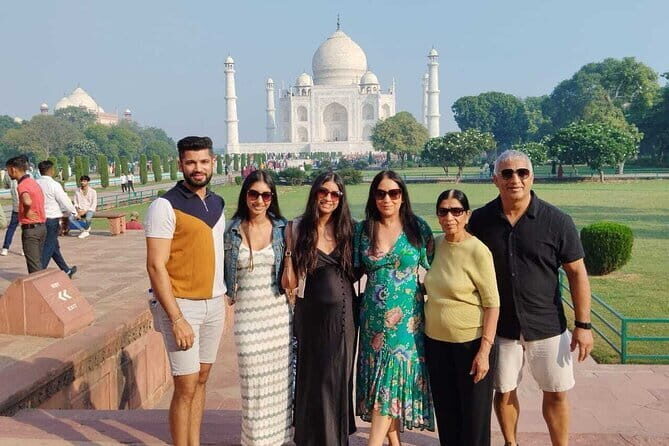
After your Agra blocks, you drive to Jaipur. The schedule indicates arrival and hotel check-in, plus an overnight stay if you choose the accommodation option.
One useful thing about having the overnight: you don’t need to turn around and drive straight through. By the time Day 2 starts, you’ll be ready to walk Jaipur rather than trying to speed-run it after a full day in the car.
The itinerary doesn’t lay out a long evening program in detail, so treat this as your reset window. Use it for a shower, a quick meal near your hotel, and an early night. Day 2 has several major sights and you’ll feel it if you under-sleep.
Jaipur Day 2: Panna Meena ka Kund, Jal Mahal, and the “postcard” stops

Day 2 begins after breakfast, then your guided city sightseeing starts. The first stop is Panna Meena ka Kund, a stepwell located near Amber Palace. It’s a short visit, about 15 minutes, and it fits nicely as a warm-up to Jaipur’s architecture theme.
Next is Jal Mahal, the palace that appears to float on Man Sagar Lake. You’ll get a photo opportunity here. It’s another classic view moment, and it’s efficient—again, built for time-limited travelers.
Then you head into the core Jaipur sights.
City Palace: where Jaipur’s power center lived
At the City Palace, you spend about 1 hour exploring. The site is described as the administrative and ceremonial seat of the Maharaja of Jaipur, constructed in 1721.
This is a meaningful stop because it connects the city’s monuments to how the ruling system worked. If you’re the type who likes to understand the “why” behind what you see, the time here is worth it.
Entrance is not included, so confirm entrance fees in advance or at least have a buffer.
Jantar Mantar UNESCO: astronomy made public
Next comes Jantar Mantar, noted as a UNESCO World Heritage site, built in 1734. You’ll see nineteen astronomical instruments built by Rajput king Sawai Jai Singh II.
This is one of those stops people rush. Don’t. The instruments look abstract until someone explains their purpose. With a guide, it’s easier to connect the shapes you’re seeing to how people measured time, motion, and the sky. Even if you’re not a science person, it tends to click once you understand the basics.
Entrance isn’t included.
Hawa Mahal: the Palace of Breeze
Finally, Hawa Mahal is scheduled about 30 minutes. It’s described as the Palace of Winds, made from red and pink sandstone, and built as a five-storey pyramidal-shaped monument.
This is a great last stop because it’s photo-friendly and visually distinctive. It also helps you end the day on something immediately recognizable from Jaipur postcards.
Entrance is not included, so factor that in.
Returning to Delhi: the last drive is part of the deal
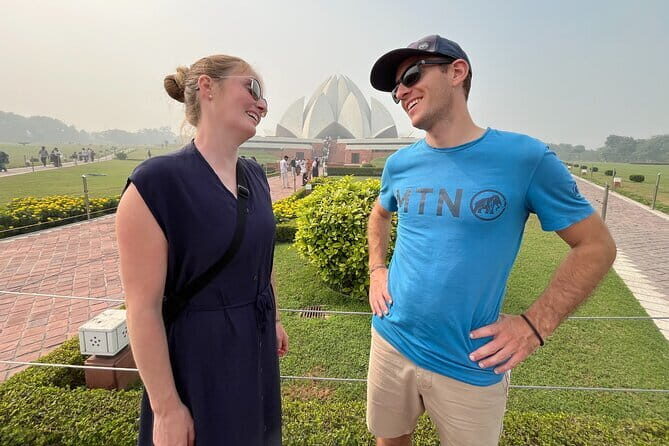
After the Jaipur sights, you drive back to Delhi. The itinerary states the return trip is around five hours.
This is another reason the private-car format is so important. A long drive can drain you, but when you’re not also handling transfers and lines, you keep your travel energy for the sights.
If you’re planning your flights or train departures, build in buffer time. The driving time is estimated, and real life can add traffic or delays—especially when you’re coming back from a major city area.
Transportation, comfort, and how the group size affects your ride
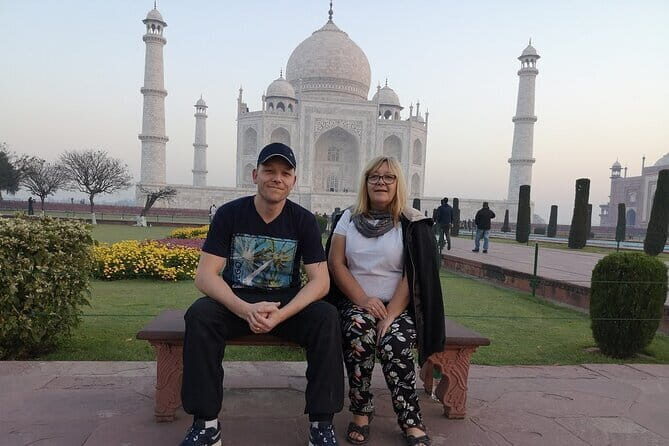
A big practical detail: the vehicle size changes based on group size. The tour specifies a 4-seater sedan for groups of 1 or 2, a 6-seater wagon for groups of 3 or 4, and a 10-seater minivan for groups of 5 to 10.
That matters more than you might think. If you’re traveling as a couple, a sedan can feel more comfortable and private. If you’re in a larger group, the minivan keeps everyone together, but it can feel tighter. Either way, the vehicle is air-conditioned.
You also get the benefit of hotel or airport pickup and drop-off, which is huge for convenience. Starting your trip this way often makes the difference between a smooth first day and a stressful one.
Price and value: what $131.54 gets you, and what to budget
The price listed is $131.54 per person for the 2-day private luxury Golden Triangle. That’s not just a number—it tells you how the tour is structured.
Here’s what the package price generally supports:
- Private tour with local guides in Agra and Jaipur
- Transport in a private air-conditioned vehicle with driver
- Hotel or airport pickup and drop-off
- Battery bus ride access related to Taj Mahal parking area
- Breakfast and bottled water during journeys
- Option for 1-night accommodation if you pick the hotel-inclusive option
What’s not included (so you should plan for it):
- Monument entrance tickets
- Tips for the driver and guide
- Travel insurance, and your own flight or train tickets
So the value equation is simple. If you’re going to pay for guides and private transport anyway, you’re already buying the core of the experience. The “private luxury” part is mainly about avoiding the time sink of public transport and getting help at each site.
Also, because it’s private, you’re not forced to wait around for other people’s pace. That’s a real quality-of-life boost on a schedule as tight as this one.
Who this 2-day private Golden Triangle tour suits best
This tour fits best if you:
- Have limited time and want Taj Mahal + Jaipur without extra planning
- Prefer private guiding and a dedicated driver over group tours
- Want a practical “highlights-first” route rather than a slow, deep exploration
It’s also a solid first-timer option for India, because the route is major, the sights are clear, and the guides help you understand what you’re seeing.
If you’re the type who likes to spend half a day in a single place, you might feel the pace is brisk. But if you want the highlights with minimal friction, this is built for you.
Should you book this 2-day private Golden Triangle?
I’d book it if you want a smooth, efficient Golden Triangle with private local guides, an included morning Taj Mahal plan, and comfort on the road. The battery bus detail at the Taj is a small thing that saves time and energy, and the Agra-to-Jaipur sequencing makes the two days feel organized instead of random.
I’d pause if you’re determined to do everything at your own tempo, or if you strongly prefer entrance fees to be bundled into one single price. Since monument tickets aren’t included, you’ll need to budget separately and factor in payment timing on-site.
Finally, if you care about service, the tour provider has strong praise in the areas that matter most for this kind of trip: drivers showing up on time and guides explaining the sites clearly. Names that show up in praised experiences include Mr. Gopal (coordination), drivers such as Vishal and Surendra, and local guides Anil in Agra and Satish in Jaipur.
FAQ
How long is the 2-days Golden Triangle tour?
It runs for about 2 days (the itinerary covers Day 1 travel and sightseeing in Agra, an overnight in Jaipur, then Day 2 sightseeing and a return drive to Delhi).
Where does pickup happen?
Pickup is offered from your Delhi hotel, the airport (Indira Gandhi Intl Airport is listed as the start), or other desired locations in Delhi, Noida, or Gurgaon.
Are monument entrance tickets included?
No. The package includes many parts of the experience, but monument entrance tickets are listed as not included, including for the Taj Mahal and other sites.
Is breakfast included?
Yes. Breakfast is included as part of the tour.
Do I get a hotel overnight?
You can get 1-night accommodation if you book the option that includes hotels. The tour also offers versions without accommodation.
Is this tour private or group-based?
It’s private. Only your group participates.
What vehicle will I ride in?
It depends on your group size: a 4-seater sedan for 1–2 people, a 6-seater wagon for 3–4 people, and a 10-seater minivan for 5–10 people.