REVIEW · NEW DELHI
10-Day Private Golden Triangle Tour With Jodhpur Udaipur Pushkar
Book on Viator →Operated by Golden Triangle Tours India · Bookable on Viator
Private Golden Triangle with Rajasthan, minus stress. You get a built-in pace that helps you linger in Delhi and Agra, then slide into Rajasthan’s forts and lakes. What makes this one interesting is the focus on UNESCO stops and the Taj Mahal sunrise/sunset planning.
I like the practical side most. You travel in a dedicated private, air-conditioned car with pickup and drop-off, which saves you from the time-sink of sorting transport between cities. And the standout service theme is straightforward: drivers named Vinod, Ashok, Surendra, and Maan Singh are repeatedly praised for punctual, safety-first driving, with Jaipur guide time described as friendly and light (including Satish).
The trade-off: you stack a lot of monuments into short blocks, so some stops feel more like curated highlights than slow wandering. Also, monument entrance fees are extra, so your real total should include that budget.
In This Review
- Key things that make this tour click
- What This 10-Day Golden Triangle + Rajasthan Trip Really Delivers
- Delhi With a Two-World Feel: Gurudwara, Qutub Minar, Old Delhi Markets
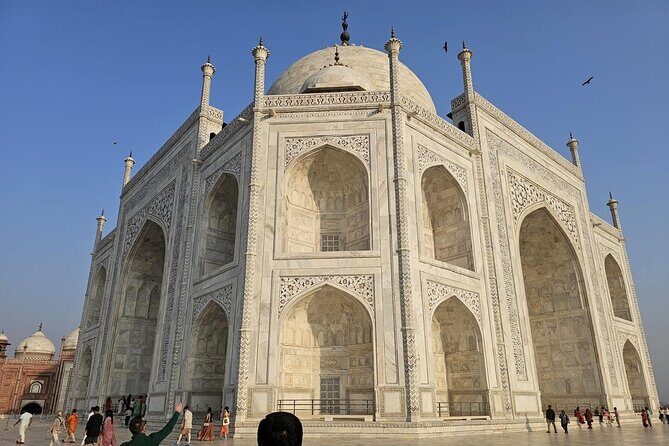
- Agra’s Fort-and-Face-Off Day: Agra Fort, Baby Taj, Mehtab Bagh, Taj Mahal
- Fatehpur Sikri and Chand Baori: The “In-Between” Stop That Changes Your Rajasthan Mood
- Jaipur Highlights Without the Guesswork: Fort Time, Jal Mahal Photos, City Palace, Jantar Mantar, Hawa Mahal
- Udaipur at Water Level: Lake Pichola, City Palace, Jagdish Temple, Bagore Ki Haveli
- Jodhpur’s Blue City Day: Clock Tower Markets, Mehrangarh Fort, Umaid Bhawan, Jaswant Thada
- Pushkar’s Sacred Calm: Brahma Temple and Brahma Ghat
- Price and Value: What You Pay, What You Must Budget Separately
- Driver and Guide Matter More Than You Think
- Who This Tour Suits Best (and Who Might Want Something Different)
- Should You Book This Private Golden Triangle + Rajasthan Tour?
- FAQ
- What’s included in this tour price?
- Are monument entrance fees included?
- Is the tour private or shared with strangers?
- Which cities are covered over the 10 days?
- How are hotel rooms handled for groups of different sizes?
- Can I cancel for a full refund?
- Is there a ticket delivered digitally?
Key things that make this tour click
- UNESCO-heavy route across Delhi, Agra, Jaipur, Udaipur, and beyond
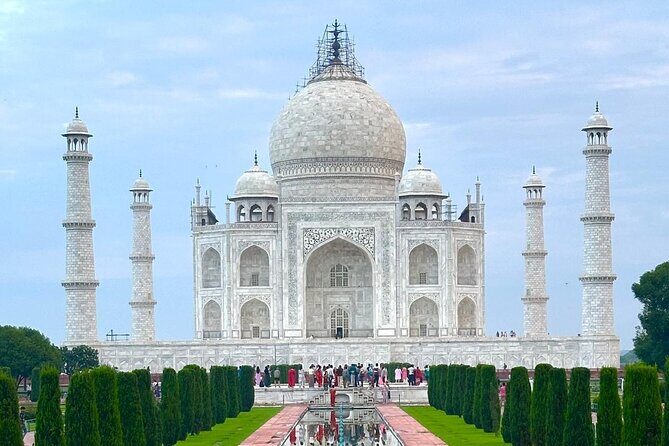
- Taj Mahal twice in different moods: a sunset viewpoint and a sunrise visit
- Old Delhi + New Delhi in one sweep, mixing major Mughal-era sights with local markets
- Jaipur designed for photos and orientation, from Hawa Mahal to Jantar Mantar
- Udaipur at water level, with Lake Pichola views and City Palace time
- Jodhpur’s royal scale, anchored by Mehrangarh Fort and marble cenotaphs
What This 10-Day Golden Triangle + Rajasthan Trip Really Delivers
This is a classic North India route, but it’s built as a private experience, so you’re not stuck in a group shuffle. You’ll cover the Golden Triangle anchor cities—Delhi, Agra, Jaipur—then extend the flavor with Jodhpur, Udaipur, and Pushkar.
The schedule is sightseeing-first, not “rest and reset.” That’s good if you want structure and guidance. It’s less ideal if you prefer long, unplanned hours in one place, or if you’re sensitive to travel days that start early.
You can also read our reviews of more private tours in New Delhi

Delhi With a Two-World Feel: Gurudwara, Qutub Minar, Old Delhi Markets
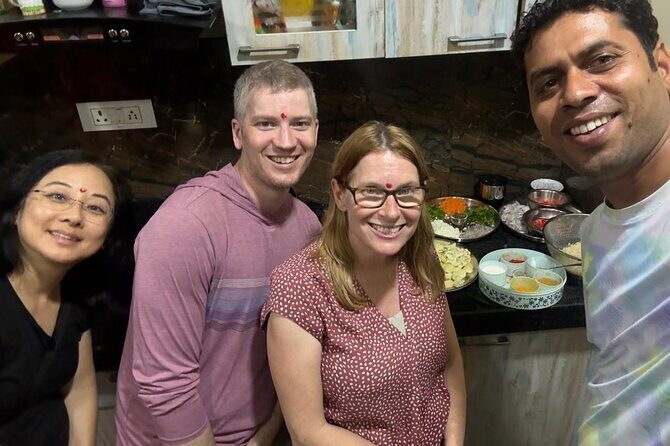
Day 1 and Day 2 give you a full Delhi snapshot. You start with Gurudwara Bangla Sahib, a free, calm intro that’s easy to appreciate even if you don’t know Sikh history yet. Then you hit Agrasen Ki Baoli, a stepwell built for water storage and social life—small, atmospheric, and great for understanding how people used to engineer daily survival.
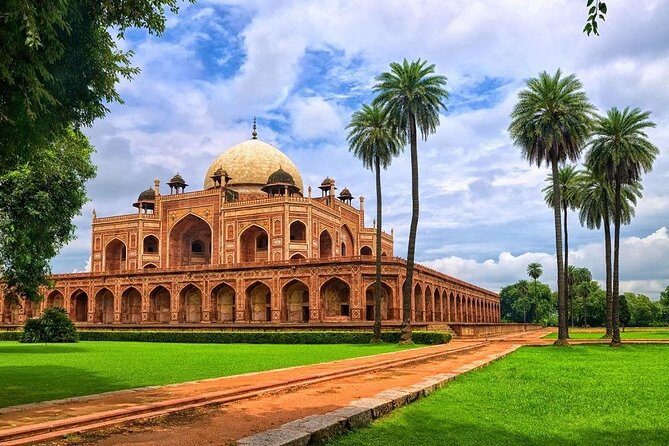
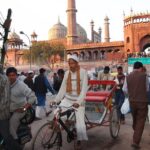
Day 2 leans monumental. Qutub Minar (UNESCO) is the star: a tall, 12th-century-style marker of the Delhi Sultanate period. From there, you move to the Lotus Temple, which is visually distinctive and open to everyone, no matter your faith. The day also threads through major landmarks like India Gate and Parliament House from the outside, then lands deep in Old Delhi with Jama Masjid and time at Chandni Chowk.
Why this mix works: Delhi is too big for “one vibe.” You’re getting sacred space, imperial-era architecture, and street-level life in the same arc. Just know the pace can feel compressed—Old Delhi market areas move fast, and you’ll want comfortable walking shoes.
Agra’s Fort-and-Face-Off Day: Agra Fort, Baby Taj, Mehtab Bagh, Taj Mahal
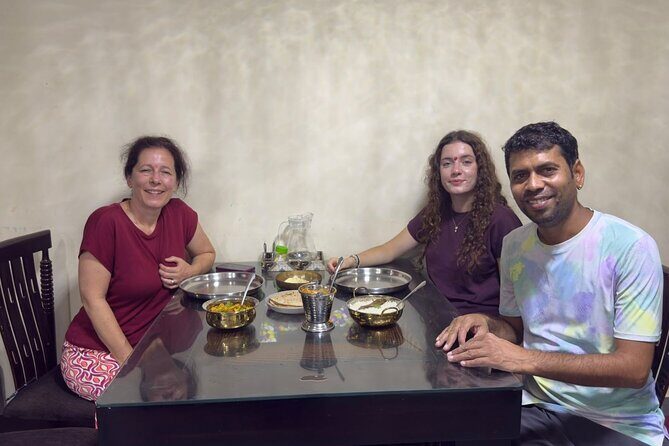
Agra is where the tour gets real for most people. You begin after checkout with a drive through the expressway toward Agra—smooth travel compared with slower city-to-city routes.
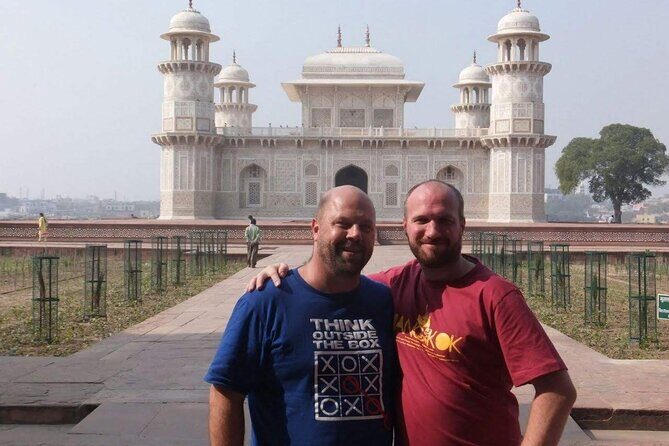
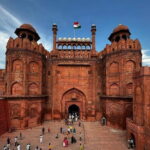
Agra Fort is a heavyweight stop: red sandstone, Mughal-era power, and a palace layout that’s easier to read with a guide than as a self-guided maze. Then you go to Itmad-ud-Daula (often called the Baby Taj). It’s smaller than the Taj Mahal, but that’s part of the charm. You can study the detailing without feeling like you’re racing a clock.
Mehtab Bagh is the “breathe and frame the photo” moment. Even with a short time window, you’re getting garden time across the Yamuna area, which makes the later Taj moments feel more intentional.
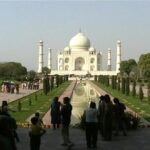
And then comes the Taj Mahal planning, which is the biggest draw in this whole trip:
- One day features a Taj Mahal sunset viewpoint setup (a quieter angle across the river area).
- Another day is a sunrise visit at the Taj itself.
Practical note: sunrise visits typically mean early start energy. If you’re not a morning person, bring patience. The payoff is that you’re not only seeing the Taj—you’re seeing how light changes it.
Fatehpur Sikri and Chand Baori: The “In-Between” Stop That Changes Your Rajasthan Mood

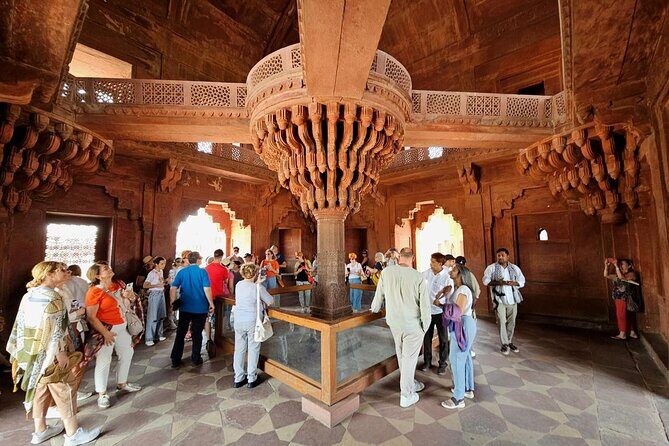
On your way into Rajasthan, you’ll stop at Fatehpur Sikri, known as the City of Victory. It’s a Mughal capital complex with a feel that’s both grand and eerie—like a city that got stopped mid-sentence. One hour may sound short, but the main goal here is orientation: you want enough time to understand what you’re looking at before the route shifts into Rajasthan’s palaces and stepwells.
Then you visit Chand Baori near Abhaneri, one of India’s most famous stepwells. It’s impressive because it’s deep and geometric, and it gives you a different lens than forts and mosques—this is daily infrastructure turned monumental. Even if you only spend a half hour, it’s a strong visual reset before Jaipur.
Jaipur Highlights Without the Guesswork: Fort Time, Jal Mahal Photos, City Palace, Jantar Mantar, Hawa Mahal
Jaipur day is built for first-time orientation, and that’s a big value. You start with Panna Meena ka Kund, a stepwell near the palace area. It’s a quick stop, but it adds context: Jaipur wasn’t just painted buildings—it also depended on clever water design.
Next comes time at the main fort area (Amer/Fort complex). This is where you get the palaces and courtyards energy. Then you take a photo-oriented stop at Jal Mahal, the palace on Man Sagar Lake. You won’t be spending all day here, but it works as a visual palate cleanser between fort density and palace museums.
City Palace follows, and this is a good “sit still for a moment” stop. You get an hour to explore the ceremonial seat of the Maharajas and its museum-style collections. Then you move to Jantar Mantar (UNESCO). Those astronomical instruments look like sculptures, but they were built for real observation. You’ll understand them better if you let the guide connect the dots instead of treating it like just more sightseeing.
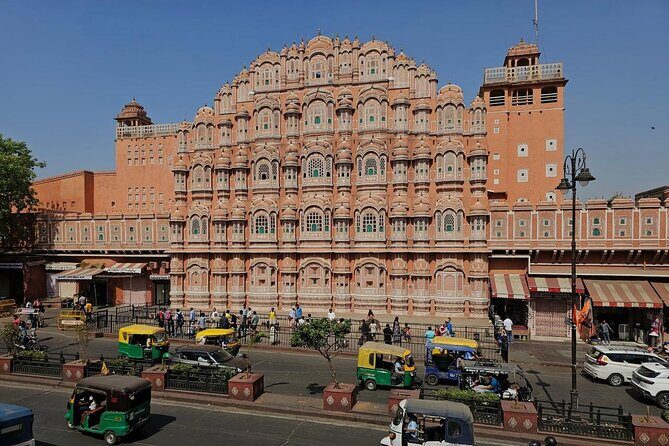
Hawa Mahal closes the day. It’s short-time friendly because you mainly want the façade, the windows, and the idea of how it shaped street-level viewing. It’s also a nice final photo stop before evening city wander time.
Where Jaipur can feel tight: Several stops are capped around 30–60 minutes. If you want slow art-in-a-museum time, you’ll need to pick your priorities and let the rest be the “see it once” highlights.




Udaipur at Water Level: Lake Pichola, City Palace, Jagdish Temple, Bagore Ki Haveli
Udaipur slows the pace in a way the earlier cities don’t. You check in, then the focus becomes views and palace-city atmosphere.
Lake Pichola is your first anchor. You’ll have time for sightseeing and the option for a private boat ride around the lake with stops near Jagmandir Palace. If you do the boat, you’ll see Udaipur’s skyline from the water, which is where the city’s geometry really makes sense.
City Palace is on the lakefront, and it’s one of those stops where you get both architecture and museum collections—things like weapons and historic displays are part of the package. After that, you visit Jagdish Temple nearby, which keeps the cultural thread going with Indo-Aryan style architecture in a temple setting.
Bagore Ki Haveli Museum is another strong choice for travelers who like “how people lived” context. It’s time with a guide, and there’s an easy out built in: if you don’t want that stop, you can skip ahead to the next.
Udaipur tip: Udaipur is best when you build in downtime. Even if the schedule is structured, try to plan one restful hour after dinner so the palace-and-fort intensity doesn’t stack up day after day.
Jodhpur’s Blue City Day: Clock Tower Markets, Mehrangarh Fort, Umaid Bhawan, Jaswant Thada
Jodhpur comes with a different vibe. You’ll drive into the blue city, check in, then head to the Clock Tower Market area. This is one of those neighborhood-feel stops that helps you understand the city isn’t only forts—it’s everyday life around old structures.
Mehrangarh Fort is the headline. It’s set on a rocky outcrop and feels like a full statement. Inside, you’ll see weapons, paintings, and elaborate royal palanquins, plus displays that make sense of Marwar’s royal culture. Even a shorter time window can work here because the architecture does much of the explaining.
Umaid Bhawan Museum is another great contrast: it’s linked to the idea of palace-as-residence and modern royal life. Then you wrap with Jaswant Thada, often compared to the Taj Mahal of Jodhpur for its white marble elegance. It’s memorial space, but it also functions as a gentle last stop where you can slow your eyes.
How to make this day comfortable: Jodhpur involves walking up and down fort approaches and terraces. Wear shoes you trust, and keep water handy.
Pushkar’s Sacred Calm: Brahma Temple and Brahma Ghat
Pushkar ends the journey with a softer tone. You’ll start at Brahma Temple, famous for being dedicated to Brahma and known for its architecture and mythology. It’s a short stop, but it gives you the spiritual reason Pushkar is what it is.
Then you move to Pushkar Lake and Brahma Ghat area. The focus here is prayers, photography opportunities, and the ritual side of the lakeside culture. The schedule keeps it focused: you’re not here for a long museum day, you’re here for atmosphere.
Price and Value: What You Pay, What You Must Budget Separately
The listed price is $437.14 per person for 10 days, with 9 nights of accommodation and breakfast included when you choose the hotel option. You also get private, air-conditioned transportation with a driver, bottled water during journeys, and hotel or airport pickup and drop-off.
That can be good value if you’re comparing against:
- buying separate city transfers,
- booking multiple guides across cities,
- paying for transportation on your own while navigating busy traffic.
But there’s one budget reality you shouldn’t ignore: entrance fees are not included. The package notes monument entrance tickets of USD 150.00 per person. Your total should be price + that add-on + any tips, travel insurance, and flights or trains you’re not already booking separately.
My take on value: If you want a structured path with minimal logistical friction—and you’re okay with a “highlights” pace—this is the kind of private tour that can feel like money well spent. If you want deep, slow exploration in just one or two places, the value shifts because you may feel rushed by the number of stops.
Driver and Guide Matter More Than You Think
This kind of private tour lives or dies on how the driver and guide run the flow. The strongest praise pattern you’ll see around this operator is about service that feels calm and organized: named drivers like Vinod, Ashok, Surendra, and Maan Singh get described as professional, punctually run, and focused on keeping the drive safe.
There’s also an important service style in how sightseeing time is handled. Several people highlighted a balance that doesn’t feel pushy—meaning you’ll be taken to the important spots, but you still have space for personal pacing rather than being forced into endless stops.
Practical advice: when you confirm, ask how your guide will handle timing. If you want longer time at specific places—like Taj Mahal viewpoints or Jaipur’s fort zone—mention it early so the day can breathe.
Who This Tour Suits Best (and Who Might Want Something Different)
This tour is ideal if you:
- are a first-time visitor to North India and want a clean route,
- like seeing the big UNESCO names without planning every day yourself,
- want private transport for comfort and time savings,
- prefer guided orientation to guesswork.
It may be less ideal if you:
- hate early mornings (sunrise Taj Mahal can be a wake-up test),
- want long stays in one city instead of multi-city highlights,
- dislike having many stops in one day.
Should You Book This Private Golden Triangle + Rajasthan Tour?
If your priority is structure + comfort + key sights, I’d say yes, especially for a first trip. The combination of Delhi’s mix of sacred and imperial architecture, Agra’s two different Taj experiences, and Rajasthan’s palaces and forts is a solid “great hits” sequence—without you having to play logistics games.
Book it if you’re happy with a highlights pace and you plan your budget for entrance fees (USD 150 per person). Skip it or look for a slower alternative if you’d rather soak in one city for several days and you’re sensitive to travel days stacking up.
FAQ
What’s included in this tour price?
The package includes a private tour, 9 nights of accommodation with breakfast (when you book the option including hotels), private air-conditioned transport with a driver, and hotel or airport pick-up and drop-off. Bottled mineral water during journeys and breakfast each morning are also included.
Are monument entrance fees included?
No. The tour states an additional entrance fee of USD 150.00 per person for monument tickets in all cities.
Is the tour private or shared with strangers?
It’s private. Only your group participates, and you’ll use a private vehicle sized to your group (4-seater sedan for 1–2 people, 6-seater wagon for 3–4 people, and a 10-seater minivan for 5–10 people).
Which cities are covered over the 10 days?
You’ll cover New Delhi, Agra, Jaipur, Jodhpur, Udaipur, and Pushkar, with time arranged across the full 10 days.
How are hotel rooms handled for groups of different sizes?
Rooms are generally twin-sharing. If you book for 3 people, triple-sharing is the default, and if 3 guests want 2 rooms instead, an additional charge may apply.
Can I cancel for a full refund?
Yes, free cancellation is offered up to 24 hours before the experience’s start time for a full refund.
Is there a ticket delivered digitally?
The tour includes a mobile ticket.