REVIEW · JAIPUR
Hands-on Block Printing Workshop
Book on Viator →Operated by Creatis · Bookable on Viator
Your hands will make Jaipur art.
In Jaipur at Creatis, you learn Sanganeri block printing where it was developed, with step-by-step coaching in a calm studio setting. I like the fact that the class keeps things personal—a small-group cap of six means you’re not shouting across a room.
I also love the payoff: you leave with two stoles you printed yourself, not just a quick souvenir you barely touched. The process is hands-on, and the layering approach makes your designs look like real Sanganeri work, not a beginner sketch.
One consideration: you’ll travel to the studio on your own (no hotel pickup), and the work is a bit fiddly. Come with patience, especially if you pick a more detailed stencil.
In This Review
- Key things to know before you go
- Jaipur block printing at Creatis: what the experience feels like
- The studio setup and how to get there without stress
- How you learn Sanganeri: blocks, parts, and what they actually do
- Pigments and layering: your hands do the “teaching”
- Choosing your design and controlling difficulty
- The main event: making two stoles you keep
- Who this workshop suits best (and who should skip it)
- Value for money: why $25.16 feels fair here
- Practical tips to get the best results
- Should you book this Jaipur block printing class?
Key things to know before you go
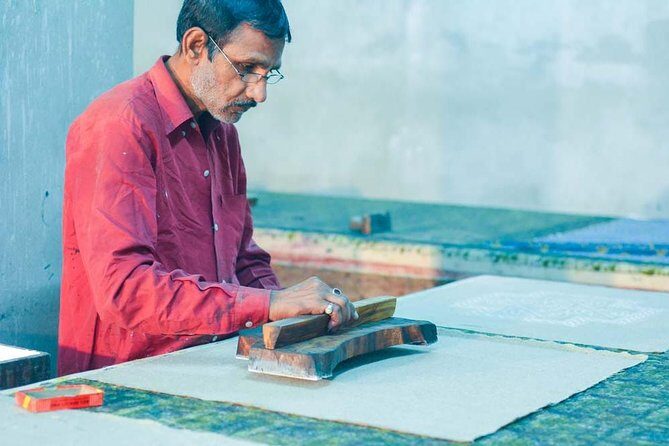
- Sanganeri basics with real terminology: you’ll hear about Gad (ground), Rekh (outline), and Datte (filler).
- Layering with water-based pigments: you’ll practice how designs build up color by color.
- Two take-home stoles: the class is set up so you can finish usable items within about two hours.
- Small-group tutoring: capped at six people for more direct help.
- Calm, non-pretend studio vibe: the space is part of an active textile operation, so it feels grounded.
- Instruction includes practical practice: you may start with a test piece so block placement feels less intimidating.
Jaipur block printing at Creatis: what the experience feels like
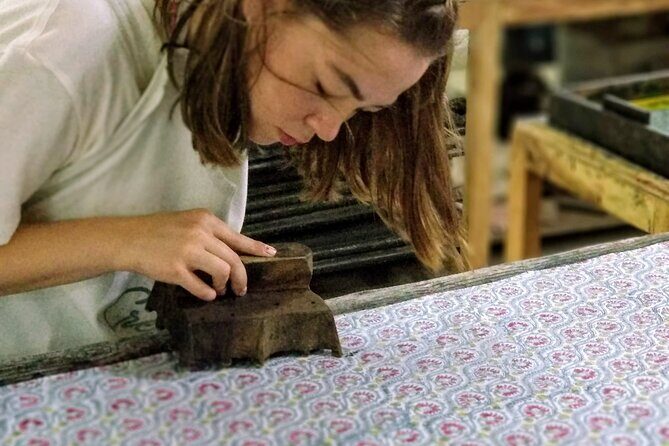
Jaipur can be loud. Bright shops, loud traffic, and constant motion can wear you out fast. This class is different. It slows you down on purpose, with a hands-on rhythm: ink/pigment, print, dry a bit, line up again, repeat.
The heart of it is Sanganeri block printing, a craft that’s commonly linked to Jaipur’s region and has been around for centuries. What you do here isn’t just “print a pattern.” You learn how the art works in layers—because Sanganeri is often about controlled repetition, clean alignment, and the way colors build as you go.
Also, the vibe is very “do the work, ask questions.” The studio staff (including owner Mohit, plus assistants) are patient and helpful. People describe it as chill and spacious, not stiff or tourist-factory. If you want a creative break that still feels meaningful, this fits.
The small-group structure matters more than it sounds. With a tutor-style cap of six, you can actually get help when your block placement is slightly off, or when you’re deciding between two colors. In a larger class, that kind of attention usually disappears.
You can also read our reviews of more tours and experiences in Jaipur

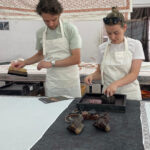
The studio setup and how to get there without stress
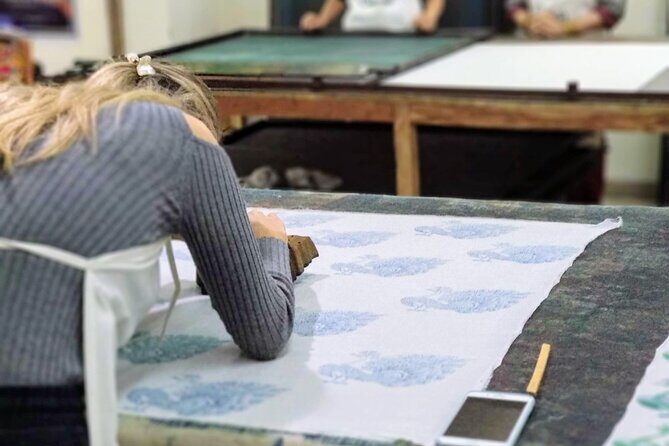
You meet at Creatis at A12 Sudarshanpura RIICO, behind Tata Motors Service Center, in the Industrial Area of Sudarshanpura, Bais Godam, Jaipur (302006). It’s not in the middle of the main tourist zone, so treat this as an independent trip.
Good news: it’s described as near public transportation, which helps. What I’d do in your shoes is plan to arrive a little early, find the studio entrance, and settle in before class starts. Block printing works better when you’re not rushing your brain and hands at the same time.
Dress code is smart casual. You’ll want comfortable clothes because you’ll be handling pigments and working at a table for about two hours. If you’re the type who gets nervous about mess, keep a mild “I’m fine if I get a little paint on me” mindset—this is a craft class, not a museum lecture.
How you learn Sanganeri: blocks, parts, and what they actually do
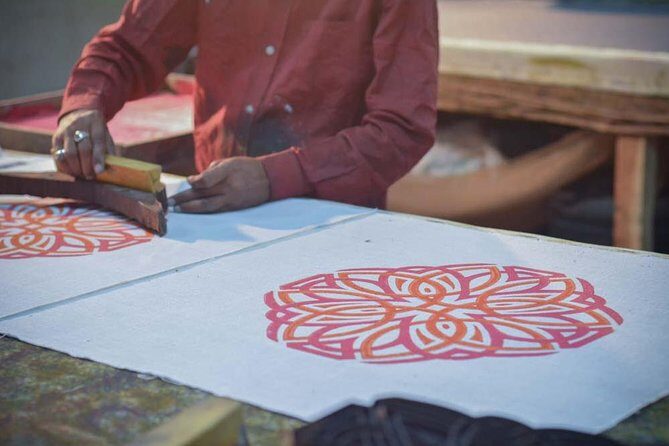
Before you print your own stoles, you get the “map” for the craft. You’ll learn a bit of history and cultural significance of block printing, then you’ll meet the tools and materials used in this traditional process.
The most practical part is the introduction to block types. You’ll work with design structures described as:
- Gad (Ground): the base layer that gives the overall field.
- Rekh (Outline): the lines that define shapes.
- Datte (Filler): extra elements that fill spaces and create texture.
Why this matters: if you just mix random colors and stamp them down, it can look busy. Knowing the role of each block helps you build a design that looks intentional. It also helps you understand why Sanganeri prints can look so clean and structured even when they’re complex.
In class, you also get guidance on selecting intricate designs from the studio’s fabric collection. This is one place where your creativity is real, but you’re not left alone to guess. The staff explains how motifs translate into blocks and how layering changes the final look.
Pigments and layering: your hands do the “teaching”
The core technique is layering using water-based pigments. You don’t just stamp once and call it done. You build the design color by color.
This is where the workshop becomes satisfying. Each time you align a block, you’re making a decision. Do you press evenly? Do you place it exactly so the outline sits where it should? Do you change color placement to make the pattern feel more balanced?
Here’s a detail worth knowing: you may get a test piece for practice. That’s not busywork. It helps you learn how far the ink/pigment spreads, and it trains your eye for alignment before you commit to your final stoles.
Color expectations can also be a little tricky. One helpful thing from real experiences in this type of workshop: the swatches you pick from aren’t always the exact final tones you see after printing and drying. If you’re unhappy with how the test piece turns out, you can ask about adjustments. I’d recommend doing that early—don’t wait until your design is fully layered.
And yes, mixing and matching colors is part of the fun. You’ll experiment so your motifs don’t all end up in the same predictable palette. Still, you’ll work within the logic of the technique so your result stays crisp.
Choosing your design and controlling difficulty
Your stencil choice affects the whole experience. A simple stencil can feel quick and forgiving. A more detailed one asks more from your lining-up skills and patience.
The studio setup encourages picking at your own comfort level. Many people find they can make choices about design and color that fit their taste, while the staff supports you if you want something harder. If you’re new to printing, start with a design that has clear sections—when you understand the sequence, it stops feeling chaotic.
One thing that can surprise first-timers: block printing looks easy in photos. In real life, your success is about alignment and pressure. That’s why a relaxed studio pace matters. You’re not being rushed through “Stamp! Next!” Your hands learn, and then the pattern appears.
Also, if you want creativity beyond what you’re used to, this class rewards it. You’re not just repeating one pattern. You’re making a personal selection from what the studio offers and then translating that into layered prints.






The main event: making two stoles you keep
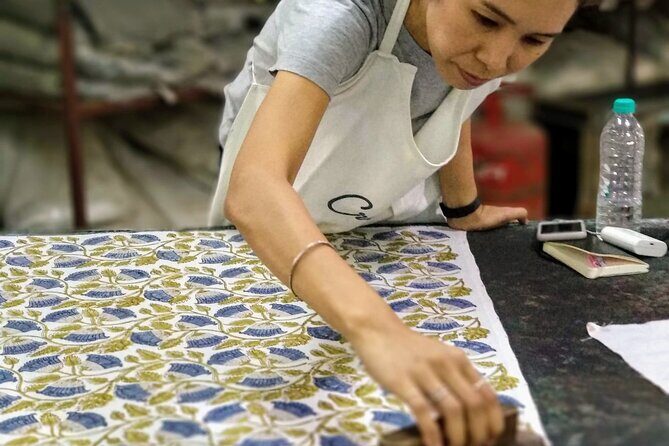
The big promise here is practical: you’ll create two stoles using Sanganeri block printing techniques.
You’ll apply your designs to the fabric during the class, working through the layering process. The studio then handles the finishing step on the edges—the borders are machine-embroidered for a clean, wearable finish. That matters because it saves you from spending your limited time wrestling with finishing details.
In other words, your two hours are focused on what you came for: learning and printing. The end result feels finished in a way that many DIY crafts don’t. You’re not leaving with a half-done project that needs extra hours back at your hotel.
You might also see options mentioned like scarf or placemats depending on the studio fabric collection and what they have set up. If you’re deciding between “I want stoles” and “I want something smaller,” the safest bet is to stick with what’s included: two stoles.
Take a moment to think about what you’ll do with them after the class. These make great gifts because they’re personal, but they also work for you. A printed stole is easy to pack, and it adds instant “I did something here” value to your outfits.
Who this workshop suits best (and who should skip it)
This is a great fit if you want:
- A break from sightseeing noise
- A tactile activity where you see progress in real time
- A souvenir that’s actually made by your own hands
- Instruction that stays calm and personal
It’s also ideal if you enjoy patterns and color planning. Even if you’re not “an arts person,” the structure (ground/outline/filler) gives you a framework that helps you succeed.
You might want a different activity if you hate precision tasks. Block printing depends on alignment, and your work can be slightly imperfect. That’s normal and part of learning—but if you need everything perfectly symmetrical, you might feel frustrated.
Age is 18+ (minimum age 18). Physical effort is moderate—mostly standing or leaning at a work surface—so if you can handle that kind of seated/standing crafting, you should be fine.
Value for money: why $25.16 feels fair here
At about $25.16 per person for roughly two hours, this is strong value—especially because:
- You’re not just watching; you’re making
- You leave with usable items (two stoles)
- GST and all taxes/fees/handling are included
- The class stays small for tutoring (capped at six)
It also compares well to “buying souvenirs later.” A store-bought stole might look beautiful, but it doesn’t come with the skill story attached. Here, you’ll remember the sequence: test piece, alignment practice, color layering, then the finishing process.
Could it be expensive in some other context? Sure. But for a short, guided craft lesson with take-home results and included taxes, it’s priced like you’re paying for time, materials, and instruction—not just access to a studio.
Practical tips to get the best results
These are the small things that tend to make the difference in crafts like this:
- Pick a design you can handle. If you’re brand-new, choose something with clear sections instead of ultra-dense details.
- Don’t rush color layering. Take your time lining up each print pass.
- Use the test piece as a real practice run. If the colors feel off, adjust early.
- Stay relaxed about mess. You’re working with pigments, and the goal is to learn, not stay spotless.
- Ask questions when you’re unsure. The staff is set up for step-by-step help, and you’ll get more confidence faster.
And if you’re a bit nervous, that’s normal. The work is detail-focused, but the studio pace is meant to feel comfortable. People describe it as a calm break and good vibes, not stressful.
Should you book this Jaipur block printing class?
Book it if you want a Jaipur experience that’s genuinely hands-on and calm, with a finished product at the end. The small-group Sanganeri block printing lesson, the structured block roles (Gad/Rekh/Datte), and the chance to create two stoles you keep make it a smart use of your time.
Skip it if you need hotel pickup, or if you want something fast-and-easy with zero precision. Also, if you’re traveling with strict time constraints, remember the class is about two hours—this is a focused session, not a quick stop.
If your goal is to bring home a souvenir with a real story, this is one of the better ways to do it in Jaipur. You’ll leave with fabric art that looks like it came out of the tradition, and you’ll know how the layers work—so it won’t just be something you hang on a wall.