REVIEW · JAIPUR
Take in the Beauty of an Early Morning with Fresh Flowers
Book on GetYourGuide →Operated by Ultimate Urban Adventures Pvt. Ltd. · Bookable on GetYourGuide
Jaipur smells like fresh flowers. This short early-morning walk is a smart way to see the Pink City in motion, starting right by Hawa Mahal and ending with a real taste of daily life at the flower and vegetable market. You’ll stroll past the Blue Gate, Town Hall, and temples on quieter streets, then spend your time where the city’s color (and fragrance) is at its peak.
I love how the tour gives you photo time in the right spots without turning your walk into a mad dash. I also love that you’re not just looking at landmarks; you’re getting the living context, like how farmers bring blooms from villages and why the market matters. One thing to consider: it’s a walking tour (about 1.5 hours), so comfortable shoes matter, and it’s not a good fit for people with back problems or wheelchair users.
In This Review
- Quick reasons this morning walk works
- A sunrise walk that skips the worst street chaos
- Hawa Mahal photo stop: start where Jaipur becomes real
- Blue Gate, Town Hall, and temples on foot
- The flower and vegetable market: color, fragrance, and local work
- Masala chai at a local tea stall: a small stop with real meaning
- Timing, pace, and what to bring for 1.5 hours
- Price and value: what $16 buys you in Jaipur
- Who should book this tour, and who should skip it
- Should you book this Jaipur morning flower walk?
- FAQ
- Where is the meeting point for the tour?
- How long is the tour, and what language is the guide?
- What’s included in the experience?
- What should I bring?
- Is the tour wheelchair accessible?
- Can I cancel and get a refund?
Quick reasons this morning walk works
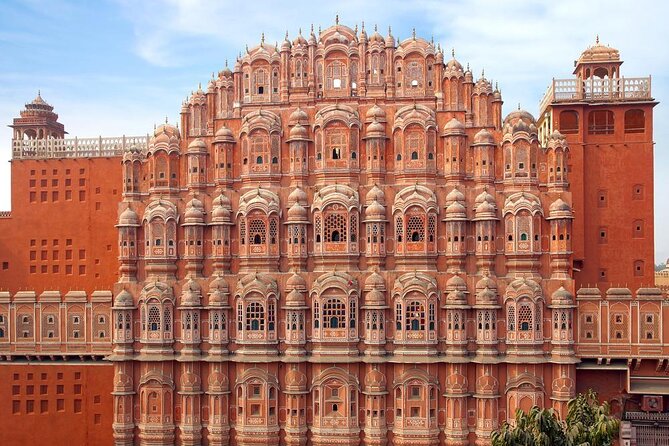
- Hawa Mahal at the start: you begin with an easy photo stop and a clear sense of where you are in Jaipur
- Pass-by sights without traffic stress: Blue Gate, Town Hall building, and temples are on the route while streets are still calm
- Flower and vegetable market details: you’ll see mounds of blooms up close and learn how sellers and farmers work
- Masala chai break: you end with a local tea stall stop that feels like how the day actually begins
- Safety + smart pacing: guides keep you moving with the flow of pedestrians and street life (and some have excellent photo skills)
A sunrise walk that skips the worst street chaos
Early morning in Jaipur has a different tempo. The streets you’ll walk through feel more manageable, and the market area is reached before things get frantic. That matters because this isn’t a sit-and-look sightseeing loop. It’s a walking morning where you’re meant to notice how people live: vendors setting up, shoppers moving through aisles, and temples with worship happening around you.
I like tours like this for two reasons. First, you get to get your bearings fast. Even if it’s your first day, you’ll leave knowing how the Pink City’s key heritage sights relate to the everyday market lanes. Second, it’s the right format for people who want culture without spending half the day inside a museum.
If you hate walking, don’t pretend you’ll suddenly love it. You’ll cover ground on foot, and you’ll likely do some stand-and-watch time for photos in busy areas. Bring warm layers if you’re visiting in winter months (Nov–Feb), and plan to move.
You can also read our reviews of more tours and experiences in Jaipur



Hawa Mahal photo stop: start where Jaipur becomes real

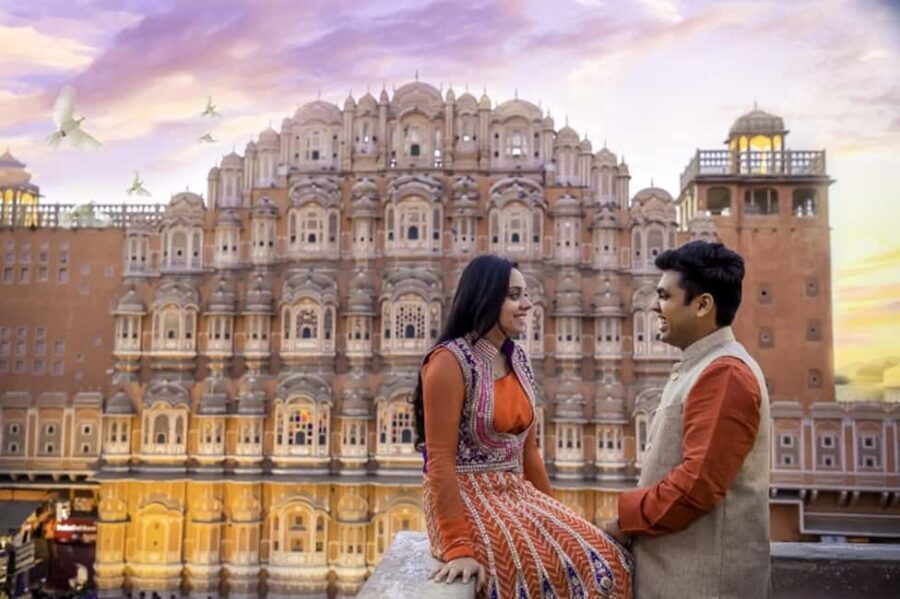
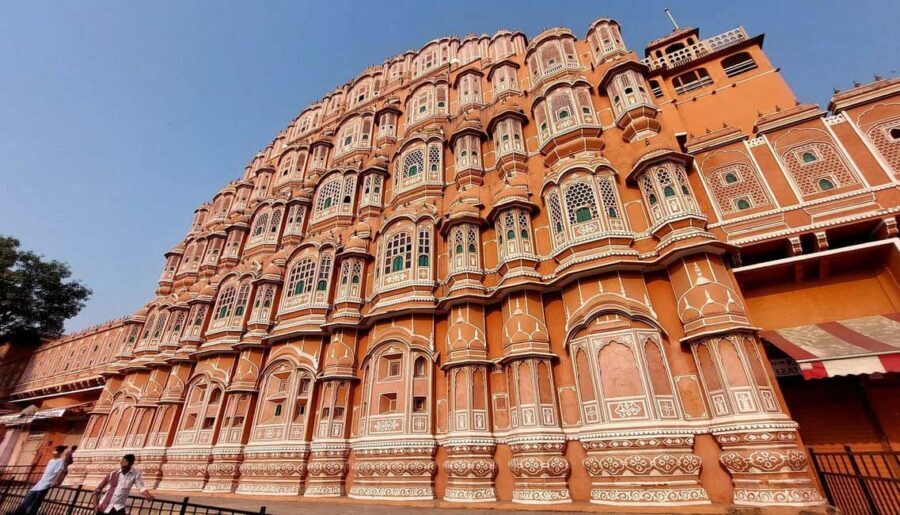
Your guide meets you just outside Hawa Mahal, next to an ATM. That’s a helpful landmark in itself, especially when you’re figuring out the Pink City streets early in the day. You’ll then take time for photos of Hawa Mahal before you head into the walking portion.
What makes this stop worthwhile is timing and pacing. You’re not squeezing a quick photo between other activities. You’re starting with the city’s most recognizable facade, so the rest of the walk makes sense. If you’re using a phone, this is also when it’s easiest to frame the windows and the overall shape without harsh midday glare.
In the reviews, guides like Monty and Ansh are specifically praised for sharing context and helping with photos. Even if you’re just a casual photographer, having someone point out what to shoot (and where to stand) can save you a lot of guesswork in narrow streets.
Blue Gate, Town Hall, and temples on foot
As you head onward, you’ll walk past the Blue Gate and the Town Hall building, plus temples along the way. These are the kinds of sights that are almost invisible if you drive past them. On foot, you can actually see how they sit in the street fabric—how locals move around them, how shopfronts and lanes shape views, and where the routes naturally funnel.
A big advantage here is that you get a sequence of heritage “anchors” without needing tickets or long waits. Think of it as a guided route that helps you read Jaipur’s architecture like it’s a map you can walk.
One more thing: during some visits, the temple portion can be more than a pass-by. Several people describe arriving while worship is active—singing, drums, and flower offerings. Your experience may vary depending on the day and time, but even a brief encounter with morning devotion can make the city feel personal instead of purely scenic.
The flower and vegetable market: color, fragrance, and local work
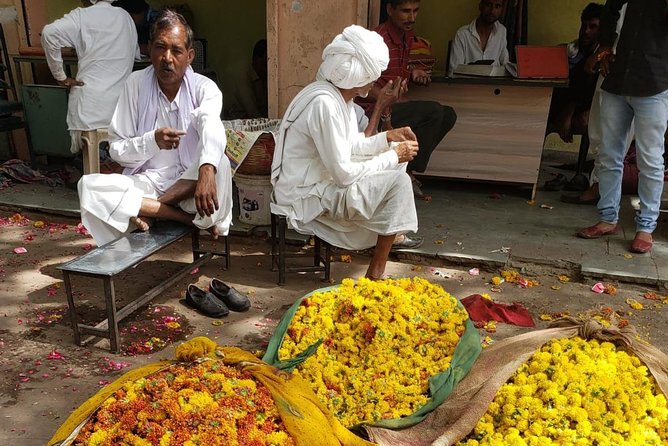
This is the heart of the tour. You’ll enter the market area when streets are calmer, and then you’ll spend your time with the vendors. The flower and vegetable market is exactly what it sounds like: stalls with fresh blooms and produce, people selling and buying, and a steady flow of activity.
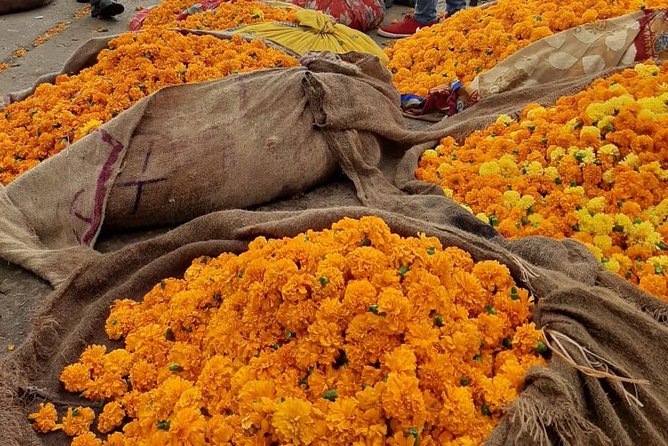
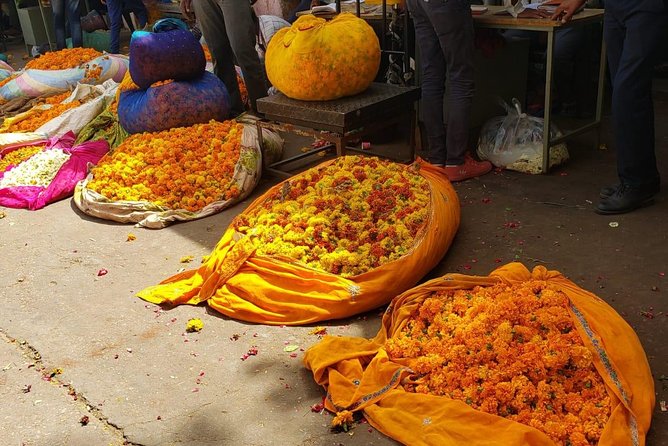
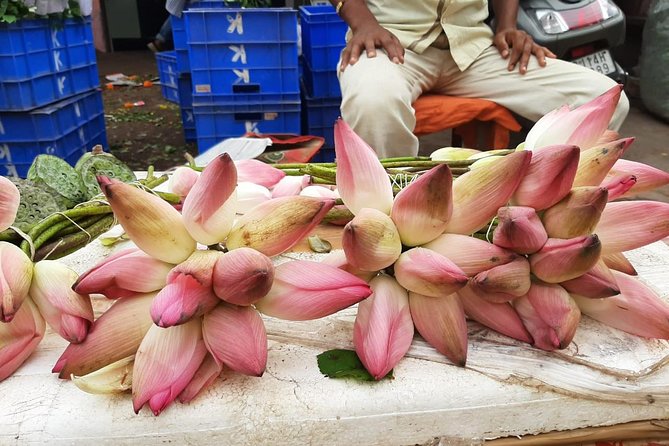
Expect to see flowers like marigolds and roses in large amounts, with bright piles and lots of natural color for photos. The best part is learning what you’re looking at. You’ll hear about the lifestyle of farmers who come from villages to sell their flowers, and you’ll understand that this is part of the daily supply chain—not just a pretty street scene.
Practical photo tip: keep your phone charged and tidy. In markets, you’re moving between clusters of people and bright stalls, so a quick camera habit helps. Also, pack hand sanitizer or tissues. Markets are hands-on places, and it’s nice to have a quick reset when you’ve been handling phones, cameras, or taking close-up shots.
And yes, the visual payoff is huge. But the value is also in watching how people work—how goods are arranged, how sellers talk, and how customers move through the aisles. It’s the kind of sensory experience that’s hard to recreate if you go alone.
Masala chai at a local tea stall: a small stop with real meaning
After the market, you’ll enjoy a cup of masala chai at a local tea stall. This isn’t just a beverage break. It’s part of how locals pace the day: warm, spiced, and practical—especially helpful if you started early and you’re still waking up.
In reviews, people mention the chai being among the best they had in India, and some also describe grabbing simple breakfast-style snacks like samosa or chickpea bites alongside their tea. Those extras aren’t guaranteed from the tour details you have here, but it’s common for street vendors to offer small bites. If you see something you want, you can usually pair it with your chai—just go with what’s being served in that stall at that moment.
Culturally, this stop helps the market feel less like a photo mission. You get a moment to sit, sip, and absorb. You’ll also get guidance on local culture while you’re there, which makes the street scenes click into place.






Timing, pace, and what to bring for 1.5 hours
This tour is about 1.5 hours. That’s short enough to fit into your arrival day or your first full morning, but long enough to feel like you actually saw the city—not just one or two snapshots.
Pace matters. You’ll be walking continuously, with some stop time for photos and a bit of waiting/standing around in market areas and near temples. If you have back issues, this is one you should skip. The tour also notes that electric wheelchairs aren’t allowed, and it’s not suitable for wheelchair users.
For what to bring, stick to the essentials:
- Comfortable shoes (you’ll be on your feet a lot)
- A camera (or a charged smartphone for photos)
- Hand sanitizer or tissues
- Warm clothes if you’re traveling in Nov–Feb
Safety-wise, the reviews highlight guides who keep solo women feeling comfortable and who manage foot traffic while crossing between sights. You’re still in a real street environment, so keep your usual city-smart habits: stay aware, keep valuables secure, and follow your guide’s lead.
Price and value: what $16 buys you in Jaipur
At $16 per person for a 1.5-hour guided walking tour, the value comes from the mix of things you get without spending extra money on guides at each stop. You’re paying for:
- A guided walking route through key Pink City sights
- A visit to the fresh flower and vegetable market
- Photo opportunities at Hawa Mahal, Blue Gate, Town Hall building, and temples
- Masala chai at a local tea stall
What’s not included is private transfers. That’s normal for a walking tour, but it matters for planning. If you’re coming from farther away, factor in how you’ll get to the meeting point outside Hawa Mahal next to an ATM.
Where this price tends to feel especially fair is when you compare it to doing the same route alone. Markets are confusing if you don’t know what you’re looking for. A guide saves time, improves your photo setup, and adds the context that turns color into meaning.
Who should book this tour, and who should skip it
This is a great fit if you:
- Want a first-day Jaipur introduction that doesn’t require a long itinerary
- Like markets and enjoy street-level culture more than big-ticket museums
- Care about photos and would rather have help choosing where to stand
- Travel solo and want a guided route that supports comfort in real street conditions
Skip it if you:
- Have back problems or any mobility constraints that make steady walking hard
- Use a wheelchair (the tour isn’t suitable for wheelchair users, and electric wheelchairs aren’t allowed)
- Prefer low-step, sit-down touring only
It’s also clearly designed for people who speak English, since the guide is English-speaking.
Should you book this Jaipur morning flower walk?
If you’re the type of traveler who likes culture you can smell and see, I’d book it. Starting at Hawa Mahal, then walking through heritage lanes to the flower market, and finishing with masala chai is a clean, efficient plan for a short morning.
If your trip schedule is tight, this is one of the easiest Jaipur experiences to slot in. And if you want something more than a checklist of famous monuments, the market stop plus the chai break give you daily-life context you won’t get from photos alone.
FAQ
Where is the meeting point for the tour?
You meet your guide just outside the Hawa Mahal building next to an ATM.
How long is the tour, and what language is the guide?
The tour lasts about 1.5 hours, and the guide is English-speaking.
What’s included in the experience?
It includes a guided walking tour of Jaipur, a visit to the fresh flower & vegetable local market, photography opportunities at key stops, and masala chai at a local tea stall.
What should I bring?
Bring comfortable shoes, a camera (or a charged smartphone), and hand sanitizer or tissues.
Is the tour wheelchair accessible?
No. Electric wheelchairs aren’t allowed, and the tour isn’t suitable for wheelchair users. It also isn’t suitable for people with back problems.
Can I cancel and get a refund?
Yes. You can cancel up to 24 hours in advance for a full refund.