REVIEW · AGRA
Taj Mahal Handicraft Walk: Explore True India with Artisans
Book on Viator →Operated by Agra Heritage Walks · Bookable on Viator
The Taj has a hidden neighbor: craft streets. This Taj Mahal Handicraft Walk takes you around the Taj Mahal area away from the biggest tourist crush, where you can meet artisans, look closely at work made by hand, and understand what goes into Agra’s most famous artistry.
Two things I really like about it: you focus on the crafts themselves (from zardozi gold embroidery to marble inlay), and you see people working in real home or workshop spaces, not just behind glass. You’ll also walk through old lanes where everyday making happens, including fresh-flower garlands and body jewelry.
The main drawback to plan around is comfort. It’s a walking experience, and it requires good weather, so you’ll want a flexible day and sun-sense (water, hat, and good shoes help).
In This Review
- Key highlights worth your time
- Why This Handicraft Walk Feels Different From a Standard Taj Tour
- Getting There: Orchid Retreat Start Point and Pickup Choices
- Your 2-Hour Game Plan (and How to Make It Enjoyable)
- Zardozi Gold Embroidery Workshop: Where Ornament Becomes Skill
- Marble Inlay (Pietra Dura): The Taj Connection You Can Actually See
- 17th-Century Lanes and Fresh-Flower Jewelry: Agra’s Everyday Craft Side
- Three-Generation Marble Prachinkari: Patterns, Connection, and Continuity
- Carpetmaking at Home: How Designs Evolve Between Communities
- Photos, Souvenirs, and Getting Better Prices Than Stores
- Tour Value: Is $15.88 a Smart Use of Time?
- Who This Tour Fits Best (and Who Might Skip It)
- Book It: My Decision Rules for This Craft Walk
- FAQ
- How long is the Taj Mahal Handicraft Walk?
- Where does the tour start and end?
- Is pickup available?
- What is included in the price?
- What should I bring or plan for since private transport is not included?
- Is the tour private?
- What happens if the weather is bad?
Key highlights worth your time

- Zardozi gold embroidery workshop near the Taj area, with a quick sense of where the craft fits historically
- Pietra dura marble inlay lessons, including how the tradition connects back to Taj Mahal artistry
- Fresh-flower garlands and body jewelry made in household lanes, with real context on how styles change
- Marble prachinkari workshop that links its look to the inlay tradition
- Carpetmaking at home, including how designs shifted through cross-community influence
- Buy souvenirs with better pricing than typical stores, because you’re shopping closer to the makers
Why This Handicraft Walk Feels Different From a Standard Taj Tour
If you’ve ever walked past the Taj Mahal and wondered how anyone could plan and build something that detailed, this walk gives you the answer in small, human steps. You’re not just looking at famous monuments. You’re seeing the working knowledge behind them—stitch by stitch, tile by tile, knot by knot.
I love how the tour keeps things practical. You don’t need a design degree to follow what’s happening. You get a guided sense of the craft, what the artisans actually do, and how the traditions link back to the Taj Mahal era. It’s a great pairing: do it after you visit the Taj, and you’ll notice details you didn’t have context for before.
The other big plus is the atmosphere. This isn’t about big, loud sights. It’s about everyday lanes around Tajmahal where craft work is part of life, and you can snap photos while people explain their process.
You can also read our reviews of more walking tours in Agra



Getting There: Orchid Retreat Start Point and Pickup Choices
The walk starts at The Orchid Retreat, Plot No 28 Taj Nagri Phase 1, Taj East Gate Road, Shilpgram Rd, Taj Nagari Phase 1, Telipara, Agra, Uttar Pradesh 282006. It also ends back at the meeting point, so you’re not stranded at the far end of a neighborhood maze.
Pickup is part of the experience in a couple of ways. You can select pickup by private car or tuk tuk, or you can choose the tour only. That flexibility matters in Agra, where your day can swing between early sights and later wandering.
One helpful detail: it’s a private tour/activity, meaning only your group participates. If you’re the kind of traveler who likes questions (and you should be, because the craft context is the whole point), fewer people in the group makes it easier to actually talk with the guide and artisans.
Your 2-Hour Game Plan (and How to Make It Enjoyable)
The tour runs about 2 hours. In that time, you’ll move through several craft stops and household work areas around the Taj Mahal region. Because it’s walking, your comfort depends on timing and weather. The experience notes good weather is required, so plan for a day when conditions cooperate.
I suggest treating the walk like a “slow look” session. Don’t rush the photos. Ask simple questions when you can. Even basic curiosity—how long something takes, what tools they use, what people still make the most—turns into real understanding fast.
Also, one small tip from how the experience is described in praise: people liked the smooth rhythm from start to finish. One highlight mentioned extra info stops added by the guide. That’s not something you can count on every time, but it’s a good sign that your guide may keep the walk interesting and not just stick rigidly to a checklist.
Zardozi Gold Embroidery Workshop: Where Ornament Becomes Skill
One of the first stops is an older workshop for zardozi, the gold embroidery style associated with high-end ceremonial and historical textile traditions. You’ll learn a brief history of the craft, then focus on the details and intricacies of how the work is made.
This stop is valuable because zardozi is one of those crafts where the beauty is obvious, but the process is not. When you see how the work is built, you understand why these designs look so controlled and why they still matter as a souvenir category. It’s also a craft that rewards careful viewing—watch where the gold elements sit, how patterns are planned, and how artisans handle the materials.
Potential drawback: this is guided explanation, not a full manufacturing lab. If you expect a long hands-on demo, manage your expectations. The payoff here is appreciation and vocabulary—after this, you can recognize quality when you see it.
Marble Inlay (Pietra Dura): The Taj Connection You Can Actually See
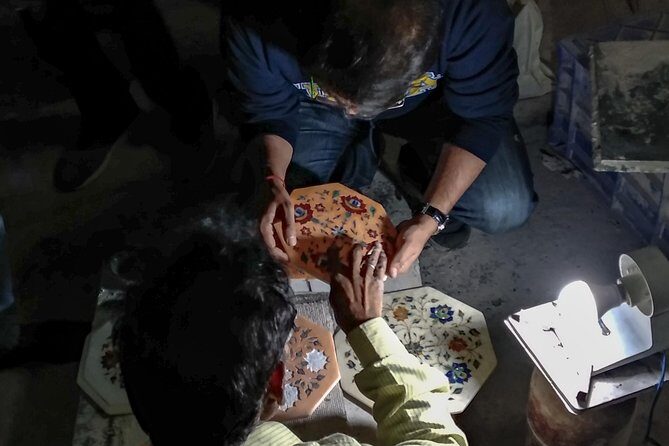
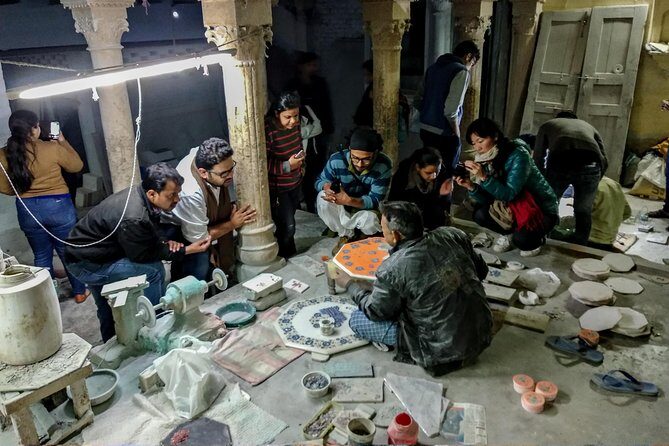
Next up is a marble inlay workshop—pietra dura—where you’ll hear how this craft started and how it flourished over time, tied back to the era of the Taj Mahal. There’s also emphasis on lineage: the artisans are described as descendants of those who made the Taj.
Why this matters: pietra dura is easy to admire from far away and hard to truly understand. When someone explains the origins and the idea behind the inlay work, you start to notice design discipline—how pieces fit, how surfaces are prepared, and how the overall pattern holds together.
A good way to use your time here is to look for how patterns are transferred into the final arrangement. Even if you can’t follow every technical step, you can learn what “good work” looks like: clean edges, consistent placement, and design that stays coherent as it scales.
Small caution: marble crafts can look similar in photos. If you’re buying later, take a few minutes now to study what sets quality apart—then you can spot it when souvenirs get offered.






17th-Century Lanes and Fresh-Flower Jewelry: Agra’s Everyday Craft Side
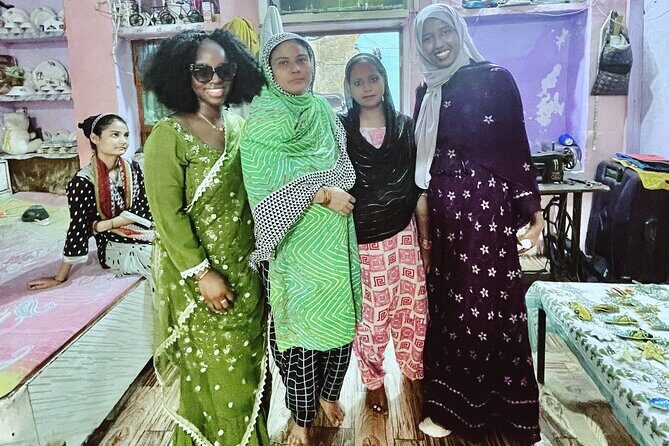
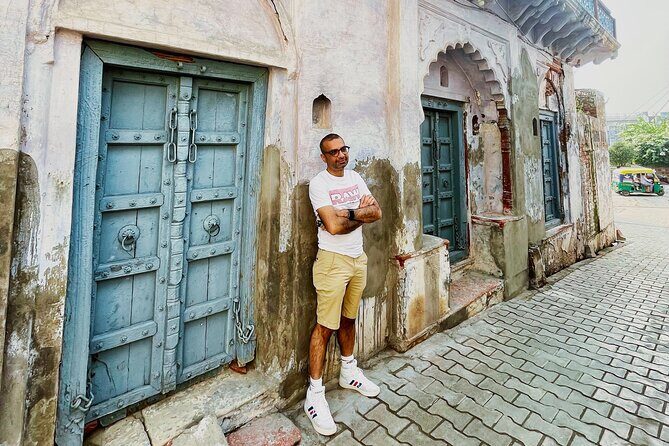
After marble and metal-like glamour, you’ll walk into lanes where craft happens at the household level. You’ll visit parts of the 17th-century lanes around the Taj area and see households where people make garlands and other body jewelry of fresh flowers.
This stop works because it doesn’t try to turn everything into a museum piece. You’re seeing a living tradition, not just a legacy product. The guide also explains briefly how the use of fresh flowers has changed over time and how that shift affects the industry.
What to look for: how the craft adapts. Flower-based work can be time-sensitive, seasonal, and tied to specific uses. Even without technical details, you’ll get the idea that demand shapes style, and style shapes what artisans learn to make well.
If you’re into photos, this is one of the best moments—but do it thoughtfully. Ask first, keep your space respectful, and focus on the work rather than only the person.
Three-Generation Marble Prachinkari: Patterns, Connection, and Continuity
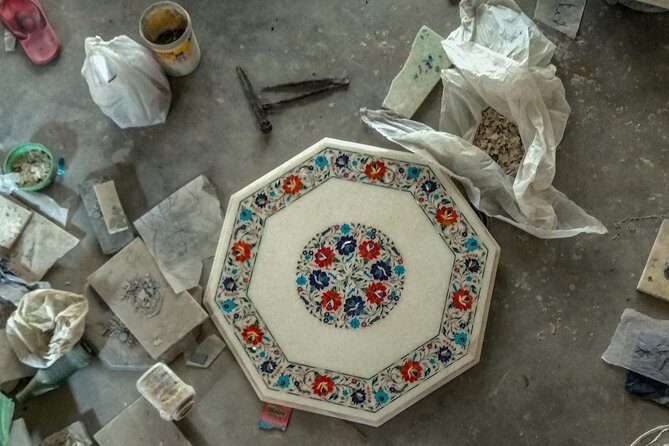
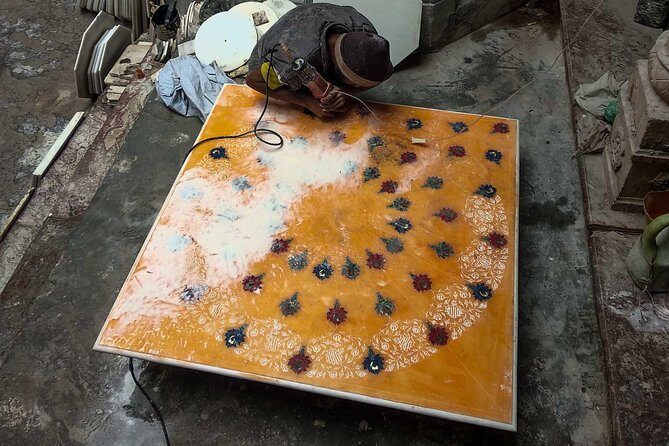
Then comes a three-generation old workshop for marble prachinkari work. You’ll learn the brief connection between this art and pietra dura, which is key. The goal isn’t to overload you with craft terminology—it’s to show that the visual language of inlay and the look of patterned marble work aren’t unrelated.
In practical terms, this stop helps you build a mental map. You start to understand that different techniques can produce related aesthetics: detailed surfaces, pattern logic, and an emphasis on careful placement. That means you’ll walk through souvenir areas later with better eyes, not just better interest.
A drawback to keep in mind: since the tour is about 2 hours, each workshop is likely a guided overview rather than a full deep instruction session. If you want to learn a specific craft technique at a slower pace, plan to ask your guide what else you can do afterward in Agra.
Carpetmaking at Home: How Designs Evolve Between Communities
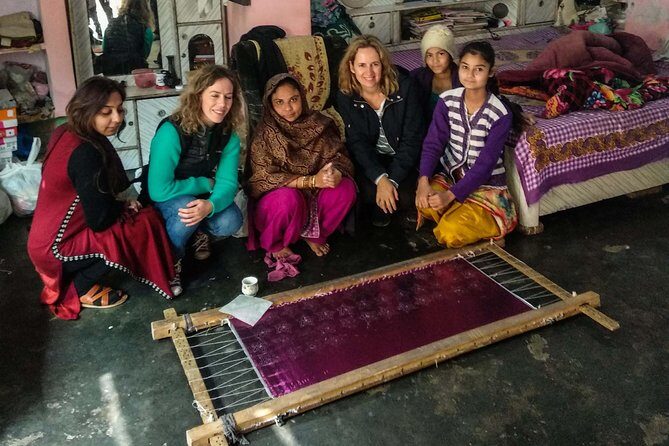
The final craft focus is on household art of carpetmaking. You’ll get a brief explanation of how present-day designs evolved, including the role of cross-community acculturation.
This is a smarter ending than you might expect. Jewelry and marble are gorgeous, but carpets tell you something about social history and how design moves across cultures. If you’ve ever wondered why certain patterns feel familiar even when they come from different regions, this part helps you connect design to people—not just to style trends.
When you’re looking at carpets, don’t only ask what’s pretty. Ask what it’s based on—what changed, what stayed, and what influences still show up. Even if your guide can only cover a little, you’ll leave with a more thoughtful approach to shopping and collecting.
Photos, Souvenirs, and Getting Better Prices Than Stores
This walk is also pitched as a prime chance to buy souvenirs at much better prices than in typical stores. That advantage makes sense: you’re closer to the makers, and you’re shopping with context. You’re not just picking an item off a rack—you’re buying an explanation.
If shopping matters to you, here’s how I’d play it:
- Focus on one or two crafts you truly care about (zardozi textiles, marble inlay items, or carpet design), not everything at once. It keeps decision-making sane.
- Use your questions while you’re with the guide. Ask what the craft is called and what makes one piece more labor-intensive than another.
- When you’re offered something, compare it mentally to what you studied in the workshops. Small differences can signal bigger differences in craftsmanship.
Also, remember that pricing and bargaining depends on local norms and the specific workshop. The tour description promises better pricing than stores, but you’ll still want to be polite, patient, and realistic.
Tour Value: Is $15.88 a Smart Use of Time?
At about $15.88 per person for roughly 2 hours, this is one of those deals that can either feel like a bargain or feel too short—depending on your mindset. If you want a quick Taj-area experience with real craft context, it’s strong value.
The value isn’t only the price. It’s what’s included:
- a tour guide
- entry to artisans homes
And it’s missing one big item:
- private transportation is not included (though pickup can be selected)
Entry to artisans homes matters because it changes what you can see. You’re not just looking from the street. You’re getting invited into the working spaces where crafts actually happen. That’s a big part of why the tour earns such high praise.
Group discounts are also mentioned, which makes this a practical choice if you’re traveling with friends or family and want to keep costs down without sacrificing a meaningful guide-led experience.
Who This Tour Fits Best (and Who Might Skip It)
This is a great fit if you:
- like hands-on craft stories and want to understand what you’re seeing
- want a break from standard sightseeing crowds around the Taj area
- enjoy walking in older lanes and talking with people behind traditional work
- care about souvenirs made with care, not just mass-produced items
You might reconsider if you:
- dislike walking or have limited mobility concerns (most travelers can participate, but it’s still a walking route)
- need a perfectly structured, timed schedule with no weather sensitivity
- only want landmark photos and nothing else
If you’re pairing this with a Taj visit, I’d do it the same day. The crafts make more sense right after you’ve seen the monument details that inspired these techniques.
Book It: My Decision Rules for This Craft Walk
If your goal is to leave Agra with understanding, not just images, I think this is worth booking. The strongest praise centers on the idea that you come away with a new appreciation for the work behind the Taj, plus a smooth, friendly guide experience.
One example name you may run into is Arhaan, who was described as clear and friendly after booking, and importantly, on time. That kind of reliable communication helps when you’re coordinating in a city where schedules can get messy.
So here’s my simple call: book this if you want the Taj story told in craft form—gold embroidery, marble inlay, flower jewelry, marble prachinkari, and carpets—over about two hours, with the chance to shop smart near the makers.
FAQ
How long is the Taj Mahal Handicraft Walk?
It’s about 2 hours (approx.).
Where does the tour start and end?
It starts at The Orchid Retreat in Agra and ends back at the same meeting point.
Is pickup available?
Yes. You can select pickup by private car or tuk tuk, or choose the tour only.
What is included in the price?
The tour includes a tour guide and entry to artisans homes.
What should I bring or plan for since private transport is not included?
Private transportation is not included, so if you need it, select pickup. Also, wear comfortable shoes because it’s a walking tour.
Is the tour private?
Yes. It’s private, and only your group will participate.
What happens if the weather is bad?
The experience requires good weather. If it’s canceled due to poor weather, you’ll be offered a different date or a full refund.