REVIEW · RISHIKESH
Rishikesh Private Guided Sightseeing Tour by Car
Book on Viator →Operated by India Easy Trip Pvt Ltd · Bookable on Viator
Some days you want temples, not tourism.
This private, guided Rishikesh route mixes major ashrams, old river bridges, and time along the Ganges so the day feels more like a slow spiritual circuit than a checklist. You’ll see places tied to yoga life and Hindu practice, then end with the evening prayers atmosphere by the water.
Two things I really like about this tour: you get smooth hotel pickup/drop-off with an air-conditioned private vehicle, and you’re not stuck guessing where to go or what you’re looking at thanks to a professional guide. The plan also includes major landmarks like Lakshman Jhula, Ram Jhula, multiple ashrams, and a Ganga aarti stop—so you get the real “why Rishikesh matters” feeling, not just photos.
One thing to watch: it follows a dress code (no shorts or sleeveless tops; knees and shoulders covered) and there’s a moderate amount of walking. Timing can also shift a bit because of traffic, so if you’re the type who hates delays, plan your day loosely.
In This Review
- Key Highlights You’ll Actually Feel
- Rishikesh By Car: Temples, Ashrams, and the River Feeling
- 10:00 am Pickup and the 6 to 7 Hour Rhythm
- Lakshman Jhula: Classic Suspension Bridge Views, No Walking Needed
- Sivananda Ashram: A Traditional Stop for Understanding Ashram Life
- Ram Jhula and Swarg Ashram: Temples Close to the River
- Gita Bhawan: When a Place Is Bigger, the Meaning Shows
- Parmarth Niketan Ashram and the Evening Prayer Atmosphere
- Triveni Ghat: Learning the Ganga Along the Ghats
- The Flexible Rishikesh Time for Lunch and Market Browsing
- Price and Value: Is $40 a Good Deal?
- Practical Tips: Dress Code, Walking Pace, and Weather Reality
- Who This Tour Fits Best (And Who Should Skip It)
- Should You Book This Rishikesh Private Car Tour?
- FAQ
- How long is the Rishikesh private guided sightseeing tour by car?
- What time does the tour start?
- Does the tour include hotel pickup and drop-off?
- Is food included in the price?
- Is there any dress code for the tour?
- Can I cancel for a full refund?
Key Highlights You’ll Actually Feel
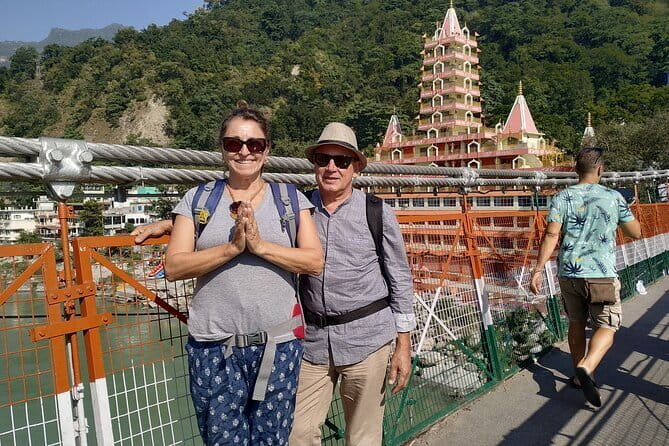
- Private guided pacing across the river bridges and ashram lanes, with flexibility if you want more time somewhere
- Air-conditioned round-trip transport with hotel pickup/drop-off and water provided
- Multiple bridge viewpoints (Lakshman Jhula, Ram Jhula, and Janki Bridge) plus market time nearby
- Stop-by-stop context at classic places like Sivananda Ashram, Swarg Ashram, Gita Bhawan, and Parmarth Niketan
- Evening Ganga aarti time along the ghats, including well-known aarti organization spots
Rishikesh By Car: Temples, Ashrams, and the River Feeling
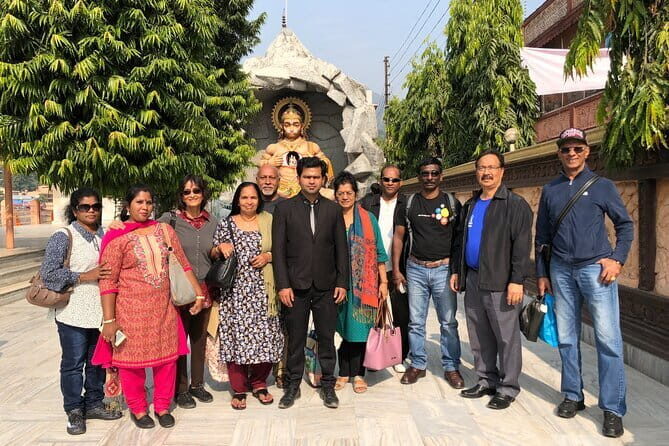
Rishikesh is called the yoga capital for a reason, but this is the kind of day that proves it beyond slogans. When you’re moving between bridges, ashrams, and temple areas, you start noticing patterns—how daily life and devotion blend right into the streets.
What I like here is that the tour isn’t only about famous buildings. It also aims to bring you to the riverfront prayer energy, where the Ganges becomes the center of the experience. You’ll be there at the time of day when locals and visitors gather, and that makes everything feel more connected.
Also, the tour’s format works well if you want comfort without losing meaning. You’re not doing the whole thing on foot, yet you still get enough time at each stop to actually look around, take photos, and understand what you’re seeing.
You can also read our reviews of more guided tours in Rishikesh


10:00 am Pickup and the 6 to 7 Hour Rhythm
The tour starts at 10:00 am, and the total time is about 6 to 7 hours. That’s long enough to cover key sights, but not so long that you’re exhausted before the best part—time near the ghats and evening prayers.
You’ll get round-trip hotel pickup and drop-off within city areas, plus a private air-conditioned vehicle. There’s also mineral water (1 liter per person), which is a small detail, but it matters in Rishikesh heat and crowds.
A practical note: the day is described as flexible. Some spots may take longer if you linger, and traffic can affect timing. So I’d treat the schedule as a guideline, not a stopwatch.
Lakshman Jhula: Classic Suspension Bridge Views, No Walking Needed
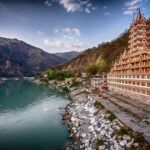
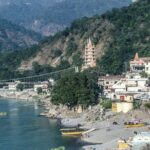
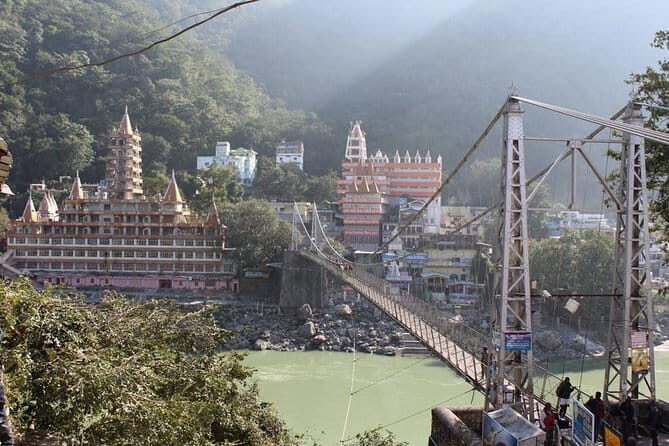
You’ll begin at Lakshman Jhula Bridge, one of the iconic suspension bridges in Rishikesh. Even though it’s noted as closed for walking right now, it’s still worth the visit for the viewpoint and the nearby market area.
This is a good first stop because it gives you instant orientation. From here, you can get a sense of where the ashram lanes cluster, and how the riverfront connects to temple roads.
Pros:
- Great early photo angle and view
- Close to market browsing time later in the day
Consideration:
- Since the bridge itself isn’t for walking, you’ll focus more on viewpoints than a full stroll
Sivananda Ashram: A Traditional Stop for Understanding Ashram Life
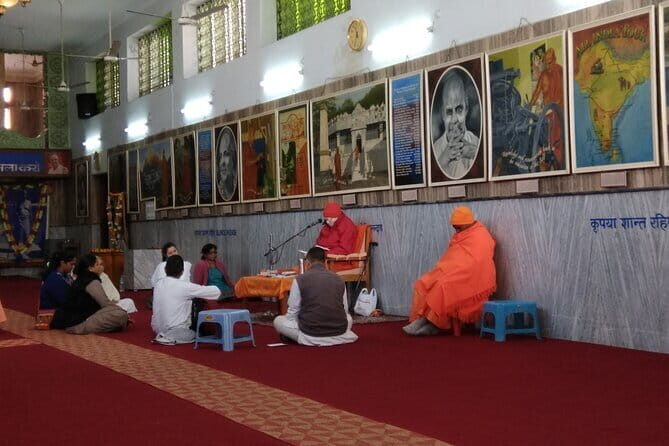
Next up is Sivananda Ashram, described as one of the leading and more traditional ashrams in Rishikesh, started by Swami Sivananda. The visit is set for about 30 minutes, so it’s not a long retreat day. But it’s enough time to see the setting and get a sense of the place’s tone.
This is the kind of stop where a guide helps a lot. Even if you don’t follow every detail of the teachings, you’ll likely pick up the basics of how ashrams function—community rhythms, devotion spaces, and the overall purpose of the site.
Pros:
- A strong intro to ashram tradition
- Time with context, not just sightseeing
Consideration:
- Expect “look and learn” pacing rather than deep meditation time
Ram Jhula and Swarg Ashram: Temples Close to the River
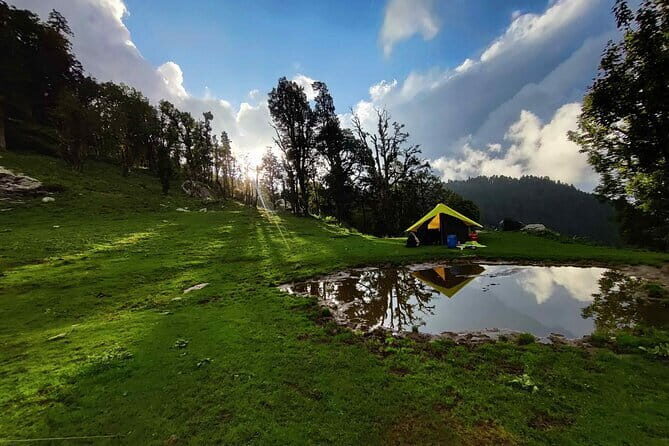
Then you’ll move to Ram Jhula, the second major suspension bridge. It’s surrounded by ashrams and temples, and it’s also a convenient hub for nearby historic sights.
After that comes Swarg Ashram, located near Ram Jhula. You’ll have time to view Swargashram Temple. This area is often calmer than the bridge crossing itself, so you can slow down, watch the flow of people, and see the mix of devotion and daily activity.
Pros:
- Two different “river bridge” moods in one stretch
- Easy geographic logic: temples and ashrams are close
Consideration:
- Because these are religious areas, you’ll want to keep your pace respectful and avoid disrupting worship
You can also read our reviews of more private tours in Rishikesh

Gita Bhawan: When a Place Is Bigger, the Meaning Shows
Gita Bhawan is next, and it’s noted as one of the biggest ashrams in terms of rooms. It’s named after the famous Hindu religious text, the Gita, and the focus is on learning about Krishna.
That size detail matters because bigger ashrams tend to feel more structured—more rooms, more daily movement, more of a living institution rather than a single quiet courtyard.
In a short stop like this, you’re not going to “learn everything.” But you can still walk away with a clearer sense of how philosophy and practice show up in space: where people gather, how ideas get taught, and what the ashram highlights to visitors.
Pros:
- Strong theme connection: Gita and Krishna
- A bigger setting that helps you understand ashram scale
Consideration:
- You may need to choose what you focus on in the time you have
Parmarth Niketan Ashram and the Evening Prayer Atmosphere

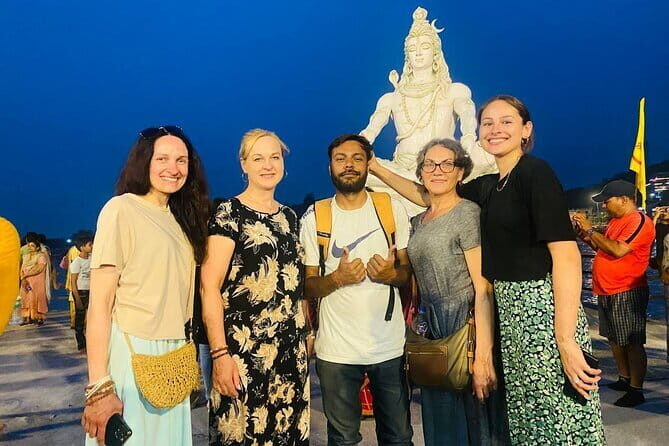
Your day’s tone shifts as you get to Parmarth Niketan Ashram. This is a famous ashram, and the current leader is listed as Swami Chidananda. The stop includes time to view Hindu statues and learn about them, so it’s more than a quick photo.
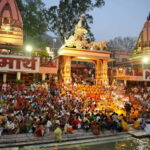
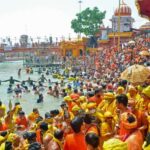
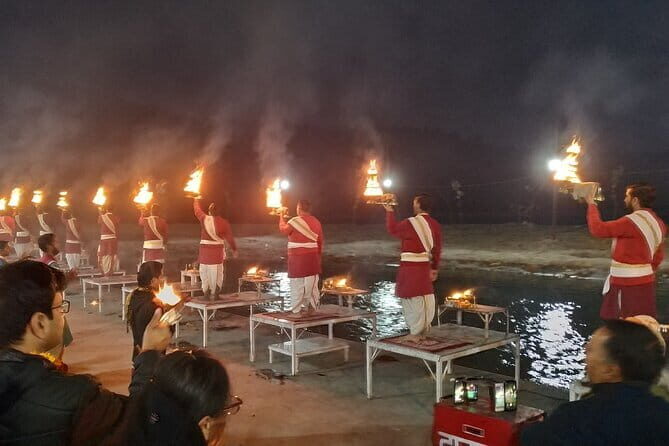
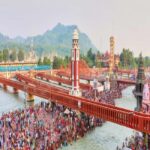
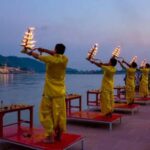
The bigger draw is what happens later: the experience is designed around evening prayers by the River Ganges, and your day ends at the evening prayer moments at Parmarth Niketan Ashram. This is where the Ganges stops being a background and becomes the main stage.
If you’ve never seen a Ganga aarti setting, it can be unexpectedly moving. Music, lamps, and the steady flow of people create a rhythm that pulls you in even if you’re not fluent in the rituals. You don’t have to force emotion. Just show up and observe.
Pros:
- Meaningful end to the day
- Time with statues and spirituality before prayer
Consideration:
- Dress code applies here too, and it can be cooler near the river than you expect
Triveni Ghat: Learning the Ganga Along the Ghats
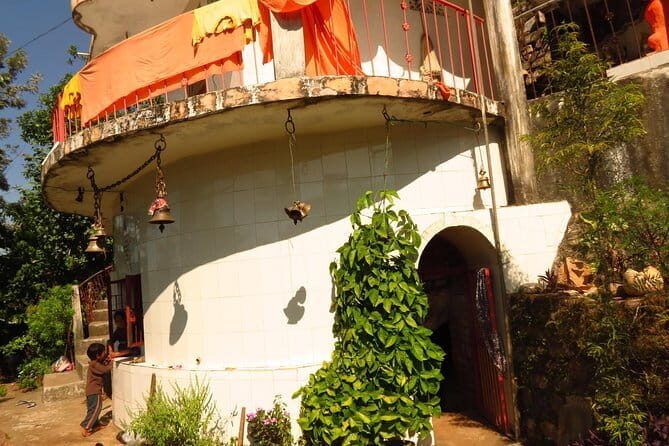
In addition to the Parmarth Niketan evening moment, the plan includes Triveni Ghat. You’ll visit and learn more about the Ganga there, and the evening Ganga Aarti is also part of the tour.
Triveni Ghat is described as being organized very well, with music that helps connect people from different backgrounds. That matters if you’re a first-timer: you’ll likely feel like you’re in a guided flow rather than trying to figure it out on your own.
Pros:
- A clear educational angle at the ghat
- Evening prayer experience at a well-organized spot
Consideration:
- Ghats can get crowded, and your time depends on how the ceremony timing plays out
The Flexible Rishikesh Time for Lunch and Market Browsing
There’s also dedicated time at Rishikesh itself (about 1 hour 30 minutes). The tour notes that this is flexible, meaning you can spend more time at certain places and less at others depending on your interests.
This is where lunch and market browsing fit in. Food and drinks aren’t included, so you’ll want to plan for spending a bit on lunch. The upside is choice: you’re not locked into a single restaurant.
One small food tip from what people talk about in this area: you might want to try bamboo eater and sugar cane water if you see them available near the market strip. Even if you skip it, it’s an easy way to try local street-style refreshers.
Also, if you’re curious about the so-called Beatles Temple area, this is the part of the day where it makes sense to ask your guide if there’s time to swing by, since the tour allows flexibility around the Rishikesh stop.
Pros:
- Built-in time to breathe and browse
- Flexibility to match your pace
Consideration:
- Food costs are on you, and market timing depends on traffic and prayer schedule
Price and Value: Is $40 a Good Deal?
At $40.00 per person, this isn’t a high-end luxury price. It’s priced like a practical private sightseeing day, and the value depends on what you care about.
Here’s what you’re getting that usually costs extra on your own:
- A professional guide (translation of sights into understanding)
- Private air-conditioned vehicle with toll/parking/driver charges covered
- Hotel pickup and drop-off within city limits
- Water (1 liter per person)
- All taxes included
What’s not included is also important: food and drinks are on you. That’s pretty standard, but it means your final day cost will be a bit more depending on where you eat.
If you’re traveling solo, you might feel the price more. If you’re a couple or family, the private car cost spreads out and the day starts to feel like a smart shortcut. You’re paying to avoid confusion and wasted time, and that’s the hidden value in a place like Rishikesh.
Practical Tips: Dress Code, Walking Pace, and Weather Reality
This tour works in all weather conditions, so you should dress for rain or shine. The important part is comfort and meeting the rules for religious sites.
Dress code is specific:
- No shorts or sleeveless tops
- Knees and shoulders must be covered for both men and women
Plan for moderate walking too. You’re not doing long hikes, but you will move between viewpoints and temple/ashram spaces. If you bring shoes you can walk in for 10–20 minutes at a time, you’ll feel a lot better.
One more note: it’s listed as not recommended for pregnant women, so if that applies, you’ll want to look at a shorter or more seated-focused alternative.
Who This Tour Fits Best (And Who Should Skip It)
This tour is a great match if you want:
- A guided, organized way to see the best-known ashrams and temples
- Comfort via private transport plus a clear start/end to your day
- Evening Ganga aarti time without the stress of planning routes
It might not be the best fit if you strongly dislike:
- Dress-code requirements at religious sites
- Any moderate walking at all
- Timing uncertainty from traffic
Should You Book This Rishikesh Private Car Tour?
If you’re trying to see Rishikesh without chaos, I’d book it. The mix of bridge viewpoints, classic ashrams (Sivananda, Swarg, Gita Bhawan, Parmarth Niketan), and evening prayer stops makes it feel like a full-day experience with meaning, not random hopping.
Choose this especially if you value a guide who can explain what you’re seeing and you like the idea of ending the day by the Ganges. If you’re flexible, respectful, and dressed appropriately, this is the kind of day that gives you real understanding fast.
FAQ
How long is the Rishikesh private guided sightseeing tour by car?
The tour runs about 6 to 7 hours.
What time does the tour start?
It starts at 10:00 am.
Does the tour include hotel pickup and drop-off?
Yes. You get round-trip hotel pickup and drop-off to hotels within the city.
Is food included in the price?
No. Food and drinks are not included. The tour includes time to stop for lunch, but you’ll pay for what you eat.
Is there any dress code for the tour?
Yes. No shorts or sleeveless tops. Knees and shoulders must be covered for both men and women.
Can I cancel for a full refund?
Yes, you can cancel up to 24 hours in advance of the experience start time for a full refund.