REVIEW · RISHIKESH
Rishikesh Full Day Guided Sightseeing Tour with Ganga Aarti
Book on GetYourGuide →Operated by Amusing destinations · Bookable on GetYourGuide
One evening, one river, and a lot of meaning. This full-day, guided Rishikesh route pairs temples and ghats with the Ganga Aarti at Parmarth Niketan, so your day has both calm sightseeing and a powerful finale.
I like two things most: first, the day is structured around key spiritual stops with a professional English-speaking guide who explains what you’re seeing as you go. Second, the highlight is timed for the evening ritual, with Ganga Aarti details like mantras, bhajans, and oil lamps (diyas) offered along the river.
One consideration: it’s not suitable for wheelchair users, and the plan includes several walks—across the suspension bridges and through temple/ghat areas—so comfortable shoes matter.
In This Review
- Key highlights worth your attention
- Price and what $52 buys you in Rishikesh
- How the 8-hour flow actually works (and why timing matters)
- Triveni Ghat and Bharat Mandir: where the day’s spiritual vibe sets in
- Sivananda Ashram (Divine Life Society): wellness time that feels different
- Ram Jhula and Lakshman Jhula: suspension-bridge views and a bit of local wandering
- Ram Jhula
- Lakshman Jhula
- Parmarth Niketan Ashram: the evening build-up to Ganga Aarti
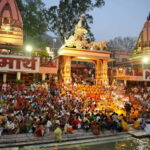
- Witnessing Ganga Aarti at the holy Ganges (what you’ll actually see)
- The value of a guided plan (and how the guide helps)
- What to bring and how to dress for the day
- Who this tour fits best (and who might want a different day)
- Should you book this Rishikesh full-day tour with Ganga Aarti?
- FAQ
- How long is the tour?
- Where is hotel pickup and drop-off available?
- Is the tour guide available in English?
- What are the main stops during the day?
- Is Ganga Aarti included?
- What’s included in the price?
- What’s not included?
- What should I bring?
- Are there any restrictions on clothing or items?
- Is the tour suitable for wheelchair users?
Key highlights worth your attention
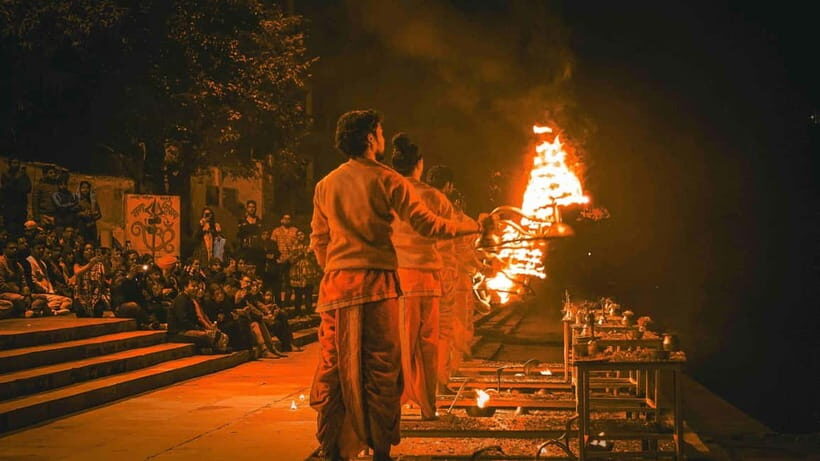
- Ganga Aarti at Parmarth Niketan: mantras, bhajans, diyas, and offerings to Mother Ganga
- Triveni Ghat + Bharat Mandir: two recognizable spiritual stops, with time to photo and explore
- Sivananda Ashram (Divine Life Society): ashram campus time, plus a library visit and yoga/meditation if available
- Ram Jhula and Lakshman Jhula: iconic suspension bridges with panoramic Ganges views
- Pickup and drop-off in Tapovan and Rishikesh: less hassle, more actual sightseeing time
Price and what $52 buys you in Rishikesh
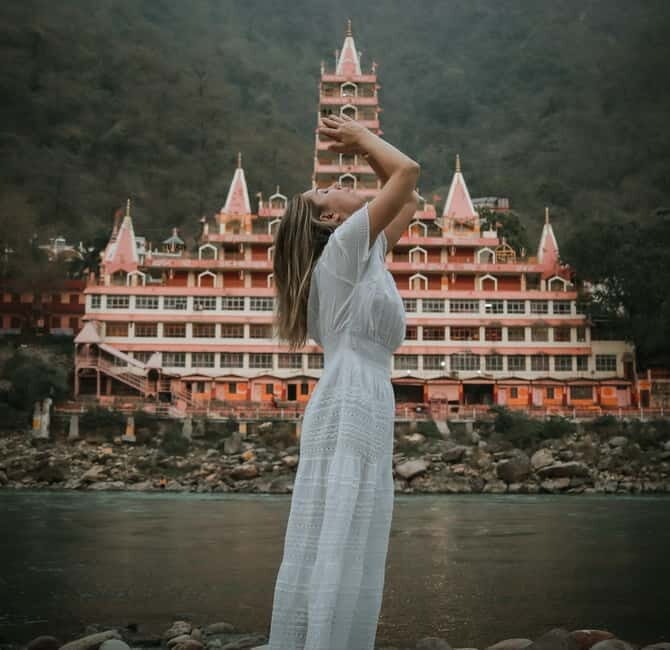
At about $52 per person for an 8-hour day, this tour is trying to solve a very specific problem: how to see a lot of Rishikesh’s highlights without spending your day figuring out transport, timing, and where to go for the evening ceremony.
You’re paying for a few practical things that add up fast in a city like Rishikesh:
- Hotel pickup and drop-off (in Tapovan and Rishikesh)
- Private transportation in an air-conditioned vehicle
- An English-speaking guide who stays with you through multiple stops
- A schedule built around major locations, ending with Ganga Aarti at Parmarth Niketan
Food isn’t included, so you’ll need to plan your own meal breaks. That’s the main “extra cost” category you should expect. Still, for people who want one guided day and don’t want to coordinate rides across several spiritual sites, this price tends to make sense.
You can also read our reviews of more guided tours in Rishikesh


How the 8-hour flow actually works (and why timing matters)
This is a full day, but it’s not the kind where you only “drive by” places. The route mixes:
- short photo stops,
- temple/ghat visits,
- ashram walking time,
- and two bridge strolls with river views.
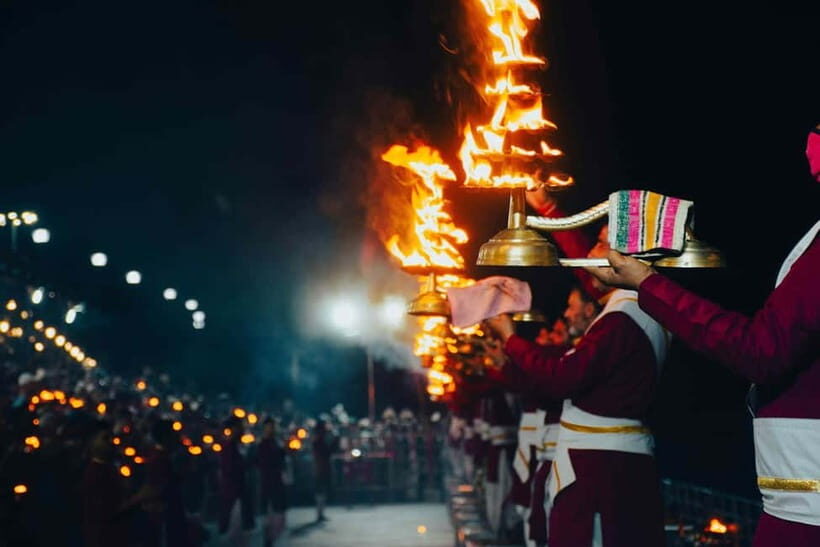
The biggest reason the timing matters is the ending: Ganga Aarti is performed in the evening on the banks of the holy Ganges, and this tour places you at Parmarth Niketan for it. If you’re a first-timer, you don’t want to gamble on finding the right spot, the right time, and the right “what’s going on now” context once it starts.
Triveni Ghat and Bharat Mandir: where the day’s spiritual vibe sets in
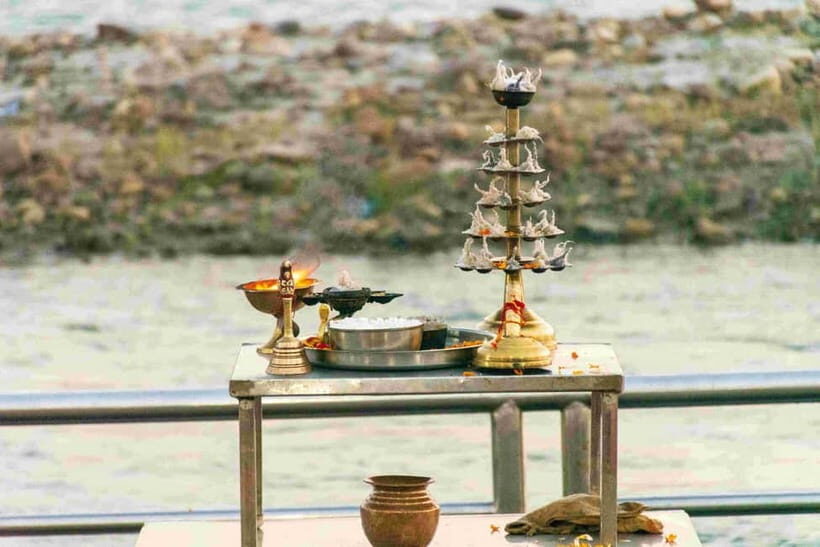
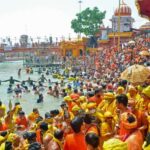
Your day gets rolling with Triveni Ghat, one of the most revered ghats in Rishikesh. You’ll get a photo stop plus a visit time totaling about 1 hour. That’s long enough to take photos, walk around the area at your own pace, and actually look at how busy or calm it feels compared with other parts of town.
After that you head to Bharat Mandir, with about 30 minutes allocated for a visit and walking. This stop is shorter, but that’s not necessarily a drawback. In a one-day plan, shorter temple time can be a smart trade: you still get the atmosphere and key site experience, while keeping energy for the bigger segments like the ashrams and the bridges.
One small practical tip: temples and ghats are visually intense. If you’re the type who likes to take your time, use the guide’s explanations to choose what to focus on—rather than trying to capture everything at once.
Sivananda Ashram (Divine Life Society): wellness time that feels different
Next up is Sivananda Ashram, also known as The Divine Life Society. You’ll have about 40 minutes here—enough time to do the essentials without feeling rushed into a checklist.
What makes this stop worthwhile is the contrast:
- you’re coming from ghats and temples,
- then you step into an ashram campus vibe designed for reflection and learning.
You can explore the ashram and visit its library. And if it’s available during your visit, you may also catch yoga or meditation sessions. That “if available” part matters: don’t build your whole day around it, but do keep an eye out once you arrive.
For many visitors, this is where the tour stops feeling like sightseeing and starts feeling like understanding why people come to Rishikesh in the first place.
Ram Jhula and Lakshman Jhula: suspension-bridge views and a bit of local wandering
Then the tour shifts to something more playful: the iconic bridges.
You can also read our reviews of more tours and experiences in Rishikesh

Ram Jhula
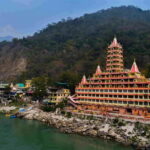
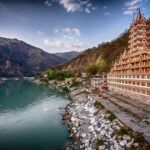
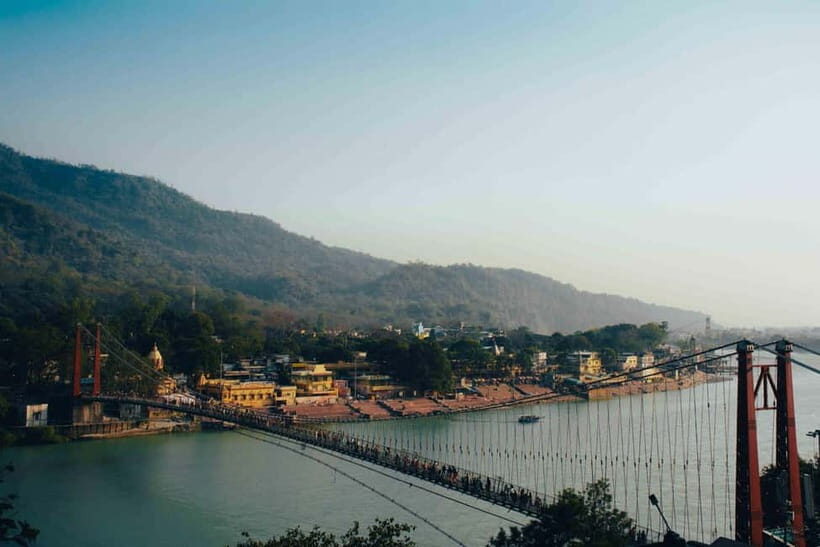
You’ll spend about 30 minutes at Ram Jhula, with sightseeing and walking. The big draw is the panoramic views of the Ganges. This is also where your camera will probably get used the most, because the bridge gives you a moving viewpoint while you walk.
Lakshman Jhula
Next is Lakshman Jhula, again with about 30 minutes of sightseeing and walking. The timing here is practical: you’re already dressed for walking from the earlier temple/ghat sections, and you’re now transitioning into a more scenic, less “inside” part of the day.
This part of the tour also includes opportunities to browse nearby areas. You’ll have time to explore local shops and visit nearby temples around the bridges, which is a nice break from structured stops. It’s also a good moment for souvenirs—without feeling like you have to stop for shopping every ten minutes.
Parmarth Niketan Ashram: the evening build-up to Ganga Aarti
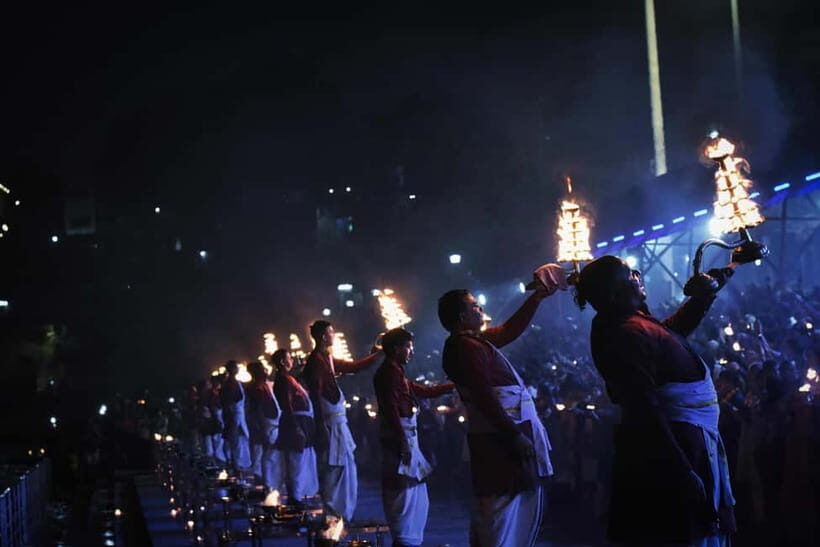
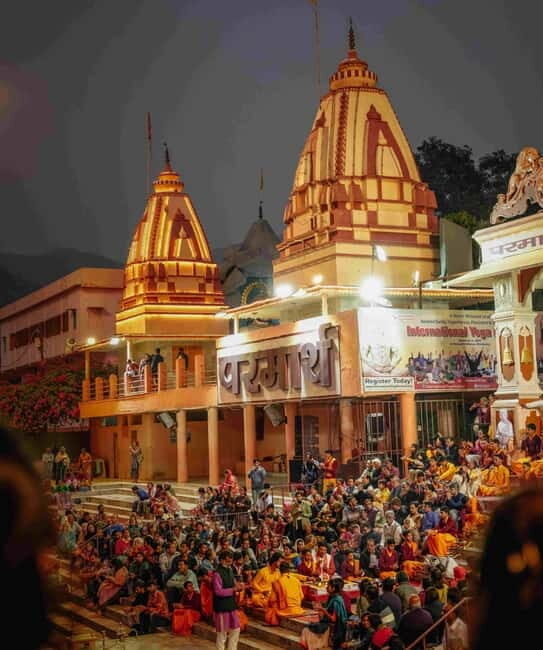
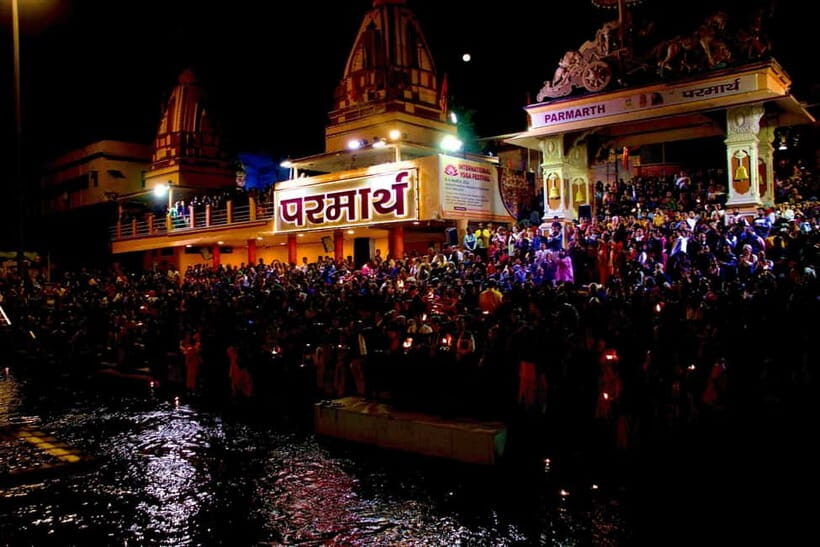
You finish at Parmarth Niketan Ashram, with about 2 hours allocated. That time includes a photo stop, a visit, and walking inside the campus area—so you aren’t just dropped in at the very last second.
If ongoing activities or classes are available, you may be able to join them. Even if you don’t catch anything scheduled, this is still valuable time because you’ll understand the setting where Ganga Aarti happens. It also helps you avoid that common travel problem: arriving too late, too confused about where to stand, and too distracted to enjoy the ritual itself.
Witnessing Ganga Aarti at the holy Ganges (what you’ll actually see)
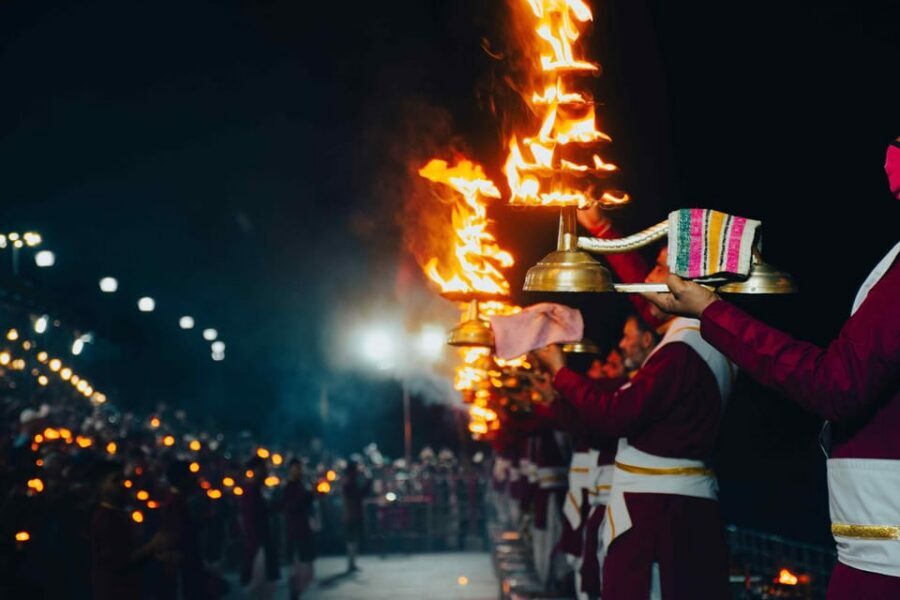
This is the reason most people choose this day tour, and it’s handled in a very clear, experience-focused way.
The Ganga Aarti is described as:
- performed every evening on the banks of the holy Ganges,
- with priests chanting mantras,
- singing bhajans,
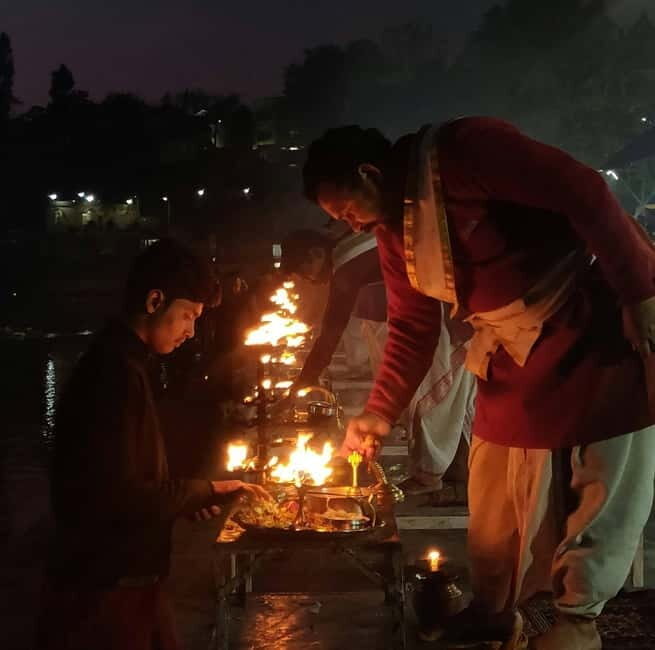
- lighting oil lamps (diyas),
- and making offerings to Mother Ganga.
The emphasis here is on what’s happening in real time. You’re not just learning about the ceremony—you’re watching the rhythm of it: the chanting, the movement, the diyas, and the focus on offerings.
A practical note: ceremonies like this can feel emotionally intense because people treat them seriously. You’ll likely want to arrive with a calm mindset and be ready to put your phone away for stretches, so you can actually take it in rather than only record it.
The value of a guided plan (and how the guide helps)
One of the best “invisible” benefits of this tour is having someone guide you through multiple spiritual stops in a single day, in English. A good guide doesn’t just point. They explain what you’re looking at and why it matters.
One guide name you may hear associated with this kind of tour is Shelesh—mentioned as friendly company in feedback. Even if you don’t get the same guide, the concept is the same: you should expect English-speaking guidance at each stop, with insights designed to make the day easier to understand.
For first-timers, this is huge. Without a guide, it’s easy to miss the story behind what you’re seeing—or to spend too long asking basic questions. Here, those answers are part of the flow.
What to bring and how to dress for the day
This tour is straightforward about what you need, and it’s also clear about what’s not allowed.
Bring:
- A camera (you’ll use it across ghats, bridges, and the ashram)
Dress and behavior considerations:
- Short skirts are not allowed
- Alcohol and drugs are not allowed
Also, given the number of walking segments (Triveni Ghat area, Bharat Mandir walk time, bridges, and two ashrams), I’d strongly prioritize comfort. Think supportive footwear and clothing you can move in easily.
Since food and drinks aren’t included, plan your own meal timing. You’ll be happiest if you don’t arrive hungry and distracted.
Who this tour fits best (and who might want a different day)
This is a strong fit if:
- you’re seeing Rishikesh for the first time and want a single day plan,
- you want a mix of culture + spirituality + scenic bridge time,
- you care about finishing with Ganga Aarti in a meaningful setting,
- you’d rather rely on a prepared schedule than coordinate transport on your own.
It’s not a fit if:
- you use a wheelchair, since it’s listed as not suitable for wheelchair users,
- you hate walking, because the day includes multiple walking segments and bridge strolls.
If you’re traveling with family, the tone of recent feedback suggests the route works well for a group—partly because the guide helps keep the day organized.
Should you book this Rishikesh full-day tour with Ganga Aarti?
I’d book it if your goal is simple: see the big Rishikesh highlights in one day, with an English guide, and end with Ganga Aarti at Parmarth Niketan. The value comes from the structure—pickup, transport, guided stops, and a timed finale—plus the fact that the Aarti details are built into the experience rather than treated as an afterthought.
I’d skip it (or look for a different style) if walking is a big issue for you, or if you prefer a more flexible schedule with lots of unplanned free time. This tour is designed to cover specific places efficiently, not to sprawl across the day.
If you want one day that feels complete—ghats and temples, ashrams and bridges, then the evening ritual—this is a very reasonable choice.
FAQ
How long is the tour?
The tour lasts 8 hours.
Where is hotel pickup and drop-off available?
Pickup and drop-off are available for hotels in Tapovan and Rishikesh.
Is the tour guide available in English?
Yes. The live tour guide speaks English.
What are the main stops during the day?
You’ll visit Triveni Ghat, Bharat Mandir, Sivananda Ashram (Divine Life Society), Ram Jhula, Lakshman Jhula, and Parmarth Niketan Ashram, with Ganga Aarti as the key evening highlight.
Is Ganga Aarti included?
Yes. The tour includes the Ganga Aarti ceremony at Parmarth Niketan in the evening.
What’s included in the price?
Hotel pickup and drop-off, private transportation, a professional English-speaking guide, and an air-conditioned vehicle are included.
What’s not included?
Food and drinks, plus personal expenses, are not included.
What should I bring?
A camera is recommended.
Are there any restrictions on clothing or items?
Short skirts are not allowed, and alcohol and drugs are not allowed.
Is the tour suitable for wheelchair users?
No, it’s not suitable for wheelchair users.