REVIEW · NEW DELHI
Private Tour, The Portraits of Old and New Delhi with Pickup Included
Book on Viator →Operated by Journey Dastaan · Bookable on Viator
Delhi in one day, without the stress. This private full-day route helps you connect the dots between Mughal-era icons and everyday market life, including places like Khari Baoli and Kinari Bazaar that most quick itineraries skip. You also get classic landmarks such as Qutub Minar, Humayun’s Tomb, Jama Masjid, and a pedicab ride around Chandni Chowk.
I love the pacing and comfort on a long day: an air-conditioned vehicle with onboard Wi‑Fi and bottled water makes the heat and traffic feel much more manageable. One thing to keep in mind: entrance tickets to monuments are not included, even though some stops are listed as ticket-free—so check what you’ll need on the day.
In This Review
- Key moments worth planning for
- Why Old and New Delhi need a private day
- Qutub Minar: where 12th-century stone still feels tall
- Humayun’s Tomb: Mughal and Persian ideas in one complex
- Jama Masjid: the Friday Mosque and Delhi’s grand courtyard
- Gurudwara Bangla Sahib and the lesson of langar
- Chandni Chowk: pedicab views, then spice and wedding shopping
- Raj Ghat: a calm pause by the Yamuna
- Lotus Temple: faith as architecture you can actually relax in
- Rashtrapati Bhavan and India Gate: New Delhi’s big political statements
- Red Fort: Mughal power, walls, and the long timeline of Delhi
- Price and value: what you’re paying for, beyond the monuments
- Who this tour suits (and who might want something else)
- Should you book this Delhi Old-and-New tour?
- FAQ
- How long is the private tour?
- Is pickup included?
- What’s the price per person?
- Is this tour private?
- What’s included for comfort during the day?
- Are entrance tickets included?
- What major places does the tour visit?
- What’s the cancellation policy?
Key moments worth planning for
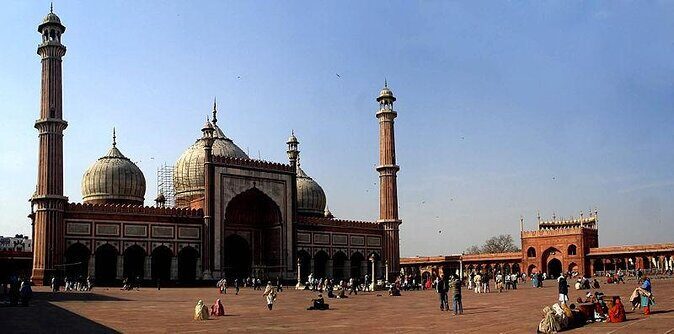
- A private day with pickup: only your group, traveling together in an A/C vehicle
- Old Delhi markets with real character: spice stalls at Khari Baoli, wedding shopping at Kinari Bazaar, bangles at Churi Wali Gali
- Chandni Chowk by pedicab: a low-effort way to see layers of the old city in a short time
- Big monuments plus quiet pauses: Raj Ghat and the Lotus Temple balance the busier streets
- Iconic New Delhi architecture: Rashtrapati Bhavan and India Gate round out the day
Why Old and New Delhi need a private day
Delhi is two cities in one trip. Old Delhi is about trade, faith, and tight alleyways. New Delhi is about state power, planning, and wide boulevards. Doing both in a single 8-hour private outing is a practical way to see the highlights without spending your whole day negotiating transport.
What makes this tour feel efficient is that it doesn’t treat markets as an afterthought. It pairs major sights with market stops that reflect how Delhi actually shops and celebrates. You’ll spend time where people line up for spices, browse wedding goods, and buy bangles—then you’ll step into landmark spaces like Humayun’s Tomb and Jama Masjid.
Also, the “private” part matters. You can keep moving at a sensible pace and spend your attention on what you’re looking at, not on finding your way. The A/C vehicle plus onboard Wi‑Fi and bottled water is a simple comfort win on a full-day schedule.
You can also read our reviews of more private tours in New Delhi



Qutub Minar: where 12th-century stone still feels tall
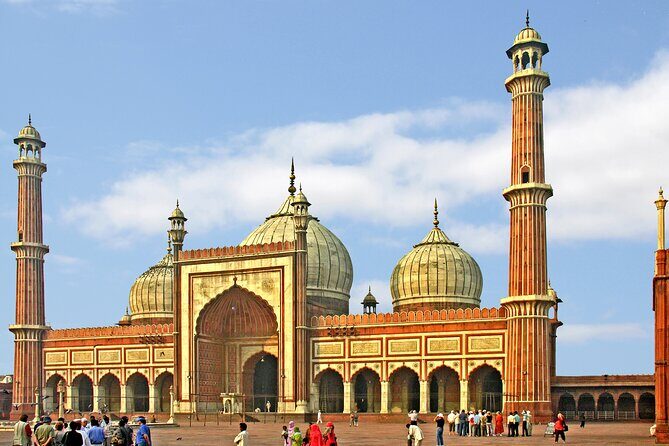
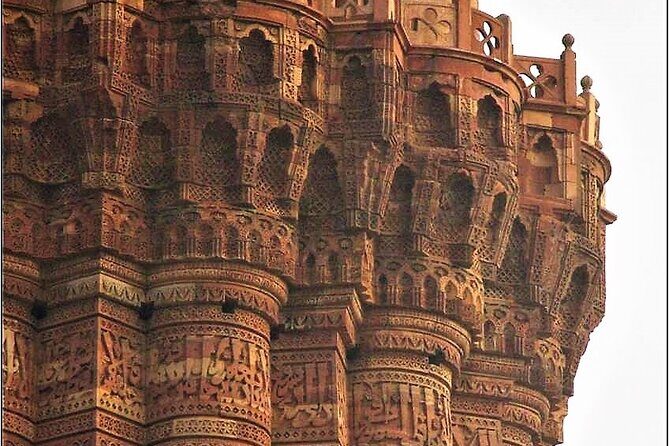
Your first major stop is Qutub Minar, a tall sandstone minaret and victory tower built in 1193. It’s impressive in a way photos don’t fully capture, because you’re standing next to the scale and detail of the structure.
You’ll spend about 50 minutes here, which is long enough to walk around, take photos, and get your bearings. One practical note: the itinerary lists admission as ticket-free at this stop, but the overall tour says monument entrance tickets aren’t included. Translation: you might not pay at Qutub Minar, but don’t assume every stop will be the same—stay flexible.
If you’re wondering why Qutub Minar matters, it’s because it’s tied to a turning point in Delhi’s history. Even if you don’t go deep on dates, the building itself tells you this was a serious statement of power and craft.
Humayun’s Tomb: Mughal and Persian ideas in one complex
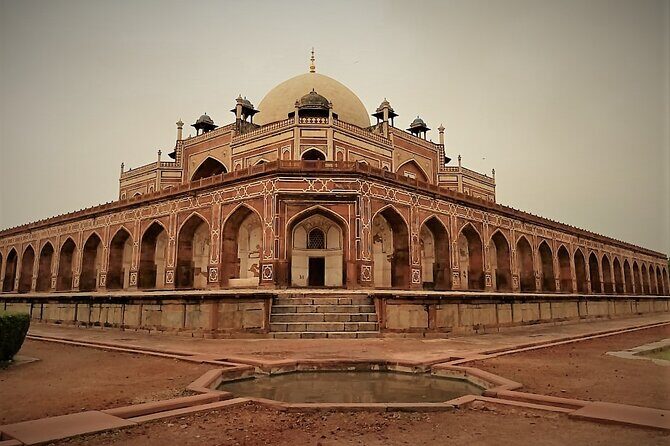
Next up is Humayun’s Tomb, built in the mid-16th century for Mughal emperor Humayun. What I like about this stop is how it shows connections: the tomb is described as a blend of Persian and Mughal design elements.
You’ll have around 50 minutes. That’s enough to take your time with the architecture without rushing through. This is also a great “breather” stop in the middle of a day of crowds, because the grounds and layout encourage slower walking.
The itinerary also lists admission as ticket-free here, but the same caveat applies: entrance tickets aren’t included across the board. I’d plan your budget as if you may pay something at later sites, then treat any free entry as a bonus.
Jama Masjid: the Friday Mosque and Delhi’s grand courtyard
Then you’re at Jama Masjid, the Friday Mosque built between 1644 and 1658. It’s a marble-and-red-sandstone structure, and the minarets rise about 40 meters high (one of them can be climbed, depending on rules in place that day).
You’ll spend around 50 minutes. Jama Masjid works best when you let yourself notice the big picture first—shape, symmetry, and how the courtyard pulls your eye. Then you can zoom in on smaller details like materials and carvings.
Like the other monuments, it’s listed as ticket-free in the itinerary. Still, because entrances aren’t included, consider this stop as “possibly free,” not guaranteed free. On a day like this, it’s better to have a little extra flexibility than to get stuck at the ticket desk.
Gurudwara Bangla Sahib and the lesson of langar
After the major Islamic monuments, the tour heads to Gurudwara Bangla Sahib, a Sikh temple. You can watch (and if you like, join) langar, the voluntary group cooking and feeding program.
This stop is only about 30 minutes, but it changes the tone of the day. Instead of focusing on stone monuments, you’re reminded that public spaces in Delhi are often about community routines. If you’re curious about how faith shows up in daily life, this is one of the most direct ways on the itinerary.
As with other stops, the itinerary lists admission as ticket-free. And because the tour includes bottled water and A/C while you’re in transit, this is one of those points where you can slow down mentally as well as physically.





Chandni Chowk: pedicab views, then spice and wedding shopping
This is the heart of the Old Delhi side of the tour. You’ll get a pedicab ride around Chandni Chowk, plus time to move through nearby religious and shopping streets.
You’ll also see:
- Digambar Jain Temple
- Sisganj Gurudwara
- Gali Paranthewali
- Khari Baoli, described as Asia’s biggest spice market
- Kinari Bazaar, known for wedding shopping
- Churi Wali Gali, where merchants sell bangles
What I like here is that you’re not just looking at one “attraction street.” You’re watching a whole system of commerce and culture in small geographic chunks. Spices are an immediate sensory cue. Wedding items are a cue to how much shopping in Delhi connects to festivals and life events. And bangles are a reminder that traditions show up in very practical everyday items.
The itinerary shows about 30 minutes for this whole Chandni Chowk block. That means you won’t be shopping leisurely for hours, but you will get a strong sense of what these markets are about. If you’re the type who needs to browse slowly, treat this as “see and understand first,” then plan a return trip on a different day.
Also, a quick reality check: markets are crowded and lively. The tour’s best value is that you’re with a private team, so the day stays focused rather than turning into navigation stress.
Raj Ghat: a calm pause by the Yamuna
Next comes Raj Ghat, the memorial dedicated to Mahatma Gandhi on the banks of the Yamuna River. You’ll have around 45 minutes, and it’s a noticeable shift from markets and monuments.
This is where the tour gives you room to breathe. The grounds are described as peaceful and very well maintained, and the memorial is a simple black-marble platform marking the spot related to Gandhi’s life.
If your day has started to feel packed, this stop helps you reset. It’s also a reminder that Delhi’s major landmarks aren’t only about empires and architecture; they’re also about modern political identity and memory.
Entrance is listed as ticket-free here. Still, the tour’s overall note about entrance tickets not being included remains relevant for other sites later in the day.
Lotus Temple: faith as architecture you can actually relax in
Then you’ll visit the Lotus Temple, famous for its 27 white-marble petals. It’s designed to bring faiths together, and visitors are invited to pray or meditate silently according to their own beliefs.
You’ll only have about 20 minutes here, so the goal is quick appreciation rather than deep study. What makes this stop work in a tight itinerary is that the temple is visually clear and calming from many angles. It’s a great contrast to the sharper edges of older forts and mosques.
Again, admission is listed as ticket-free in the itinerary. And in a day with lots of moving, a short “quiet architecture” stop can be the difference between feeling overwhelmed and feeling satisfied.
Rashtrapati Bhavan and India Gate: New Delhi’s big political statements
Now you head into the New Delhi side with Rashtrapati Bhavan, also known as the President’s Palace. The tour describes it as the former home of the British Viceroy, and notes it has 340 rooms.
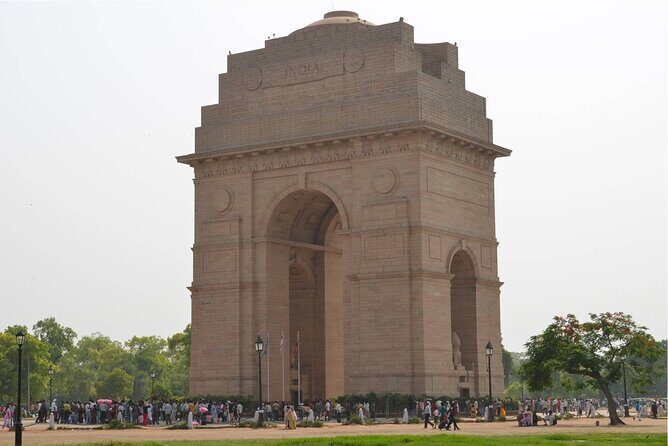
Next is India Gate, a 42-meter-high stone memorial arch designed by Lutyens in 1921. It honors around 90,000 Indian Army soldiers who died in WWI and related campaigns, including the Northwest Frontier operations and the 1919 Anglo-Afghan War.
These stops can feel more “look and reflect” than “explore.” That’s not a weakness—it’s exactly why they fit in a day like this. When you’re mixing Old and New Delhi, you don’t want every hour to require heavy walking. You want some time where your job is simply to understand what you’re seeing.
Because entrance tickets aren’t included, it’s smart to expect that you might mainly view these areas from permitted public viewpoints, unless the day allows more access. The tour time budget supports that kind of overview approach.
Red Fort: Mughal power, walls, and the long timeline of Delhi
To close the classic sightseeing portion, you’ll arrive at the Red Fort, a symbol of Mughal power founded by Emperor Shah Jahan. The tour notes it’s surrounded by an 18-meter-high wall and took about 10 years to construct (1638–48).
This is one of those landmarks where the outer structure tells you a lot before you even step deeper. It signals defense, authority, and the scale of planning needed to build something like this. It also helps you connect your earlier stops—Qutub Minar and Humayun’s Tomb—into a bigger story of how Delhi’s architectural eras overlapped and evolved.
Admission for Red Fort isn’t specified as ticket-free in the information provided. Since the tour states that entrance tickets are not included, plan for the possibility of a fee here.
Price and value: what you’re paying for, beyond the monuments
At $90.77 per person for an 8-hour private outing, you’re mainly paying for three things: time, comfort, and organization.
- Time: You pack in Old Delhi markets plus major New Delhi landmarks in one day. That’s useful if you’re working with limited days.
- Comfort: An air-conditioned vehicle with bottled water and onboard Wi‑Fi keeps you from burning your energy on heat and downtime.
- Organization: You’re not piecing together rides between sites or figuring out the best route through markets. The tour format is built to keep the day coherent.
There’s also practical value in the market selection. Khari Baoli spice market, Kinari Bazaar, and Churi Wali Gali are the kind of places that give you an everyday Delhi picture. You’re not stuck only with museum-level highlights.
The main cost consideration is entrance tickets. Since those aren’t included, it’s possible your final spending will depend on what you choose to enter and what fees are active on the day. The itinerary lists ticket-free entry for several specific stops, but not all. Plan a little buffer and you’ll stay stress-free.
Who this tour suits (and who might want something else)
This is a strong match if you want a single-day plan that covers both sides of Delhi: Old Delhi street life and New Delhi monument viewpoints. It’s also ideal if you prefer a private format—your group gets attention, and the tour keeps you moving.
It’s especially good if you’re the kind of traveler who likes context, not just checklists. The combination of monuments plus markets helps you understand how Delhi feels as a lived city.
If you’re the type who wants long, unhurried museum-style time at every major site, this 8-hour structure may feel a bit compressed. But for most visitors trying to see the key highlights efficiently, the time balance is a real advantage.
Should you book this Delhi Old-and-New tour?
Yes—if you want a focused, private day that blends the famous with the everyday. The comfort setup (A/C, onboard Wi‑Fi, bottled water) makes it feel doable. And the Old Delhi market stops give you more than the usual temple-and-fort pattern.
I’d choose this tour if you value organized sightseeing with a thoughtful mix of architecture and street-level culture. I’d think twice only if you hate market crowds or you dislike tours where some sites are more “see and understand” than “wander for hours.”
If you book, bring a flexible mindset about entrance fees, and use the onboard Wi‑Fi to plan quick notes on what you’re seeing next. Then you’ll get the best kind of Delhi day: memorable sights, plus markets that actually teach you something.
FAQ
How long is the private tour?
It’s listed as about 8 hours.
Is pickup included?
Pickup is offered.
What’s the price per person?
The price is $90.77 per person.
Is this tour private?
Yes. It’s a private tour/activity, and only your group participates.
What’s included for comfort during the day?
You’ll have an air-conditioned vehicle, bottled water, and Wi‑Fi on board, plus private transportation.
Are entrance tickets included?
Entrance tickets to the included monuments and features are not included. Some stops are noted as admission ticket free, but fees can vary by site.
What major places does the tour visit?
You’ll visit Qutub Minar, Humayun’s Tomb, Jama Masjid, Gurudwara Bangla Sahib, Chandni Chowk (including nearby market streets such as Khari Baoli, Kinari Bazaar, and Churi Wali Gali), Raj Ghat, Lotus Temple, Rashtrapati Bhavan, India Gate, and Red Fort.
What’s the cancellation policy?
Free cancellation is available up to 24 hours in advance for a full refund. The experience may also be changed or refunded due to poor weather, and it requires a minimum number of travelers.