REVIEW · NEW DELHI
Private Over Night Taj Sunrise and Sunset From New Delhi
Book on Viator →Operated by Akbran Tours · Bookable on Viator
Sunrise at the Taj shifts your whole perspective. This private overnight trip stacks the big Mughal sights into one smooth plan, with pickup in Delhi, a guided Taj morning, and sunset views from Mehtab Bagh. I especially like that you’re not left juggling logistics: monument entrance fees and a professional guide are part of the package.
The other win for me is the pacing. You get time to check in, see the quieter highlights like Itmad-ud-Daula (Baby Taj), then sleep in Agra before the early start for sunrise. One consideration: you’ll be up early for the Taj (meet time is around 0600), and lunch and dinner are on your own.
In This Review
- Key highlights at a glance
- Private Delhi to Agra transfers: comfort first, stress last
- Your Agra hotel night: what’s included and what to plan for
- Baby Taj and Mehtab Bagh sunset: a calmer start to Mughal Agra
- Taj Mahal sunrise: why the early timing is the point
- Agra Fort after breakfast: Akbar-era walls you can feel
- Fatehpur Sikri: the UNESCO ghost town of Mughal ambition
- Guides, entrance fees, and the option to skip lines
- Price and value: what you’re really paying for
- What to pack and how to survive the timing
- Should you book this Delhi to Agra overnight tour?
- FAQ
- What is the duration of the private overnight Taj sunrise and sunset tour from New Delhi?
- Where does the tour start, and do you get picked up?
- What are the main sightseeing stops?
- Is the hotel stay included, and what level of hotel is it?
- Are entrance fees included?
- What meals are included?
- Is transportation provided, and is it private?
- What time is the Taj Mahal sunrise experience scheduled?
- Can I cancel for a full refund?
Key highlights at a glance
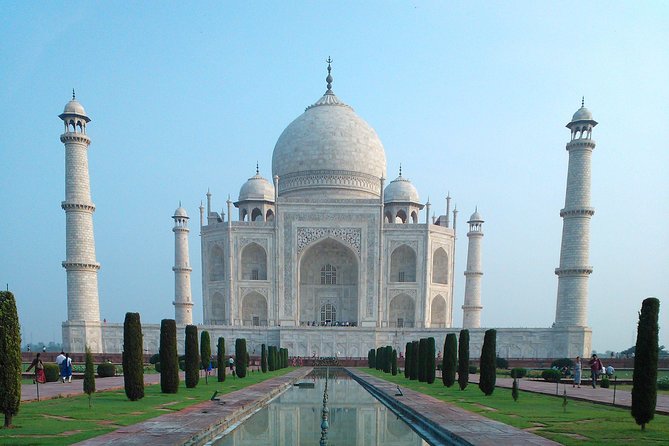
- Taj Mahal sunrise with early pickup (meet around 0600 and guided explanations)
- Mehtab Bagh sunset viewing for a classic Taj marble color shift
- Itmad-ud-Daula (Baby Taj) with inlay work and detailed marble scenes
- Agra Fort tied to Akbar-era Mughal power
- Fatehpur Sikri UNESCO former capital, built in red sandstone and later abandoned due to water shortage
- Private air-conditioned transfers plus a dedicated driver and guide setup
Private Delhi to Agra transfers: comfort first, stress last
This trip is built around a private, air-conditioned car or SUV, with pickup from your hotel or the airport in New Delhi and drop-off back in Delhi at the end. The road time is about three hours each way, so you should plan for a full day that starts with driving and ends with driving again.
Because it’s private, the timing is easier than a public-bus scramble. You also get a clearer rhythm: get collected, move to Agra, check in, do the evening sights, then wake up for sunrise. The tour lists vehicle types based on group size, ranging from a private sedan for 1–4 people up to larger mini-bus and bus options for bigger groups. That matters if you’re traveling with family or coworkers and don’t want a cramped ride.
My practical take: if you’re sensitive to early mornings, pack a small bag with essentials for the Taj morning so you’re not digging through luggage at the last second.
You can also read our reviews of more tours and experiences in New Delhi.



Your Agra hotel night: what’s included and what to plan for
You stay one night in a three-star Agra hotel on a twin-sharing basis if that option is chosen. Breakfast is included, and you’ll also get bottled water as part of the included features. That’s the baseline that helps the itinerary feel doable.
It’s also a good setup for the one big “mental shift” of this trip: day one is arrival and sightseeing, day two is sunrise and more monuments. A proper sleep in Agra is what makes sunrise possible without turning your vacation into an all-night endurance event.
Two things to keep in mind while you’re planning meals. Lunch and dinner are not included, so you’ll want either a plan to eat near your stops or a bit of cash on hand. Also, the tour notes a mandatory Christmas and New Year dinner during those seasons that you pay directly to the hotel. If your travel dates fall around those holidays, you’ll want to budget for it.
Baby Taj and Mehtab Bagh sunset: a calmer start to Mughal Agra
Day one is a smart way to “warm up” before the main event. After you arrive in Agra, you check in and get time to rest. Then you meet your guide and head to Itmad-ud-Daula, often called Baby Taj.
Itmad-ud-Daula is famous for its white-marble look and intricate decorative work. The tour description highlights the inlay work and paintings, and it’s easy to see why people describe it as something like a mini jewelry box—small compared to the Taj, but detailed in a way that rewards slow looking. This is the kind of stop where a guide helps you notice what you’d otherwise miss.
After that, you move to Mehtab Bagh, the garden positioned behind the Taj Mahal. Here, the goal is sunset. You’ll view the Taj as the light changes and you’ll notice the marble shifting color as the sun goes down. Even if you’ve seen photos, this is one of those moments where being there in real time makes the difference. It’s also a nice change of pace from pure tomb-and-fort sightseeing—gardens let you reset.
Where this shines for you: if you don’t want your whole Agra experience to start and end with the Taj, this evening pairing gives you variety, with one detailed monument and one viewing spot that frames the Taj from a different angle.
Taj Mahal sunrise: why the early timing is the point
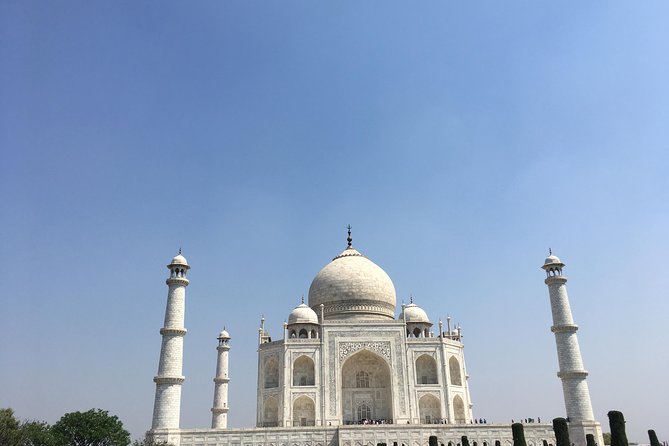
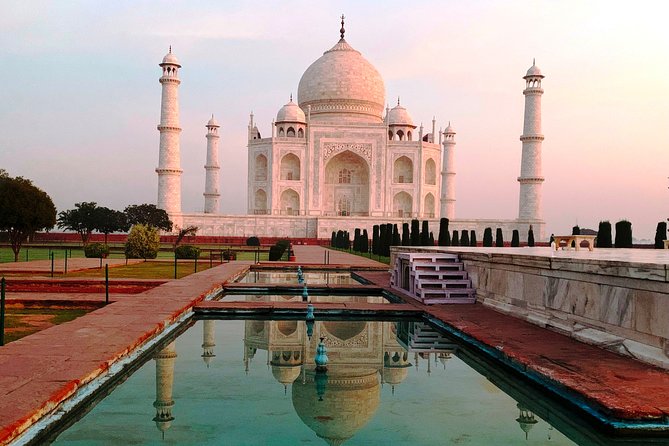
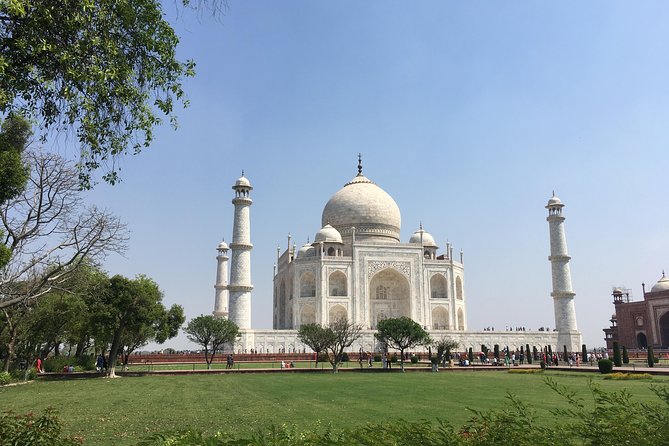
The next morning starts with an early meet-up around 0600 at your hotel. You’ll then drive to the Taj Mahal for sunrise, guided the entire time. The guide’s role here isn’t just reading facts—it’s also helping you understand the monument’s background and assisting with taking photos.
Sunrise viewing can be a big deal for two reasons. First, the light tends to be softer and more flattering than mid-day glare, which helps the marble show texture instead of washing out. Second, you avoid the worst of the day’s heat, which can make walking and standing much easier on your body.
You’ll spend about two hours at the Taj Mahal. The “value” in that number is not just time at the site—it’s time with enough breathing room to see key viewpoints and not feel like you’re sprinting. If you pick the option for skip-the-line entry (the tour says it’s included if chosen), you can also lose less time standing around before you even get started.
One consideration: early mornings are non-negotiable for sunrise. If you’re traveling with kids or anyone who struggles with waking up early, plan on going to sleep right after dinner (and keep dinner simple since lunch and dinner are your responsibility on day one).
Agra Fort after breakfast: Akbar-era walls you can feel
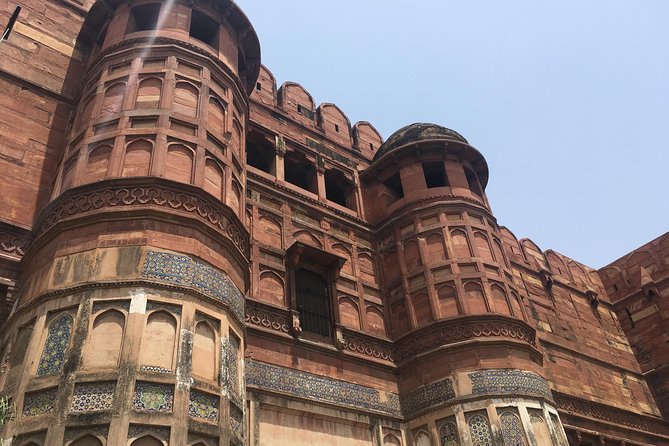
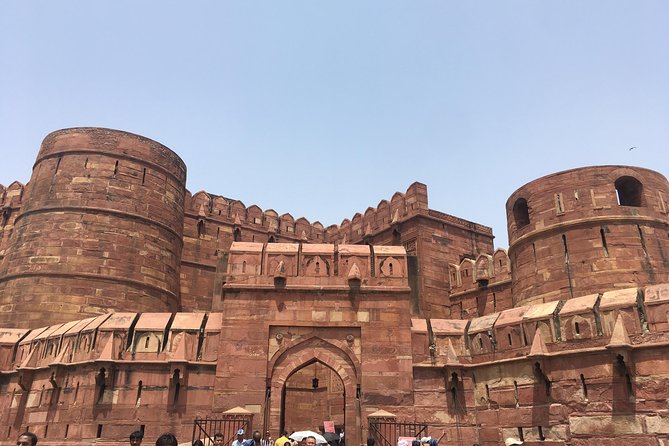
After sunrise, you get breakfast, then check out of the hotel and head to Agra Fort. The fort is described as a UNESCO World Heritage site built by Mughal king Akbar in 1556, and the tour points out palaces where the royal family used to live.
This is a different mood from the Taj. The Taj is all about the sculpted calm of marble. Agra Fort is about walls, structure, and power—architecture that looks built to last and built to control space. The visit is about one hour, which is realistic because forts can tire you out with walking and stairs.
A guide matters here because forts are easy to treat like a collection of buildings unless someone connects what you’re seeing to how the Mughal court lived. If you like understanding how people actually used these spaces, this stop delivers.
My tip: if you’re traveling in hot weather, wear breathable clothing and keep water handy. The tour includes bottled water, but it helps to take small sips during breaks rather than saving everything until you’re thirsty.



Fatehpur Sikri: the UNESCO ghost town of Mughal ambition
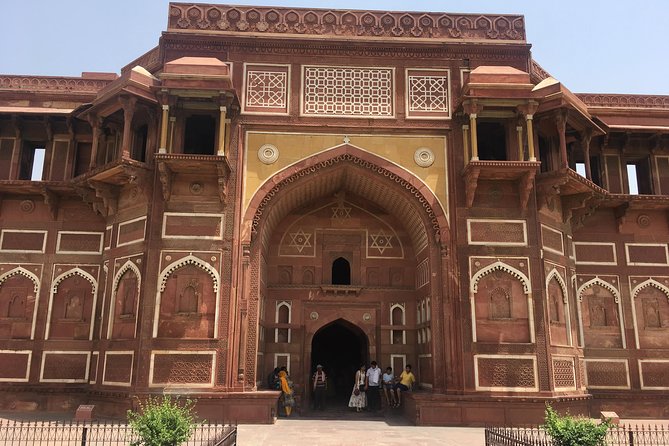
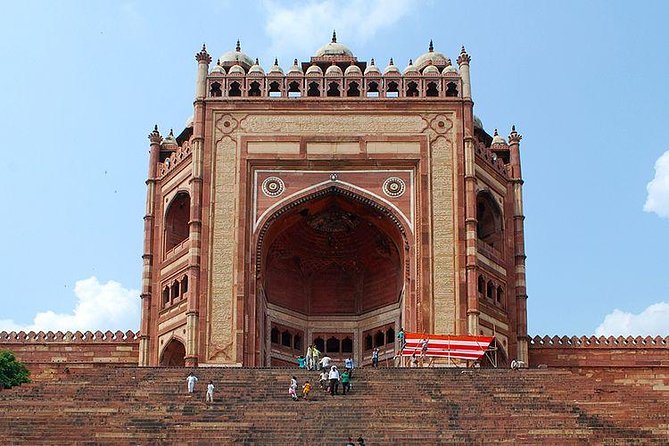
The afternoon is reserved for Fatehpur Sikri, a former Mughal capital built in 1570 and later abandoned because of water shortage. The tour calls it a UNESCO World Heritage sight, and it frames it as a kind of ghost town—full of impressive structures but not active in the way a working city is.
The highlights here are the palaces built in red sandstone. That red color is one of the first things you’ll notice when the light hits those buildings. Because Fatehpur Sikri is known for being abandoned, it’s also a place where context changes the experience: you’re not just admiring architecture, you’re seeing the evidence of a plan that couldn’t sustain itself.
The visit is about two hours, and it’s also listed with admission ticket information that shows up as free in the schedule. Even if you don’t care about UNESCO labels, the story of building a capital and losing the water supply gives the place a strong narrative spine.
Why this stop is worth your time: it balances the Taj’s poetry with a city’s practical needs. You get to see Mughal grandeur and the limits that eventually broke it.
Guides, entrance fees, and the option to skip lines
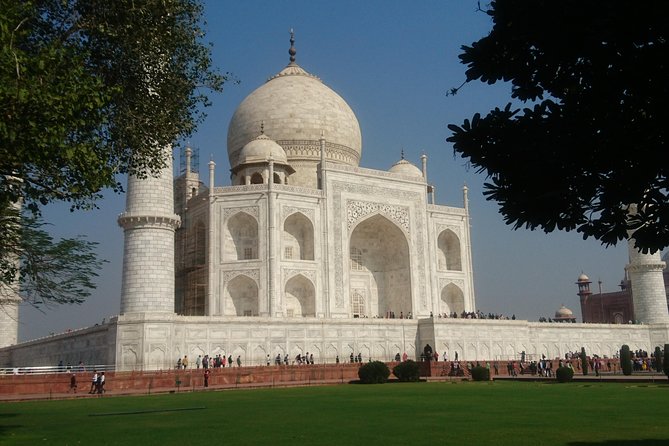
This is where the tour tends to feel easiest for you. The package includes a professional guide and covers monument entrance fees, which removes a common headache: buying and managing tickets across multiple sites.
Taj Mahal entry can be the most time-sensitive part of an Agra itinerary, so the tour offers skip-the-line entrance tickets if you choose that option. Even when everything is scheduled well, waiting at a landmark entrance is still waiting. If you can pay a little extra to save that time, it usually turns into more time actually seeing.
Also, this is a private tour/activity, meaning you’re not sharing the experience with strangers in a chaotic group. For some people, that matters even more than comfort, especially when you want your guide to explain things at a natural pace.
There are hints in past service stories that smooth coordination can make a difference. In one case, the driver is noted as being on time (a driver named Deepak). Another service note highlights a guide named Akash helping during the sunrise photo moment. You can’t assume every pairing will match those names, but it’s a reminder that good guidance is often the difference between rushing photos and getting it right.
Price and value: what you’re really paying for
The price listed is $77.11 per person for this two-day overnight experience. For that rate, you’re getting a mix of things that are usually expensive when booked separately: a private air-conditioned vehicle for the Delhi–Agra round trip, one night in a three-star hotel, breakfast, bottled water, a professional guide, and monument entrance fees.
Lunch and dinner aren’t included, so you’ll add meals to your total cost. But compared to many itineraries where you pay for the car, pay for the hotel, then still pay separately for entry and guides, the package structure helps you control spending.
The private aspect also affects value. A private vehicle is the kind of convenience you feel immediately when you’re doing sunrise and multiple stops without coordinating with other people’s schedules. If you’ve ever tried to stitch together transport and ticketing in Agra, you know how quickly time and energy disappear.
Booking timing note: this tour is commonly booked about 23 days in advance. If you’re traveling during a busy season or on a tight schedule, I’d aim for earlier than the average so you’re not pushing your luck with vehicle and guide availability.
What to pack and how to survive the timing
This tour runs in all weather conditions, so you should pack for whatever Agra throws at you. Even if it’s sunny, sunrise and early morning can feel cooler than midday, so dress in layers. Keep a light jacket or something you can add quickly.
For the day itself, you’ll want:
- Comfortable walking shoes for forts and UNESCO sites
- A small bag for essentials during the Taj sunrise drive
- Water and sun protection (bottled water is included, but personal comfort helps)
Since skip-the-line entry may be an option depending on what you choose, be ready for the simplest version: have your mobile ticket accessible on your phone, and bring a valid ID if requested at entrances.
Finally, plan meals loosely on day one and day two beyond breakfast. Because lunch and dinner aren’t included, your best bet is to treat meals as flexible breaks rather than scheduling a strict eating plan that could throw you off when sites run slightly ahead or behind.
Should you book this Delhi to Agra overnight tour?
If you want an Agra visit that feels efficient without being frantic, this is a strong choice. It nails the two big emotional beats for most people: Taj Mahal sunrise and a second Taj-related viewpoint at Mehtab Bagh sunset. Then it balances the schedule with Baby Taj (Itmad-ud-Daula), Agra Fort, and Fatehpur Sikri, which gives you far more than just one landmark.
I’d suggest booking if you:
- Like guided context for major monuments
- Prefer private transfers over shared group logistics
- Want a full UNESCO day without the hassle of self-planning tickets and routes
I’d think twice if:
- You hate early mornings (Taj meet time is around 0600)
- You’d rather stay in one city and explore slowly, with fewer scheduled drives
For most visitors, this overnight format is the sweet spot: you get the best lighting for the Taj, you see more of the Mughal story, and you return to Delhi without losing whole days to transport.
FAQ
What is the duration of the private overnight Taj sunrise and sunset tour from New Delhi?
The tour runs for about 2 days.
Where does the tour start, and do you get picked up?
Pickup is available from your hotel or the airport in New Delhi, and you’ll be dropped off back at your hotel or the New Delhi airport after the tour.
What are the main sightseeing stops?
You’ll visit the Tomb of Itmad-ud-Daula (Baby Taj), Mehtab Bagh for sunset, the Taj Mahal for sunrise, Agra Fort, and Fatehpur Sikri.
Is the hotel stay included, and what level of hotel is it?
Yes. You get accommodation in a three-star Agra hotel on a twin-sharing basis if that option is chosen, for one night.
Are entrance fees included?
Yes. All monument entrance fees are included, and the Taj Mahal skip-the-line option is available if you choose it.
What meals are included?
Breakfast is included. Lunch and dinner are not included.
Is transportation provided, and is it private?
Yes. You travel in an air-conditioned private vehicle (car/SUV/mini bus/bus depending on group size), and the tour is private for your group.
What time is the Taj Mahal sunrise experience scheduled?
You meet at about 0600 hours at your hotel and then drive to the Taj Mahal for sunrise.
Can I cancel for a full refund?
Yes. You can cancel up to 24 hours in advance for a full refund. If you cancel less than 24 hours before the start time, the amount paid is not refunded.