Delhi hits you fast. That’s the point.
This private Old and New Delhi tour strings together big sights from two very different parts of the city, with a live guide to help it all make sense. I like that you start with the calm, sacred atmosphere of Gurudwara Bangla Sahib, then pivot into Delhi’s iconic Mughal-era monuments like Jama Masjid and Humayun’s Tomb. I also like the smooth logistics: you get pickup in Delhi/NCR, an air-conditioned private car, bottled water, and even a tuk-tuk ride in Old Delhi. One drawback to plan for: some major landmarks are “drive-by” stops, so if you want lots of time for photos and walking at places like Red Fort or India Gate, you may feel a little time-crunched.
The good news is the schedule is built for value. In about 5 to 8 hours, you cover religious Delhi, market Delhi, and official New Delhi—without spending your whole day fighting for transport in traffic.
In This Review
- Key highlights you’ll feel right away
- Why this Old and New Delhi route makes sense
- Private air-conditioned car, guide, and tuk-tuk: real comfort benefits
- Gurudwara Bangla Sahib: quiet power and a service story
- Jama Masjid and the Mughal scale you can actually feel
- Chandni Chowk and Khari Baoli: markets that teach you how Delhi works
- Drive-by Red Fort, India Gate, and Parliament House: good for context, not deep time
- Agrasen ki Baoli stepwell: a short stop with a big atmosphere
- Humayun’s Tomb: the UNESCO Mughal highlight with real time
- Lotus Temple: the calm stop that keeps the day from feeling exhausting
- Pace, timing, and how to plan for Delhi heat and crowds
- Price and value: why $8.58 can still make sense here
- Should you book this Old and New Delhi city tour?
- FAQ
- FAQ
- Is this tour private, or will I be with other groups?
- What sites are included in the schedule?
- Are entrance fees included?
- How long is the tour?
- Will I have pickup and drop-off?
- Do I get transportation inside Delhi?
- What’s not included?
Key highlights you’ll feel right away
- Tuk-tuk in Old Delhi for a quick flavor change from the car.
- Gurudwara Bangla Sahib with context on Guru Har Krishan and the temple’s service during an epidemic.
- Jama Masjid built by Shah Jahan, giving you scale fast.
- Humayun’s Tomb time on-site (and it’s UNESCO) rather than just a photo stop.
- Lotus Temple for a quiet reset that welcomes people of all faiths.
- Private guide + private car, so you set the pace in a place that can overwhelm you.
Why this Old and New Delhi route makes sense
Delhi is not one city. It’s layers. This tour works because it gives you a day that moves between those layers without requiring you to figure out transport or directions on the fly.
Old Delhi is about arriving in the middle of history and daily life at the same time. You’ll see monumental architecture, but you’ll also walk through markets and lanes where the city feels lived-in. New Delhi is more planned and formal—wide roads, government architecture, and major national monuments—so you get a clear contrast.
I like how the order sets expectations. It starts with a major place of worship, then moves into huge Mughal and market landmarks. By the time you reach Humayun’s Tomb and the Lotus Temple, you’re ready for something calmer and more reflective.
You can also read our reviews of more guided tours in New Delhi



Private air-conditioned car, guide, and tuk-tuk: real comfort benefits
This isn’t a hop-on hop-off bus day. It’s private transport for your group, in a fully air-conditioned car, with pickup and drop-off from anywhere in Delhi and NCR (including Noida, Gurugram, Ghaziabad, and Faridabad).
That matters because Delhi traffic is a full-time character. Having a driver and a route plan means you spend time seeing, not negotiating. You also get bottled mineral water during the journey, which is a small detail that can keep the whole day from turning into a heat slog.
Then you get the fun break: a tuk-tuk ride in Old Delhi. It’s short, but it changes the tempo. You feel the neighborhood scale in a different way than you do from inside a car.
A live guide is the real value engine here. Some guides in this operator’s orbit—like Lucky and Rej, or Banti, or Gullu with a great care-for-your-day style—are known for explaining what you’re looking at, not just where it is.
Gurudwara Bangla Sahib: quiet power and a service story
Your tour starts at Gurudwara Bangla Sahib, one of the most important Sikh temples in India. This stop isn’t just about architecture. It’s also about why the place matters.
The connection to Guru Har Krishan—the eighth Sikh Guru—and the story of helping sick people during an epidemic give you a key lens for what you’re seeing. It helps you understand why temple life here isn’t only ceremonial. It’s also community service.
The practical upside: you’ll spend about 30 minutes at the site, and the admission is free. That makes it a low-stress start. If you’re arriving in Delhi feeling jet-lagged or unsure, this is a strong first stop because the vibe is steady and welcoming.
One thing to keep in mind: dress and behavior standards apply at temples in India. You’ll want to wear clothing that covers appropriately and keep your head and hands respectful in sacred areas.
Jama Masjid and the Mughal scale you can actually feel
Next up is Jama Masjid, established by Emperor Shah Jahan. This is one of India’s largest mosques and it can accommodate thousands of people. You don’t need a lecture to get the scale—you feel it once you’re inside.
This stop is about around an hour, and admission is free. That time window is enough to see the main prayer area and take in the courtyard without racing.
The best part of going with a guide here is context. You’ll connect Jama Masjid to the same imperial creative force that also produced the Taj Mahal. The architecture makes more sense when you know you’re looking at a specific era’s ideas about power, devotion, and city planning.
A consideration: you may encounter crowds, especially during prayer times. Keep your schedule flexible and your expectations realistic. Big religious sites often mean slower movement than you’d hope.
Chandni Chowk and Khari Baoli: markets that teach you how Delhi works
After Jama Masjid, you’ll head to Chandni Chowk, often described as one of the oldest markets in India. It dates back over 350 years and was constructed during the Mughal era. Walking into this market lane style is like seeing Delhi’s economy and social life as a street-level event.
From there you’ll continue to Khari Baoli, near the historic Fatehpuri Mosque. Khari Baoli was established in the 17th century during the Mughal era, and it’s famous for spice and everyday goods. This area makes Delhi feel immediate. You’ll likely notice how tightly packed the streets are and how quickly people manage traffic on foot.
What I like about this portion is that it slows your mind down. You stop thinking only about monuments and start thinking about routines: bargaining, deliveries, small shops, and how neighborhoods function.
If you’re sensitive to crowds or strong smells, plan to take breaks. Also wear comfortable shoes. You’re not touring in slippers mode today.
You can also read our reviews of more city tours in New Delhi





Drive-by Red Fort, India Gate, and Parliament House: good for context, not deep time
After the Old Delhi walking, the day shifts into New Delhi architecture by car. You’ll get drive-by views of:
- Red Fort, a UNESCO World Heritage Site built in the 17th century by Shah Jahan.
- India Gate, the 42-meter-high ceremonial arch built in 1931.
- Parliament House, designed by British architects Sir Edwin Lutyens and Herbert Baker.
Drive-bys have a clear trade-off. You get orientation quickly and you see the big landmarks in a short window, but you won’t get long walks or extended photo time at each one.
For many people, that’s the right choice. Your day is already packed with walking and major sites that benefit from longer stops. Still, if Red Fort or India Gate is your top priority and you want to explore on foot, you might prefer a separate, longer add-on day for those.
Agrasen ki Baoli stepwell: a short stop with a big atmosphere
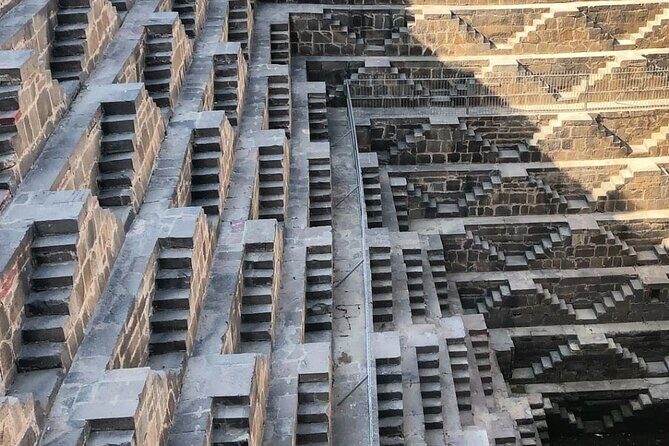
Now comes a different kind of Delhi landmark: a stepwell. Agrasen ki Baoli is a historic stepwell in the heart of New Delhi, visited in about 30 minutes with free entry.
The interesting part is the legend and the layered construction story. It’s believed to have been originally built during the time of the Mahabharata era and later rebuilt in the 14th century. Even if you don’t know the legends, the structure itself does the talking. You see how people engineered water access and social gathering spaces in a hot climate.
This is also a smart pacing stop. After markets and long driving stretches, you get a quieter, architectural kind of time. It’s not as famous globally as some other sites, but it’s the kind of place where Delhi’s past feels tactile.
Humayun’s Tomb: the UNESCO Mughal highlight with real time
Humayun’s Tomb is the big Mughal moment of the day. It’s a UNESCO World Heritage Site and one of Delhi’s most iconic Mughal monuments.
You’ll have about 1 hour here, and admission is included. That time matters because tombs like this need slow attention. You want to see the symmetry, the garden layout, and the way the monument holds attention even when the city around it keeps moving.
The tour context is also useful: it was built in the 16th century by Empress Haji Begum in memory of her husband. When you understand that personal stake behind the monument, it changes how you read the scale. You’re not just looking at an artifact. You’re looking at grief, power, and artistry translated into stone.
One practical note: it’s outdoors, so weather matters. If you’re going in hotter months, start earlier if you can, and bring water even though the car provides it.
Lotus Temple: the calm stop that keeps the day from feeling exhausting
To finish the classic sightseeing block, you’ll visit the Lotus Temple. This is a Bahá’í House of Worship shaped like a blooming lotus flower. It’s designed for people of all faiths and beliefs, which is a big reason it feels welcoming to first-time visitors.
Your time here is about 45 minutes and admission is free. I love this stop because it’s the emotional reset of the whole itinerary. After stone, lanes, and crowds, this is light, open, and quiet.
It’s also visually memorable without needing a complicated explanation. You see the lotus geometry from multiple angles, and the simplicity helps your brain unclutter.
Pace, timing, and how to plan for Delhi heat and crowds
The total duration is typically 5 to 8 hours, depending on which option you choose. With a private guide and car, the pace feels controlled, but Delhi still sets the tempo through traffic and crowd density.
Here’s how to plan your day so you enjoy it instead of rushing through it:
- Wear comfortable, closed shoes for Old Delhi walking.
- Bring a light layer if you enter religious spaces where you’ll want to cover.
- Keep your phone ready for photos, but accept that some stops may mean waiting for the best angles.
- Use the car time as breathing room, especially after Chandni Chowk.
If you’re a first-time Delhi visitor and you want a strong overview without hopping between buses, this is a good format. If you’re a serious photographer who wants long, detailed exploration at one monument, you may want to pair this tour with separate time blocks for your top two sites.
Price and value: why $8.58 can still make sense here
On paper, $8.58 per person looks shockingly low for a private full or half-day experience. But the value comes from how it’s structured: private car transport, a private live guide, bottled water, and key stops that are mostly free entry.
There’s also a practical value shift. You’re paying for time saved—no routing headaches, no getting lost in Old Delhi, and no figuring out what to see in what order.
A quick reality check: meals and personal expenses are not included, and tips aren’t included either. Also, entrance fees to monuments may depend on the option you choose, even though several major sites on this route are listed as free (and Humayun’s Tomb is indicated as included).
Still, if you compare this to paying for taxis plus a guide plus separate tickets, the math often favors a guided private day—especially when traffic is part of the cost.
Should you book this Old and New Delhi city tour?
Book it if you want:
- A single day that covers Old Delhi monuments, markets, and New Delhi landmarks without stressful navigation.
- A private guide who helps you understand why each stop matters.
- A mix of big names (Jama Masjid, Humayun’s Tomb, Lotus Temple) and a less-obvious architectural stop (Agrasen ki Baoli).
Skip it or plan differently if:
- Your priority is to spend hours exploring one specific landmark (Red Fort, India Gate, Parliament area) on foot.
- You hate crowds and long walking in heat. You’ll still have manageable time blocks, but Old Delhi is not a quiet stroll.
If you’re short on time and want Delhi’s main stories told in one efficient sweep, this is a solid choice.
FAQ
FAQ
Is this tour private, or will I be with other groups?
It’s a private tour/activity, meaning only your group participates.
What sites are included in the schedule?
The route includes Gurudwara Bangla Sahib, Jama Masjid, Chandni Chowk, Khari Baoli, a drive-by of Red Fort, India Gate, and Parliament House, plus Agrasen ki Baoli, Humayun’s Tomb, and the Lotus Temple.
Are entrance fees included?
Entrance fees are included if you choose the option that includes monuments. Humayun’s Tomb is listed as admission ticket included on the schedule, while several other stops are listed as free.
How long is the tour?
The duration is approximately 5 to 8 hours, depending on the half-day or full-day option.
Will I have pickup and drop-off?
Yes. Pickup and drop-off are included from and to locations in Delhi and NCR, such as hotels, the airport, or your home, including Noida, Gurugram, Ghaziabad, and Faridabad.
Do I get transportation inside Delhi?
Yes. You’ll travel in a private, air-conditioned car for the day, with a tuk-tuk ride in Old Delhi.
What’s not included?
Meals and personal expenses are not included, and tips and gratuities are also not included.