REVIEW · JAIPUR
Private Natural Dye and Block Print Workshop with Lunch
Book on Viator →Operated by Dye it Yourself · Bookable on Viator
Natural dyeing can feel magical. This hands-on Jaipur workshop teaches natural dye extraction, Shibori tie-dye, and block printing using colors pulled from the world around you, with sustainability built into every step. I love that the whole point is practical: you’ll learn fundamentals and how to use plant-based color rather than just watch. I also love the take-home value—an organic cotton garment of your choice, plus four natural dye packs (50 grams each) you can use again later.
You should know one thing up front: it’s hands-on, and sometimes messy. Wear comfortable shoes (the workshop can get tiring), and don’t plan on keeping your outfit pristine—this is dyeing, not a museum stop.
In This Review
- Key things that make this workshop worth your time
- Natural dyeing, Shibori, and block printing in one 5½-hour session
- The color lab: how natural shades are extracted and used
- Shibori tie-dye: controlling color with folds, knots, and restraint
- Block printing: turning stamps into patterns that repeat
- What you get to take home: dyed organic cotton plus natural dye packs
- Lunch and snacks: fueling a hands-on creative day
- Where the session starts (and how to plan your timing)
- Who this workshop suits best in Jaipur
- Price and logistics: is $190 good value?
- Should you book Dye It Yourself in Jaipur?
- FAQ
- How long is the Private Natural Dye and Block Print Workshop with Lunch?
- Where does the workshop start and end?
- Is lunch included?
- What materials and take-home items are included?
- Can I bring extra fabric or garments to dye?
- Is this a private tour?
- What are the opening hours?
- What is the price per person?
- What if weather is poor?
Key things that make this workshop worth your time
- Natural colors from real sources: you’ll explore how to get yellows, oranges, browns, pinks, blues, reds, and greens from natural materials around you.
- Three skills in one session: natural dyeing fundamentals, Shibori tie-dye techniques, and block printing patterns all happen in the same 5½-hour workshop.
- Sustainability is the lesson, not the slogan: chemical dyes are framed as a major pollution source, and the workshop focuses on using natural dyes instead.
- You dye to take home: you’ll leave with a dyed organic garment (scarf, dress, shorts, placemat, or cushion cover) plus an organic cotton bag.
- Extra fabric is welcome: you can bring as much fabric/garments as you want to dye during the workshop.
- The team is interactive: names like Sidhant and Vaibhav show up in feedback, and you’ll have time to ask questions and learn from people practicing these arts for generations.
Natural dyeing, Shibori, and block printing in one 5½-hour session
In Jaipur, it’s easy to collect souvenirs. It’s harder to collect skills. This workshop is built for that second goal.
You’ll spend about 5 hours 30 minutes learning by doing: natural dye processes, then twist and fold techniques for Shibori, and finally the stamp-and-press world of block printing. The flow matters. You’re not jumping between random demonstrations. The workshop is organized into three segments, so the skills stack: first you understand color, then you learn ways to control where color goes, then you create repeatable patterns.
Another detail I appreciate is the “why” behind the work. The workshop frames chemical dyes as a major pollution source in textiles, and it encourages you to treat sustainability as a filter before buying clothes. You won’t just leave with pretty patterns; you’ll leave with a new way to think about the fabrics you buy later.
Because it’s labeled a private tour/activity for your group, the pace tends to feel less rushed than big group sessions. You’ll get expert attention while you work through the techniques.
You can also read our reviews of more tours and experiences in Jaipur.

The color lab: how natural shades are extracted and used
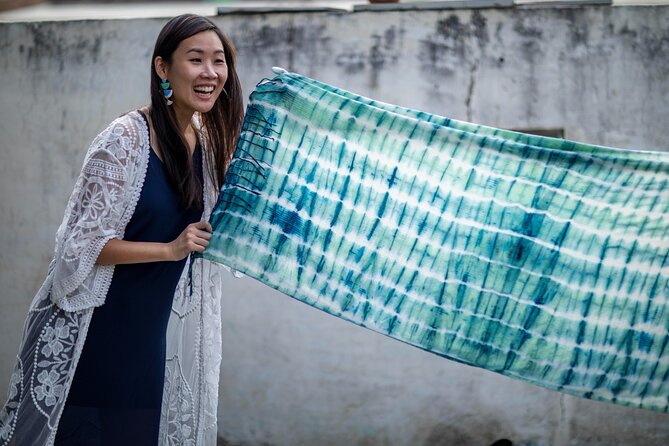
The natural dyeing portion is where the workshop earns its keep. Instead of relying on pre-mixed dye buckets, you learn how natural colors are extracted and used, and why they behave differently than synthetic dyes.
The workshop introduces a practical concept: natural colors come from living things and waste streams. It specifically mentions using waste from the kitchen and surrounding for natural dyeing. That’s not just an eco-friendly story. It changes what you pay attention to—materials, preparation, soaking, and how the dye takes to cotton.
You’re also taught that nature gives a range of color families, not one “earth tone” palette. The workshop highlights learning to pull colors like yellows, oranges, browns, pinks, blues, reds, and greens. Even if you end up with slightly imperfect results, you’ll understand the method well enough to troubleshoot next time.
One practical takeaway: you’ll likely see how temperature, timing, and fabric handling affect outcomes. Natural dyes can be more sensitive than many people expect, and that’s part of the learning curve. You don’t need to be a textile scientist. You just need patience, and the willingness to experiment.
Shibori tie-dye: controlling color with folds, knots, and restraint
Shibori is the part where your design brain wakes up. Once you’ve seen the natural dye basics, you move into tying, folding, and binding so the fabric resists dye in specific areas.
The key idea in Shibori is control. You decide how tightly to bind, where to place folds, and how to shape the fabric before it meets the dye. Those choices create patterns that feel deliberate, even when you’re working by hand and learning as you go.
I like that the workshop doesn’t treat Shibori as a separate craft. It’s connected to natural dyeing. You’re learning how to use the dye you made (or the dye process you practiced) together with technique.
Practical note: Shibori work can be time-consuming in the moment. If you’re the type who wants everything finished instantly, this may feel a little slow. But if you enjoy taking your time and seeing how choices affect results, it’s one of the most satisfying parts of the day.
Block printing: turning stamps into patterns that repeat
After Shibori, block printing adds a new kind of control: pattern repetition.
Block printing is about aligning a stamp, applying color, and pressing or spreading dye in a consistent way. That means you get a different texture and look than tie-dye. The workshop’s structure pairs these skills because they show two ways of creating pattern:
- Shibori resists dye through structure (folds and binds).
- Block printing builds pattern through contact (stamps and placement).
If you’ve ever loved printed textiles but wondered how they’re made, this is your chance to do it hands-on. You learn the workflow, not just the final look.
You’ll also get a better sense of why artisans plan designs carefully. Even when you’re making something simple, small adjustments in placement can change the feel of the pattern. This is where your “I want to buy this” instinct can turn into “I could make something like this.”
What you get to take home: dyed organic cotton plus natural dye packs
This is where the value becomes clear. You don’t just leave with memories.
Included take-home items:
- An organic cotton garment you choose from options like a scarf, dress, shorts, placemat, or cushion cover
- Four natural dye packs (50 grams each)
- An organic cotton bag
- You’ll also get the basics so you can dye and finish your piece during the workshop
That garment choice matters more than it sounds. If you pick something you’ll actually use—like a scarf or cushion cover—you get a reminder of the day every time it’s in your hands. It’s not a keepsake you tuck away.
The four dye packs are the smart bonus. A lot of workshops give you one finished item and call it a day. Here, you get enough dye material to keep experimenting after you leave Jaipur. Even if your second attempt is imperfect, you’ll know what you did and why.
You can also bring additional fabrics and dye them during the workshop. If you have a favorite shirt that needs a new life, or you want matching pieces, plan for it. This option is one of the most practical ways to turn a workshop into wardrobe updates.





Lunch and snacks: fueling a hands-on creative day
A good workshop needs a good rhythm. You’ll get vegetarian thali for lunch, typically including 3 vegetable dishes, chapati, rice, curd, and a sweet. You also get Indian tea and cookies, plus bottled water.
Why this matters: dyeing work is repetitive. Your hands are busy, your attention is split between technique and timing, and you don’t want to run out of energy halfway through. The food is simple and filling—exactly what you want when you’re working for hours and not sitting still.
If you’re sensitive to spice, you might find some dishes stronger than others, but the overall structure is standard and should feel comfortable for most visitors.
Where the session starts (and how to plan your timing)
The workshop starts and ends back at the same meeting point, so you’re not dealing with transportation transfers as part of the activity.
Location is listed at QQ7J+M27 Kokawas, Rajasthan, India. Private transportation isn’t included, so you’ll want to plan how you’ll get there and back on your own. For a smooth day, build in a little extra time for local travel and getting settled.
The workshop runs in daily opening hours of 10:00 AM to 5:00 PM. The experience itself runs about 5 hours 30 minutes, so choose a time that doesn’t stress you out. You want time to arrive calm, because once you start dyeing, you’ll be focused.
Also keep in mind there’s a weather dependency noted for the experience. If conditions aren’t good, they may offer another date or a full refund. Dyeing can be picky, and natural processes don’t like surprises.
Who this workshop suits best in Jaipur
This workshop is ideal if you want more than a pretty souvenir. It fits well for:
- People who like hands-on classes and want to learn a technique they can repeat
- Anyone interested in sustainable textiles and natural dye processes
- Beginners who want a structured introduction to natural color plus design methods
- People with an interest in craft work—especially Shibori and block printing
If you work in textiles, there’s extra appeal. One of the standout comments mentions that someone in the textile industry got new knowledge and a stronger love for natural dyes. Even if you’re not in that field, you’ll likely appreciate the technical clarity and the chance to ask questions.
You’ll also appreciate the workshop vibe if you like interacting with the team and learning from experts who have practiced these arts for generations. Names like Sidhant and Vaibhav show up in feedback, and the tone is consistently welcoming and hands-on.
Price and logistics: is $190 good value?
At $190 per person, it’s not the cheapest activity in Jaipur. But it’s priced closer to a full-day experience than a quick craft stop.
Here’s what supports the cost:
- A structured 5½-hour workshop covering multiple techniques (natural dyeing, Shibori, block printing)
- Materials provided to create and finish an organic cotton garment
- Four 50-gram natural dye packs included as a take-home supply
- Lunch (vegetarian thali) plus tea and cookies
- Bottled water and the tools/materials to work safely and effectively
When a workshop includes both a finished item and enough dye to experiment again, it changes the math. You’re paying for learning plus usable product plus supplies. That’s different from paying only for a demonstration.
Group discounts are listed as a feature too. So if you’re traveling with friends and can book together, it may bring the per-person cost down.
The main logistical “watch-out” is transportation: private transit isn’t included. If you’re already in the area or can arrange a simple ride, that’s manageable. If getting there and back is a headache, you might want to factor that into your budget.
Should you book Dye It Yourself in Jaipur?
Book it if you want a craft day with real skills, not just a photo. This workshop is built around natural dyeing, plus two design systems—Shibori and block printing—so you leave with both process knowledge and a tangible result. The take-home haul (organic garment + four dye packs) is the kind of detail that makes the price feel fair.
Skip it or think twice if you hate mess, hate hands-on work, or want something purely relaxing with zero physical effort. The workshop can be tiring, and dyeing means you should expect stains and the practical cleanup that comes with making.
If you’re curious about sustainability in a way that actually connects to daily choices, this is one of the more direct ways to learn. You’ll walk out spattered, inspired, and with enough supplies to try again—this time with intention.
FAQ
How long is the Private Natural Dye and Block Print Workshop with Lunch?
The workshop lasts about 5 hours 30 minutes (approx.).
Where does the workshop start and end?
It starts at QQ7J+M27 Kokawas, Rajasthan, India and ends back at the same meeting point.
Is lunch included?
Yes. Lunch is a vegetarian thali with chapati, rice, curd, a sweet, and three vegetable items.
What materials and take-home items are included?
You receive all necessary materials for the workshop, and you take home an organic cotton garment (you can select from options), an organic cotton bag, and four natural dye packs (50 grams each).
Can I bring extra fabric or garments to dye?
Yes. The workshop notes that you can bring as much fabric or garments as you want to dye during the workshop.
Is this a private tour?
Yes. It’s listed as private for your group, meaning only your group participates.
What are the opening hours?
The listed opening hours are Monday through Sunday, 10:00 AM to 5:00 PM.
What is the price per person?
The price is $190.00 per person.
What if weather is poor?
The experience requires good weather. If it’s canceled due to poor weather, you’ll be offered a different date or a full refund.