REVIEW · JAIPUR
Private Jaipur Tour for Solo Female Traveler with Female Guide
Book on Viator →Operated by Pashmina Tours · Bookable on Viator
Jaipur feels safer with a female guide. This is a private tour built for solo women, and your local host (like Ms. Neeru or Veena from past tours) helps you read the city as you go through the Pink City. I love the female-led comfort and the way the explanations make the architecture click.
You’ll also like how smoothly it’s handled. With pickup and drop-off in a private air-conditioned vehicle plus lunch and entry tickets included, you spend your energy on sightseeing instead of logistics.
One thing to consider: the day is efficient, so some highlights are short stops (think Hawa Mahal). If you want slow, long photo sessions everywhere, you might wish you had extra time.
In This Review
- Key things you will notice on this Jaipur solo-woman tour
- Female-first Jaipur sightseeing, with a guide who sets the tone
- Price and what makes the math feel fair
- Amber Palace (Amer Fort): where Hindu-Rajput and Mughal styles meet
- Panna Meena ka Kund and Jal Mahal: stepwell geometry and a palace on water
- Royal Gaitor Tumbas: a royal cremation site that still functions
- Hawa Mahal and City Palace: 957 windows and the seat of power
- Jantar Mantar: the observatory you can actually feel while walking
- Timing for a smooth 5 to 8 hours (without rushing your eyes)
- Lunch and comfort: included, but still worth thinking about
- Photography and shopping reality in the Pink City
- Who this tour is perfect for (and who should rethink)
- Should you book this solo-female Jaipur tour?
- FAQ
- Is this tour only for solo travelers?
- Will I have a female guide?
- What’s included in the tour price?
- How long is the tour?
- Which monuments are included in the route?
- Can I cancel and get a refund?
Key things you will notice on this Jaipur solo-woman tour
- A female guide for solo comfort: designed for solo women, with a backup plan of a male guide only if a female guide is not available
- Amber Palace time with admission included: about 2 hours at Amer Fort, a blend of Hindu Rajput and Mughal architecture
- Panna Meena ka Kund in Amer: a 16th-century stepwell tied to religious gatherings, with striking step design
- Jal Mahal stop for classic views: the Water Palace set in the water, with a short dedicated stop on the way to Jaipur
- Royal Gaitor Tumbas + still-used cremation site: described as the royal crematorium for Jaipur kings
- Jaipur’s planning genius in one route: City Palace (founded 1727 by Maharaja Sawai Jai Singh) and Jantar Mantar (world heritage since 2010)
Female-first Jaipur sightseeing, with a guide who sets the tone
Jaipur can feel wonderfully approachable once you have the right guide in your corner. This tour is built around the simple idea that solo women deserve a relaxed plan, clear context, and someone local who knows where to stand for the best views and how to make the day flow.
A big plus here is that the guide is female by default. In past tours, names like Ms. Neeru and Veena show up in feedback, and that matters because the guide is not just translating signs. She’s helping you understand why Jaipur looks the way it does—Hindu and Mughal influences, the city’s layout, and why so many of these monuments feel linked instead of random.
You’re also getting a private setup. That means you can move at a pace that suits you. Want an extra few minutes to watch how a crowd forms around a viewpoint? You can. Want to ask a question that pops into your mind while you’re looking up at façades? You can do that too, without turning the tour into a group debate.
You can also read our reviews of more guided tours in Jaipur


Price and what makes the math feel fair
At $115 per person, the value is mostly about what’s already included. You get:
- Private air-conditioned vehicle pickup and drop-off
- A professional female tour guide
- Lunch
- Monument entrance fees
So you’re not pricing out a guide, entry tickets, and vehicle time separately while trying to coordinate everything on your own. For many visitors, that’s the real cost trap: the headline price is one thing, then tickets and transport stack up fast.
The other good part: this is a private tour. Even if the day is solo, you’re not paying the solo premium that sometimes shows up in other sightseeing formats. You’re paying for time, comfort, and direct access to a local guide across multiple major sights.
If you’re deciding purely on price, the question to ask yourself is simple: do you want someone handling the pacing, ticket logistics, and routing? If yes, this is priced like a practical day, not just a ticket bundle.
Amber Palace (Amer Fort): where Hindu-Rajput and Mughal styles meet
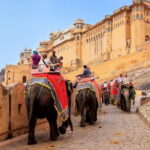
Amber Palace is usually the first stop for a reason. It’s not only a famous site—it’s also the one that gives you the strongest sense of scale. You spend about 2 hours here, and you’ll have time to look carefully instead of doing the sprint-and-snap approach.
The fort is described as a 16th-century build by Hindu Rajput kings, with a blend of Hindu and Mughal architecture. That mix shows in the way spaces feel arranged and how decorative elements sit alongside each other. Your guide’s job here is to help you spot those connections fast.
Practical note: forts like this are visual from every angle, but they also punish you if you rush. If you’re short on energy, bring a little patience. Plan to spend some time just observing the details, then step back for the bigger composition shots.
Possible drawback: because this is the main anchor stop, the whole day is timed around it. If you want to linger extra long, your next stops may feel tighter. Still, with admission included, you’ll spend the time on site instead of waiting around for tickets.
Panna Meena ka Kund and Jal Mahal: stepwell geometry and a palace on water
After Amer Fort, the route shifts to something calmer and more unusual: Panna Meena ka Kund. You’ll have about 15 minutes here, which is short, but it’s also the kind of place where a focused visit works. This stepwell dates to the 16th century and is described as a place for religious gatherings. The real star is the artistic design of the steps.
Here’s what I like to tell people: don’t just look at it like a photo spot. Look at it like an engineering puzzle. The steps are the story. They show how people moved through light and space, and why this kind of structure mattered beyond aesthetics.
Then you’ll drive toward Jaipur with a stop at Jal Mahal, the Water Palace built in 1799 AD, set in the water. You get about 15 minutes, enough time to appreciate why it’s so iconic and to grab the classic angles.
A consideration: Jal Mahal can look dramatically better depending on the time of day and the water level. This tour gives you the stop, but it can’t control weather or conditions. Still, the fact that it’s timed as a mid-route photo break keeps the day from feeling like one long march.
Royal Gaitor Tumbas: a royal cremation site that still functions
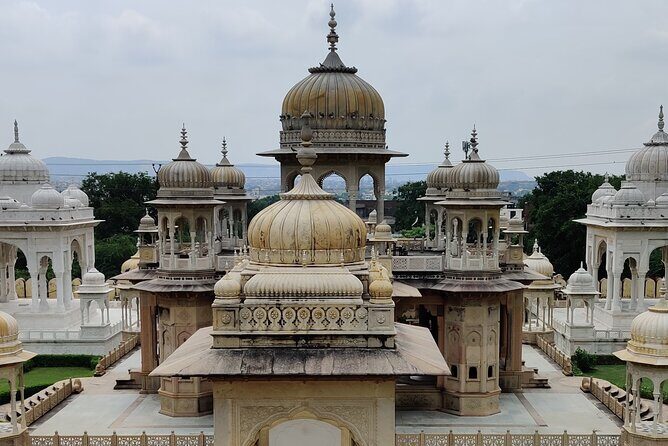
Next comes Royal Gaitor Tumbas, about 1 hour here. This stop is different from the rest because it’s not only a monument—it’s described as the royal crematorium for Jaipur, and it’s still being used by the royal family.
That detail changes the tone. You’ll likely notice that the space feels more solemn than the big photo magnets. Your guide can help you understand the significance without making it heavy or uncomfortable. This is one of those stops where local context genuinely matters, because otherwise it’s easy to treat it like a set piece.
There’s also a practical reason this stop works in a route like this: it adds variety. After forts, wells, and palace imagery, you shift to memorial architecture and a different kind of meaning.
You can also read our reviews of more private tours in Jaipur





Hawa Mahal and City Palace: 957 windows and the seat of power
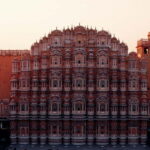
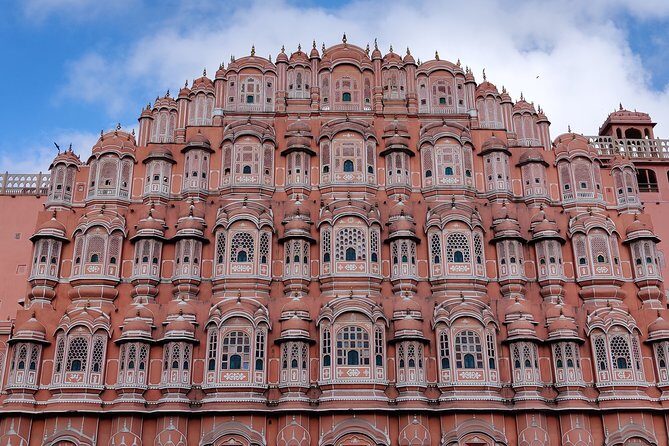
Then you hit Hawa Mahal, the Palace of Wind. You get around 10 minutes here. It’s located in the middle of the Pink City, built in 1799 AD, and designed so it looks like a wall from the front side. One detail worth knowing up front: it has 957 windows.
Ten minutes sounds brief, but Hawa Mahal is the kind of place where you mostly need one thing: the right angle. With a guide, you’ll know where to stand and what to look for instead of wandering.
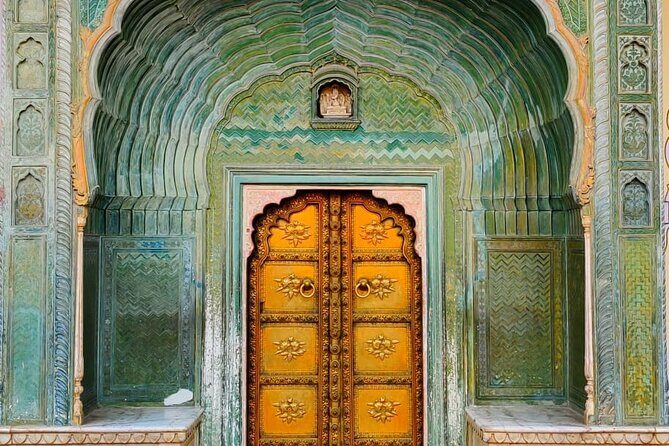
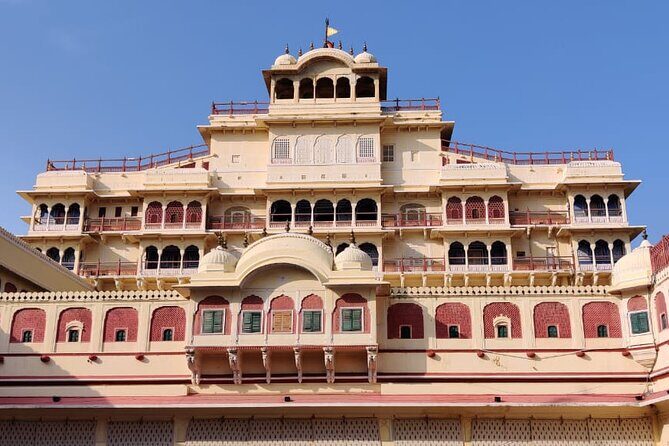
From there it’s a short drive to City Palace of Jaipur, with about 1 hour on site. The palace is described as the new home to the kings of Amer town, and it ties directly back to the city’s origin—Maharaja Sawai Jai Singh founded Jaipur in 1727.
The guide context helps here because City Palace connects the dots. You’re not just looking at a standalone building. You’re seeing the role it played in ruling, planning, and cultural life.
Jantar Mantar: the observatory you can actually feel while walking
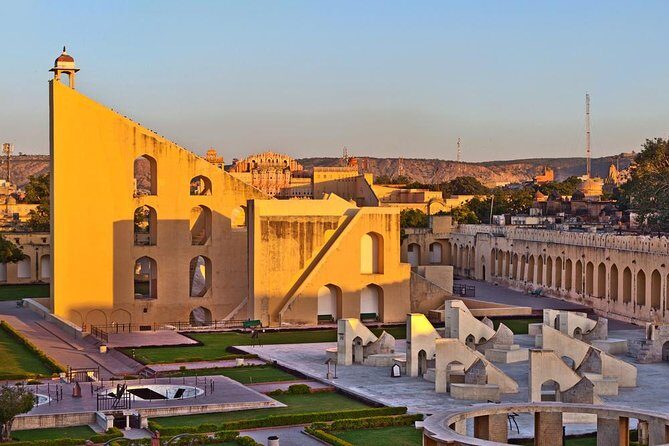
After City Palace, you’ll walk to Jantar Mantar – Jaipur, with about 1 hour here. This is one of those UNESCO-style sites that can feel intimidating if you don’t know what you’re looking at. The good news: your guide’s job is to help you translate the shapes and structures into something understandable.
Jantar Mantar is described as an observatory, built in the early 18th century by Sawai Jai Singh, and it has been a world heritage site since 2010. When a place is built as a working instrument, it’s worth treating it differently than a palace courtyard. You’ll want to look for how the structures relate to direction, alignment, and measurement.
If you like photography, Jantar Mantar can be a great shift from ornate façades to clean geometric forms. If you’re more interested in meaning than pictures, this is still one of the stops where you’ll come away with a stronger sense of what the city was built to do.
Timing for a smooth 5 to 8 hours (without rushing your eyes)
This tour runs roughly 5 to 8 hours, and the schedule is designed around keeping you moving between key monuments. That means you should expect a rhythm: a solid anchor stop (Amer Fort), a couple of short photo-and-look stops (stepwell, water palace, Hawa Mahal), then two stronger time blocks (Royal Gaitor and the City Palace + Jantar Mantar area).
If you want to get the best experience from it, plan your energy like this:
- Save your patience for the short stops. They’re short because the route needs balance, not because they are unimportant.
- Take your time at the longer stops. Amer Fort and City Palace are where you’ll likely remember the details afterward.
- Let your guide lead the pacing. This is one of those days where small timing choices make the difference between frustration and flow.
Also, wear shoes you can handle on uneven surfaces. Forts and older sites can be more about footing than walking distance.
Lunch and comfort: included, but still worth thinking about
Lunch is included in the price. That’s genuinely helpful because it removes one big decision during a sightseeing day. You can spend your mental energy on the monuments instead of hunting for food while your schedule tightens.
Comfort-wise, you’re in a private air-conditioned vehicle for pickup and transport between stops. In Jaipur’s heat, that matters more than people think. Even if you’re fine walking around, you’ll appreciate the breaks between locations.
Photography and shopping reality in the Pink City
This route also works well if you care about photos and shopping, because it places you at the city’s signature landmarks. However, the tour is structured around fixed time at each stop. That means you’ll get strong photo targets, but you won’t have unlimited wandering time for shopping sprees at every corner.
My practical advice: treat shopping as a bonus, not the main plan, unless you’re okay with doing it fast. If you want to shop properly, you’ll want a separate block of time later or a customized day.
Who this tour is perfect for (and who should rethink)
This tour is a very strong match if:
- You’re a solo female traveler who prefers a female guide
- You want the convenience of pickup, AC transport, lunch, and entrance fees included
- You like a structured day that hits major Jaipur icons without you coordinating everything
It may be less ideal if:
- You’re the type who wants long, slow exploration at every stop
- You dislike fixed time windows and quick photo transitions
The good part is that the tour includes a range of monuments: fort, stepwell, water palace, a royal cremation site, wind palace, the seat of rulers, and an observatory. That mix is usually the best antidote to souvenir fatigue.
Should you book this solo-female Jaipur tour?
If you want a safe-feeling, well-run Jaipur day with a female guide and the important logistics handled for you, I think this is an easy yes. The biggest wins are the practical inclusions—private AC transport, lunch, and entry fees—and the fact that your guide can help you understand what you’re seeing, not just show it.
I would book it especially if you’re traveling solo and you want your first Jaipur day to feel organized. Start with the classics, get context from a local woman who knows how to explain Jaipur, and then decide what deserves a second visit.
If you already know you want extra time at monuments like Hawa Mahal or you hate short stops, consider adding time elsewhere. Otherwise, this itinerary is a solid way to see the core of Jaipur without the stress.
FAQ
Is this tour only for solo travelers?
It is a private tour, so it’s just your group. It’s specifically described as a solo female traveler special tour.
Will I have a female guide?
A professional female tour guide is included. The additional info says a male tour guide will be assigned only if a female tour guide is not available.
What’s included in the tour price?
Included are pickup and drop-off in a private air-conditioned vehicle, a professional female tour guide, lunch, and monument entrance fees.
How long is the tour?
The duration is listed as approximately 5 to 8 hours.
Which monuments are included in the route?
The stops include Amber Palace, Panna Meena ka Kund, Jal Mahal, Royal Gaitor Tumbas, Hawa Mahal, City Palace of Jaipur, and Jantar Mantar – Jaipur.
Can I cancel and get a refund?
Yes, there is free cancellation. You can cancel up to 24 hours in advance for a full refund. If you cancel less than 24 hours before the start time, the amount paid is not refunded.