REVIEW · NEW DELHI
Private Full Day Old and New Delhi City Tour by Car
Book on Viator →Operated by Aiza tours · Bookable on Viator
Delhi can feel like a lot. This tour helps you tame it.
What makes it work is the mix of Old Delhi religion + street life with New Delhi’s grand government-era sights, all timed inside one practical full day. You’re also not stuck figuring things out alone: a private driver and a live guide (I’ve seen guides named Nawin, Asim, Saurabh, Sujal, Amir, and others in past tours) keep the day moving.
I especially like the air-conditioned private car for the long rides and heat, and I like that you actually get inside the story at key monuments instead of just driving past them. One consideration: it’s still Delhi. Traffic and crowd flow can squeeze timing, so you should be flexible about a perfect minute-by-minute schedule.
In This Review
- Key highlights at a glance
- Private car comfort matters more than you think
- Chandni Chowk by tuk-tuk: the quick way to get your bearings
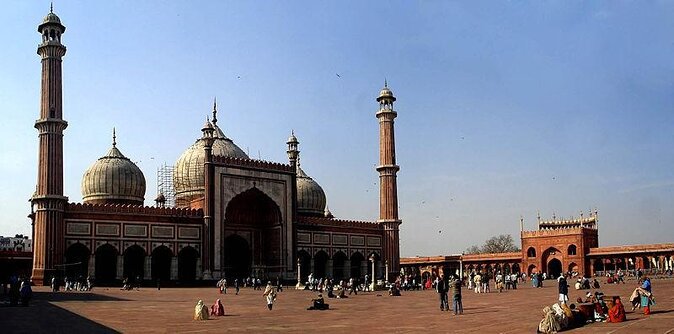
- Jama Masjid: a UNESCO-scale mosque with a courtyard you can feel
- Gurudwara Bangla Sahib: community service, plus roti practice
- Humayun’s Tomb and Raj Ghat: two very different kinds of stillness
- Qutub Minar: a tall-brick landmark with big historical weight
- Lotus Temple, Monday closure, and the easy swap
- New Delhi landmarks: what you see from the road (and what you can’t)
- When the day stretches: heat, timing, and the art of staying flexible
- Entrance fees and the $18 question: value vs what you might pay
- Who should book this tour
- Should you book this Old and New Delhi day?
- FAQ
- How long is the Old and New Delhi tour by car?
- What are the pickup times and where can you be picked up?
- Is this tour private or shared with other groups?
- Is the tuk-tuk ride in Chandni Chowk included?
- Are monument entrance fees included?
- What happens if I book on a Monday?
- Are meals included in the price?
- Do I need to pay tips?
- Is free cancellation available?
Key highlights at a glance
- AC private car + dressed chauffeur to keep the day comfortable
- Tuk-tuk ride in Chandni Chowk starting around Sunheri Masjid for instant street energy
- UNESCO hits with entry included at Jama Masjid, Humayun’s Tomb, and Qutub Minar (option-dependent)
- Gurudwara Bangla Sahib with admission included, known for community service and a chance to try roti
- New Delhi landmarks from the road like India Gate and Parliament House, plus Rashtrapati Bhavan viewing from outside
- Lotus Temple switch on Mondays since Lotus Temple is closed then
Private car comfort matters more than you think
This is a full-day plan built for a city where travel time can eat your morning. You can choose a pickup window from 8:00am to 2:00pm, and pickup is offered from Delhi, Gurugram, Noida, Ghaziabad, the airport, or Faridabad. That flexibility is useful if your arrival day is messy or your timing is dictated by another booking.
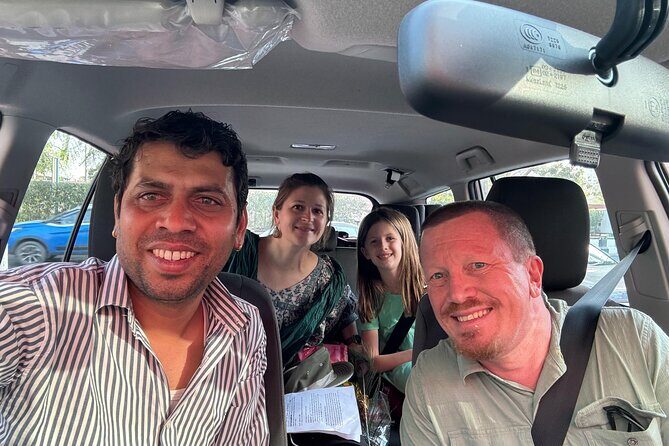
The car is private and air-conditioned, with a dressed chauffeur and water bottles in the vehicle. In a place where heat and congestion are real, that simple comfort choice changes the tone of the day. You arrive at monuments less wiped out, and you can listen to the guide instead of counting down to the next stop.
It’s also genuinely private: only your group goes. That matters because you can ask questions without trying to be heard over a crowd, and you can keep your pacing steadier.
You can also read our reviews of more tours and experiences in New Delhi.



Chandni Chowk by tuk-tuk: the quick way to get your bearings
Old Delhi isn’t the kind of place where you want to “figure it out” on your first day. This tour starts you where the energy is, with a tuk-tuk (tuk-tuk/tuk tuk) ride in the Chandni Chowk area, beginning around Sunheri Masjid. You get the feel for the narrow lanes and shop-to-shop chaos fast, without spending an hour trying to navigate traffic and turns.
From there, the guide brings you into the market rhythm, including time around Chandni Chowk’s spice market. You’ll get a sensory reminder that Delhi isn’t just monuments—this is also daily life, bargaining, and cooking staples moving through tightly packed streets.
Practical tip: in this kind of market stop, keep your hands free and expect the space to be tight. If you’re sensitive to noise or crowds, decide ahead of time how long you want to stay in the densest lanes.
Jama Masjid: a UNESCO-scale mosque with a courtyard you can feel
Next up is Jama Masjid, one of Delhi’s biggest and most important mosques. The tour includes the admission ticket, and you spend about an hour walking in the vast red sandstone courtyard.
What I like about this stop is that you’re not rushed into pictures only. You get time to slow down and see the layout from inside, including the calm contrast that shows up after you’ve been in busy lanes. The mosque’s main story is big and clear too: built in 1656, it’s an architectural landmark that helps you understand the Mughal-era influence on Delhi.
If you want a monument where you can sit with the scale and not just “move through,” this is it.
Gurudwara Bangla Sahib: community service, plus roti practice
Then you shift from Mughal architecture to Sikh spirituality at Gurudwara Bangla Sahib. This stop runs about 30 minutes and includes admission.
The key detail here is not only sightseeing. The shrine is known for selfless service, and the tour highlights the community kitchen element. Even better, you can try making roti as part of the tradition of service.
That hands-on moment is the kind of memory that sticks, because it’s not performance for tourists—it’s participation in a real ritual. If you’re traveling with kids, it’s also a rare chance to do something active and cultural in a short time.
Do note: the tour also mentions that Lotus Temple is closed on Monday, and on those days you visit Gurudwara Bangla Sahib instead. So for Monday travelers, this stop becomes even more central.
Humayun’s Tomb and Raj Ghat: two very different kinds of stillness
After the religious energy of Old Delhi, the day moves into two monuments that offer a more reflective pace.
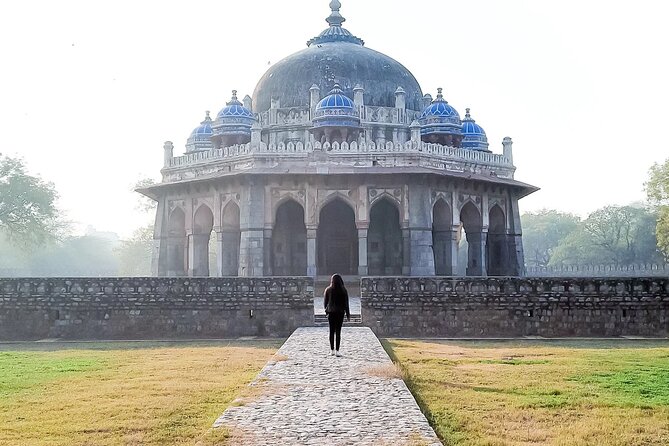
First: Humayun’s Tomb. It’s a UNESCO World Heritage site, built in 1570 by Empress Bega Begum in memory of her husband, Emperor Humayun. Admission is included here, and you get about an hour. This is where Mughal design becomes easier to “read” than in the chaos of the streets. Gardens, symmetry, and stonework give you time to understand power expressed through architecture.
Then you visit Raj Ghat, the memorial of Mahatma Gandhi. You get about 30 minutes. Admission is listed as not included, so if you’re buying the all-inclusive ticket option, double-check what your booking includes. The memorial itself is simple but strong: a black marble platform marking where Gandhi’s cremation took place on January 31, 1948.
In a busy day, that contrast is useful. You go from tall stone stories of empire to a quiet symbol of modern India’s moral legacy.



Qutub Minar: a tall-brick landmark with big historical weight
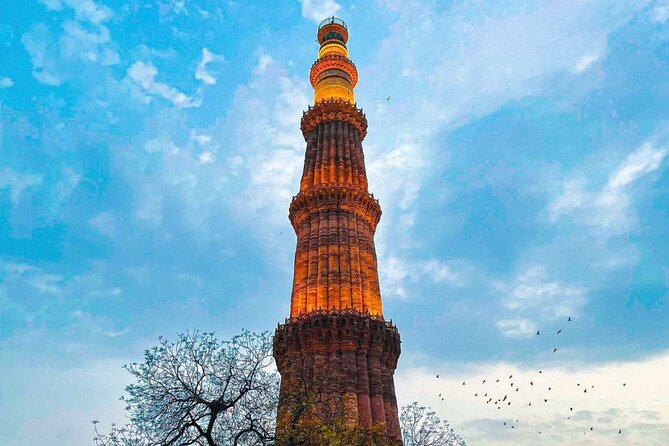
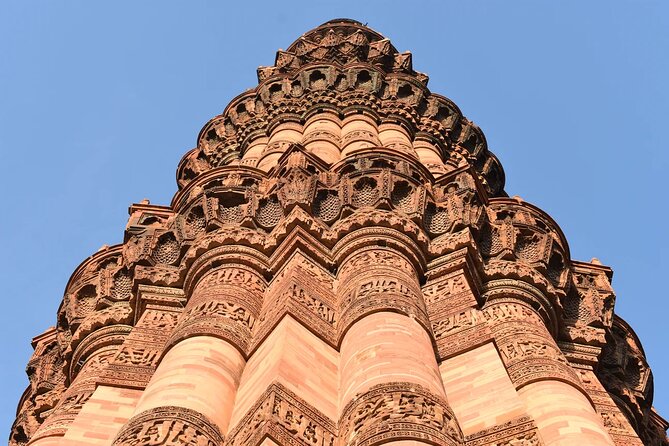
If you want one monument where the scale does half the work for you, it’s Qutub Minar. Admission is included on this tour stop, and you’ll spend about an hour.
The headline facts are straightforward: Qutub Minar is the tallest brick minaret in the world, standing at 73 meters (240 feet), and it dates back to 1193. It’s tied to Qutb-ud-din Aibak, described here as the founder of the Delhi Sultanate. UNESCO status adds the “why this matters” flag.
I like this stop because it gives you a clear before-and-after view of Delhi’s eras. After seeing the Mughal connections at Humayun’s Tomb, Qutub Minar shifts you to a different political chapter. The architecture also feels more direct: a single vertical story you can understand quickly.
Lotus Temple, Monday closure, and the easy swap
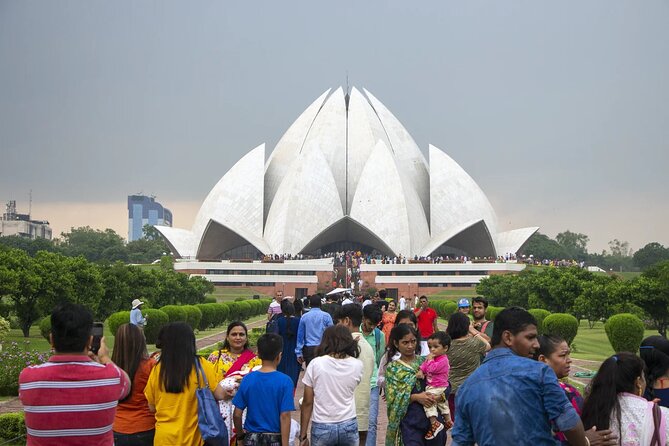
Next is Lotus Temple, with admission included and about an hour allocated. It’s described as a Bahá’í House of Worship, known for lotus-inspired architecture. It was consecrated in December 1986.
This stop works well late in the itinerary because it offers visual calm: smooth lines, geometric form, and a design that’s not about empire or conquest. It’s about modern spiritual space and a different kind of “Delhi landmark.”
One important scheduling note: Lotus Temple is closed on Monday. On those days, the tour swaps in Gurudwara Bangla Sahib instead. If Lotus Temple is a must for you, check your day-of-week before you book.
New Delhi landmarks: what you see from the road (and what you can’t)
New Delhi arrives in driving views rather than full on-site time at every location. The tour mentions stops like India Gate and Parliament House, plus viewing Rashtrapati Bhavan, the official residence of the President of India.
For Rashtrapati Bhavan, the info provided is clear: entry is restricted, but you can still experience the building from outside. That’s exactly the right expectation to hold. You’re paying for guidance and efficiency, not for access that won’t exist on the ground.
The value here is orientation. India Gate and Parliament-area architecture help you understand why Delhi is two cities stitched together—Old Delhi’s layered history, then New Delhi’s colonial and government planning. Even if you don’t get inside every building, you leave with a clearer map in your head.
When the day stretches: heat, timing, and the art of staying flexible
This tour runs about 8 hours, with a pickup that can start as early as 8:00am or as late as 2:00pm. The itinerary includes several one-hour stops, plus shorter ones. That can work brilliantly, but it also means the day has little dead time.
Delhi traffic is the wildcard. Even with a professional driver, you might spend a bit more time in transit on heavier days. That’s why this tour is built around a private vehicle and a guide who can adjust.
Also keep in mind that religious schedules can affect access and flow. The tour info doesn’t list specific closures beyond Lotus Temple’s Monday schedule, but changes can happen around high-traffic periods. Build in the mindset that a guide may shift timing so you still get a full day.
Meals aren’t included, so plan food timing. You’ll want water (already provided), and you may prefer to eat based on what your guide recommends when the day’s pacing becomes clear.
Entrance fees and the $18 question: value vs what you might pay
The price is listed at $18.00 per person, which is unusually low for a full-day private car + live guide + monument admissions (depending on the ticket option you choose). But here’s the key: entrance fees are included only in the Old & New Delhi with Tickets option. If you choose a different booking option, you may need to purchase tickets separately at each monument.
So the value is real, but only if you pick the option that matches your expectations. If you hate surprise costs, choose the “with Tickets” option. If you’re okay buying individual tickets, you can compare and choose.
Even with that caveat, the inclusions that matter for comfort and logistics are clear:
- Private air-conditioned car with chauffeur
- Private live guide
- Hotel/airport pickup and drop-off
- Rickshaw ride in Old Delhi Chandni Chowk
- Bottled water
- Taxes, fees, and GST listed as included
Tips aren’t included, and neither are meals. And yes, you’ll likely spend a little extra on food and tipping. Still, for many visitors, this is one of the most cost-effective ways to do Delhi’s core highlights without wrestling transport and entry rules alone.
Who should book this tour
This tour is a strong fit if:
- You have limited time and want both Old Delhi and New Delhi in one day
- You prefer a private driver + guide setup over hopping on public transport
- You want the Chandni Chowk experience but don’t want to do it without help
- You enjoy a mix of major monuments and a hands-on cultural moment like trying to make roti at Gurudwara Bangla Sahib
It’s also a good choice for visitors who value pacing. In past experiences, guides mentioned in the reviews (like Nawin and Asim) were praised for making the day feel manageable, and drivers like Sunil and Vishnu were highlighted for handling traffic calmly. That’s the practical kind of service that matters.
If you already know Delhi well and you’re comfortable getting around, you might not need a full-day private car. But if Delhi is new to you, this is a tidy, efficient way to get your bearings and see the big anchors.
Should you book this Old and New Delhi day?
I’d book it if you want a one-day plan that combines major landmarks with real street time, without turning the day into a logistics puzzle. The private AC car, live guide, and the Chandni Chowk tuk-tuk ride are the “make it worth it” elements, especially if it’s your first time in the city.
I’d think twice only if you’re the type who hates any crowding at all or you’re traveling on a day when a specific site matters a lot (like Lotus Temple on Monday). Otherwise, this is a smart way to see Delhi at full speed, with enough structure that you don’t feel lost.
FAQ
How long is the Old and New Delhi tour by car?
The tour duration is listed as about 8 hours.
What are the pickup times and where can you be picked up?
Pickup is offered from anywhere in Delhi, Gurugram, Noida, Ghaziabad, the airport, or Faridabad, and you can choose a pickup time between 8:00am and 2:00pm.
Is this tour private or shared with other groups?
It’s a private tour, so only your group participates.
Is the tuk-tuk ride in Chandni Chowk included?
Yes. The rickshaw ride (tuk-tuk) in Old Delhi’s Chandni Chowk is included.
Are monument entrance fees included?
That depends on the booking option. Monument entrances are included only in the Old & New Delhi with Tickets option. If you choose another option, you may need to purchase tickets separately at each monument.
What happens if I book on a Monday?
Lotus Temple is closed on Monday, so the tour notes you will visit Gurudwara Bangla Sahib instead.
Are meals included in the price?
No. Meals are not included.
Do I need to pay tips?
Tips/gratuities are not included.
Is free cancellation available?
Yes. You can cancel up to 24 hours in advance for a full refund.