REVIEW · NEW DELHI
Private Full-Day Jaipur City Tour with Hotel Pick-Up & Drop
Book on GetYourGuide →Operated by Delight Tours · Bookable on GetYourGuide
Jaipur in one day can work. I love how this private tour strings together the big-name sights of the Pink City with a real guide and a driver who handles the traffic. Two highlights I really like: Amber Fort with the Sheesh Mahal mirrors and the photo-friendly stops like Panna Meena ka Kund and Jal Mahal. One drawback to keep in mind is the schedule moves at a steady clip, so some places are necessarily short stops.
You get a live speaking guide in English plus several other languages, and the experience tends to feel personal because it’s private. I also appreciate the practical touches: air-conditioning in the car, water bottles, and a separate entrance so you spend less time in queues. If you hate walking in heat, plan for comfort first—this day includes multiple short walks, and the tour is not suitable for pregnant women.
In This Review
- Key things I’d plan around before you go
- A private Jaipur day that saves your energy (and your time)
- Getting to Amber Fort: the view-and-mirrors payoff
- Panna Meena ka Kund and Jal Mahal: short stops for serious photos
- City Palace and Hawa Mahal: two very different ways to show power
- Jantar Mantar: the observatory you’ll want to slow down for
- Gatore ki Chhatriyan and Patrika Gate: marble cenotaphs and painted arches
- The lunch break: plan for your own meal cost
- Price and value: what $10 really buys you in this kind of day
- Guides and drivers: the service quality is the hidden ingredient
- What to pack so Jaipur doesn’t beat you
- Who this tour is perfect for (and who should rethink it)
- Quick guide to timing: how to avoid the rushed feeling
- Should you book this full-day Jaipur city tour?
- FAQ
- What’s the duration of the Jaipur private city tour?
- What time can pickup happen?
- Is hotel or airport pickup included?
- Is this tour private?
- Will I have a live tour guide?
- What languages are available for the guide?
- Are monument entrance fees included?
- Are meals included?
- Is it wheelchair accessible?
- Is it suitable for pregnant women?
Key things I’d plan around before you go
- Private hotel or airport pickup in Jaipur, with an air-conditioned car and driver
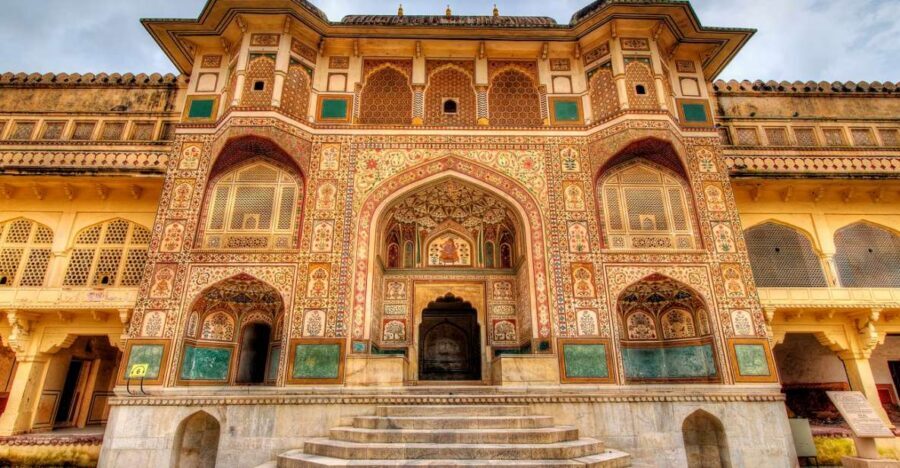
- Amber Fort + Sheesh Mahal for the mirrored-room wow factor and lake views
- Photo stops that actually pay off (Panna Meena ka Kund, Jal Mahal, Gatore ki Chhatriyan)
- UNESCO stops without the hassle at Amber Fort and Jantar Mantar
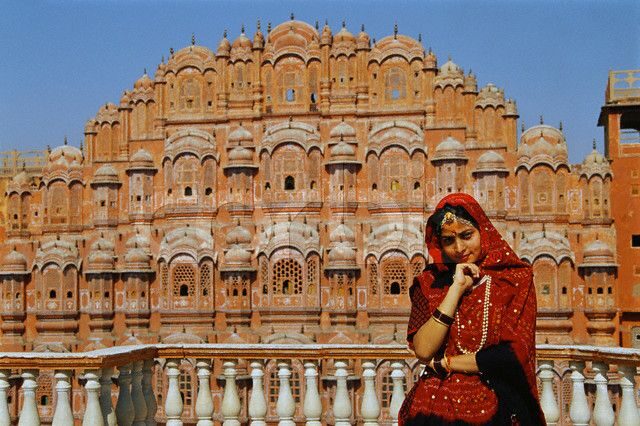
- Honeycomb façade at Hawa Mahal with its 953-window look
- A steady, 6–8 hour sightseeing rhythm depending on traffic and opening times
A private Jaipur day that saves your energy (and your time)
Jaipur can be spread out, and that’s where this tour earns its keep. You’re not trying to coordinate multiple taxis, translate on the fly, or guess which entrances are easiest. Instead, you choose a pickup time between 7 AM and 11 AM, climb into an air-conditioned car, and let the driver do the navigating while you focus on seeing.
I like that the tour is structured but not chaotic. The stops are the kind you’d want even if you only had a day: grand forts, palace architecture, and a rare observatory. Plus, the guide is with you at the monuments, so you get context while you’re standing in front of the details.
The trade-off is pacing. Even though the full day is listed as about 8 hours, the useful sightseeing time can feel tighter if traffic runs slow or if certain sights have limited public access. If you prefer lingering, pick the earliest pickup you can.
You can also read our reviews of more city tours in New Delhi

Getting to Amber Fort: the view-and-mirrors payoff
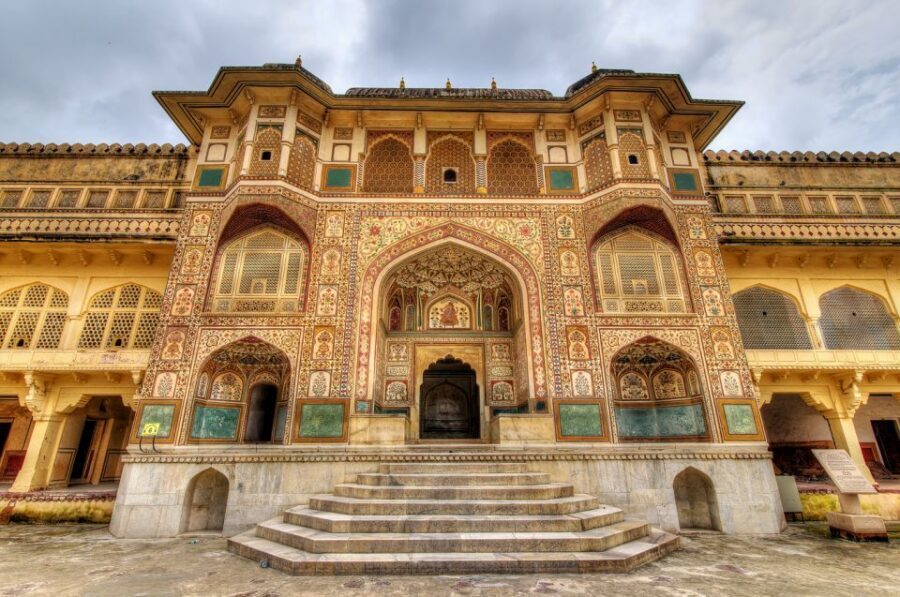
You’ll start with Amber Fort, a UNESCO World Heritage site that rewards you the moment you step into it. This is one of those places where every angle tells a story—courtyards, carved surfaces, and the kind of palace layout that makes you want to look up, not just forward.
The big interior draw is the Sheesh Mahal (mirror hall). When you see it in person, the effect lands fast: countless mirror reflections that make the space look brighter and larger than it really is. It’s not just decoration; it reflects how carefully the fort was built for comfort, spectacle, and control over light.
Don’t miss the ramparts and the panoramic view of Maota Lake from the fort’s approach areas. Even if you’re not a landscape person, the view helps you understand the location and why this fort became so important.
Practical note: plan on a short walking-and-stands-around rhythm here. Wear shoes that handle uneven surfaces, and keep sunglasses handy.
Panna Meena ka Kund and Jal Mahal: short stops for serious photos
After Amber Fort, you get two quick but memorable visual breaks.
First is Panna Meena ka Kund, a stepwell known for its symmetrical stairways and striking geometry. The stairs give you a natural frame for photos, especially when you aim down the lines instead of just shooting from the top. This is the kind of stop that takes time to appreciate, but you can still get what you need in a short window if you’re efficient.
Next comes Jal Mahal, the palace sitting on Man Sagar Lake. From the banks, it’s all about atmosphere. You’re often shooting from farther away, but that’s part of the charm: the palace reads like it’s floating, and the water turns the structure into a calmer-looking monument than the fort.
If you’re someone who likes variety in one day—forts, then geometry, then water—this pairing works well.
City Palace and Hawa Mahal: two very different ways to show power
Jaipur’s palace architecture can feel like a theme park until you learn what you’re looking at. This tour helps you connect the dots.
At City Palace, you get more than walls and doors. The palace blends Mughal and Rajasthani design, and inside you’ll find courtyards, gardens, and a museum space with royal artifacts. The value here is learning how the court lived—how the buildings functioned daily, not just how they looked.
Then there’s Hawa Mahal, the famous honeycomb façade with 953 windows. It’s easy to think it’s just pretty, but the idea is practical: it was built for royal ladies to observe street life. Standing there, you start to see how architecture can serve visibility, privacy, and style at the same time.
Photo tip: shoot from slightly farther back if you want the façade pattern to read clearly. Also, try at least one side angle. The window grid changes the look as the light shifts.
Jantar Mantar: the observatory you’ll want to slow down for
Jantar Mantar is different from the rest of the day, which is exactly why I like it. Instead of palace drama, you get giant instruments used for astronomical measurements. The scale is the first surprise. These aren’t small tools; they’re public-scale devices built to make observation possible in a specific way.
What makes the stop worthwhile is that it forces you to think about intention. You’re not just looking at a landmark—you’re looking at a system for measuring time, movement, and the sky.
Because the day is busy, you might not get a long, drift-around visit. But even a focused guided walk can help you notice what each instrument is built to do.
You can also read our reviews of more private tours in New Delhi




Gatore ki Chhatriyan and Patrika Gate: marble cenotaphs and painted arches
This is where you get the more personal-feeling stops—less famous than the big two, but memorable in your camera roll.
Gatore ki Chhatriyan is a royal cremation site with intricate marble cenotaphs. The details are what matter here: patterns in stone, the sculpted shapes, and the way the site feels quieter than the louder monuments nearby. It’s also a strong photo opportunity because you can shoot both close-up details and wider frames of the cenotaph structures.
If timing allows, you may also stop at Patrika Gate, known for its colorful, hand-painted archways. It’s the kind of place where you’ll either love the color or wonder why it exists. If you like street-art style visuals, it’s a fun add-on before heading back.
The lunch break: plan for your own meal cost
There’s a lunch break scheduled at a local restaurant for about an hour. The important detail: meals and drinks are not listed as included, so you’ll need to pay for your food.
I treat the lunch hour as a flexibility tool. If you’re the type who gets hungry fast, eat promptly and don’t wait until you’re starving. If you’re sensitive to spicy food, ask what’s mild or go with simpler items—you’ll thank yourself later when you’re still walking.
Price and value: what $10 really buys you in this kind of day
At around $10 per person, the value is strong for what’s included: a private air-conditioned car, pickup and drop-off from your hotel or the airport, a live speaking guide, water bottles, and entrance fees where you’ve selected the monument entry option. You also get driver allowances and tolls/parking handled.
This matters because Jaipur doesn’t reward you for improvising. Without a driver and a guide, you can burn money fast on multiple rides and spend more time figuring out access and timing. The separate entrance for skipping queues can also save frustration.
So the real question isn’t whether you’re paying for attractions. You’re paying for logistics that make the day work. If you’re traveling with a friend or a small group, private transport plus a guide is often where the money stops feeling like a cost and starts feeling like relief.
Guides and drivers: the service quality is the hidden ingredient
The best part of private tours is not the monuments. It’s the smoothness of the day: punctual pickup, clean communication, and a guide who can answer your questions.
I’ve seen examples of this in real service names like Ragu, Amit, and Rahman mentioned by past guests as friendly and knowledgeable about history. That’s the kind of detail that tells me the operator tends to staff for real interaction, not just a walk-through.
One balanced caution: if your plan depends on a specific add-on, confirm it. One guest noted that an expected elephant-ride component wasn’t accommodated because of timing, and another flagged that a guide meant for Italian had limited Italian. That doesn’t mean it will happen to you, but it does mean you should ask clear questions before the day starts—especially if a particular activity is on your must-do list.
What to pack so Jaipur doesn’t beat you
This is a sun-and-walk kind of day. Do what you can to stay comfortable.
Bring sunglasses and a sun hat. Wear comfortable walking shoes because you’ll move between sites and walk around each monument. Also bring an ID card (a copy is accepted).
If you’re sensitive to heat, choose the earliest pickup time you can. Morning is usually kinder for walking and photos, and it gives you a buffer if traffic slows you down.
Who this tour is perfect for (and who should rethink it)
This tour works best if you want a tight plan with a private car and a guide who can explain the stops as you see them. It’s also a solid option if you value photo opportunities—Jal Mahal and the stepwell geometry aren’t just scenic, they’re practical for cameras.
It may not be ideal if you have mobility limits that make short walks hard. The tour is listed as wheelchair accessible, but it’s still a day with moving between sites and uneven monument grounds. And it’s explicitly not suitable for pregnant women.
If you want to linger for hours in one place, this may feel like too much movement. But if your style is see the classics, get context, and come away with strong photos and clear stories, it’s a strong match.
Quick guide to timing: how to avoid the rushed feeling
Because the day runs 6–8 hours depending on traffic, your strategy matters.
- Pick up early if you want calmer walking and more breathing room.
- Do the photos quickly when the guide is still explaining. You’ll get better angles because your position and timing will still be right.
- If something is closed or restricted, don’t panic. Ask the guide what alternate viewing is possible on the spot, especially for exterior looks like Jal Mahal.
Should you book this full-day Jaipur city tour?
I’d book it if you’re aiming for one efficient day that hits the must-sees: Amber Fort, City Palace, Hawa Mahal, and Jantar Mantar, plus the photo-driven detours at Panna Meena ka Kund and Gatore ki Chhatriyan. The included driver, air-conditioned car, and live guide do real work here, and the price is hard to argue with for a private day.
I’d think twice if you hate a set schedule or you’re hoping to spend lots of time deep inside every site. This tour favors flow and coverage over long meanders.
If you go, send a quick message before arrival to confirm language expectations and any optional activity you care about. Then show up with comfortable shoes, a hat, and a camera ready for mirror hall light and stepwell symmetry.
FAQ
What’s the duration of the Jaipur private city tour?
It’s scheduled for about 8 hours, and the effective sightseeing time can run around 6–8 hours depending on traffic.
What time can pickup happen?
You can choose a pickup time between 7 AM and 11 AM.
Is hotel or airport pickup included?
Yes. Pickup is included from any hotel or from the airport in Jaipur, with drop-off back where you started.
Is this tour private?
Yes, it’s a private tour with a private air-conditioned car and driver.
Will I have a live tour guide?
Yes, the tour includes a live speaking guide at the monuments and sightseeing stops.
What languages are available for the guide?
English, Spanish, French, German, Italian, and Russian.
Are monument entrance fees included?
Entrance fees are included if you choose the option that books them (the tour notes monument entrance fees if option booked).
Are meals included?
No. Meals and drinks are not included, but there is a lunch break scheduled.
Is it wheelchair accessible?
Yes, the tour is listed as wheelchair accessible.
Is it suitable for pregnant women?
No, it’s not suitable for pregnant women.