REVIEW · NEW DELHI
Old and New Delhi City Tour Full Day
Book on Viator →Operated by Drishti India Tours · Bookable on Viator
Big Delhi, managed in one day.
This full-day Old and New Delhi tour is built for people who want the highlights without turning the trip into a chaos puzzle. You get an air-conditioned private car, a local guide, and a plan that moves from Sikh heritage and Old Delhi markets to Mughal-era icons and New Delhi landmarks. I like that the day includes both the famous monuments and the street-level stuff, like the spice bazaar and the short tuk-tuk ride through Old Delhi.
Two things I’d pick out right away: first, the guide-led flow between sites keeps you from wasting time, and second, the day includes monument entry fees plus round-trip pickup/drop-off. One drawback to consider: the schedule is tightly timed (many stops are around 30–60 minutes), so if you want long, slow hangs at just one place, you may feel a bit rushed.
In This Review
- Key takeaways before you go
- A smart way to see Old and New Delhi in one day
- Price and what you actually get for $79
- Pickup, car, and the tuk-tuk bazaar ride
- Gurudwara Bangla Sahib: faith, the Sarovar story, and a calm reset
- Jama Masjid and Khari Baoli: where Delhi smells like Delhi
- Red Fort, the Unknown Soldier, and India’s New Delhi “power zone”
- Connaught Place: food break and shopping-friendly location
- Humayun’s Tomb: UNESCO calm with a guided pacing
- Agrasen Ki Baoli: urban legends you can actually visit
- Lotus Temple: modern spirituality with a flower-like shape
- How the guides make or break this kind of day
- Who should book this tour (and who might want something else)
- Should you book this Old and New Delhi day tour?
- FAQ
- How long is the Old and New Delhi City Tour?
- Do I get pickup and drop-off?
- Is this tour private or shared?
- What transport is included?
- Are monument entry fees included?
- Are meals included?
- Where do I receive my ticket?
Key takeaways before you go
- Air-conditioned private transport with pickup and drop-off from your hotel, airport, or train station area (Delhi/NCR).
- Monument entry fees are included (and several stops are free-admission anyway).
- Old Delhi tuk-tuk ride through the bazaar lanes for a quick, fun street feel.
- A guide who steers the day so you’re not just hopping between spots on your own.
- Built-in mix of eras: Sikh sites, Mughal monuments, and New Delhi government architecture.
- Folklore and faith stops: Sarovar healing story, Agrasen ki Baoli tales, and the Lotus Temple.
A smart way to see Old and New Delhi in one day
Delhi can be two cities in one: Old Delhi’s lanes and bazaars on one side, and New Delhi’s wide boulevards and official buildings on the other. This is a full-day tour that stitches those worlds together without asking you to plan every turn.
What makes it work is the pace and the support. You’re not relying on random cabs or figuring out where to go next. Instead, you have a private guide and a private car that handle the biggest logistics stress: getting you between neighborhoods and keeping the order of stops logical.
And you still get the street-level experience. The day isn’t just marble and gates. You get to walk into places like Jama Masjid and Khari Baoli, where the sensory part of Delhi hits fast—sound, movement, and the smell of spices.
You can also read our reviews of more city tours in New Delhi


Price and what you actually get for $79
At $79 per person for about 8 hours, this is priced like a good-value “see a lot, don’t wrestle with details” day. You’re paying for more than transport. The package includes:
- Private, air-conditioned car
- Hotel/airport/train-area pickup and drop-off within Delhi/NCR
- Local guide
- Entry fees to monuments
- Tuk-tuk ride through Old Delhi bazaars (for Old Delhi and full-day options)
- All taxes, fuel, tolls, and GST
That matters because entry fees and guided time add up quickly if you do it yourself. Also, the tour is private, meaning it’s just your group—so you’re not squeezed into someone else’s schedule.
Meals and personal expenses aren’t included. So if you want a full sit-down lunch or shopping to turn into a spending spree, budget for that separately. Tips aren’t included either.
Pickup, car, and the tuk-tuk bazaar ride

Your day starts with pickup anywhere in Delhi, Noida, Gurugram, Ghaziabad, or Faridabad. That range is useful because many Delhi tours only cover a narrow city zone.
Once you’re in the car, you’ll do the longer distance jumps efficiently. Then comes the fun part: the tour includes a tuk-tuk ride through the bazaars of Old Delhi. It’s not the whole day in a vehicle, and it’s not meant to replace walking. It’s a “get the feeling” ride that helps you understand how Old Delhi moves.
The overall vibe from the feedback is clear: people feel safe and cared for. Guides and drivers get praised for being attentive, and more than one guide name shows up in the stories shared—like Naveen, Mukesh, and Push—along with the idea that the day can feel smooth and well paced.
Gurudwara Bangla Sahib: faith, the Sarovar story, and a calm reset

You begin at Gurudwara Bangla Sahib, where the story centers on the ninth Sikh Guru and a cholera outbreak in 1664. The legend says the Guru is credited with healing many people during that time, and the Sarovar (the sacred pond) is described as having therapeutic qualities.
Even if you’re not chasing religious history, this stop is a great way to get grounded early. It’s a different tone from the crowds outside, and it can reset your senses before you head into the busy Old Delhi marketplaces.
This stop runs about 30 minutes, with admission ticket details listed as free. It’s long enough to orient yourself and take in the place, without letting the schedule fall behind.
Jama Masjid and Khari Baoli: where Delhi smells like Delhi

Next up is Jama Masjid, described as the biggest mosque in India. Construction is dated to 1656, and the effort is said to have involved 5,000 labourers. You’ll spend about 1 hour here, and the time is used well for a slow courtyard stroll and a chance to take in the scale.
After that, the tour shifts into Old Delhi’s market energy at Khari Baoli, closely tied with the spice bazaar experience around Chandni Chowk. You’ll get around 30 minutes here, and the point is sensory: spices with all your senses, plus learning facts about spices and how they’re used.
This is one of the moments where having a guide changes the whole experience. Without guidance, markets can feel like walking from stall to stall. With a guide, you get context—why certain spices show up, what people do with them, and how the market functions beyond just buying souvenirs.
If you like food and you like stories tied to everyday life, this is a strong stretch of the day.
You can also read our reviews of more tours and experiences in New Delhi




Red Fort, the Unknown Soldier, and India’s New Delhi “power zone”

Once you’ve handled Old Delhi, you’ll start moving into the more ceremonial side of Delhi. Several stops in the middle of the day give you that big-government architecture feel.
You pass by the Red Fort, built between 1639 and 1648, with Mughal rulers using it as their primary home. The description points out Indo-Islamic and Mughal styles, which is helpful because it gives you something to look for while you’re seeing a massive structure.
Then you’ll go to the Tomb of the Unknown Soldier. The key detail here is specific: the wall lists the names of 13,300 Indian army soldiers who died in the First World War. Even if you don’t usually stop at memorials, having the names tied to a real conflict gives the site weight fast.
After that, the route includes major government buildings: Parliament House and President House (Rashtrapati Bhavan). Parliament House is described as India’s bicameral legislature with the Lok Sabha and Rajya Sabha. Rashtrapati Bhavan is described as originally built as the Viceroy’s House, then evolving into its current role.
These aren’t “sit and linger” stops. They’re more like “see and orient,” built into the flow so you understand how Delhi operates when it turns from markets to national administration.
Connaught Place: food break and shopping-friendly location
You’ll reach Connaught Place for about 45 minutes, and this is one of those practical pauses that helps the day feel human again. The guide will suggest eateries, including options for both foreign-style food and real Mughlai food, along with dietary-specific and vegetarian choices.
It’s also a good zone for simple shopping and getting your bearings. One reason this stop works is that it balances the heavier parts of the day. After mosques, tombs, and memorials, you get something more flexible: eat, rest, and reset.
Just keep expectations realistic. You’ll have less time than if you arrived on your own. But 45 minutes is plenty to grab a meal and regroup before the quieter monument segment later.
Humayun’s Tomb: UNESCO calm with a guided pacing

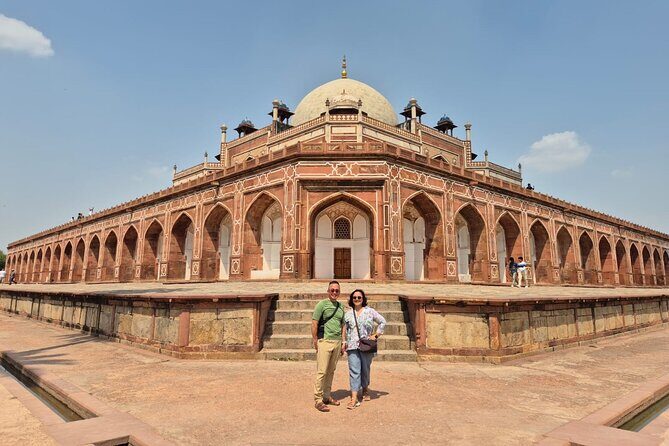
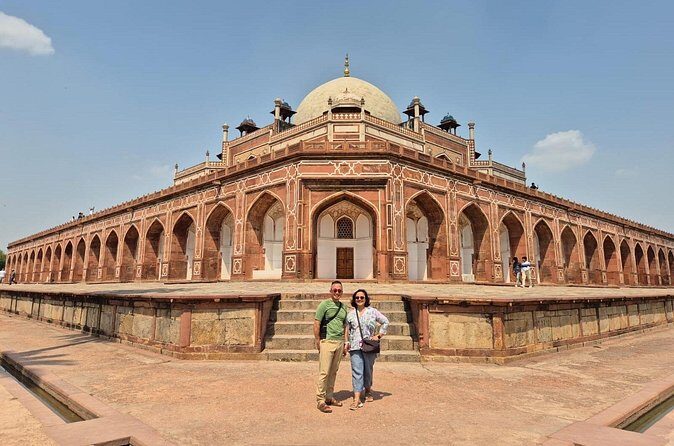
The tour then moves into a monument highlight: Humayun’s Tomb. It’s noted as India’s first garden tomb and a UNESCO World Heritage Site.
This stop lasts about 1 hour, and it’s a perfect match for the day’s rhythm: you’ve already seen big-scale Delhi; now you slow down and focus on design and atmosphere. The story included is also personal—after Humayun’s death, his wife is described as the driving force behind the mausoleum’s construction.
If you like monuments that reward attention to layout, this is the kind of site where a guide helps you notice more than just the main building. And since it’s listed with admission fees included, you’re not stuck figuring out ticket logistics mid-day.
Agrasen Ki Baoli: urban legends you can actually visit
Next comes Agrasen Ki Baoli, where the focus is on tales. It’s described as well-known for urban stories, hauntings, and paranormal events. The tour frames it as a place where these legends live.
This stop is about 30 minutes and is a fun change of pace after the more straightforward history stops. Whether you’re the type who loves ghost stories or you prefer facts, the value here is in experiencing how people attach meaning to place.
Just remember: the tour presents these as stories. You’re there to experience the site and the legend around it, not to verify supernatural claims.
Lotus Temple: modern spirituality with a flower-like shape
For the final major spiritual stop, the tour includes Lotus Temple. It’s described as a Bahá’í house of worship, consecrated in December 1986. The building is known for its flower-like form, and it’s labeled as a major attraction in metropolitan Delhi.
You’ll have about 45 minutes here, and it often feels like a good closing chapter: calm, spacious, and visually distinctive compared to the older stonework monuments you’ve been seeing all day.
Like some earlier stops, admission is listed as free, which helps you avoid one more cost decision before the day ends.
How the guides make or break this kind of day
This tour lives or dies on pacing and people skills. The strong feedback centers on guide quality and safety. Names that show up repeatedly include Push, who’s credited with planning the day well and adding local touches like chai with locals, and also Naveen and Mukesh, praised for being informative and overall amazing.
There are also details about how guides handle the practical side: getting fast access to help avoid queues, selecting good restaurant options, and keeping the group feeling taken care of. Even the driver shows up in the stories, with mention of Bibi as caring and attentive.
That’s why this tour can feel worth it. Many “highlights of Delhi” days are just a checklist. Here, the guide role shows up as real support—explaining what you’re seeing, steering you to food that fits your preferences, and helping you feel comfortable moving through crowded areas.
Who should book this tour (and who might want something else)
This full-day plan fits you best if:
- You want Old and New Delhi in one day without switching providers.
- You like guided explanations and prefer not to juggle tickets and directions.
- You’re okay with a schedule where each stop is mostly 30–60 minutes.
- You want a private setup with pickup/drop-off in Delhi/NCR.
You might want a different format if:
- You hate rushing. Some stops are short, by design.
- You prefer a deeper dive into one site. This tour is spread across many important places.
Also, if you’re sensitive to walking time, plan on steady movement during market and monument blocks. The day includes walking and courtyard time, especially at places like Jama Masjid and the bazaar area.
Should you book this Old and New Delhi day tour?
Yes—if your goal is a high-coverage Delhi day with support. The value is strongest because the day includes the big expenses you’d otherwise manage yourself: transport, entry fees, and a guide, plus the Old Delhi tuk-tuk ride.
I’d especially recommend it for a first trip to Delhi or for a time-crunched visit where you want to leave with real understanding, not just photos. The guide-focused feedback—names like Push, Naveen, and Mukesh, and mentions of safety and food choices—suggests this is the kind of tour where the human factor matters.
If you’re the type who wants to linger, you could still book it, but treat it as a strong sampler. Then plan to come back later for the places you love most.
FAQ
How long is the Old and New Delhi City Tour?
It’s listed as approximately 8 hours for a full day.
Do I get pickup and drop-off?
Yes. Pickup and drop-off are included from your hotel, airport, or train station in Delhi, Noida, Gurugram, Ghaziabad, or Faridabad.
Is this tour private or shared?
This is a private tour/activity, so only your group participates.
What transport is included?
You travel in a private, air-conditioned car, and for Old Delhi/full-day options there’s also a tuk-tuk ride through the bazaars of Old Delhi.
Are monument entry fees included?
Entry fees to monuments are included as part of the tour package.
Are meals included?
No. Meals and personal expenses aren’t included.
Where do I receive my ticket?
The tour includes a mobile ticket.