REVIEW · JAIPUR
Jaipur Sightseeing Tuk-Tuk Tour
Book on Viator →Operated by Unique Jaipur Tour · Bookable on Viator
Eight hours in one tiny vehicle.
That is the hook of this Jaipur tuk-tuk sightseeing day: you ride street-level, stop at the big-name sights, and keep things moving without the stress of figuring out routes. I like that you get hotel/airport/railway pickup and drop plus bottled water and a masala tea or coffee break to keep your head clear. The driver handles the driving, so you can focus on the sights and how each area of Jaipur feels.
I also like the human touch when the driver is someone like Rauf—friendly, helpful, and ready to adjust the day to your pace. Your stops sweep from royal architecture to a calm stepwell moment, then into an afternoon of shopping for items like gemstones, silver jewelry, bangles, blue pottery, clothes, and textiles. One drawback to plan for: monument entrance fees and camera fees are not included, and the tour notes INR 2500 per head for monuments, so the $5 price is mostly for the ride and included perks, not the full sightseeing budget.
In This Review
- Key highlights worth clocking before you go
- Why a tuk-tuk day makes sense in Jaipur
- The pickup, the pace, and how long you really have
- The old-city opener: Sita Ram Mandir and Tripolia Gate
- UNESCO in motion: Jantar Mantar and what to look for
- City Palace and Hawa Mahal: two royal stories, different feelings
- Near the forts: Royal Gaitor Tombs and Jal Mahal moments
- Amer and Panna Meena ka Kund: stepwell geometry, then hilltop grandeur
- The afternoon shopping stop that’s actually built into the schedule
- Optional tuk-tuk driving lesson: fun, but ask for the details
- Price and value: the $5 ride vs the real daily budget
- Who this Jaipur tuk-tuk tour fits best
- Should you book this Jaipur day in a tuk-tuk?
- FAQ
- How long is the Jaipur Sightseeing Tuk-Tuk Tour?
- Is pickup and drop-off included?
- What is included in the tour price?
- Are monument entrance fees included?
- Is lunch included?
- Is a guide included?
- Can I go shopping during the day?
- Is this tour private or shared?
- Can I learn to drive a tuk-tuk?
- Is free cancellation available?
Key highlights worth clocking before you go
- Private tuk-tuk with an English-speaking driver means you’re not stuck with a script and a slow-moving group
- UNESCO Jantar Mantar is a must-see stop, not just a quick photo stop
- City Palace + Hawa Mahal give you two very different views of Rajput royal life
- A real afternoon shopping slot for gemstones, silver, bangles, blue pottery, and textiles
- Optional tuk-tuk driving lesson if you want a fun ending
- Weather-dependent day: it requires good weather, so plan around that
Why a tuk-tuk day makes sense in Jaipur
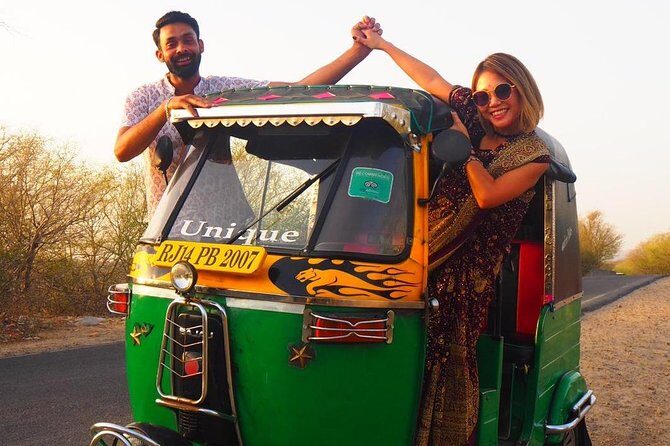
Jaipur can feel big and traffic can be unpredictable. A tuk-tuk doesn’t solve all of that, but it does change the experience. You get close to street life, you make quick turns without the hassle of parking a car, and your driver can shape the route to match how the day is going.
The vibe is also simpler than a big bus day. You’re in your own little bubble with your driver, and the day is paced to fit a lot of “key sights” without rushing you through everything like a checklist. It’s also one of the easier ways to see both the grand palaces and the calmer, more local-feeling spots in between.
The included snacks and drinks matter more than they sound. Bottled water plus masala tea or coffee gives you a small reset point, especially if the day starts early or heats up later.
If you want a day where you see the highlights and still feel like you’re moving like a local, this format fits.
You can also read our reviews of more tours and experiences in Jaipur.


The pickup, the pace, and how long you really have
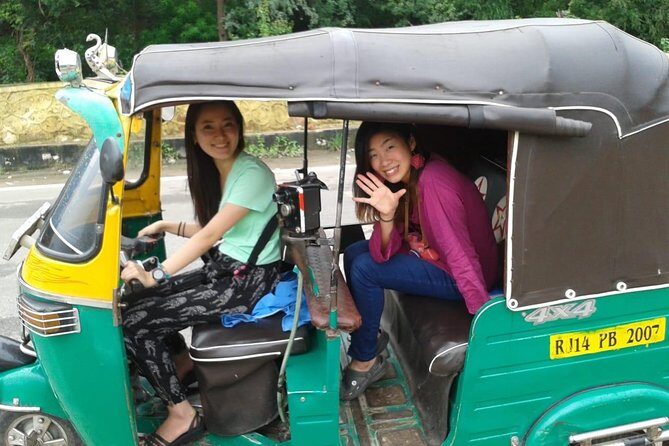
This is an 8-hour full day plan, and it runs as a private tour for your group only. Pickup and drop are included from hotel, airport, or railway/bus station, so you’re not forced into a meeting point and a scramble.
One thing to understand: “8 hours” here is the full sightseeing + shopping day, not just time at monuments. The schedule includes short stop moments—often 15 minutes—and a couple of longer blocks. That’s intentional. It lets you hit the major sights while still leaving room for an afternoon shopping session.
Tuk-tuks are open and low. If you’re on the taller side, plan for a tighter fit and bring a little patience for the physical comfort side of things. You’ll be okay, but it helps to know going in that you might need to shift positions.
The old-city opener: Sita Ram Mandir and Tripolia Gate
The day starts with a peaceful spiritual note at Mandir Shree Sitaram Ji, located in Choti Chaupad. This temple is dedicated to Lord Rama and Sita, and the architecture and spiritual presence are part of why people stop here. The stop is short, so think of it as a mood-setter: a calm contrast right after pickup.
Next comes Tripolia Gate, known as the main entrance to the City Palace. It’s closely tied to royal space and features Rajput and Mughal architectural elements. The practical value of this stop is perspective. Even before you’re deep in palace territory, you’re getting an early sense of how the city was organized around royal access.
These two stops are also good for photos, but don’t treat them like a drive-by. Look at the details for a moment. Gates and temples are where you can spot the craftsmanship that later shows up again in palaces.
UNESCO in motion: Jantar Mantar and what to look for
Jantar Mantar – Jaipur is the kind of stop you should slow down for. It’s a UNESCO World Heritage site and is famous for being home to the largest stone sundial in the world. It was built by the Rajput king Sawai Jai Singh, and it reflects how the era understood astronomy and measurement.
The scheduled time here is about 45 minutes, and that’s enough to do two things well:
1) get your bearings on the shapes and instruments
2) pick one or two areas to study closely instead of treating it like a quick snap and go
If you’re the type who likes context, this is a great place to ask your driver questions. Your English-speaking driver should be able to share explanations, and you’ll get more out of it than just standing in a courtyard with big stone pieces.
One practical note: the monument entrance fee is not included, so you’ll want to account for that when you budget.
City Palace and Hawa Mahal: two royal stories, different feelings
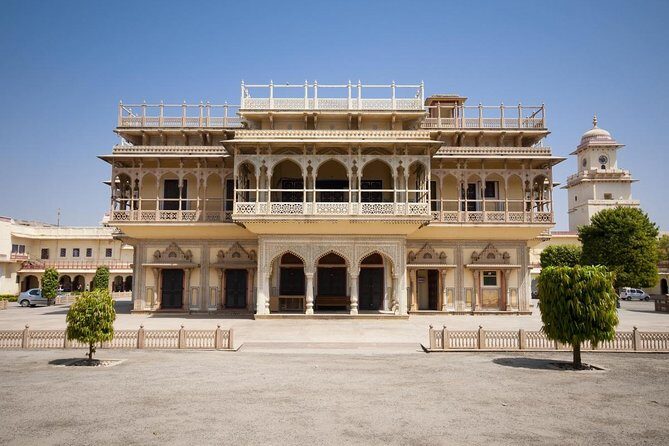
After Jantar Mantar, the day turns fully royal with City Palace. You get about 2 hours here, which is a solid block. The palace complex has separated gardens and courtyards spread over a large area, so you won’t feel squeezed. Even if you don’t read every label, the layout helps you understand how this space functioned beyond just being a single building.
City Palace also works as a transition. You’ve seen the science and the gate structures, so now you’re seeing the “engine room” of royal power—courtyards, pathways, and architectural sections that feel designed for movement and ceremony.
Then comes Hawa Mahal – the Palace of Breeze. It’s one of Jaipur’s most recognizable landmarks, and the “why” is the important part. It was planned so the royal household could view street life, while citizens could access the area too. The curved latticework gives the building its look, but it’s also a clue to how the palace blended visibility with privacy.
You’ll spend about 45 minutes at Hawa Mahal. That’s enough time to see the exterior, get photos, and still keep the day from dragging. If the light is good, you can catch the patterned shadows that make the façade look even more dramatic.
Both of these stops have entrance fees not included, so treat them as your main paid highlights.





Near the forts: Royal Gaitor Tombs and Jal Mahal moments
Not every Jaipur day is only palaces. This one includes quieter, scenic breaks.
Royal Gaitor Tombs sit near the foothills of Nahargarh Fort. The spot is known for intricately carved marble and sandstone cenotaphs honoring Jaipur’s former rulers. It’s peaceful compared with the bustle of the major palace areas, and the scheduled time is around 45 minutes—enough to slow down and notice the craftsmanship.
Then you get Jal Mahal, the water palace in the middle of Man Sagar Lake. The architecture is Rajput, and it was renovated and enlarged in the 18th century. The stop is short, about 15 minutes, so this is mostly about the viewpoint and the atmosphere. Look at how the building sits against the lake setting. Even a brief pause feels worthwhile because it breaks up the more intense palace visiting earlier in the day.
These two stops also do something practical: they keep you from feeling like you’re spending all day standing under direct sun in one high-intensity area.
Amer and Panna Meena ka Kund: stepwell geometry, then hilltop grandeur
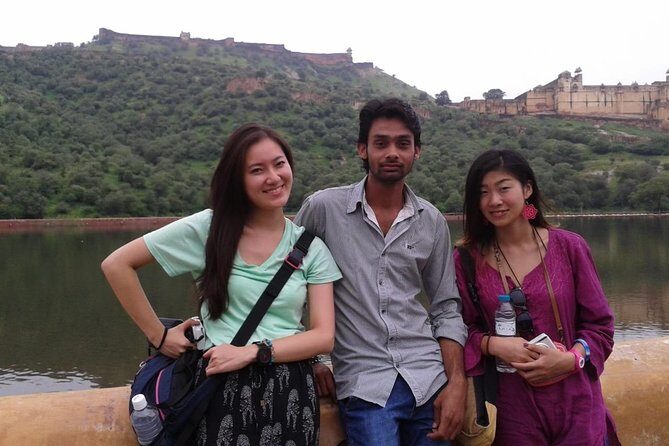
You’ll also visit Panna Meena ka Kund, a remarkable 16th-century stepwell in Amer. This is one of those places that rewards curiosity. You get crisscross, symmetrical steps and arched niches, and it served as a water reservoir and a community gathering spot.
The timing here is about 30 minutes. That works well because it lets you understand the geometry without turning it into a long museum-style session. It’s also a great place to just take a breath and cool off from the more crowded palace areas.
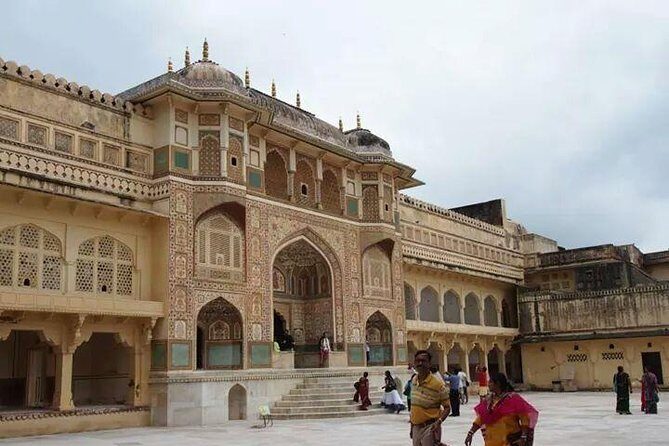
Finally, the day lands at Amer (Amber). It’s described as one of Jaipur’s most magnificent destinations, sitting on rugged hills outside town. Amer is known for a blend of Hindu and Muslim architecture, with red sandstone and white marble. You’ll have around 2 hours here, which is a meaningful chunk for Amer-style sightseeing.
Amer is often where the day can either feel perfect or feel rushed. In a tuk-tuk day, you’re more likely to hit a good rhythm because your driver can adjust how you move between viewpoints. Use the time to see the buildings and also take in the hillside setting.
If you’re planning your budget, Amer is likely one of the places where you’ll feel the entrance fee impact, since major monuments aren’t included in the tour price.
The afternoon shopping stop that’s actually built into the schedule
After the main sightseeing loop, you get an afternoon slot for shopping in Jaipur. This is where you’ll find the kinds of souvenirs people actually want to bring home: gemstones, silver jewelry, bangles, clothes, blue pottery, and textiles.
A practical tip: because shopping is scheduled, you don’t need to force it at the end of a long day. You can browse without feeling like the tour will run out the moment you ask to see one more stall.
It also helps to think about what you’re shopping for before you arrive. Silver jewelry and gemstones vary a lot in quality and pricing, and textiles and pottery are easier to compare once you know what you want the item for—gift, personal memento, or something to wear/use.
Some drivers also recommend craft or shopping stops along the way. If that happens, ask questions and keep your spending in mind alongside your already-paid entrance fees.
Optional tuk-tuk driving lesson: fun, but ask for the details
At the end of the tour, you have the option to learn how to drive a tuk-tuk with a tuk-tuk expert. It’s not required, but if you’re curious, it’s a memorable way to end the day instead of just dropping back at your pickup point and calling it done.
If you want this, I’d plan for a little extra flexibility in your energy levels. It’s the kind of activity that can be short and fun, but it also depends on how the day goes.
Ask your driver what’s possible at that moment. You’ll get a clearer sense of whether it’s a quick try or a more guided lesson.
Price and value: the $5 ride vs the real daily budget
The headline price is listed as $5 for the tour experience. That number is best understood as value for transportation and included perks, not as the full cost of seeing every major monument.
Here’s what you can rely on being included:
- private tuk-tuk with an English-speaking driver
- hotel/airport/railway/bus pickup and drop
- bottled water
- fuel and parking charges
- complimentary masala tea or coffee
- private group experience with a mobile ticket
What costs extra:
- monuments entrance fees and camera fees (not included; the tour notes INR 2500 per head)
- driver tips
- meals (the tour suggests budgeting INR 1000–1500 per head for a good hygienic restaurant)
- a guide if you want one (available on request for INR 1000)
So is it a bargain? In many cases, yes, because you’re bundling a private vehicle, a driver, and a tight schedule across far-apart sites. But the “surprise” factor can be entrance fees. If you’re coming for palaces and major monuments, plan your daily total with those fees in mind from the start.
Also note: the tour requires good weather. If the weather turns, your plans may shift or your date may be changed.
Who this Jaipur tuk-tuk tour fits best
This tour is a strong match if you:
- want major highlights in one day without negotiating transport on your own
- like the street-level view that a tuk-tuk gives
- prefer a private experience rather than waiting with a big group
- can handle a “short-and-sweet” pace at some stops (15-minute moments happen)
- want a shopping slot already built into the schedule
It’s less ideal if you hate paying extra entrance fees or if you want a slow, deep museum day. This is a touring day first, not a linger-everywhere day.
Also, if you’re tall, you might find the tuk-tuk a bit tight. It’s doable—just plan for comfort so your day feels fun instead of fiddly.
Should you book this Jaipur day in a tuk-tuk?
I’d book this if you want an efficient, low-stress way to see Jaipur’s key sights and you’re okay budgeting for monument entrances and camera fees. The private tuk-tuk format is the real win: you get the highlights, plus the practical extras like pickup, water, and tea/coffee, all within a single full-day rhythm.
Skip it if you’re only interested in free sights or you want a long, slow pace at every stop. And if you’re traveling in hot or unpredictable weather, keep an eye on conditions because this plan requires good weather.
If you’re deciding between a DIY day and an organized circuit, this is the clean middle option: organized enough to save time, flexible enough to feel human—especially when you have a driver like Rauf shaping the day around your preferences.
FAQ
How long is the Jaipur Sightseeing Tuk-Tuk Tour?
It runs for approximately 8 hours.
Is pickup and drop-off included?
Yes. Pickup and drop-off are included from the hotel, airport, railway station, or bus station.
What is included in the tour price?
Included items are the private tuk-tuk vehicle with an English-speaking driver, bottled water, fuel and parking charges, complimentary masala tea or coffee, and pickup/drop.
Are monument entrance fees included?
No. Monument entrance fees and camera fees are not included, and the tour notes INR 2500 per head for these fees.
Is lunch included?
Meal expenses are not included. The tour suggests budgeting INR 1000–1500 per head for a good hygienic restaurant.
Is a guide included?
A guide is available on request for INR 1000.
Can I go shopping during the day?
Yes. There is an afternoon shopping time in Jaipur for items like gemstones, silver jewelry, bangles, clothes, blue pottery, and textiles.
Is this tour private or shared?
It is private. Only your group participates.
Can I learn to drive a tuk-tuk?
Yes, there is an option at the end of the tour to learn to drive a tuk-tuk with a tuk-tuk expert, if you want.
Is free cancellation available?
Yes. You can cancel for a full refund up to 24 hours in advance. If you cancel less than 24 hours before the start time, the amount you paid is not refunded.